
이미지: Honeydew Melon Nutrition Facts Display with Vitamins and Minerals Infographic
게시됨:
마지막으로 업데이트되었습니다: 2026년 8월 20일 오후 2시 16분 40초 UTC
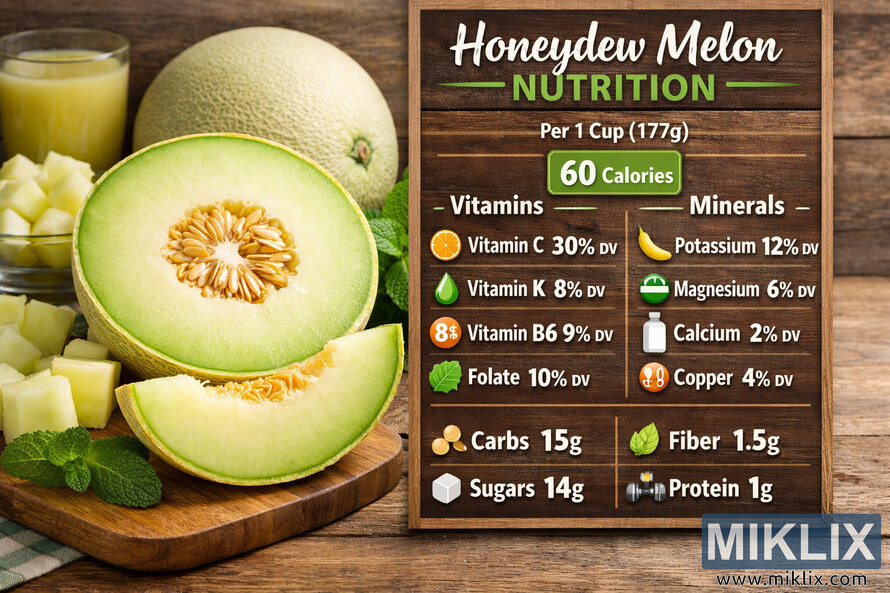
A detailed honeydew melon nutrition image featuring a fresh melon still life and an informative vitamins and minerals infographic. The left side shows halved, sliced, and cubed honeydew melon with mint leaves on a wooden cutting board, while the right side presents a clear breakdown of calories, vitamins, minerals, and macronutrients per 1 cup serving. Ideal for health, wellness, and nutrition content focused on the benefits of honeydew melon.
Honeydew Melon Nutrition Facts Display with Vitamins and Minerals Infographic
이 이미지의 사용 가능한 버전
아래에서 다운로드할 수 있는 이미지 파일은 이 웹사이트의 기사 및 페이지에 삽입된 이미지보다 압축률이 낮고 해상도가 높으며, 대역폭 소비를 줄이기 위해 파일 크기에 더 최적화되어 있어 품질이 더 높습니다.
일반 사이즈 (1,536 x 1,024)
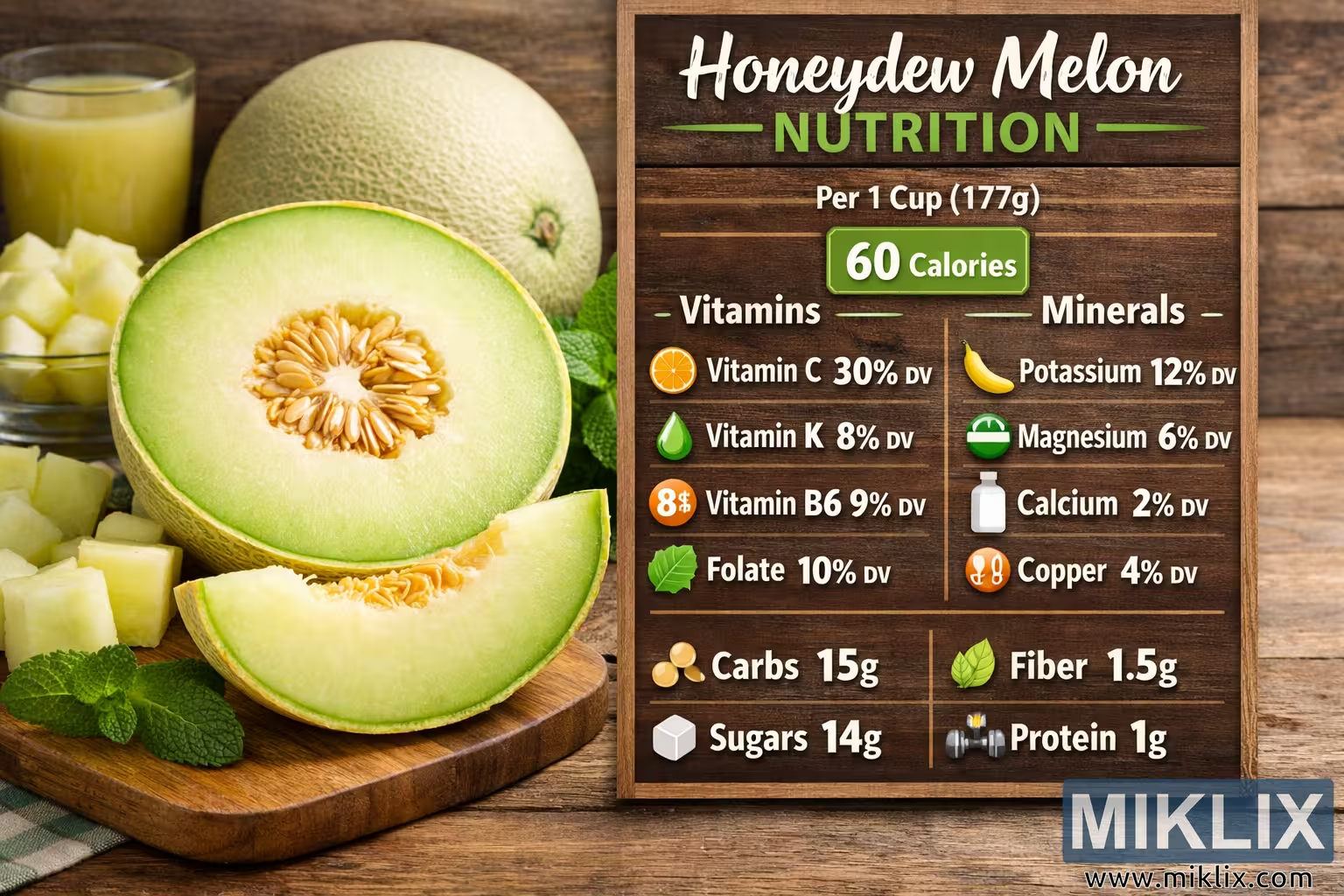
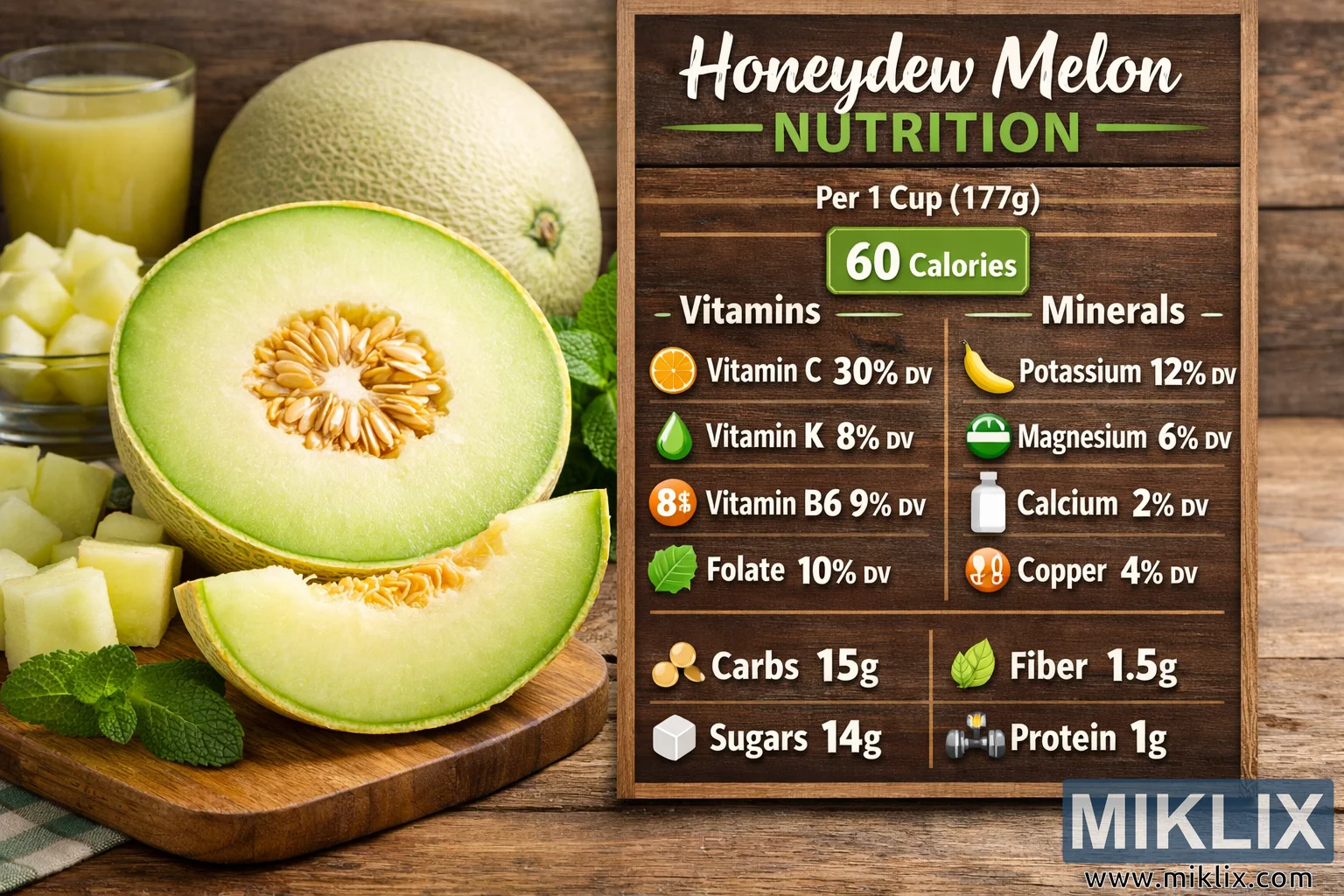
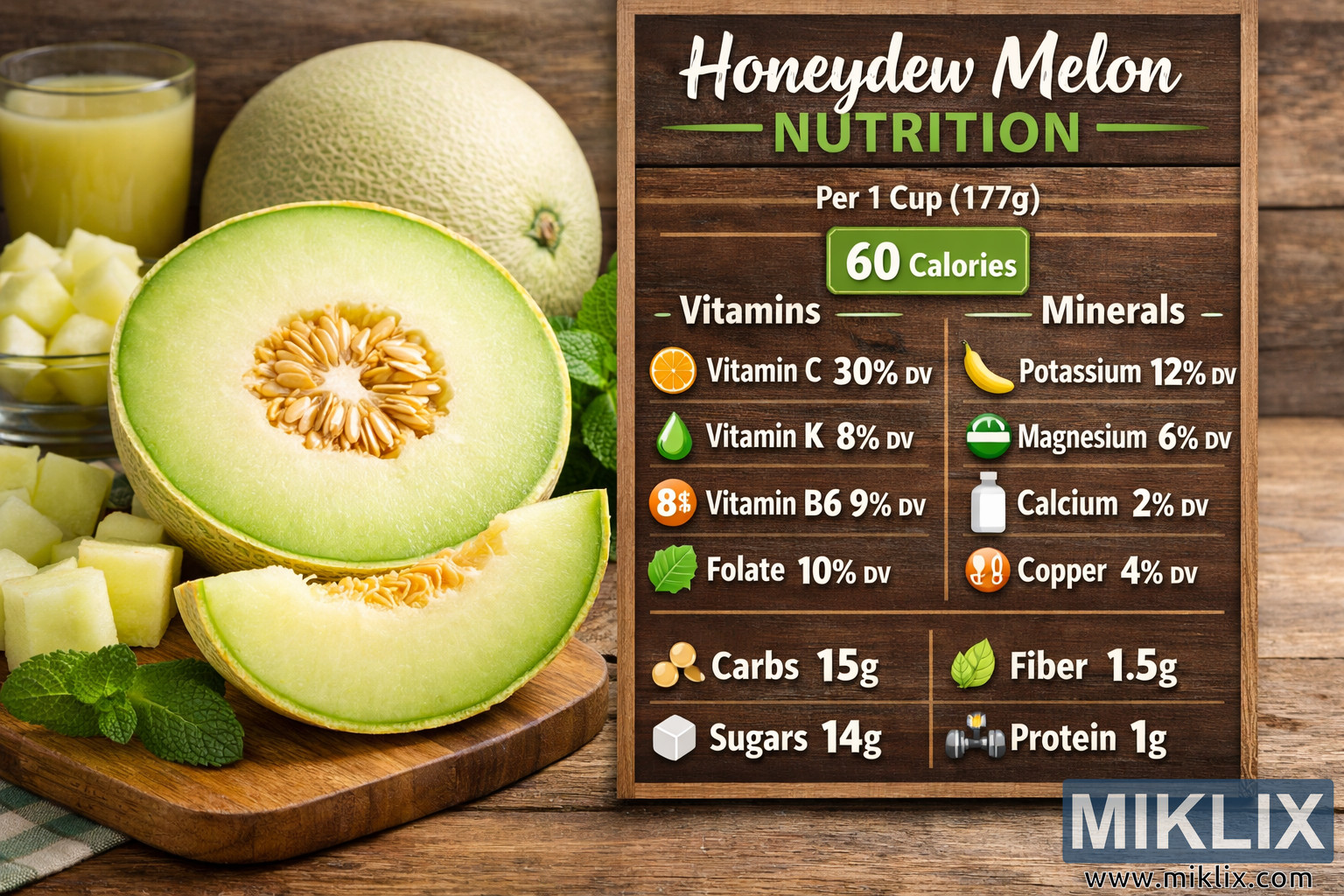
대형 사이즈 (3,072 x 2,048)
매우 큰 크기 (4,608 x 3,072)
초대형 사이즈 (6,144 x 4,096)
코믹하게 큰 사이즈 (1,048,576 x 699,051)
- 아직 업로드 중... ;-)
이미지 설명
This image presents a carefully composed, landscape-oriented nutritional facts display focused on the health benefits of honeydew melon, combining a realistic food photograph on the left with a clean, structured infographic on the right. The overall mood is fresh, wholesome, and informative, designed to visually communicate the vitamins, minerals, and macronutrients found in a typical serving of honeydew melon.
On the left side of the image, a still life arrangement showcases honeydew melon in several appealing forms. In the foreground, a halved honeydew melon sits prominently, angled slightly toward the viewer so that its interior is clearly visible. The pale green flesh appears smooth and juicy, with a subtle sheen that suggests freshness. At the center of the halved melon, the seed cavity is filled with small, tan seeds clustered together, surrounded by a slightly more translucent, moist portion of the flesh. The rind forms a gentle curve around the fruit, with a thin outer skin that transitions from a light yellowish hue to the soft green interior.
In front of the halved melon, a wedge has been cut and placed at a slight diagonal, revealing the thickness of the flesh and the contrast between the juicy interior and the firmer rind. The wedge’s surface catches the light, emphasizing the melon’s hydration and natural sweetness. To the left of the halved melon, several slices of honeydew are arranged on a wooden cutting board. These slices are neatly cut, each showing a consistent thickness and a smooth, curved edge. The cutting board itself has a warm, natural wood tone, with subtle grain patterns that add a rustic, homey feel to the composition. Scattered among the slices are a few fresh mint leaves, their deep green color and textured surfaces providing a visual contrast to the lighter green of the melon. The mint leaves also hint at flavor pairings and a refreshing culinary experience.
In the background, slightly out of focus, a whole honeydew melon is positioned to reinforce the idea of the fruit in its uncut form. Its surface appears smooth, with a pale, creamy-yellow skin that suggests ripeness. Nearby, a small glass bowl is filled with cubed honeydew melon pieces. The cubes are uniform and neatly arranged, their edges catching the light and highlighting the fruit’s juicy texture. The glass bowl adds a touch of transparency and elegance, allowing the viewer to see the melon pieces from multiple angles. In the upper left portion of the background, a glass of juice—likely melon juice or a related beverage—is visible but softly blurred, contributing to the overall sense of refreshment without distracting from the main subject. The background is gently defocused, ensuring that the primary attention remains on the foreground elements and the infographic on the right.
On the right side of the image, a well-organized infographic is displayed against a wooden background that visually echoes the cutting board on the left. At the top, the title "Honeydew Melon Nutrition" appears in bold, white and green letters, making it immediately clear what the infographic is about. Just below the title, the serving size is specified as "Per 1 Cup (177g)", providing context for the nutritional values that follow. Centered beneath the serving size, a green box highlights the calorie content: "60 Calories". This simple, prominent element quickly communicates that honeydew melon is relatively low in calories per cup, aligning with its image as a light, healthy fruit.
Below the calorie box, the infographic is divided into two main columns: "Vitamins" on the left and "Minerals" on the right. Each section lists specific nutrients along with their percentage of the daily value (DV), making it easy for viewers to understand the relative contribution of honeydew melon to their daily nutritional needs. Under the "Vitamins" heading, four key vitamins are listed: "Vitamin C 30% DV", "Vitamin K 8% DV", "Vitamin B6 9% DV", and "Folate 10% DV". Each vitamin entry is accompanied by a small, illustrative icon that visually reinforces the concept of nutrition. For example, Vitamin C is represented by an orange slice icon, symbolizing citrus and immune support; Vitamin K is paired with a green drop icon, suggesting its role in blood clotting and bone health; Vitamin B6 is depicted with a capsule-like icon labeled B6, hinting at energy metabolism and nervous system support; and Folate is represented by a leaf icon, evoking leafy greens and cellular health.
On the right side of the infographic, under the "Minerals" heading, four important minerals are listed: "Potassium 12% DV", "Magnesium 6% DV", "Calcium 2% DV", and "Copper 4% DV". Each mineral also has a corresponding icon that visually distinguishes it. Potassium is symbolized by a banana icon, a familiar representation of this mineral’s role in muscle function and fluid balance. Magnesium is illustrated with an atom-like symbol, suggesting its involvement in hundreds of biochemical reactions in the body. Calcium is represented by a milk bottle icon, a classic reference to bone health and dairy sources. Copper is depicted with another atom-style symbol, indicating its role in iron metabolism and connective tissue formation. These icons, while simple, add visual interest and help viewers quickly associate each nutrient with its common sources or functions.
At the bottom of the infographic, a horizontal row presents four key macronutrient and related values: "Carbs 15g", "Fiber 1.5g", "Sugars 14g", and "Protein 1g". Each of these entries is accompanied by a small icon: grains for carbohydrates, a leaf for fiber, a sugar cube for sugars, and a dumbbell for protein. The grains icon suggests energy-providing carbohydrates; the leaf icon reinforces the idea of dietary fiber and digestive health; the sugar cube icon highlights the natural sugars present in the fruit; and the dumbbell icon symbolizes protein’s role in muscle maintenance and overall body structure. Together, these elements provide a concise overview of the macronutrient profile of honeydew melon in a visually engaging format.
The color palette of the infographic leans heavily on greens, whites, and natural wood tones, harmonizing with the actual honeydew melon on the left side of the image. The green accents emphasize freshness, health, and plant-based nutrition, while the wooden background and cutting board convey a kitchen or home setting, suggesting that this information is practical and relevant for everyday meal planning. The typography is clean and legible, with headings in bold and nutrient values clearly separated, making the information easy to scan at a glance.
Overall, the image successfully combines appetizing food photography with a clear, educational infographic. The left side invites the viewer to appreciate the sensory qualities of honeydew melon—its color, texture, and juiciness—while the right side provides detailed nutritional information, including vitamins, minerals, carbohydrates, fiber, sugars, and protein. The composition is balanced, with the photographic elements and the infographic occupying roughly equal visual weight, creating a cohesive and informative presentation that would work well in health articles, recipe pages, nutrition blogs, or educational materials about fruit and healthy eating.
이 이미지는 다음과 관련이 있습니다: Honeydew Melon: The Refreshing Fruit Packed with Nutrients