
이미지: Comprehensive Display of Loquat Storage Methods
게시됨:
마지막으로 업데이트되었습니다: 2026년 9월 3일 오후 8시 25분 32초 UTC
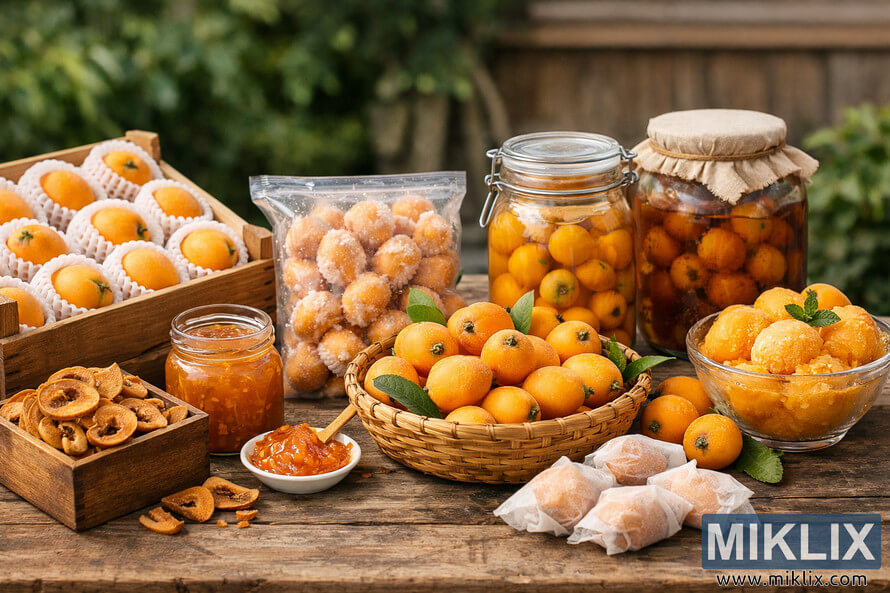
Explore the diverse ways to store loquats—from fresh baskets and dried slices to frozen packs, jams, and syrup preserves—beautifully displayed on a rustic wooden table in natural light.
Comprehensive Display of Loquat Storage Methods
이 이미지의 사용 가능한 버전
아래에서 다운로드할 수 있는 이미지 파일은 이 웹사이트의 기사 및 페이지에 삽입된 이미지보다 압축률이 낮고 해상도가 높으며, 대역폭 소비를 줄이기 위해 파일 크기에 더 최적화되어 있어 품질이 더 높습니다.
일반 사이즈 (1,536 x 1,024)
대형 사이즈 (3,072 x 2,048)
매우 큰 크기 (4,608 x 3,072)
초대형 사이즈 (6,144 x 4,096)
코믹하게 큰 사이즈 (1,048,576 x 699,051)
- 아직 업로드 중... ;-)
이미지 설명
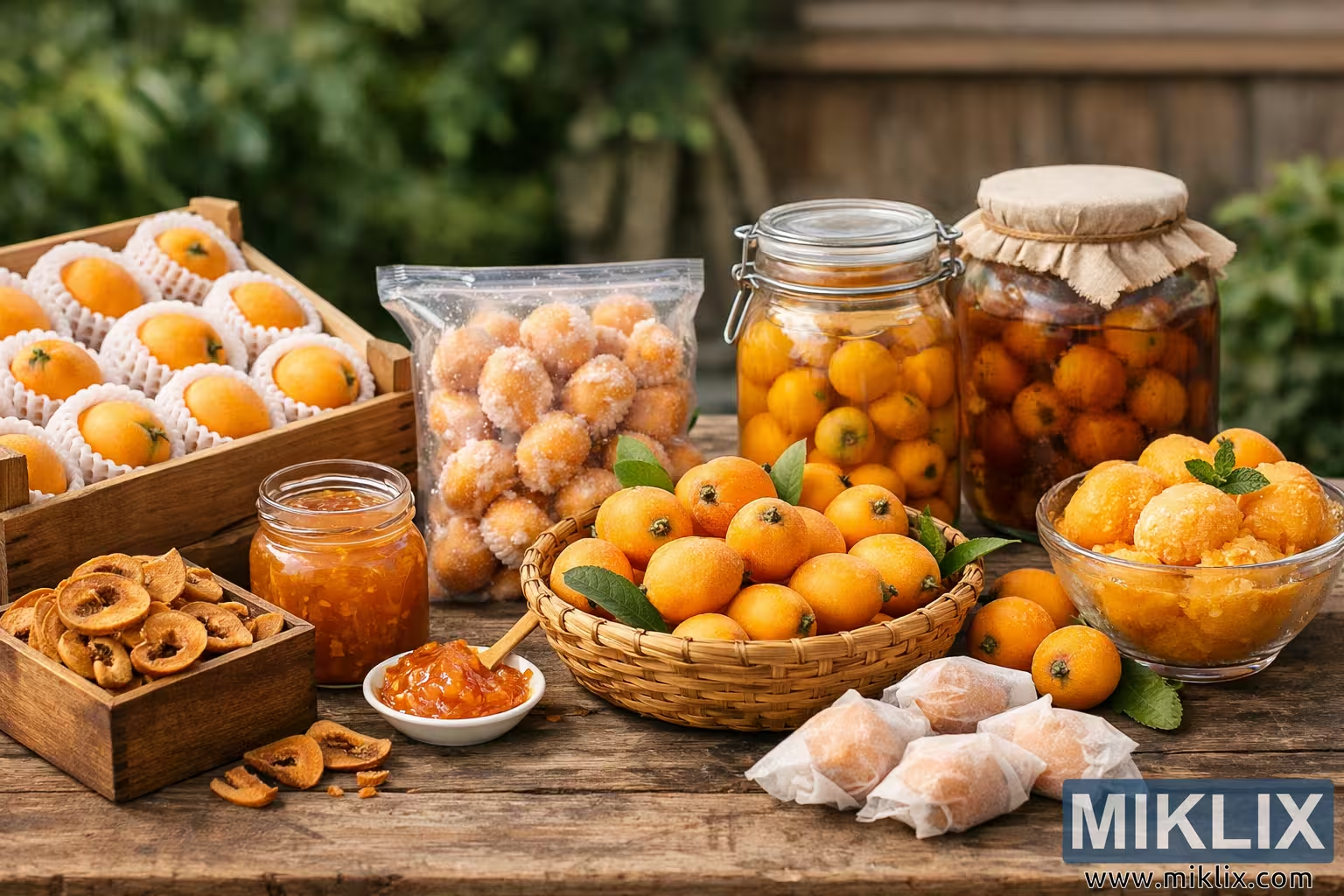
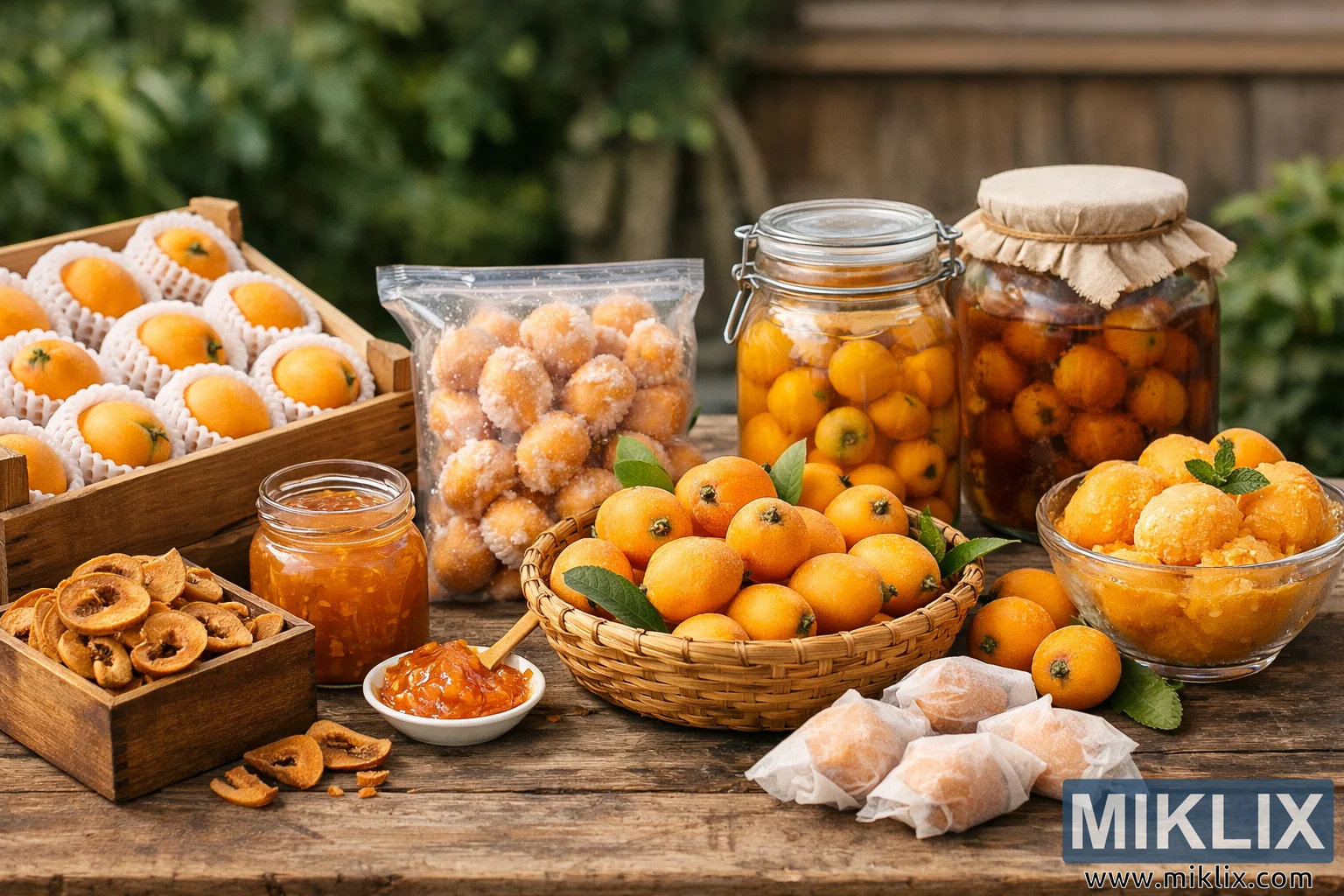
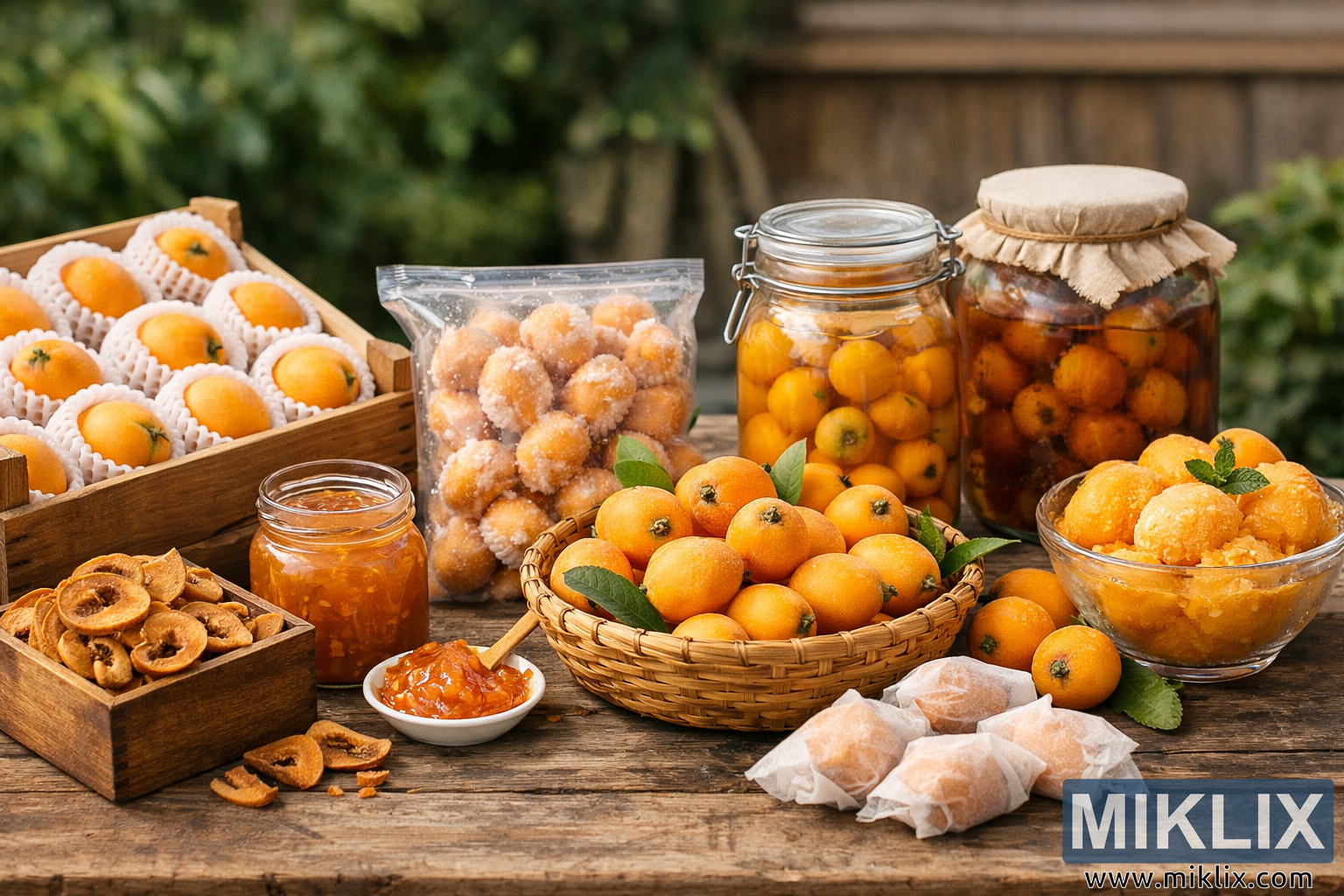
The image presents a richly detailed and visually balanced composition that celebrates the versatility of loquats and the many ways they can be stored, preserved, and enjoyed. The setting is a rustic wooden table placed outdoors, bathed in soft, natural light that filters through surrounding greenery. The background is intentionally blurred, creating a gentle bokeh effect that draws the viewer’s attention to the foreground where the loquats and their storage methods are meticulously arranged.
At the center of the composition sits a shallow woven wicker basket brimming with fresh, ripe loquats. Their skins are smooth and vibrant, ranging from golden yellow to deep orange hues, with a few green leaves still attached to the stems, adding a touch of freshness and authenticity. The basket symbolizes the most natural form of storage—fresh fruit ready to eat—and serves as the visual anchor for the entire display.
To the left of the basket, a wooden crate holds loquats cushioned in protective white foam netting. This section represents the commercial or transport-oriented method of keeping loquats safe from bruising. The crate’s rough texture contrasts beautifully with the delicate foam and the glossy fruit, highlighting the care taken to preserve the loquats’ pristine condition.
In front of the crate, a square wooden container is filled with dried loquat slices. These slices are golden brown, slightly curled, and have a leathery texture that suggests careful dehydration. A few pieces spill onto the table, creating a natural, unposed look that enhances the realism of the scene. The dried loquats evoke a sense of longevity and tradition, as drying fruit has been a preservation technique for centuries.
Moving toward the center foreground, a vacuum-sealed plastic bag filled with frozen loquats introduces a modern preservation method. The fruits inside are covered in a thin layer of frost, their color muted but still recognizable. The bag’s transparency allows the viewer to appreciate the frozen texture, while its placement near the fresh loquats creates a visual dialogue between old and new techniques.
In front of the frozen bag, a small clear glass jar contains loquat jam. The jam glows with a rich orange hue, its thick consistency visible through the glass. A wooden spoon rests on a small dish beside the jar, with a dab of jam on its tip, inviting the viewer to imagine its sweet, tangy flavor. This section of the image emphasizes the culinary potential of loquats and the artistry involved in transforming them into spreads and condiments.
To the right of the jam, a tall glass jar with an airtight clip-top lid holds loquats submerged in syrup. The syrup is translucent and golden, refracting light in a way that makes the fruit appear jewel-like. The loquats inside are plump and glossy, suspended in the viscous liquid. This jar represents a classic preservation technique that combines aesthetics and practicality, as the syrup both enhances flavor and extends shelf life.
Further to the right, a larger glass jar covered with cloth and tied with twine contains loquat preserves in an amber-colored liquid. The rustic wrapping evokes a homemade, artisanal feel, suggesting that these preserves were crafted with care and tradition. The cloth cover softens the industrial look of glass and metal, blending seamlessly with the natural tones of the wooden table.
On the far right, a shallow glass bowl holds loquat sorbet. The sorbet is a vivid orange, its icy texture captured in delicate detail. Small mint leaves garnish the top, adding a refreshing green accent. A few fresh loquats are placed beside the bowl, reinforcing the connection between the raw fruit and its frozen transformation. The sorbet introduces a sense of indulgence and modern culinary creativity to the otherwise traditional tableau.
In the foreground, several loquats are individually wrapped in white parchment paper. This subtle detail suggests a method of short-term storage or gifting, where each fruit is protected and presented with care. The parchment’s matte texture contrasts with the glossy fruit, adding another layer of visual interest.
The overall composition is harmonious and thoughtfully arranged. Each storage method—fresh, cushioned, dried, frozen, jammed, syruped, preserved, and frozen dessert—is represented with clarity and purpose. The lighting is even and natural, enhancing the warm tones of the loquats and the earthy textures of wood, wicker, and glass. The photograph conveys not only the practical aspects of loquat preservation but also the cultural and aesthetic appreciation of the fruit itself. It invites the viewer to reflect on the intersection of tradition and innovation in food storage, where ancient techniques coexist with modern conveniences.
The image’s emotional tone is one of abundance, care, and craftsmanship. It captures the essence of seasonal harvest and the human desire to savor nature’s gifts beyond their fleeting freshness. Every element—from the rustic table to the mint garnish—contributes to a narrative of respect for the fruit and the artistry of preservation. This is not merely a display of loquat storage methods; it is a celebration of the fruit’s journey from orchard to table, preserved in every possible form.
이 이미지는 다음과 관련이 있습니다: Loquat: The Sweet Fruit Packed with Real Health Benefits