
Attēls: Sautéing Technique for Nutrient-Rich Eggplant Preparation
Publicēts:
Pēdējo reizi atjaunināts: 2026. gada 23. maijs 16:34:04 UTC
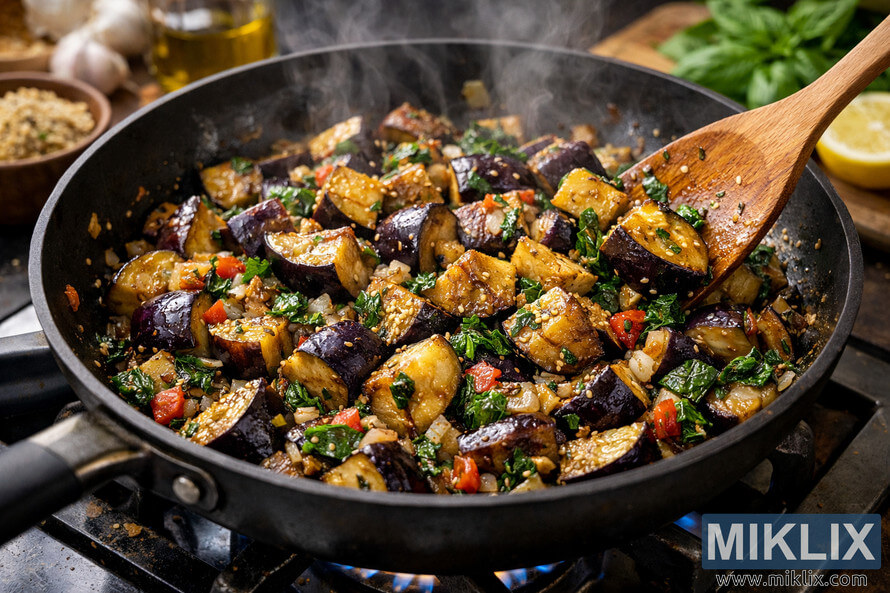
Discover the art of sautéing eggplant for maximum nutrition and flavor. This detailed depiction captures the vibrant process of cooking eggplant with herbs, grains, and vegetables in a warm kitchen setting.
Sautéing Technique for Nutrient-Rich Eggplant Preparation
Šī attēla pieejamās versijas
Tālāk lejupielādei pieejamie attēlu faili ir mazāk saspiesti un augstākas izšķirtspējas - un līdz ar to arī augstākas kvalitātes - nekā šīs vietnes rakstos un lapās ievietotie attēli, kuru izmērs ir optimizēts, lai samazinātu joslas platuma patēriņu.
Regulāra izmēra (1,536 x 1,024)
Liels izmērs (3,072 x 2,048)
Ļoti liels izmērs (4,608 x 3,072)
Īpaši liels izmērs (6,144 x 4,096)
Komiski liels izmērs (1,048,576 x 699,051)
- Joprojām augšupielādē... ;-)
Attēla apraksts
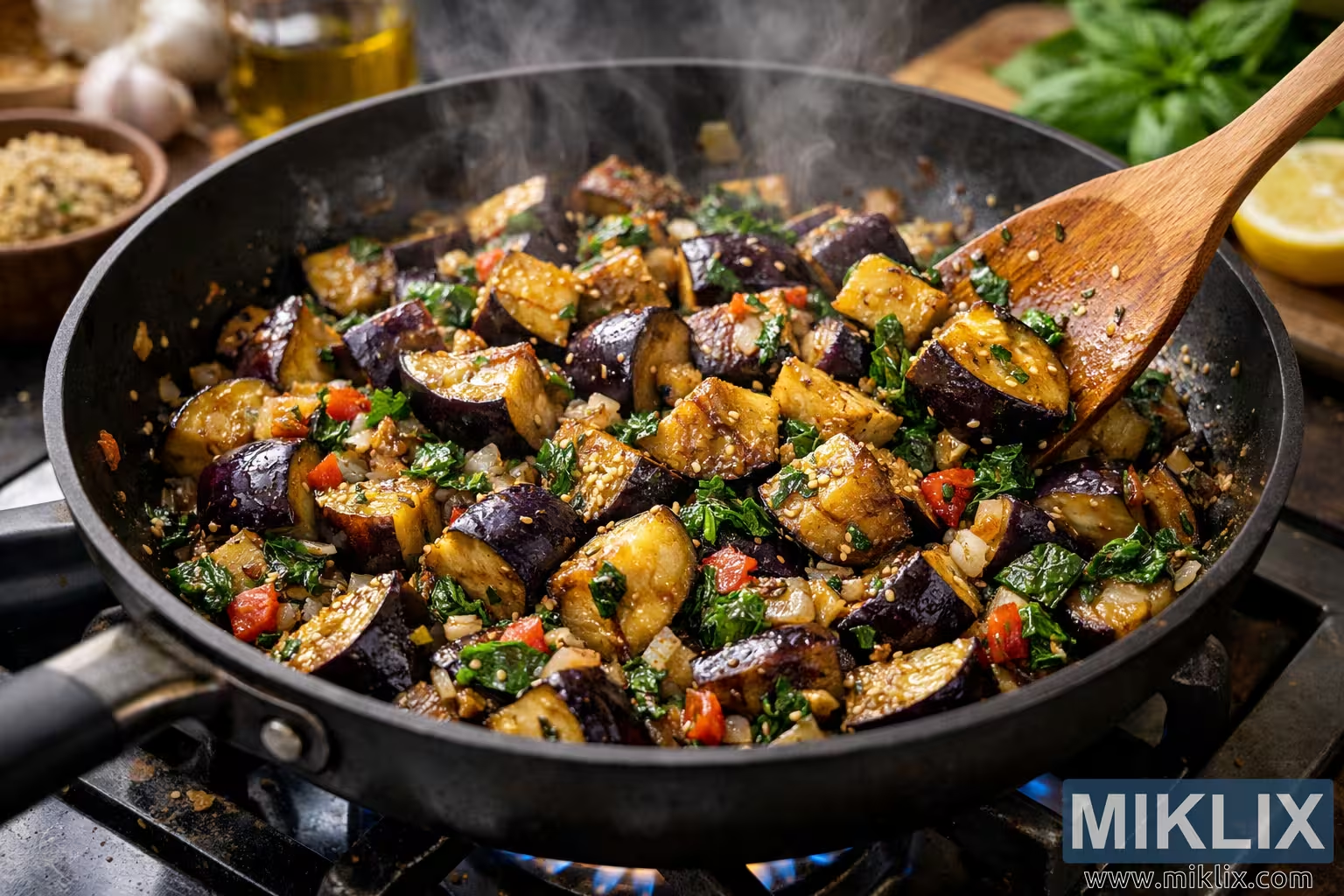
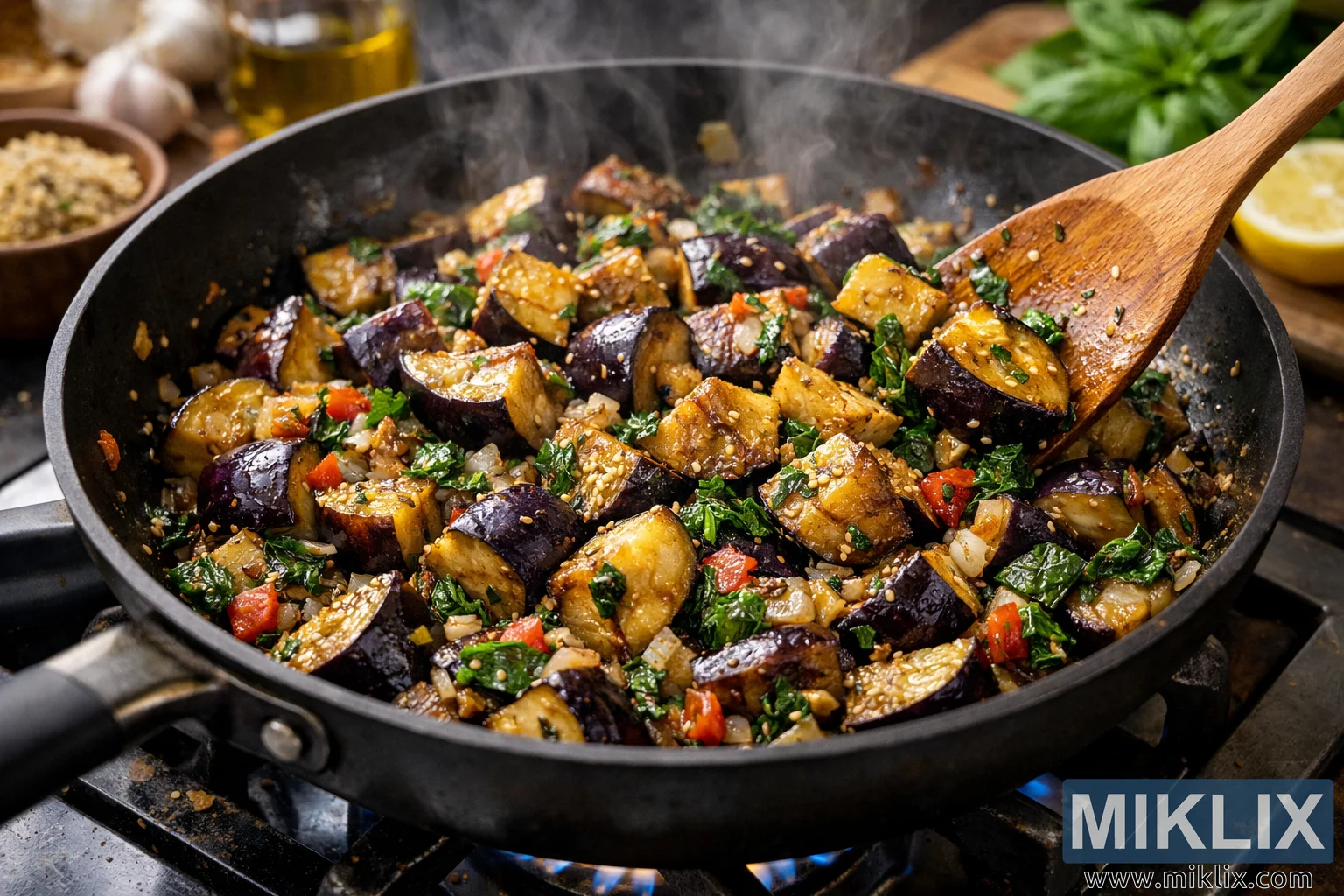
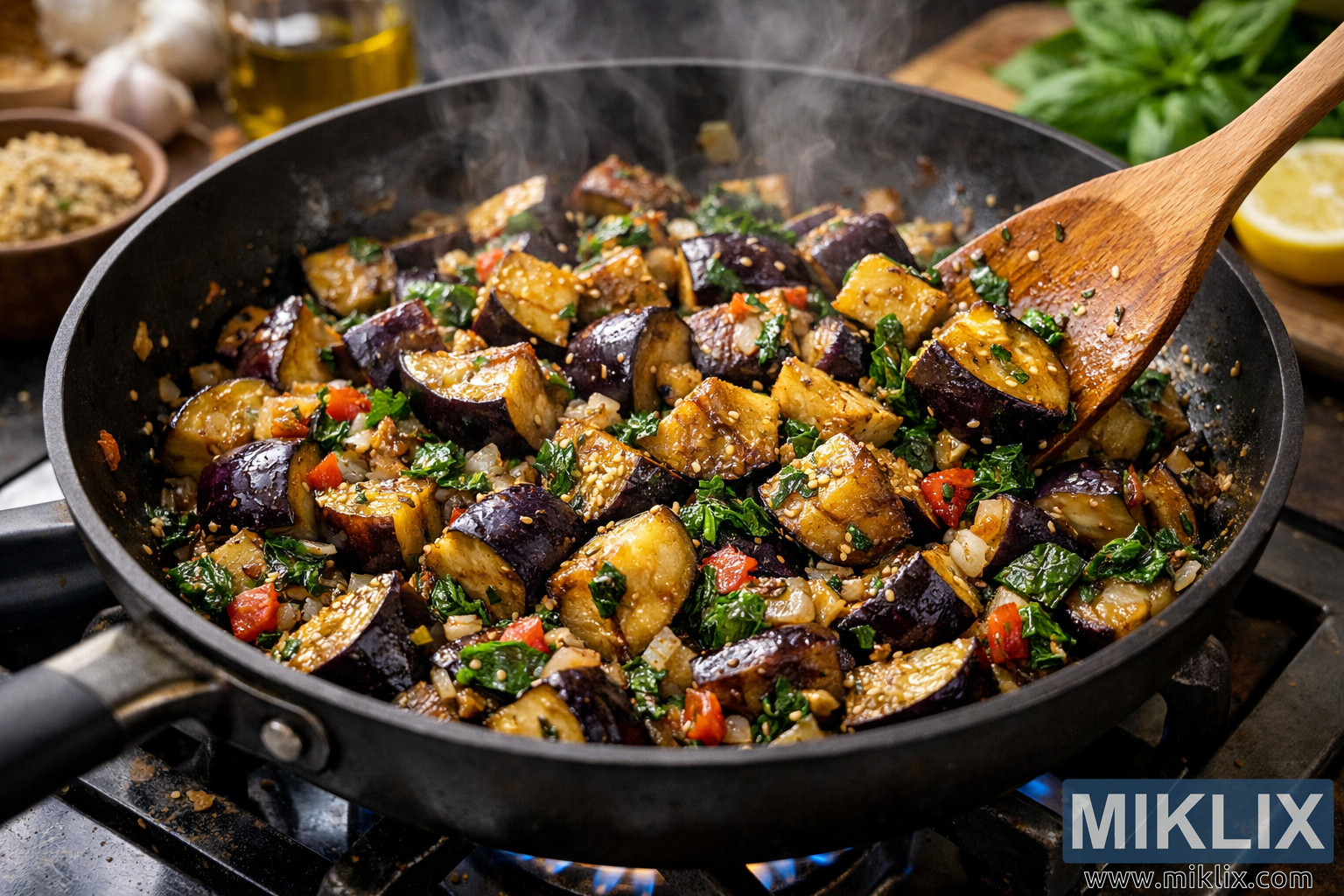
The image presents a vivid and immersive scene of a kitchen in motion, centered around the preparation of nutrient-rich eggplant through the sautéing technique. The composition is dominated by a large, black, non-stick skillet placed over a gas stove, where blue flames flicker beneath the pan, casting a subtle glow on the surrounding surfaces. Inside the skillet, sliced eggplant pieces—some diced into cubes, others cut into crescent-shaped slices—display a striking contrast between their deep purple skins and tender, golden-brown interiors. The eggplant glistens under the warm light, coated in a thin layer of oil and natural juices released during cooking. Steam rises gently from the pan, creating a sense of movement and freshness that evokes the aroma of a home-cooked meal.
A wooden spatula enters the frame from the right side, held by an unseen cook, actively stirring the vegetables. The spatula lifts a piece of eggplant that is perfectly browned on one side, revealing the soft, moist texture beneath the crisp surface. Around the eggplant, diced tomatoes add bright red accents, while finely chopped onions and minced garlic contribute texture and depth. Small flecks of green herbs—likely spinach, kale, or basil—are scattered throughout, their vibrant color contrasting beautifully with the darker tones of the eggplant and skillet. The mixture appears well-balanced, with each ingredient contributing to a harmonious palette of colors and flavors.
The sautéed vegetables are sprinkled with tiny seeds, including sesame and flax, which glisten under the light and add a subtle crunch to the dish. Among them are golden-brown bits of grains such as quinoa, suggesting a wholesome, nutrient-dense approach to cooking. The overall appearance of the dish conveys both rustic simplicity and culinary sophistication, emphasizing health-conscious preparation without sacrificing visual appeal.
Surrounding the skillet, the countertop tells a story of an ongoing cooking process. To the left, a small wooden bowl contains cooked quinoa, its texture fluffy and inviting. Nearby, a small dish holds a golden sauce—possibly a blend of olive oil, lemon juice, and spices—ready to be drizzled over the finished dish. A head of garlic and a bottle of olive oil rest in the background, slightly blurred but clearly part of the mise en place. To the right, fresh basil leaves and a halved lemon sit on a wooden cutting board, adding a touch of freshness and color to the composition.
The lighting is warm and natural, streaming from the left side of the frame, illuminating the skillet and highlighting the glossy surfaces of the vegetables. The focus is sharp on the contents of the pan, while the background fades softly into a blur, drawing the viewer’s attention to the textures and colors of the food. The interplay of light and shadow enhances the sense of depth, making the eggplant appear almost tangible.
Every element in the image contributes to a narrative of mindful cooking. The choice of ingredients—eggplant, tomatoes, garlic, onions, leafy greens, seeds, and grains—reflects a commitment to nutrition and balance. The act of sautéing, with its quick, high-heat technique, preserves the integrity of the vegetables while developing rich flavors through caramelization. The wooden spatula and natural materials evoke a sense of tradition and craftsmanship, while the modern skillet and clean workspace suggest efficiency and care.
The image captures not just a moment of cooking but the essence of culinary artistry: the transformation of simple, raw ingredients into a vibrant, nourishing meal. It celebrates the beauty of plant-based cuisine and the sensory experience of preparing food with intention. The steam, the colors, the textures, and the gentle motion of stirring all combine to create a scene that feels alive, inviting the viewer to imagine the aroma, the sizzle, and the satisfaction of tasting the finished dish.
This depiction of sautéing eggplant embodies the harmony between health and flavor, technique and creativity. It stands as a visual tribute to the everyday ritual of cooking—a reminder that nourishment begins not only with what we eat but with how we prepare it.
Attēls ir saistīts ar: A Guide to the Health Benefits of Eggplants