
Attēls: Honeydew Melon Antioxidants Protecting Skin Cells
Publicēts:
Pēdējo reizi atjaunināts: 2026. gada 20. augusts 14:16:49 UTC
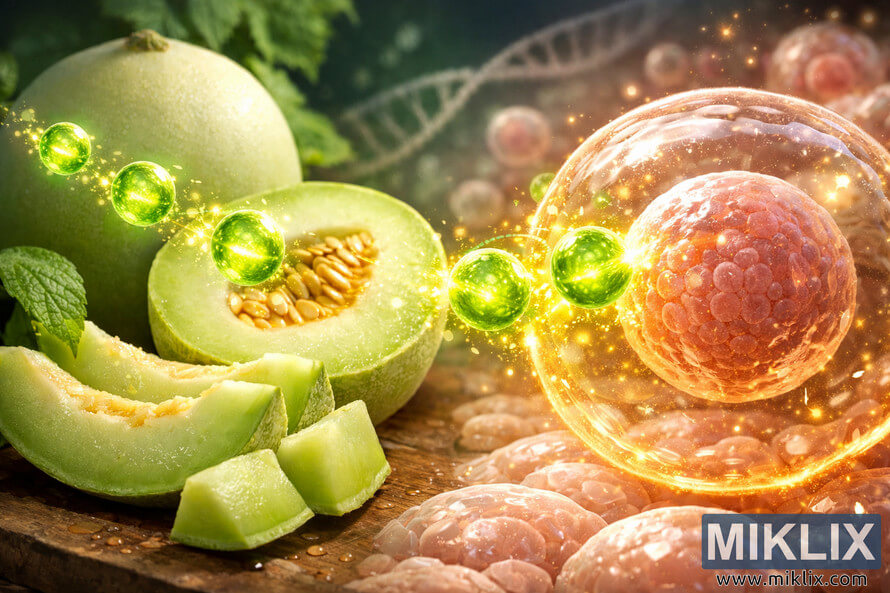
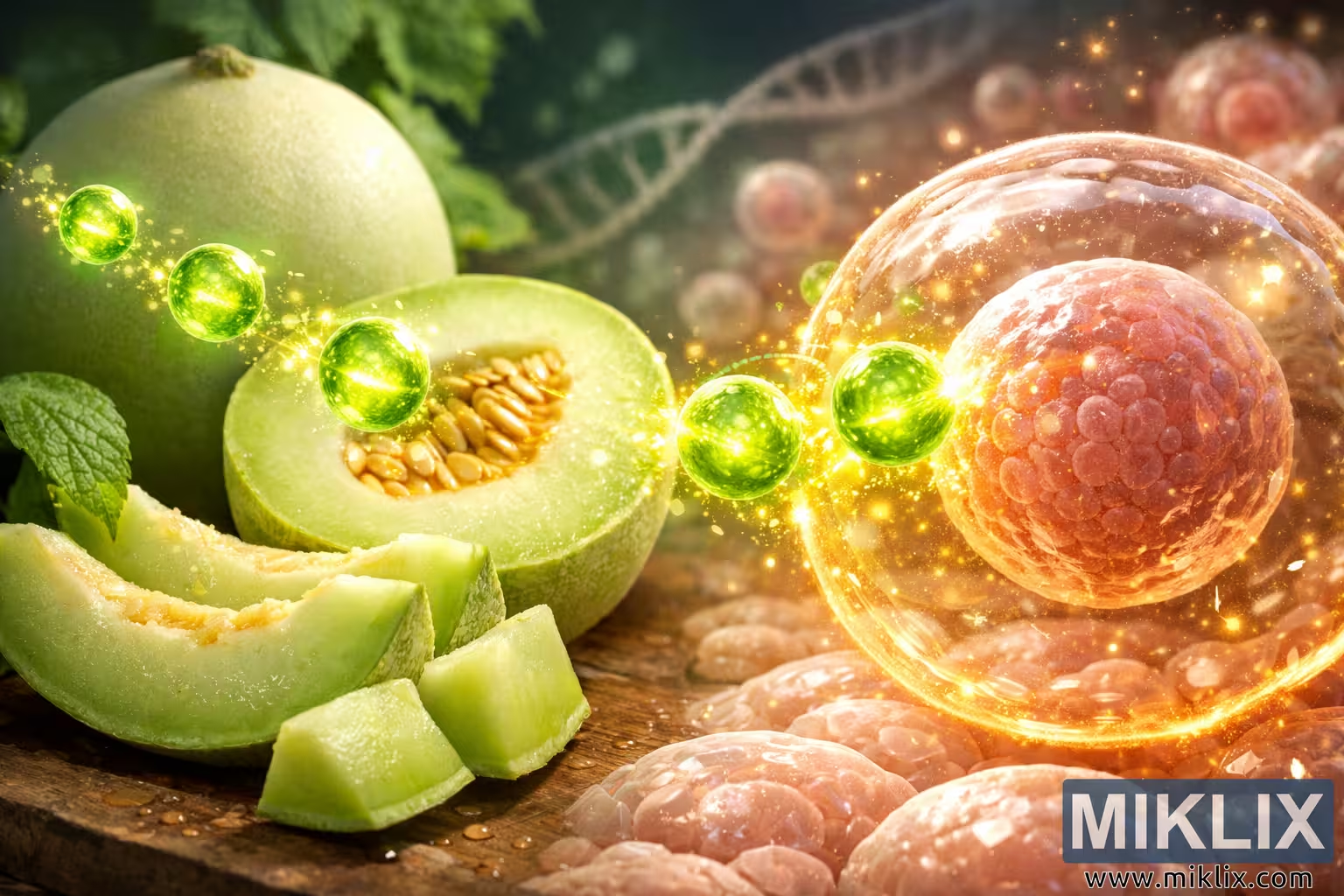
High-resolution digital image depicting anti-aging antioxidants from honeydew melon protecting human skin cells at a microscopic level. The composition shows fresh honeydew melon slices on the left and a magnified skin cell on the right, connected by glowing green antioxidant spheres. The spheres travel from the fruit to the cell, emitting golden sparks upon contact with a protective barrier around the cell. Soft pinks, natural greens, and luminous golds create a harmonious visual narrative that highlights the role of honeydew melon antioxidants in supporting youthful, healthy skin.
Honeydew Melon Antioxidants Protecting Skin Cells
Šī attēla pieejamās versijas
Tālāk lejupielādei pieejamie attēlu faili ir mazāk saspiesti un augstākas izšķirtspējas - un līdz ar to arī augstākas kvalitātes - nekā šīs vietnes rakstos un lapās ievietotie attēli, kuru izmērs ir optimizēts, lai samazinātu joslas platuma patēriņu.
Regulāra izmēra (1,536 x 1,024)
Liels izmērs (3,072 x 2,048)
Ļoti liels izmērs (4,608 x 3,072)
Īpaši liels izmērs (6,144 x 4,096)
Komiski liels izmērs (1,048,576 x 699,051)
- Joprojām augšupielādē... ;-)
Attēla apraksts
This digitally created, high-resolution landscape image visually narrates the journey of anti-aging antioxidants found in honeydew melon as they protect human skin cells at a microscopic level. The composition is carefully balanced between the tangible, familiar world of fresh fruit on the left and the magnified, scientific realm of cellular structures on the right, creating a bridge between everyday nutrition and advanced skincare science.
On the left side of the image, a collection of ripe honeydew melons is arranged in an inviting, natural still life. One whole honeydew melon sits slightly toward the back, its smooth, pale green rind catching the light with a gentle sheen. In front of it, a halved melon is prominently displayed, revealing its juicy, light green flesh. The seed cavity at the center of the halved melon is filled with golden, glistening seeds that appear moist and fresh, suggesting peak ripeness. Several neatly cut wedges of honeydew melon are placed in the foreground on a rustic wooden surface. Their pale green flesh looks succulent and tender, with tiny droplets of juice visible along the cut edges, emphasizing freshness and natural hydration.
From the honeydew melon, a series of glowing green spheres emerges, representing the powerful antioxidants contained within the fruit. These spheres are semi-transparent, with swirling patterns of light and energy inside them, giving the impression of dynamic, active compounds. Each sphere is surrounded by a faint halo of luminescent light, and as they move away from the fruit, they leave behind delicate trails of sparkling particles. These trails curve gently through the air, visually guiding the viewer’s eye from the left side of the image toward the right, symbolizing the antioxidants’ journey from dietary intake to cellular protection.
The right side of the image transitions into a magnified, microscopic view of human skin cells. Dominating this portion of the composition is a large, pinkish skin cell rendered with intricate detail. The cell’s outer membrane appears soft yet resilient, with a subtle texture that suggests a living, responsive surface. At the center of the cell, a clearly defined nucleus is visible, glowing with a warm golden hue. This nucleus is surrounded by a radiant, golden membrane, hinting at the vital processes occurring within and the importance of protecting this core structure from oxidative stress.
Encasing the skin cell is a protective, glowing barrier that appears almost like a translucent shield. This barrier is depicted as a luminous layer of light, gently wrapping around the cell and shimmering with subtle gradients of gold and soft pink. The green antioxidant spheres are shown traveling toward this barrier, their sparkling trails converging on the cell’s surface. As the spheres make contact with the protective layer, they emit bright, golden sparks, visually representing the neutralization of free radicals and the reinforcement of the cell’s defenses.
In the background, additional skin cells are faintly visible, rendered in softer focus to create depth and context. These cells share the same pinkish tones and gentle glow, suggesting a healthy, vibrant tissue environment. Interwoven among them are stylized DNA strands, depicted as twisting, luminous helices that extend diagonally across the scene. The DNA strands add a scientific dimension to the image, reinforcing the idea that antioxidants from honeydew melon help protect not only the outer cell membrane but also the genetic material within, contributing to anti-aging effects and long-term skin health.
The lighting throughout the image is carefully orchestrated to highlight the interplay between nature and science. On the left, the honeydew melons are illuminated with soft, natural light that accentuates their fresh, organic qualities. The wooden surface beneath them has warm, earthy tones, grounding the composition in a familiar, real-world setting. On the right, the skin cell and DNA strands are bathed in a more ethereal, laboratory-like glow, with subtle gradients of pink, gold, and green. This contrast in lighting helps distinguish the macroscopic and microscopic realms while maintaining a cohesive visual narrative.
Color plays a crucial role in conveying the message of the image. The natural greens of the honeydew melon—ranging from pale, almost pastel hues in the flesh to slightly deeper tones in the rind—evoke freshness, vitality, and nourishment. The glowing green antioxidant spheres intensify this color palette, adding a more vibrant, almost neon quality that suggests concentrated energy and potency. These greens stand out against the warm pinks and soft golds of the skin cell, creating a visually striking contrast that draws attention to the interaction between the antioxidants and the cellular structures.
The skin cell itself is rendered in gentle shades of pink, symbolizing softness, health, and human biology. The golden highlights around the nucleus and the protective barrier introduce a sense of preciousness and importance, implying that the cell’s integrity is something valuable to be preserved. The golden sparks that appear when the antioxidant spheres contact the cell’s barrier further reinforce the idea of active protection, as if each spark represents a successful defense against oxidative damage.
The overall composition is designed to be both educational and aesthetically pleasing. The viewer can easily follow the visual story: starting with the honeydew melon on the left, understanding it as a source of beneficial nutrients, then tracing the path of the glowing antioxidant spheres as they travel across the image, and finally arriving at the magnified skin cell on the right, where the antioxidants perform their protective role. This narrative flow makes the complex concept of anti-aging antioxidants more accessible and engaging.
Subtle details enhance the realism and depth of the scene. The wooden surface beneath the melon slices has visible grain patterns and slight imperfections, suggesting a natural, everyday environment. Tiny reflections on the juice droplets and the melon flesh add a tactile quality, making the fruit appear almost tangible. On the microscopic side, the skin cell’s membrane has gentle gradients and soft shadows that give it a three-dimensional presence. The DNA strands in the background are slightly blurred, indicating that they are part of a deeper layer within the cellular environment.
Despite the scientific theme, the image avoids harsh or clinical aesthetics. Instead, it uses warm, inviting colors and smooth, flowing shapes to create a sense of harmony between nutrition and biology. The glowing elements—both the antioxidant spheres and the protective barrier around the skin cell—contribute to an overall feeling of vitality and rejuvenation. The viewer is left with the impression that consuming antioxidant-rich foods like honeydew melon can have a meaningful, positive impact on skin health at the cellular level.
In summary, this image is a visually rich, symbolic representation of anti-aging antioxidants in honeydew melon protecting skin cells. It combines the familiar sight of fresh fruit with a detailed, magnified view of human skin cells and DNA, using glowing green spheres and golden light effects to illustrate the protective, rejuvenating power of antioxidants. The harmonious blend of natural greens and warm pinks, the dynamic movement of the antioxidant spheres, and the radiant glow surrounding the skin cell all work together to convey a message of nourishment, protection, and youthful vitality.
Attēls ir saistīts ar: Honeydew Melon: The Refreshing Fruit Packed with Nutrients