
Attēls: Loquat Nutritional Composition Infographic Layout
Publicēts:
Pēdējo reizi atjaunināts: 2026. gada 3. septembris 20:25:37 UTC
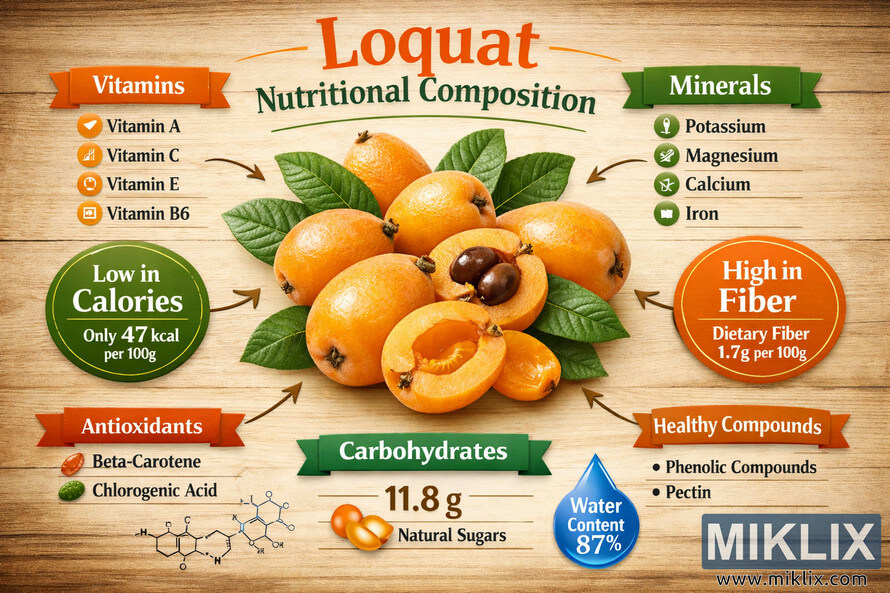
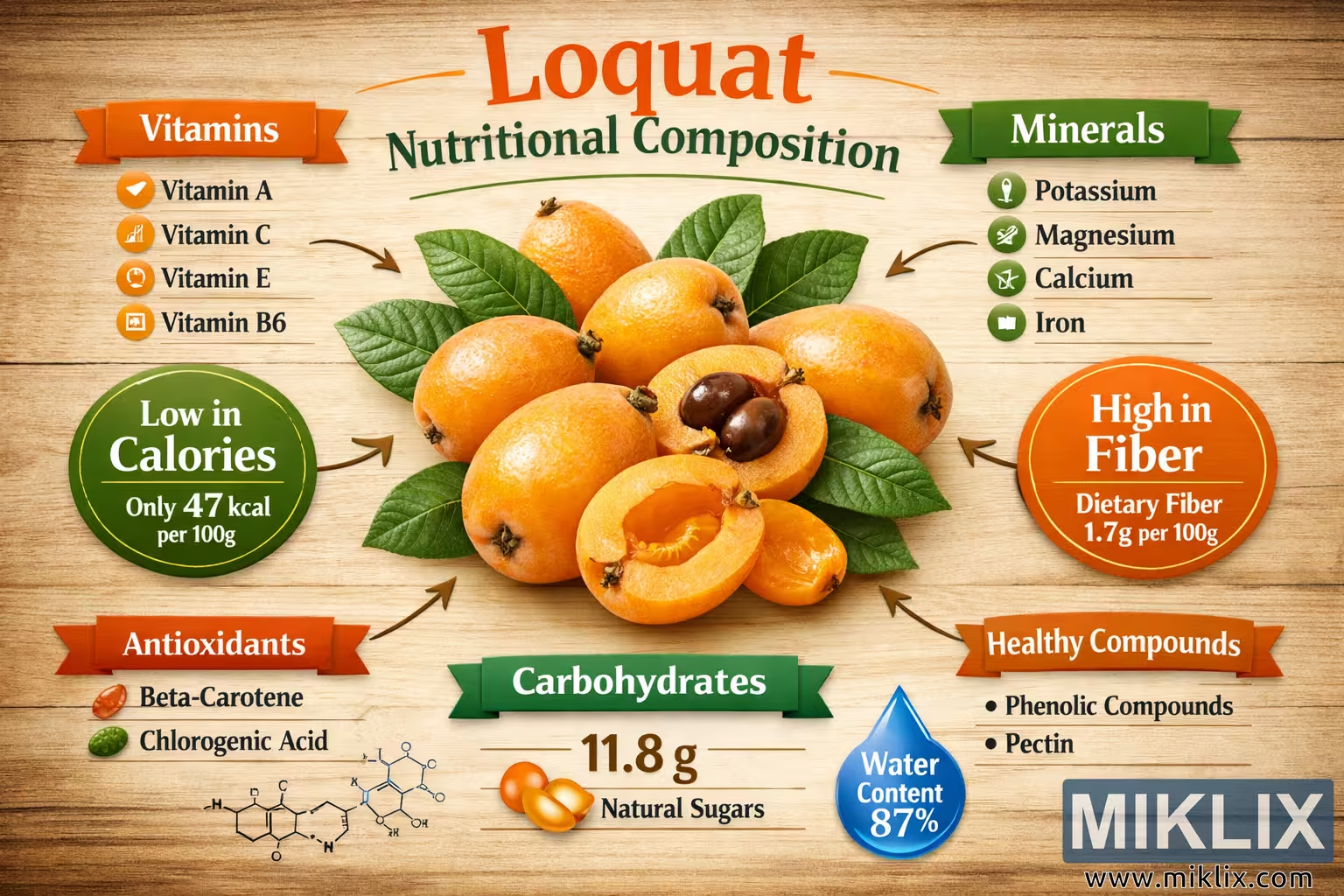
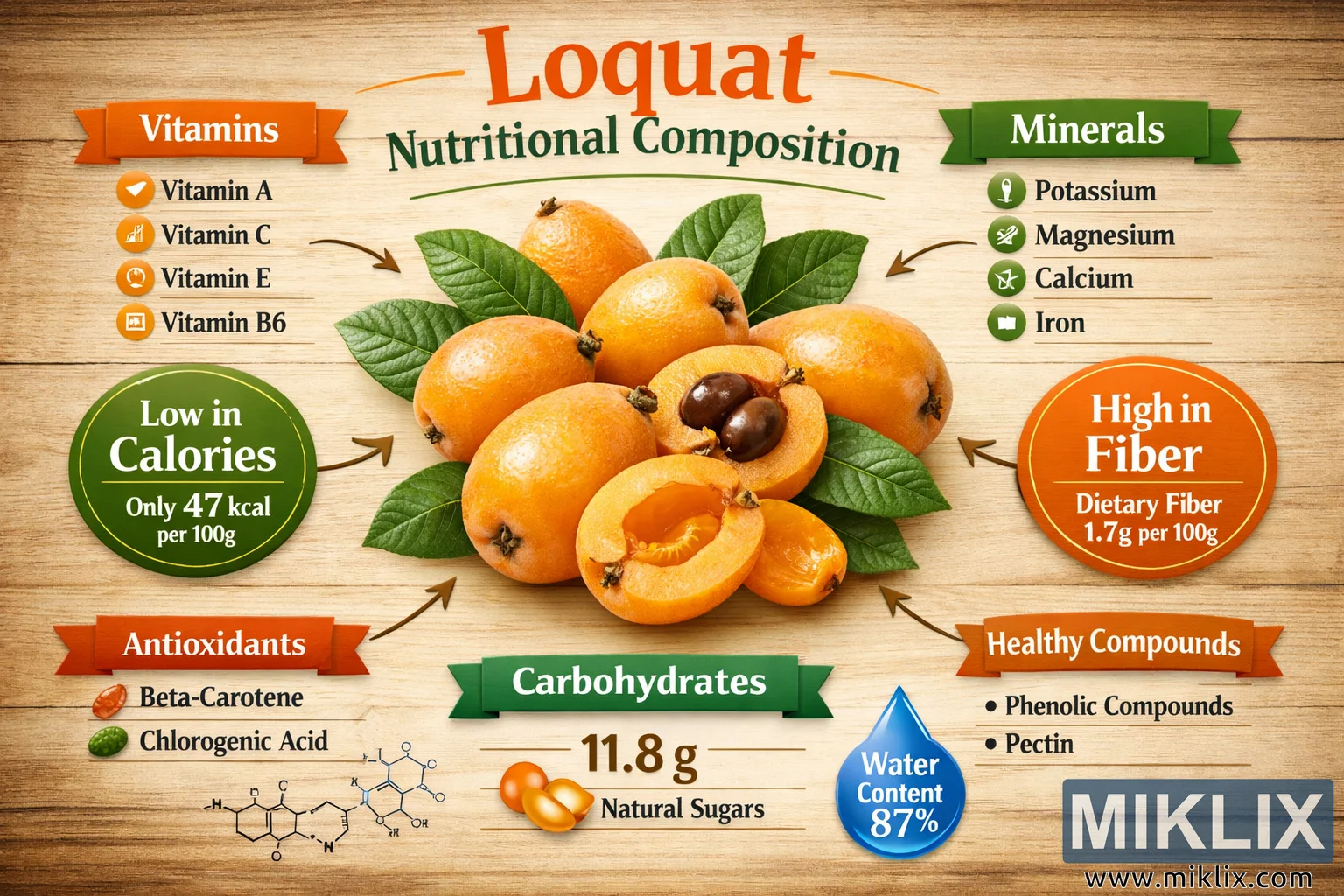
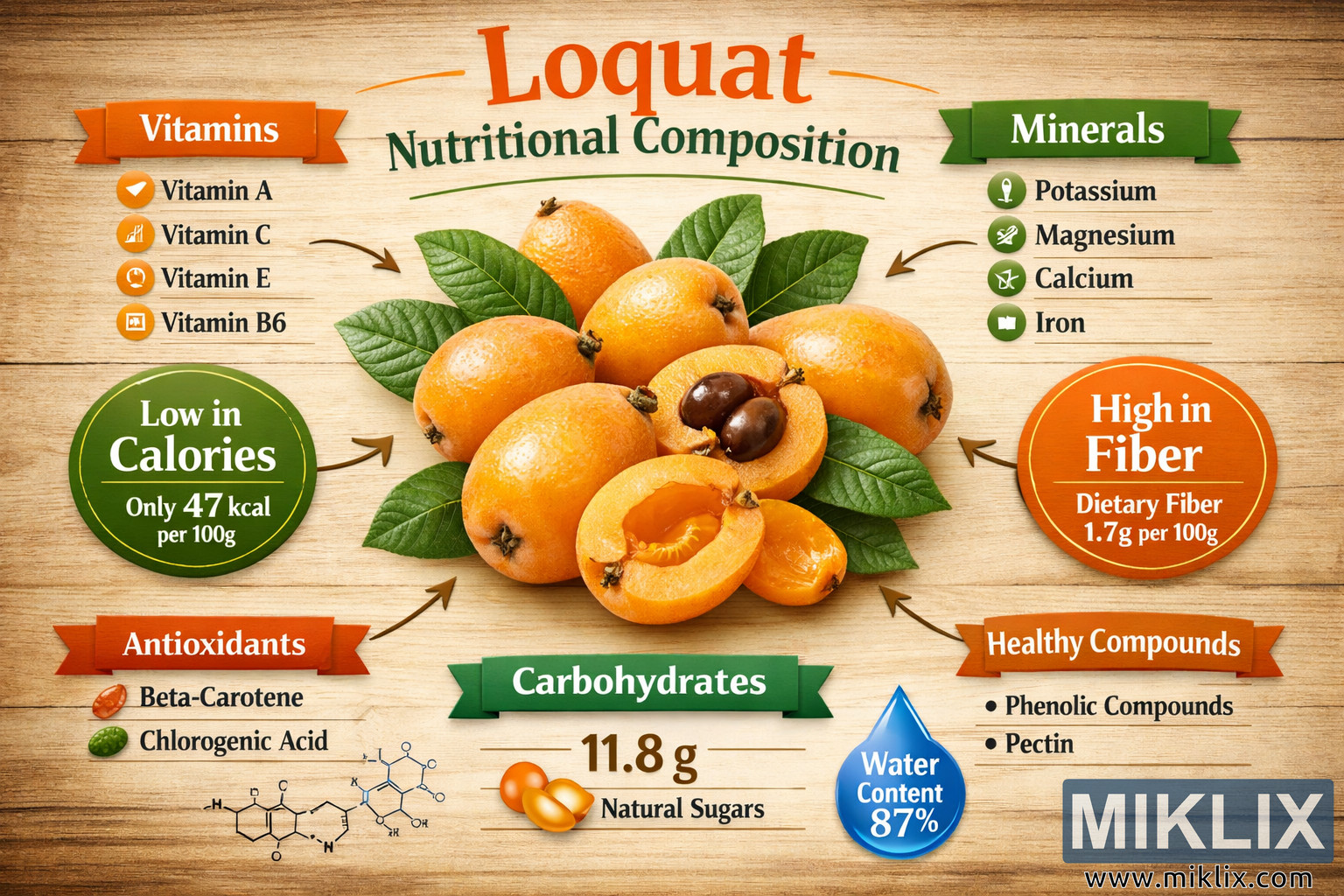
A detailed landscape infographic illustrating the nutritional composition of loquats, featuring a central photo of ripe fruits with arrows pointing to sections on vitamins, minerals, calories, fiber, antioxidants, carbohydrates, healthy compounds, and hydration, all presented on a wooden background with clear, colorful banners and icons.
Loquat Nutritional Composition Infographic Layout
Šī attēla pieejamās versijas
Tālāk lejupielādei pieejamie attēlu faili ir mazāk saspiesti un augstākas izšķirtspējas - un līdz ar to arī augstākas kvalitātes - nekā šīs vietnes rakstos un lapās ievietotie attēli, kuru izmērs ir optimizēts, lai samazinātu joslas platuma patēriņu.
Regulāra izmēra (1,536 x 1,024)
Liels izmērs (3,072 x 2,048)
Ļoti liels izmērs (4,608 x 3,072)
Īpaši liels izmērs (6,144 x 4,096)
Komiski liels izmērs (1,048,576 x 699,051)
- Joprojām augšupielādē... ;-)
Attēla apraksts
This image is a detailed, landscape-oriented infographic that visually explains the nutritional composition of loquats in a clear, structured, and engaging way. At the very center of the layout, there is a high-resolution photograph of a small pile of ripe loquats placed on a wooden surface. Some of the fruits are shown whole, with smooth, golden-orange skin, while others are sliced in half to reveal their pale, juicy flesh and glossy brown seeds. A few fresh green leaves are arranged around the fruits, adding a natural accent and emphasizing the idea of freshness and wholesomeness. The central fruit cluster acts as the focal point of the entire design, with multiple arrows radiating outward from the loquats to various labeled sections that describe different aspects of their nutritional profile.
Above the central image, a large, bold title reads "Loquat Nutritional Composition" in a combination of orange and green lettering. The typography is modern and clean, with the word "Loquat" highlighted in a warm orange tone and "Nutritional Composition" in a complementary green, reinforcing the theme of health and nature. The title sits against a wooden background that runs across the entire infographic, giving the design a rustic, organic feel, as if the information is presented on a wooden board or table. This background texture is subtle but noticeable, helping the bright banners, circles, and icons stand out clearly.
In the top left corner of the infographic, there is a section dedicated to vitamins. This section is framed by an orange banner labeled "Vitamins" in white text. Beneath the banner, a vertical list of key vitamins found in loquats is displayed, each accompanied by a small icon that symbolizes its role or category. The listed vitamins include Vitamin A, Vitamin C, Vitamin E, and Vitamin B6. The icons are simple and stylized, such as a droplet or capsule shape, and are arranged neatly to maintain readability. The orange color of the banner visually connects this section to the natural orange hue of the loquats themselves, reinforcing the idea that these fruits are a rich source of essential vitamins.
Mirroring the vitamins section on the opposite side, the top right corner features a green banner labeled "Minerals." This section lists several important minerals associated with loquats, including Potassium, Magnesium, Calcium, and Iron. Each mineral name is paired with a small, distinct icon, such as a stylized atom, a droplet, or a simple geometric symbol, to visually differentiate the nutrients. The green banner and icons create a visual balance with the orange vitamins section, and the use of green suggests vitality, balance, and the plant-based origin of these nutrients. Together, the top sections provide a quick overview of the micronutrients present in loquats.
On the left side of the infographic, below the vitamins section, there is a prominent green circle that highlights the low-calorie nature of loquats. Inside this circle, the text reads "Low in Calories" followed by the specific value "Only 47 kcal per 100g." The typography inside the circle is bold and easy to read, making this information stand out as a key health benefit. The green color of the circle ties in with the overall natural theme and suggests that loquats can be a good choice for those who are mindful of their energy intake.
On the right side, below the minerals section, there is an orange circle that emphasizes the fiber content of loquats. This circle contains the heading "High in Fiber" and the specific value "Dietary Fiber 1.7g per 100g." The orange color echoes the vitamins banner and the fruit’s skin, visually linking fiber to the idea of wholesome, plant-based nutrition. The circle format makes this information feel like a highlighted callout, drawing attention to the digestive benefits of eating loquats.
At the bottom left of the infographic, a section labeled "Antioxidants" is presented with an orange-toned banner and supporting graphics. This section lists key antioxidant compounds associated with loquats, such as Beta-Carotene and Chlorogenic Acid. Beneath these names, there is a small molecular structure icon, stylized to represent the chemical nature of these compounds. The use of scientific imagery here reinforces the idea that loquats contain bioactive substances that may help protect cells from oxidative stress.
Centered along the bottom of the infographic, a section labeled "Carbohydrates" focuses on the energy-providing macronutrients in loquats. The main value displayed is "11.8 g," indicating the carbohydrate content, and nearby icons labeled "Natural Sugars" suggest that the sweetness of loquats comes from naturally occurring sugars rather than added ingredients. The icons may resemble small droplets or cubes, but they are generic and not tied to any specific brand or product. This section helps viewers understand how loquats fit into their overall carbohydrate intake.
On the bottom right, two smaller sections are placed side by side. The first is labeled "Healthy Compounds" and lists "Phenolic Compounds" and "Pectin." These terms are presented with simple icons that hint at plant-based chemistry and structural components, suggesting that loquats contain substances that may support overall health, including gut health and potential antioxidant effects. The second section is labeled "Hydration" and highlights the water content of loquats with the text "Water Content 87%." This section uses a blue color scheme, including a banner and possibly a droplet icon, to visually represent hydration and fluid balance. The blue contrasts nicely with the warm oranges and greens used elsewhere in the infographic, making the hydration information stand out.
Throughout the design, arrows extend from the central loquat image to each of the surrounding sections. These arrows are thin, clean, and evenly spaced, creating a sense of connection between the fruit and the nutritional facts. They guide the viewer’s eye outward from the center, reinforcing the idea that all of the listed vitamins, minerals, antioxidants, carbohydrates, fiber, healthy compounds, and hydration benefits are derived from the loquats themselves. The overall layout is symmetrical and well-organized, with each section occupying a distinct area of the landscape frame.
The lighting in the central photograph is even and well-balanced, ensuring that the loquats, leaves, and wooden surface appear crisp and vibrant. The text and icons across the infographic are sharp and legible, with sufficient contrast against the wooden background and colored banners. The color palette—dominated by warm oranges, fresh greens, and cool blues—creates a harmonious and inviting visual experience that communicates health, nature, and clarity. There are no logos, brand names, or commercial elements present; the focus is entirely on the fruit and its nutritional properties. Overall, the infographic successfully combines photography, typography, icons, and color to present a comprehensive, visually appealing overview of loquat nutrition in a single, cohesive layout.
Attēls ir saistīts ar: Loquat: The Sweet Fruit Packed with Real Health Benefits