
Attēls: Digestive System Illustration Highlighting Okra and Gut Health Benefits
Publicēts:
Pēdējo reizi atjaunināts: 2026. gada 30. jūlijs 18:37:32 UTC
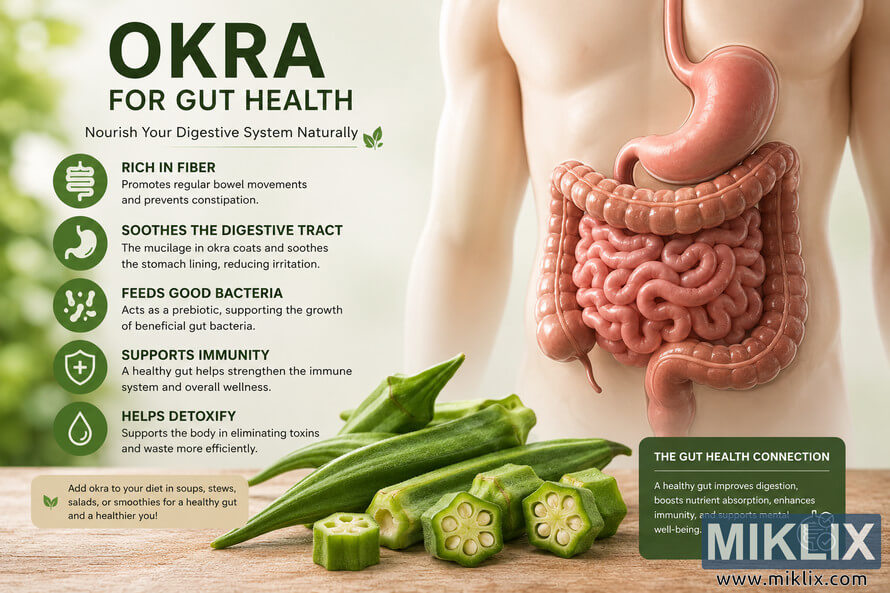
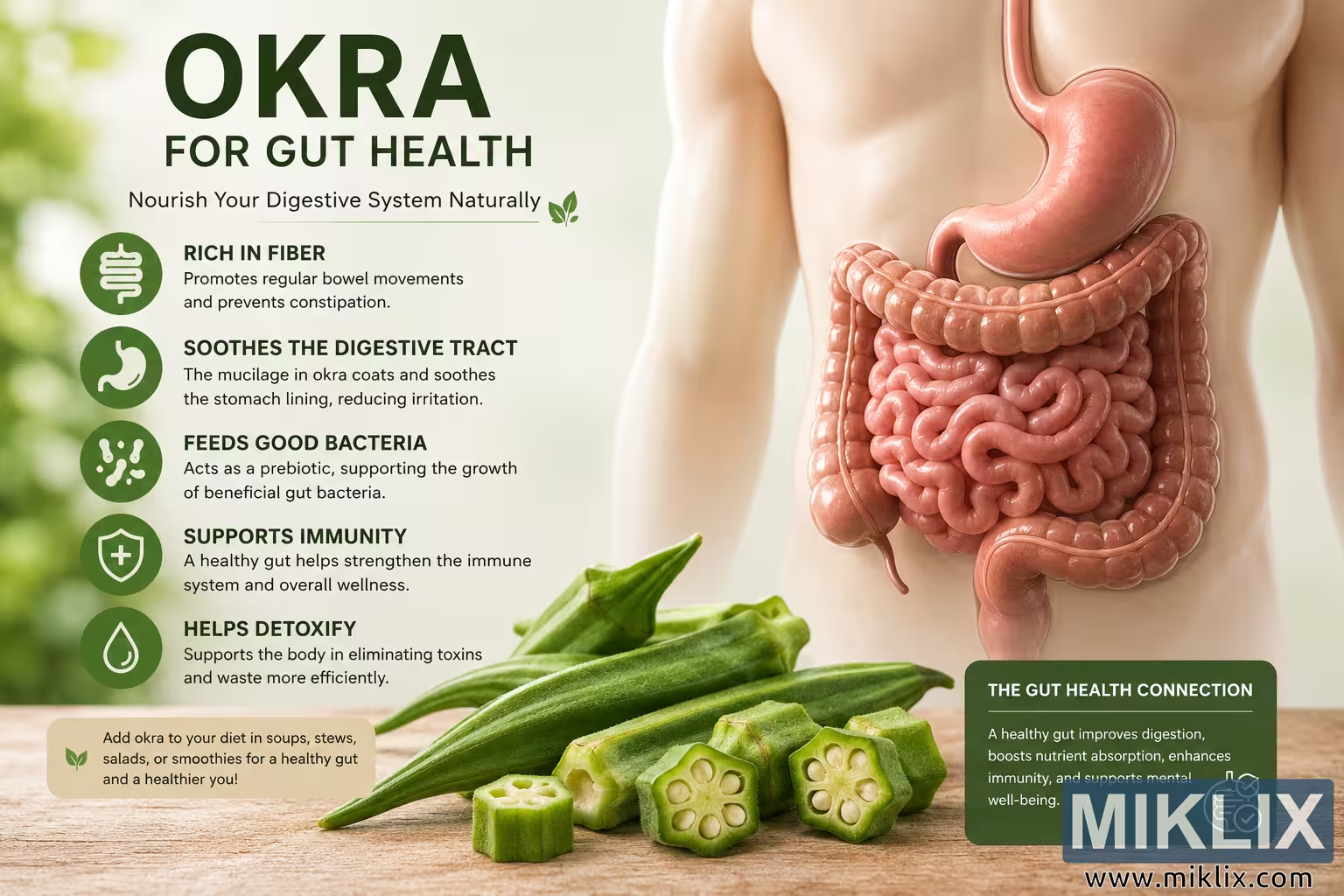
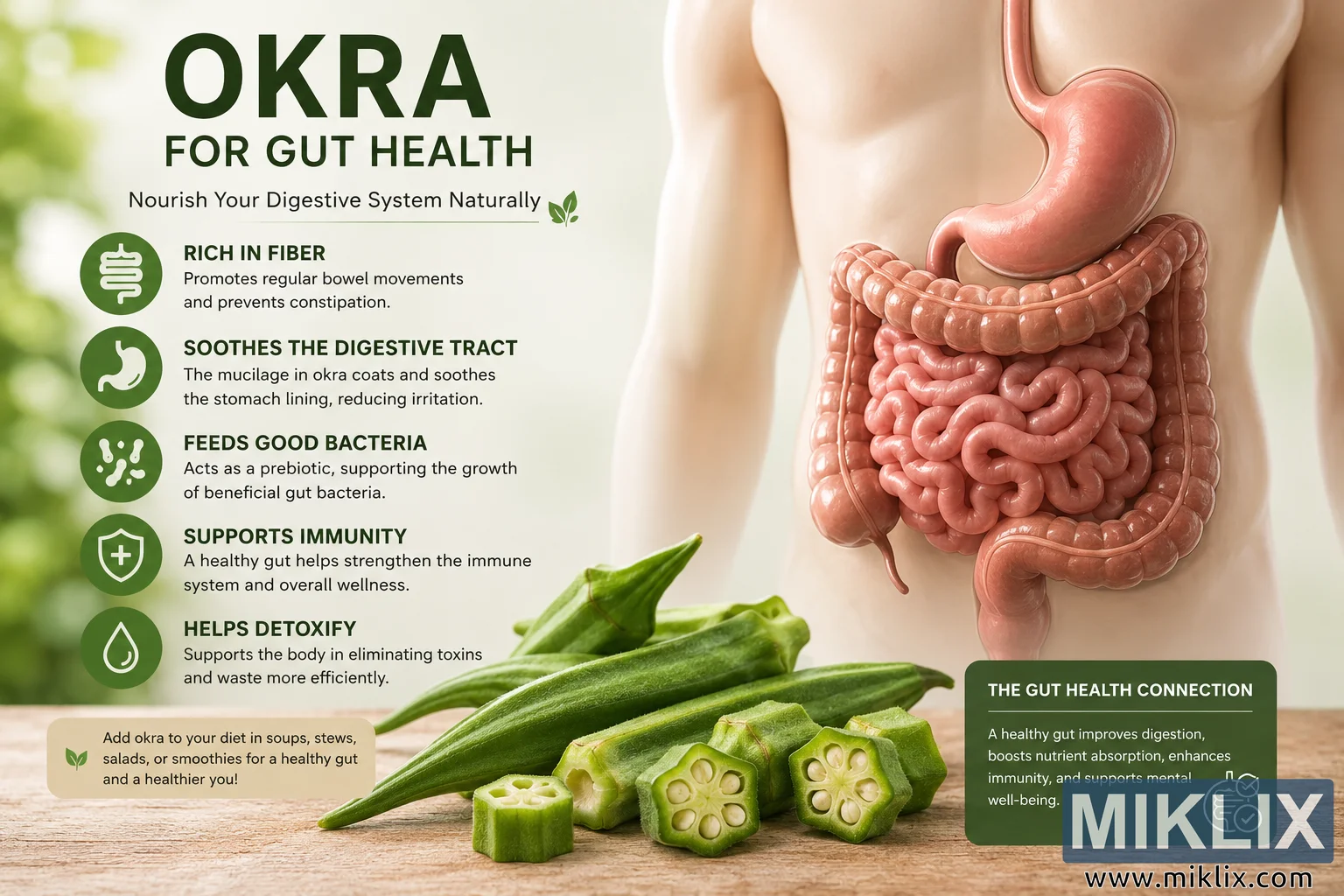
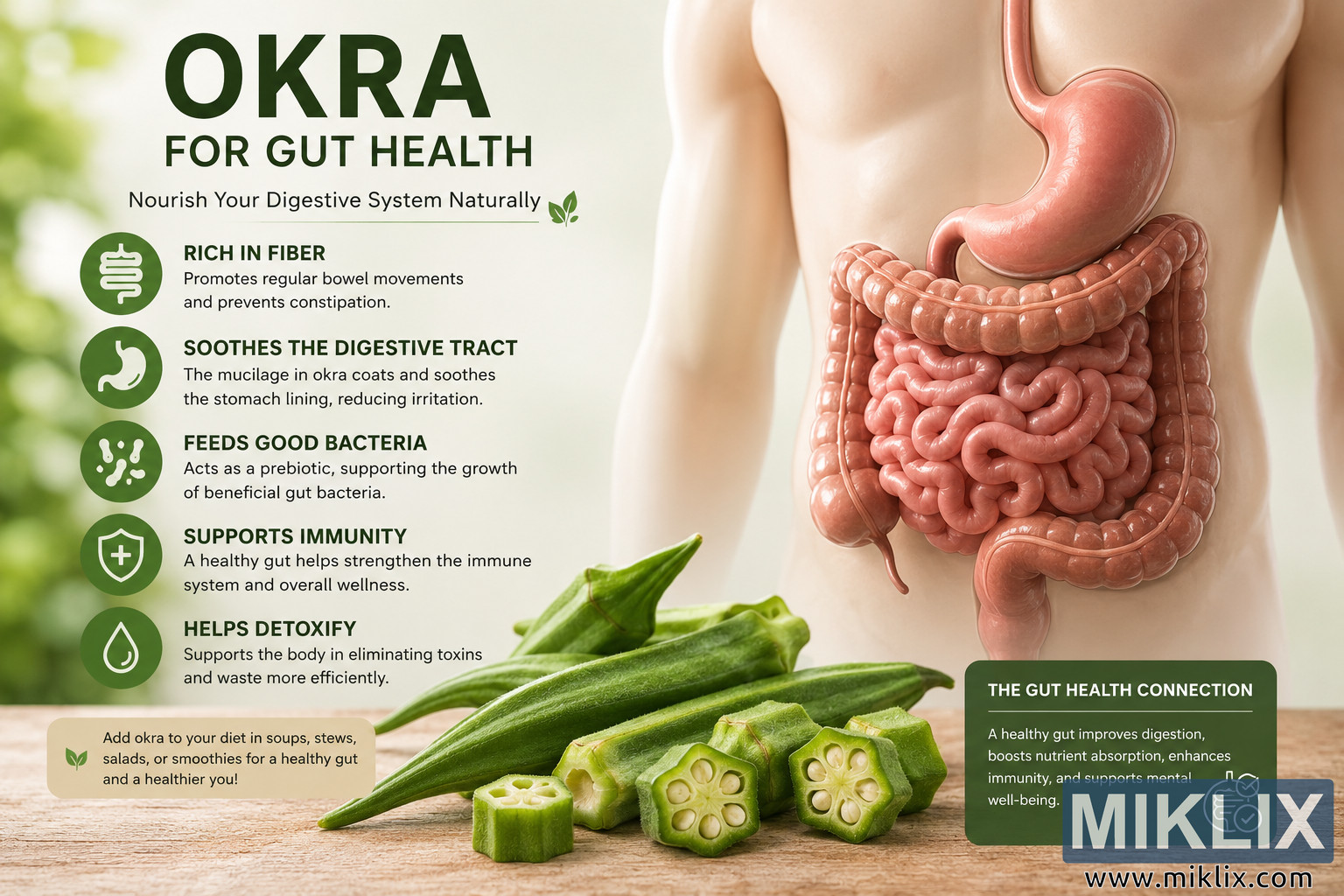
Educational infographic illustrating the relationship between okra and digestive health, featuring a detailed digestive system diagram, fresh okra, and summarized information about fiber, gut microbiome support, digestion, and overall gastrointestinal wellness.
Digestive System Illustration Highlighting Okra and Gut Health Benefits
Šī attēla pieejamās versijas
Tālāk lejupielādei pieejamie attēlu faili ir mazāk saspiesti un augstākas izšķirtspējas - un līdz ar to arī augstākas kvalitātes - nekā šīs vietnes rakstos un lapās ievietotie attēli, kuru izmērs ir optimizēts, lai samazinātu joslas platuma patēriņu.
Regulāra izmēra (1,536 x 1,024)
Liels izmērs (3,072 x 2,048)
Ļoti liels izmērs (4,608 x 3,072)
Īpaši liels izmērs (6,144 x 4,096)
Komiski liels izmērs (1,048,576 x 699,051)
- Joprojām augšupielādē... ;-)
Attēla apraksts
This landscape-oriented educational infographic presents a visually balanced overview of the relationship between okra and digestive health. The composition is divided into two primary sections, combining medical illustration with food photography and informational design. The overall color palette is dominated by natural shades of green, cream, beige, and soft brown, creating a clean, fresh, and health-focused aesthetic. The design avoids commercial branding and instead emphasizes educational content through typography, iconography, anatomical illustration, and realistic food imagery.
The left half of the infographic contains the primary informational content. At the very top is a large headline reading "OKRA FOR GUT HEALTH" in bold, uppercase lettering. Directly beneath the title appears a smaller subtitle that communicates the overall theme of naturally supporting digestive wellness. A small decorative green leaf icon accompanies the subtitle, reinforcing the natural and plant-based focus of the illustration.
Below the heading is a vertical series of educational callout sections. Each section begins with a circular green icon featuring a simple white symbol representing a digestive or health concept. The first icon depicts an abstract digestive tract and introduces information about dietary fiber, explaining that okra is rich in fiber and may help promote regular bowel movements while supporting digestive function. The second icon resembles a stomach and accompanies text discussing the soothing properties traditionally associated with the mucilage naturally present in okra, describing its role in coating and calming the digestive tract. The third icon contains stylized microorganisms representing beneficial gut bacteria and explains the concept of prebiotic support, indicating that okra may contribute to the growth of helpful intestinal microbes. The fourth icon displays a medical-style cross within a shield, visually representing immune health, alongside text suggesting that maintaining gut health contributes to broader wellness and immune function. The fifth and final icon resembles a water droplet and introduces information describing digestive support and efficient elimination of waste as part of overall digestive wellness.
Near the bottom left corner is a rounded rectangular note with a pale beige background. This highlighted callout contains a concise dietary suggestion encouraging the inclusion of okra in meals such as soups, stews, salads, and smoothies. A small green leaf icon appears beside the recommendation, visually linking the advice to the plant-based theme of the infographic.
Occupying much of the right half of the image is a realistic anatomical illustration of the human torso. Only the torso is visible, with the head and limbs excluded to maintain focus on the digestive organs. The digestive system is rendered in considerable anatomical detail, showing the esophagus entering the stomach, which connects to the small intestine. The large intestine surrounds the smaller intestinal loops in a medically familiar arrangement. The organs are illustrated with smooth textures and subtle shading that provide a three-dimensional appearance while remaining clearly educational rather than graphic. The surrounding skin tones are neutral and softly illuminated, helping the digestive organs stand out as the visual focal point.
Positioned prominently across the lower center foreground is a realistic arrangement of fresh okra pods resting on a light wooden tabletop. Several whole green okra pods overlap naturally, while multiple sliced cross-sections reveal the distinctive star-shaped internal seed pattern characteristic of okra. The vegetables appear fresh, vibrant, and sharply detailed, providing an attractive visual connection between the dietary ingredient and the digestive system illustration above. The wood grain beneath the vegetables introduces warmth and a natural kitchen-like environment without distracting from the educational purpose.
In the lower right corner is an additional dark green information box titled "The Gut Health Connection." This secondary panel summarizes the broader relationship between digestive health and overall well-being, mentioning concepts such as digestion, nutrient absorption, immune support, and general wellness. A simple white line icon depicting a stylized digestive system with check marks reinforces the positive health theme.
The background remains softly blurred throughout, featuring gentle gradients and subtle hints of green foliage that evoke freshness and nature without drawing attention away from the foreground elements. Lighting across the image is bright, diffuse, and even, creating a professional educational poster appearance suitable for health education materials, wellness websites, nutrition articles, presentations, classroom resources, or informational brochures. Typography throughout the infographic is clean and highly legible, with bold headings, consistent spacing, and clearly organized sections that guide the viewer naturally from the headline through each educational point before concluding with the anatomical illustration and food imagery. Overall, the illustration combines realistic anatomy, appealing food photography, structured information panels, and a calm color scheme to communicate the general concept that okra is associated with digestive wellness and gut health in an accessible, visually engaging, and educational manner.
Attēls ir saistīts ar: Okra Benefits: How This Nutritious Vegetable Supports Your Health