
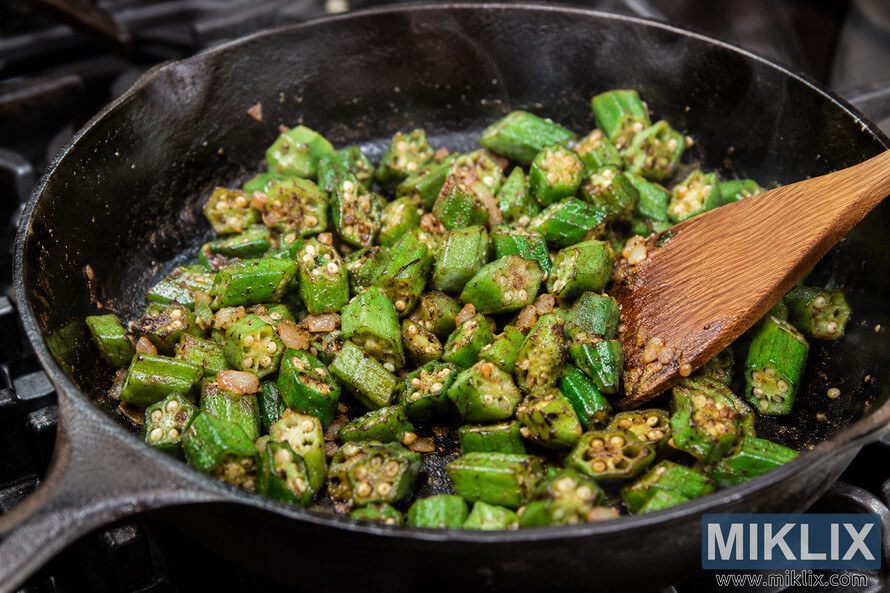
Attēls: Sautéed Okra Browning in a Cast Iron Skillet During Cooking
Publicēts:
Pēdējo reizi atjaunināts: 2026. gada 30. jūlijs 18:37:32 UTC
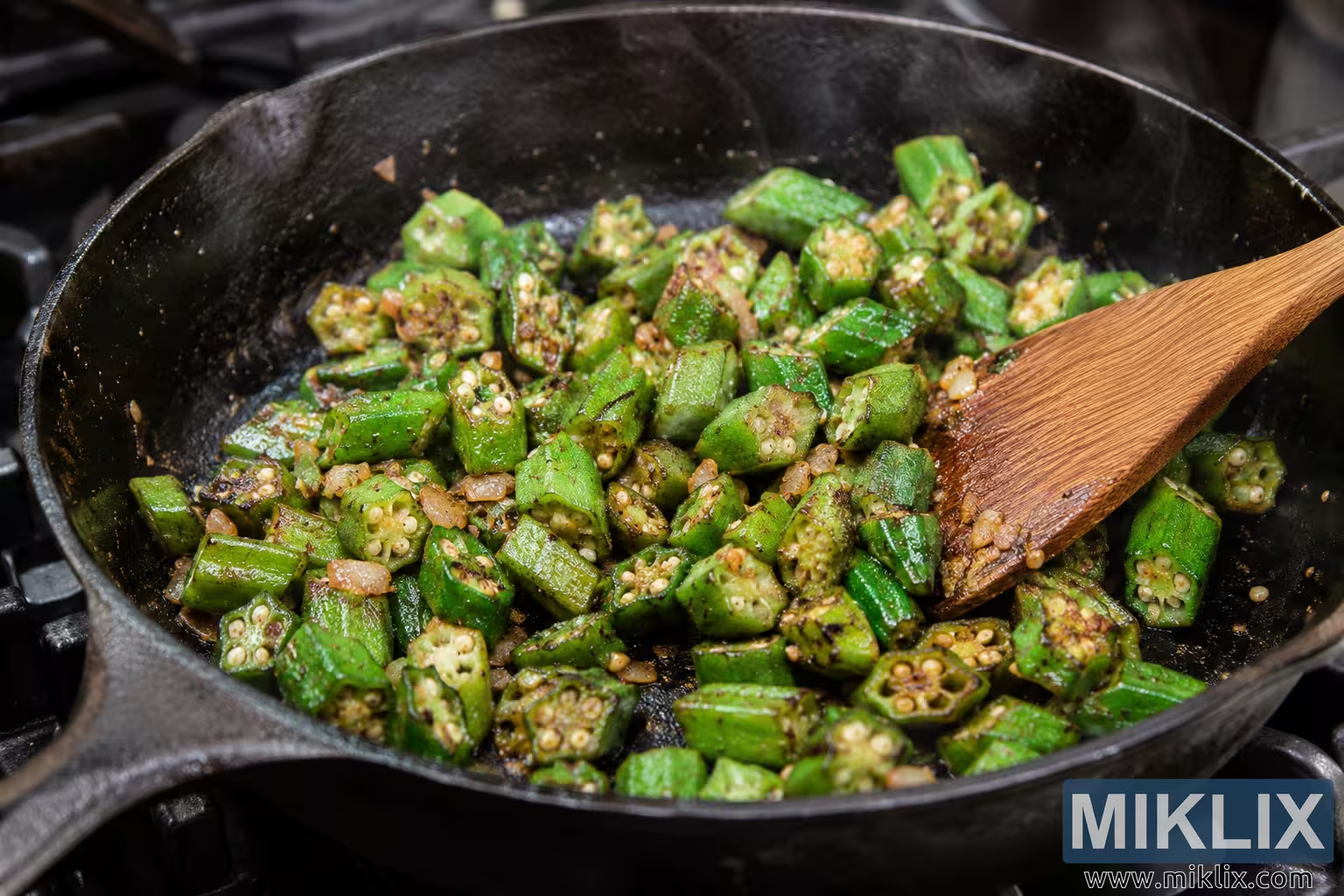
High-resolution food photograph showing fresh okra sautéing in a cast iron skillet with a wooden spatula. The cooking process highlights caramelization, rich textures, steam, and natural lighting in a rustic kitchen setting.
Sautéed Okra Browning in a Cast Iron Skillet During Cooking
Šī attēla pieejamās versijas
Tālāk lejupielādei pieejamie attēlu faili ir mazāk saspiesti un augstākas izšķirtspējas - un līdz ar to arī augstākas kvalitātes - nekā šīs vietnes rakstos un lapās ievietotie attēli, kuru izmērs ir optimizēts, lai samazinātu joslas platuma patēriņu.
Regulāra izmēra (1,536 x 1,024)
Liels izmērs (3,072 x 2,048)
Ļoti liels izmērs (4,608 x 3,072)
Īpaši liels izmērs (6,144 x 4,096)
Komiski liels izmērs (1,048,576 x 699,051)
- Joprojām augšupielādē... ;-)
Attēla apraksts
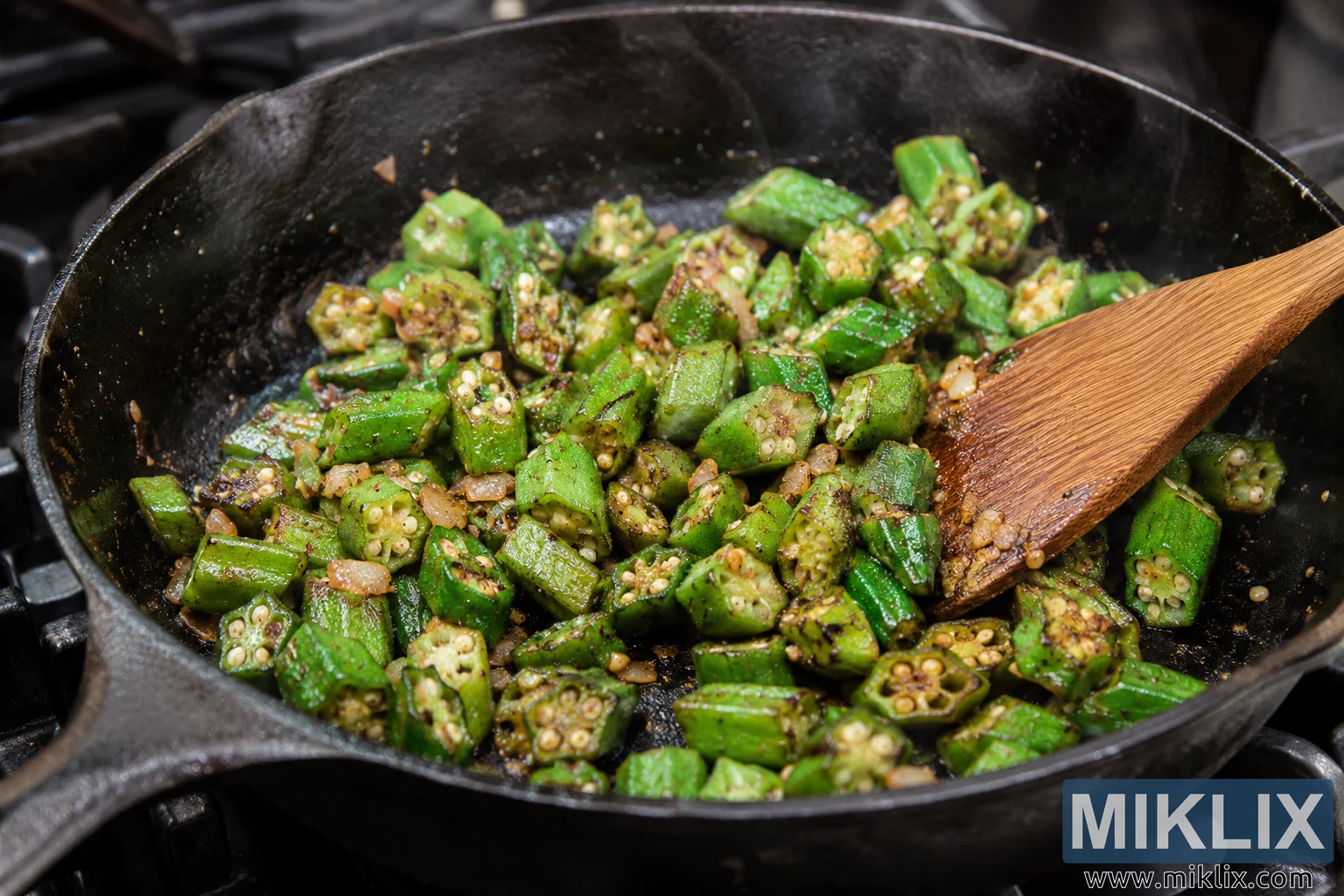
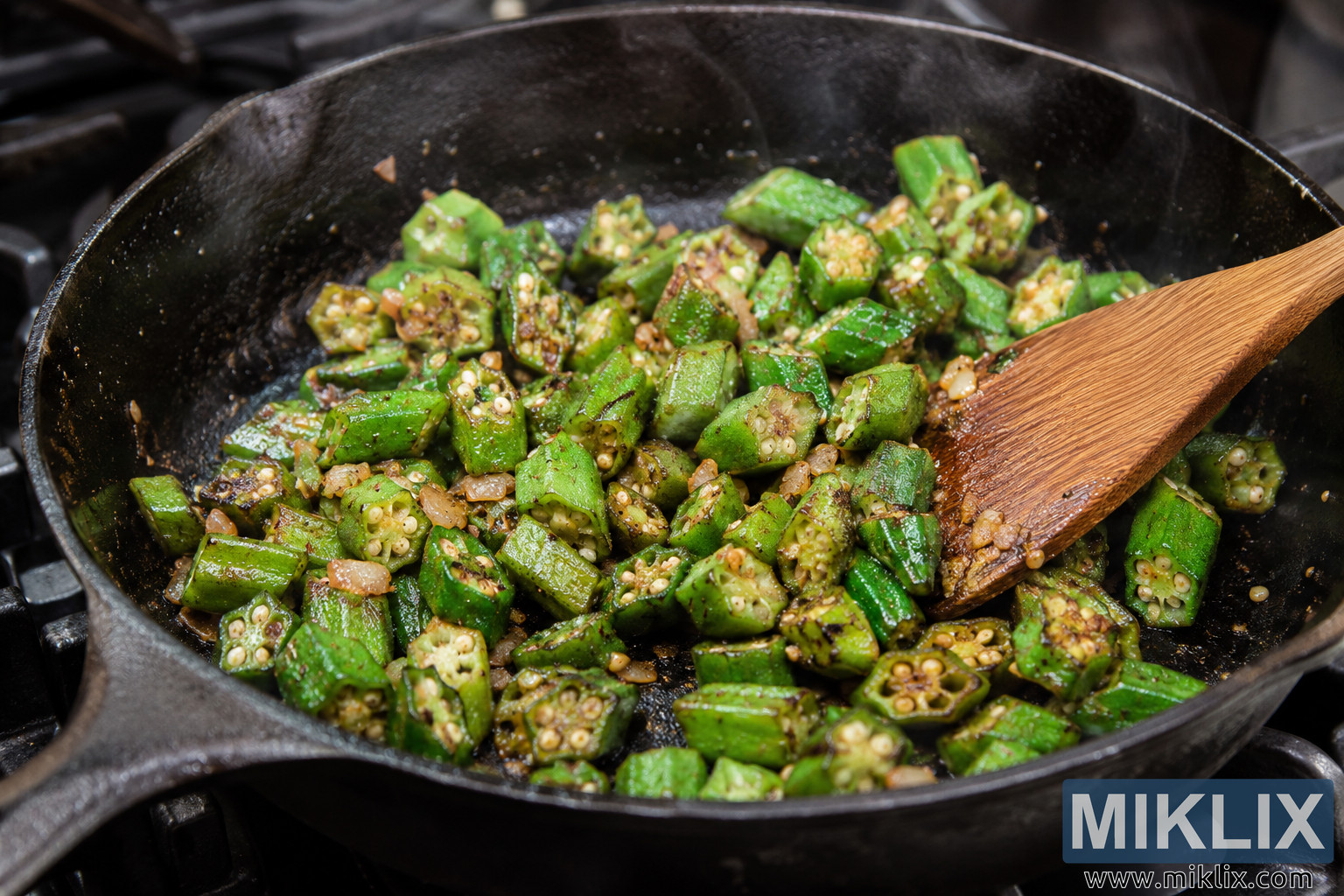
A high-resolution landscape photograph captures a close-up view of fresh okra being sautéed inside a large, well-seasoned cast iron skillet resting on a stovetop. The image focuses on the active cooking process rather than the finished dish, emphasizing the transformation of the vegetables as they develop color, texture, and flavor. Thick slices of bright green okra are scattered across the surface of the skillet, with many pieces showing lightly browned edges and distinct grill-like caramelization marks that suggest even contact with the hot cooking surface. The cut faces of the okra clearly reveal the familiar star-shaped cross-sections filled with small pale seeds, adding visual interest and immediately identifying the vegetable.
The skillet itself dominates much of the frame, its dark, slightly textured interior providing a dramatic contrast against the vivid green vegetables. Years of seasoning have given the cast iron a rich matte-black appearance with subtle highlights reflecting the overhead light. Tiny droplets of cooking oil shimmer across the pan, creating a gentle gloss that enhances the realism of the scene. Small browned bits of onion are mixed throughout the okra, suggesting that aromatics have already begun to soften and caramelize alongside the vegetables. Their golden color introduces additional warmth and complexity to the composition.
A broad wooden spatula enters the frame from the right side, partially tucked beneath several pieces of okra as though someone has just stirred the contents of the pan. The natural wood grain is clearly visible, with smooth worn edges indicating frequent use in everyday cooking. Its placement introduces a sense of motion and human activity, making the viewer feel as though the sautéing is happening in real time rather than being a carefully staged still life. The utensil also helps guide the eye diagonally through the composition, connecting the foreground vegetables with the center of the skillet.
Soft wisps of steam rise from various areas of the pan, subtly indicating heat without overwhelming the image. The steam catches the light delicately, reinforcing the impression that the vegetables are actively cooking at the perfect temperature. The lighting appears warm and natural, illuminating the ingredients from above while leaving gentle shadows that accentuate the textures of the skillet, the okra, and the wooden utensil. Highlights glisten on the oil-coated surfaces of the vegetables, making them appear fresh and moist while avoiding an overly glossy or artificial appearance.
The background remains intentionally blurred, placing full attention on the skillet and its contents. Portions of the stovetop are still recognizable, including dark burner grates and surrounding cooking surfaces, but they remain softly out of focus to preserve depth and keep the composition uncluttered. No logos, trademarks, labels, or identifiable commercial products appear anywhere within the scene, allowing the photograph to maintain a timeless and universally applicable culinary aesthetic.
Color plays an important role throughout the composition. The vibrant green of the okra contrasts beautifully with the deep charcoal tones of the cast iron and the warm honey-brown color of the wooden spatula. Flecks of seasoning and caramelized onion introduce subtle golden and brown accents, suggesting the development of rich roasted flavors. The overall palette feels earthy, natural, and inviting while remaining faithful to the appearance of ingredients during actual cooking.
The perspective is slightly elevated, allowing viewers to appreciate both the volume of vegetables inside the skillet and the detailed textures of individual pieces. The shallow depth of field isolates the primary subject while still preserving enough contextual detail to communicate that the setting is a working kitchen rather than a studio environment. Every visible element contributes to the narrative of cooking in progress, from the browned surfaces of the vegetables to the steam, oil sheen, and partially lifted spatula.
Overall, the image communicates freshness, craftsmanship, and home-style cooking. It celebrates a simple cooking technique by highlighting authentic ingredients, durable cookware, natural textures, and realistic lighting. Rather than presenting a plated meal, the photograph captures the satisfying intermediate stage where ingredients are actively transforming through heat, creating an engaging visual story that emphasizes both culinary technique and the appealing beauty of everyday food preparation.
Attēls ir saistīts ar: Okra Benefits: How This Nutritious Vegetable Supports Your Health