
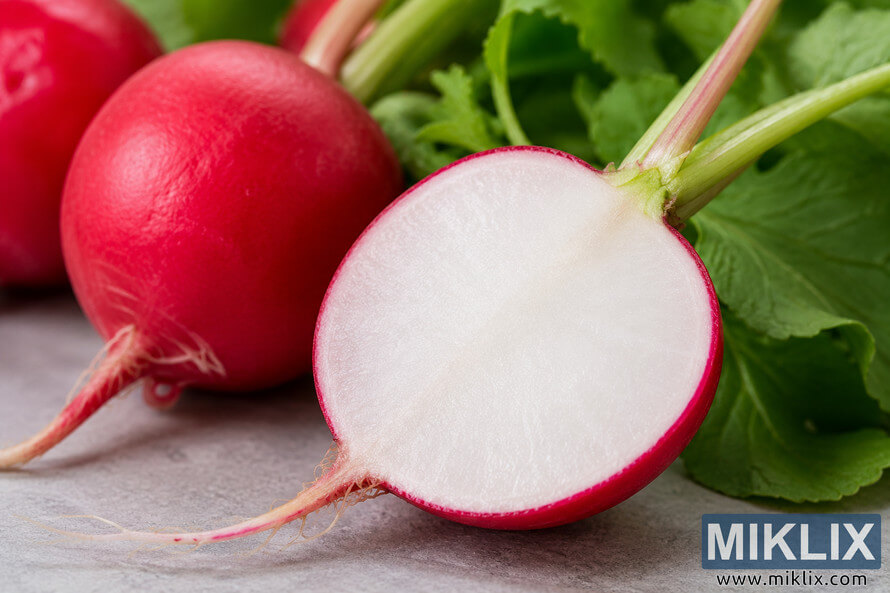
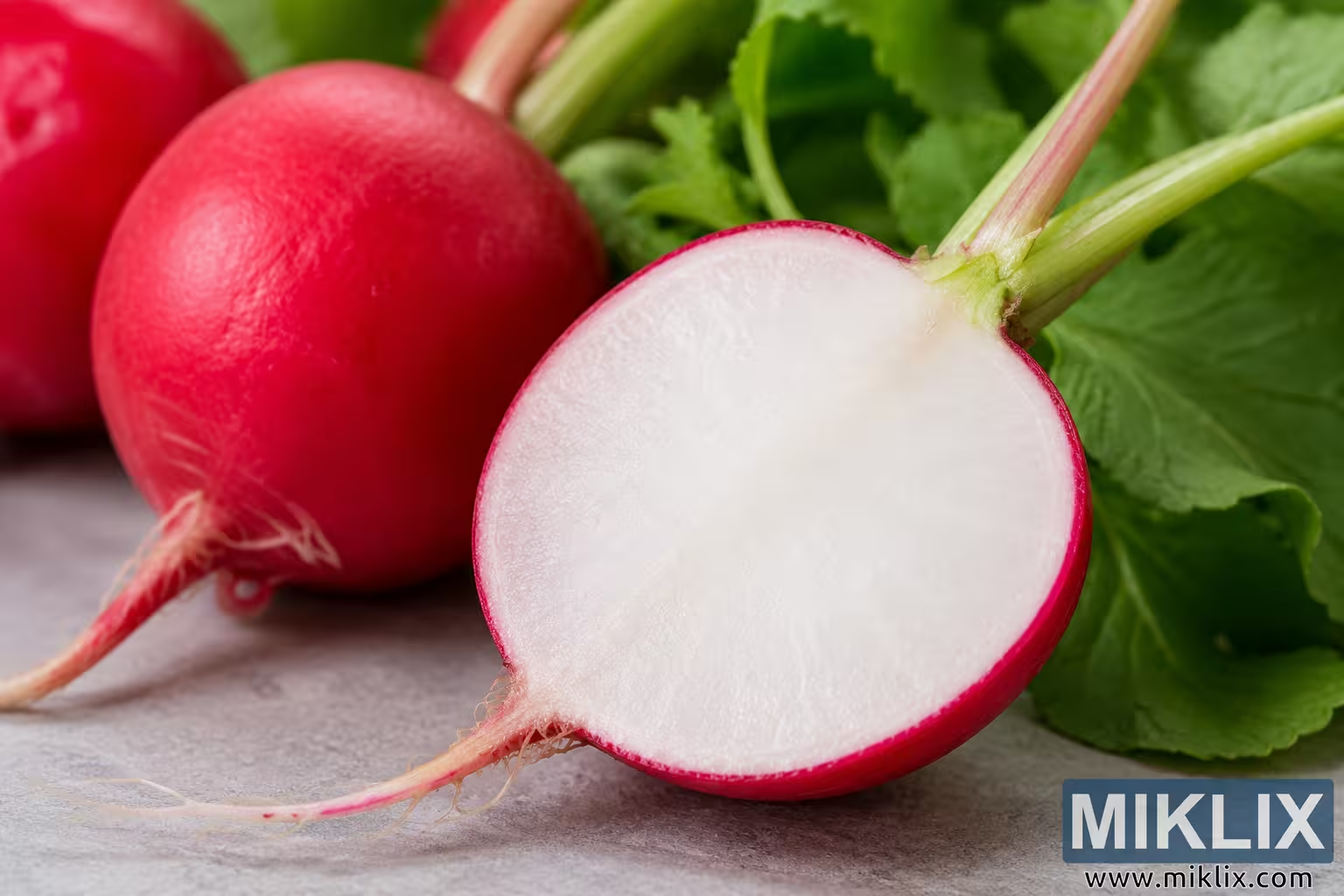
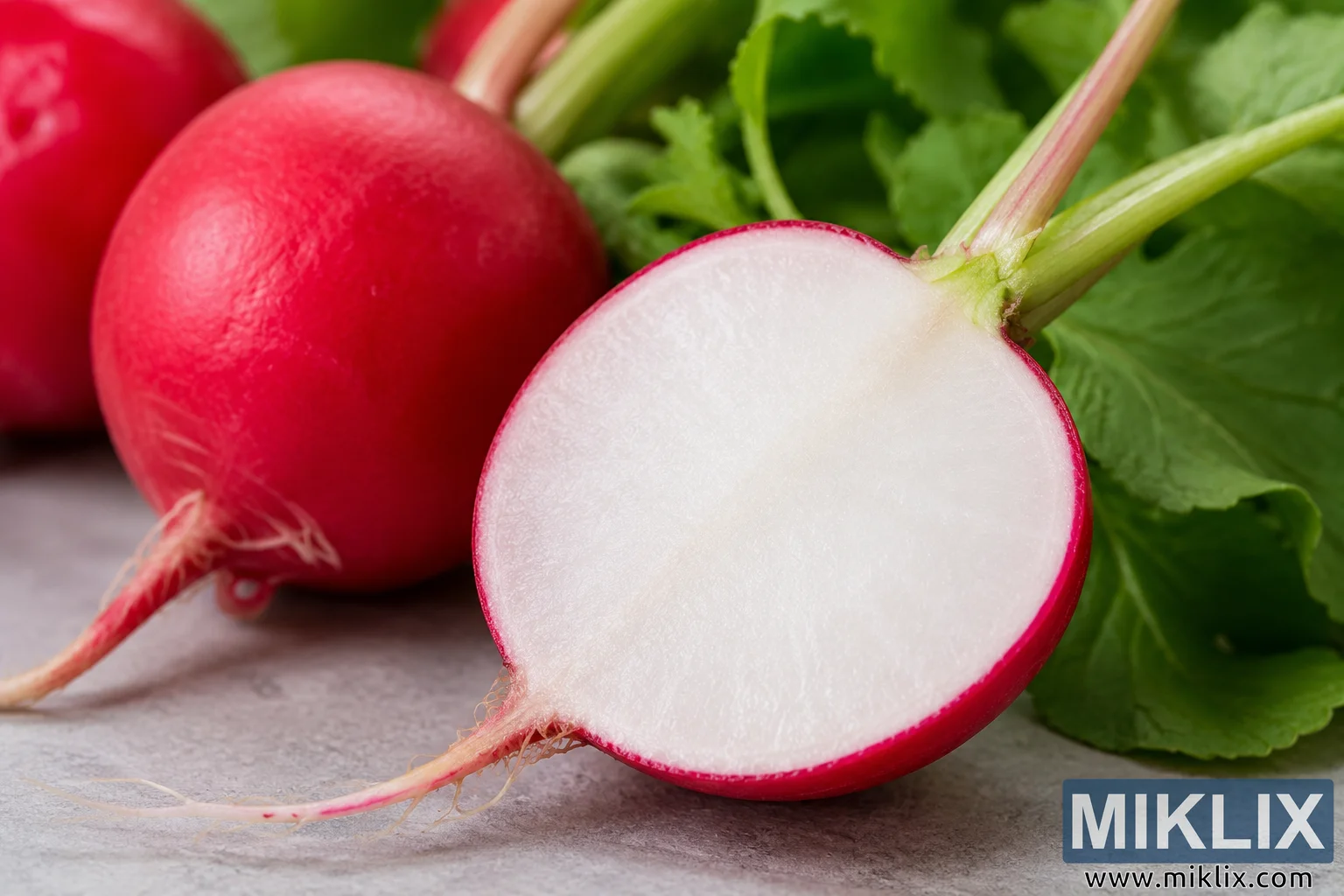
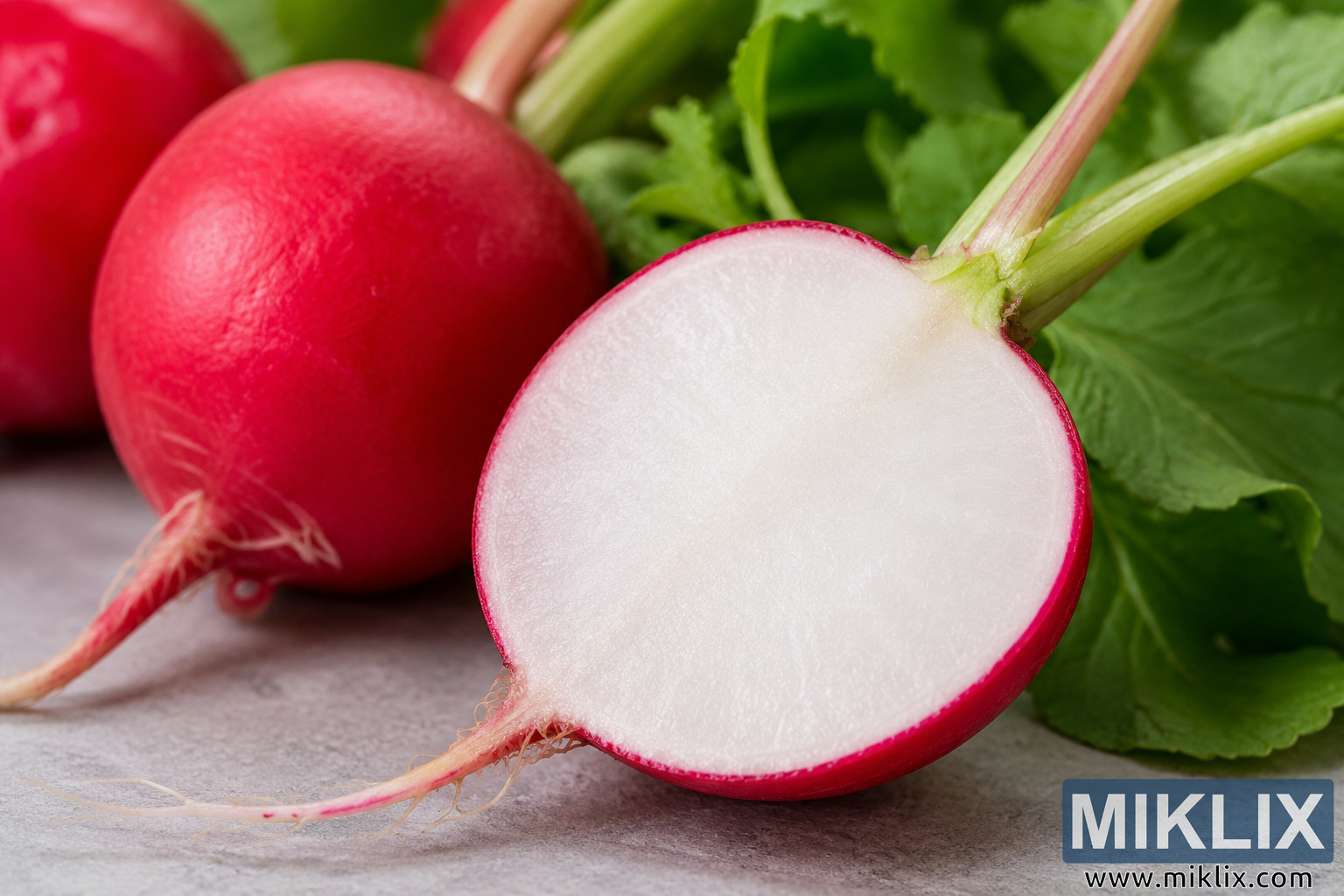
Attēls: Cross-Section of a Red Radish Revealing Its Crisp White Interior
Publicēts:
Pēdējo reizi atjaunināts: 2026. gada 10. jūlijs 16:30:00 UTC
High-resolution landscape photograph featuring a cross-section of a fresh red radish with vivid red skin and crisp white flesh, accompanied by whole radishes and leafy greens in soft natural light.
Cross-Section of a Red Radish Revealing Its Crisp White Interior
Šī attēla pieejamās versijas
Tālāk lejupielādei pieejamie attēlu faili ir mazāk saspiesti un augstākas izšķirtspējas - un līdz ar to arī augstākas kvalitātes - nekā šīs vietnes rakstos un lapās ievietotie attēli, kuru izmērs ir optimizēts, lai samazinātu joslas platuma patēriņu.
Regulāra izmēra (1,536 x 1,024)
Liels izmērs (3,072 x 2,048)
Ļoti liels izmērs (4,608 x 3,072)
Īpaši liels izmērs (6,144 x 4,096)
Komiski liels izmērs (1,048,576 x 699,051)
- Joprojām augšupielādē... ;-)
Attēla apraksts
This high-resolution landscape photograph presents a detailed close-up view of a freshly cut red radish, with the cross-section positioned prominently in the foreground. The image emphasizes the natural contrast between the radish's smooth, vibrant red outer skin and its clean, opaque white interior. The freshly sliced surface appears moist and crisp, suggesting freshness while revealing the fine, subtle cellular texture typical of a recently cut root vegetable. The cut face is nearly circular, occupying a large portion of the composition and immediately drawing the viewer's attention. A thin, evenly colored red rind forms a narrow border around the white flesh, creating a striking visual contrast that defines the subject.
The radish is attached to a short section of pale green stem emerging from the upper right portion of the vegetable. The stem transitions gradually from light green to faint pinkish hues near the crown where it meets the bulb. At the opposite end, a delicate, slender taproot extends from the base of the radish, tapering into fine root hairs that rest lightly against the neutral surface beneath. These small botanical details enhance the realism of the scene and communicate that the vegetable remains largely intact despite being cut open.
Behind the sliced radish, several whole red radishes are visible but intentionally rendered with a shallow depth of field. Their smooth, glossy skins reflect soft natural light without producing harsh highlights. The blurred appearance keeps the viewer's attention focused on the sharply rendered cross-section while still providing context that these vegetables belong to the same freshly harvested group. The whole radishes vary slightly in size and positioning, contributing a natural, organic arrangement rather than a perfectly symmetrical display.
Lush green leaves fill much of the background, introducing rich shades of green that complement the vivid red bulbs. Although softened by the shallow focus, the foliage retains recognizable shapes, gently serrated edges, and visible veins that suggest freshness. The leaves provide both texture and color contrast, framing the main subject without overwhelming it. Their organic forms soften the composition and reinforce the agricultural origin of the produce.
The vegetables rest upon a light, neutral-colored surface with a subtle matte texture. The understated background allows the saturated colors of the radishes and foliage to stand out while avoiding visual distraction. Gentle transitions in brightness across the surface suggest diffused natural illumination, possibly from a nearby window or similarly soft light source. Shadows remain soft and gradual, preserving detail throughout the image while contributing to a clean and inviting presentation.
Lighting is one of the defining characteristics of the photograph. Soft, even illumination enhances the smooth exterior of the radish and reveals the faint granular texture within the white flesh. The absence of harsh directional shadows gives the image a fresh, airy quality often associated with natural food photography. Fine tonal gradations emphasize the rounded geometry of the vegetables, while subtle reflections along the skin communicate freshness without appearing overly glossy.
The composition follows a balanced arrangement in which the sliced radish occupies the foreground and slightly right-of-center position. The remaining radishes and leafy greens create depth by receding naturally into the background. Selective focus isolates the primary subject while allowing secondary elements to provide environmental context. The resulting perspective conveys dimensionality and invites close inspection of the radish's internal structure.
Overall, the image communicates freshness, simplicity, and natural beauty through careful attention to botanical detail, balanced composition, restrained color harmony, and soft natural lighting. The dominant visual feature is the crisp white interior of the cross-section framed by the thin red skin, illustrating the characteristic appearance of a fresh red radish while surrounding vegetables and foliage reinforce the impression of recently harvested produce. The photograph contains no visible packaging, labels, logos, text, or commercial branding, maintaining a clean, timeless, and purely food-focused presentation suitable for editorial, educational, culinary, or agricultural contexts.
Attēls ir saistīts ar: The Powerful Health Benefits of Radishes: Your Complete Nutrition Guide