
Attēls: Myth Versus Fact: Potatoes and Nutrition Labels in a Balanced Diet Comparison
Publicēts:
Pēdējo reizi atjaunināts: 2026. gada 4. augusts 13:57:11 UTC
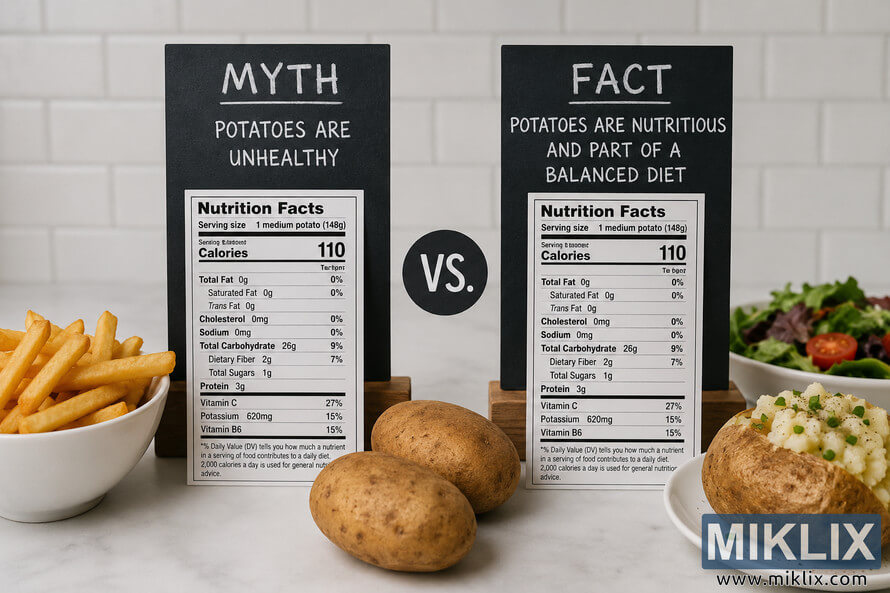
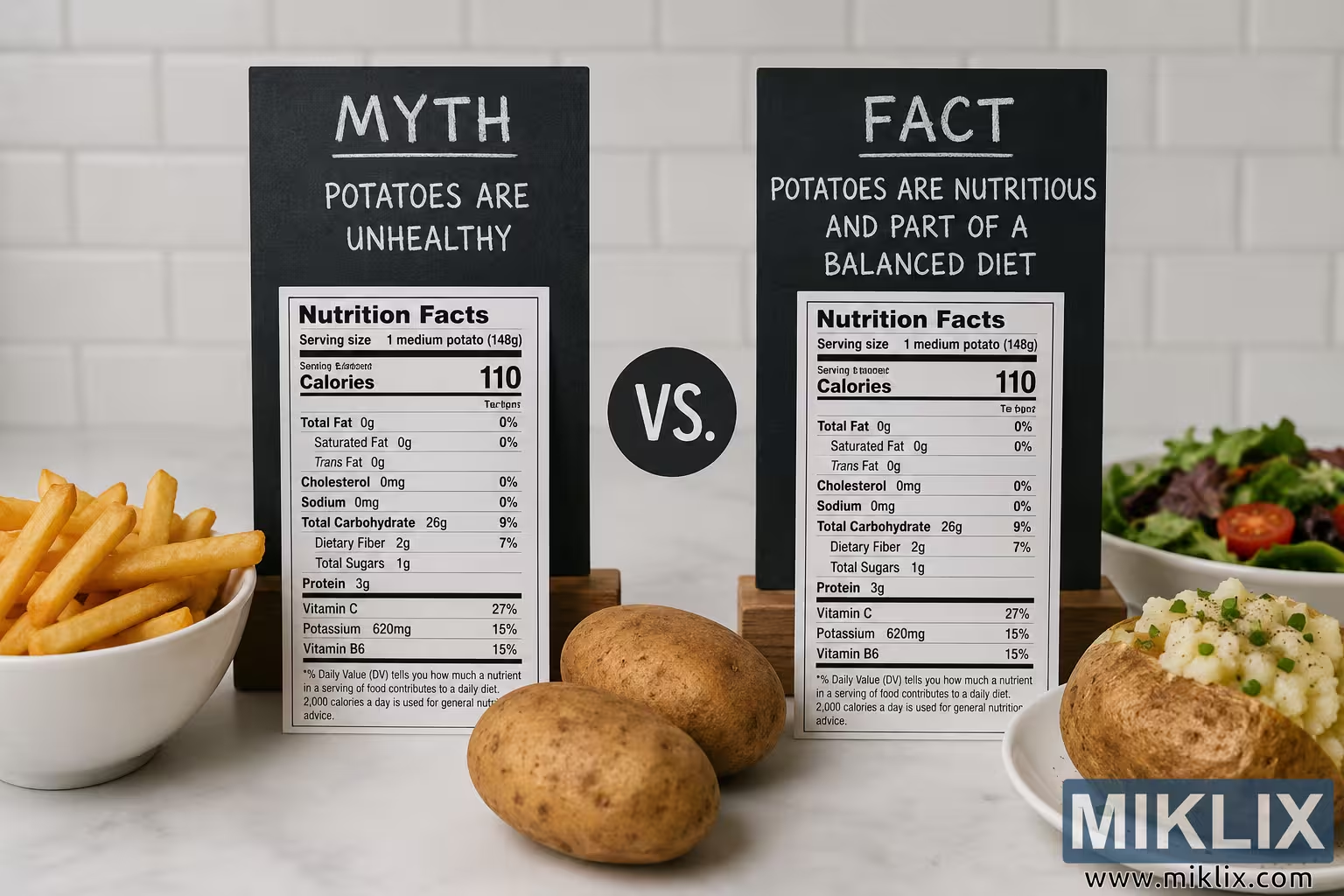
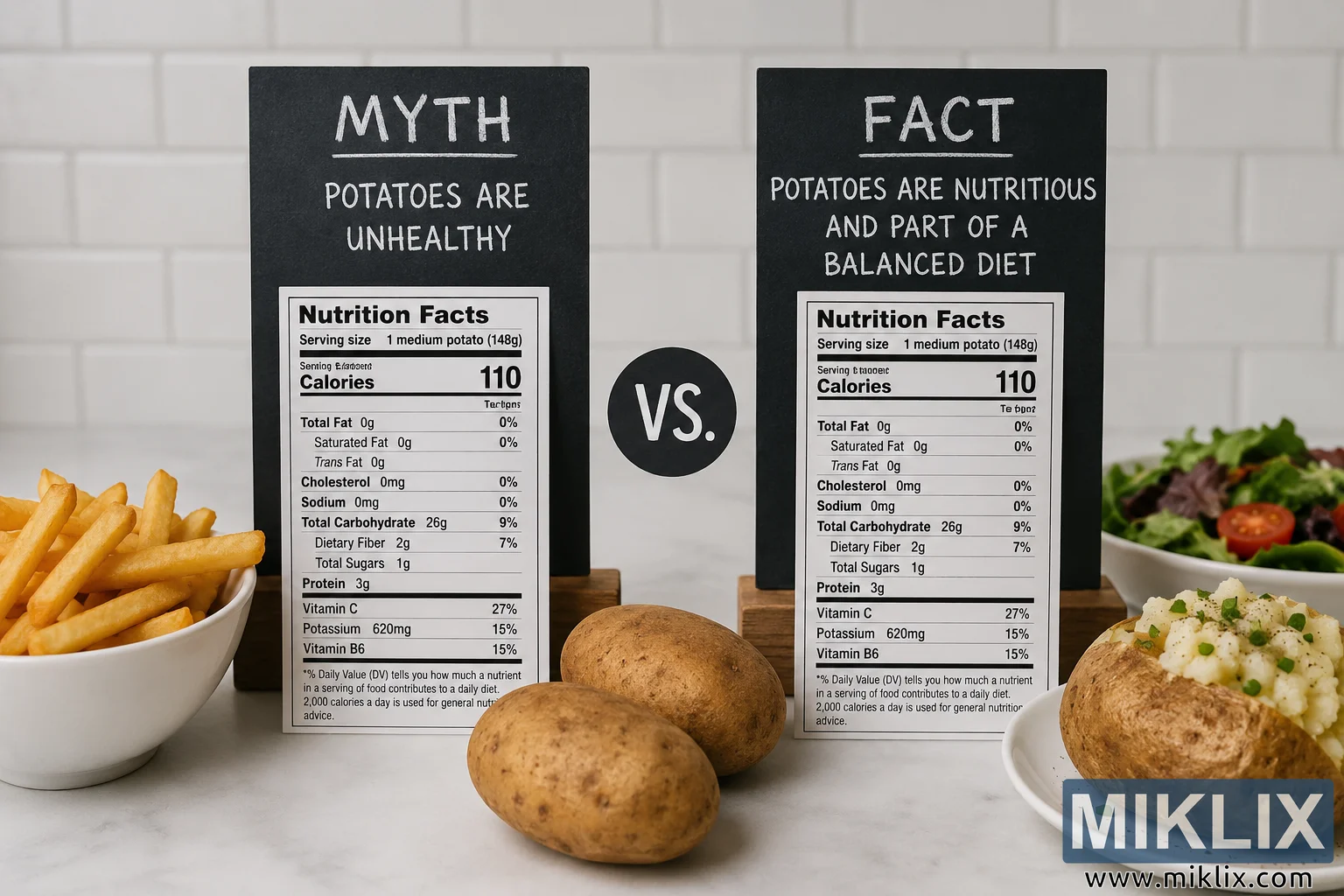
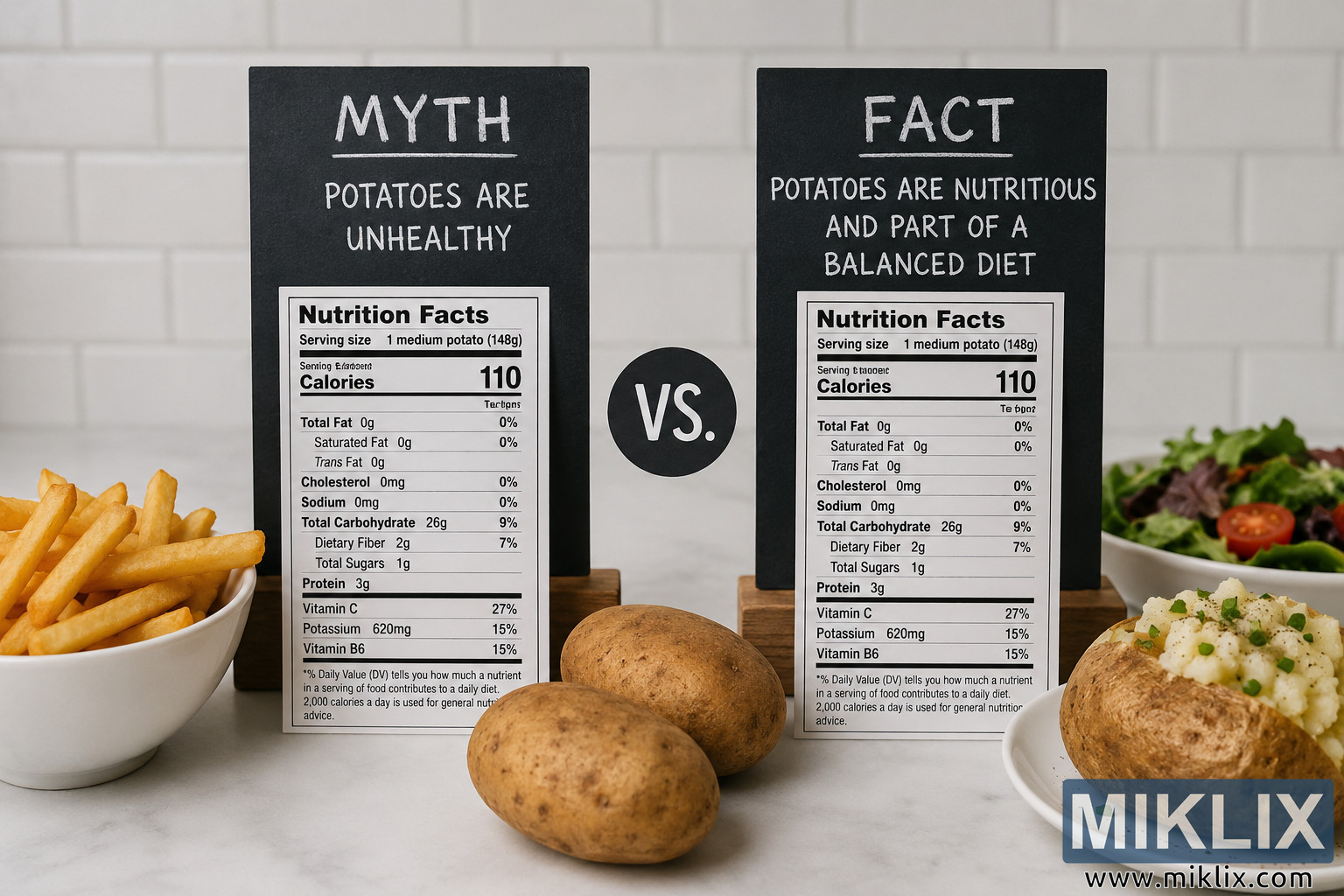
Educational landscape image comparing myths and facts about potatoes using nutrition-style labels, raw potatoes, fries, and a balanced meal to illustrate evidence-based nutrition concepts without commercial branding.
Myth Versus Fact: Potatoes and Nutrition Labels in a Balanced Diet Comparison
Šī attēla pieejamās versijas
Tālāk lejupielādei pieejamie attēlu faili ir mazāk saspiesti un augstākas izšķirtspējas - un līdz ar to arī augstākas kvalitātes - nekā šīs vietnes rakstos un lapās ievietotie attēli, kuru izmērs ir optimizēts, lai samazinātu joslas platuma patēriņu.
Regulāra izmēra (1,536 x 1,024)
Liels izmērs (3,072 x 2,048)
Ļoti liels izmērs (4,608 x 3,072)
Īpaši liels izmērs (6,144 x 4,096)
Komiski liels izmērs (1,048,576 x 699,051)
- Joprojām augšupielādē... ;-)
Attēla apraksts
This landscape-oriented image presents a clean, educational visual concept built around the theme of distinguishing myths from facts about potatoes and nutrition. The composition is symmetrical and intentionally organized to encourage viewers to compare two opposing messages side by side. The overall setting resembles a bright, modern kitchen with a softly blurred white tile background that keeps attention focused on the foreground objects while maintaining a realistic photographic appearance.
At the center of the image stand two vertical black presentation boards positioned on small wooden supports. The board on the left is labeled "MYTH" in large white handwritten-style lettering, while the board on the right is labeled "FACT" using matching typography. Between the two boards is a circular dark emblem containing the letters "VS.", reinforcing the comparison between the opposing statements.
Beneath the heading on the left board appears the statement claiming that potatoes are unhealthy. Directly below this statement is a nutrition-style information label designed to resemble the familiar format used on packaged foods. The label contains multiple rows, headings, numbers, serving information, calories, nutrients, vitamins, percentages, and other nutritional details. Although it closely resembles a real nutrition panel, it functions primarily as a conceptual design element rather than a document intended for detailed reading.
The right board presents the contrasting perspective under the heading "FACT." It communicates that potatoes are nutritious and can be part of a balanced diet. Below this statement is another nutrition-style label formatted similarly to the one on the left. Like its counterpart, it contains numerous nutritional categories and numerical values presented in a structured layout, visually reinforcing the educational theme of examining food information rather than relying on assumptions.
The lower foreground contains several realistic potatoes placed between the two boards. Their natural brown skins display subtle variations in color and texture, contributing to the authentic photographic quality of the scene. The potatoes serve as the visual focal point connecting both sides of the comparison and emphasizing that the discussion concerns the same food item rather than different products.
On the far left foreground sits a white ceramic bowl filled with golden potato fries. The fries are arranged casually and appear freshly prepared with crisp edges and warm coloring. Their placement beneath the "MYTH" side suggests a visual association with common assumptions people may make when they think about potatoes exclusively through the lens of fried foods. The bowl itself is simple, smooth, and undecorated, avoiding the presence of logos or commercial branding.
On the opposite side of the composition, beneath the "FACT" board, is a white plate holding a baked potato topped with a creamy mashed or whipped potato mixture and sprinkled with finely chopped green herbs. Behind this plate sits a bowl containing a colorful green salad with leafy greens and visible tomato slices. Together these foods visually communicate the idea of balanced meal choices while remaining free of identifiable brands, restaurant markings, or packaging.
Lighting throughout the scene is soft, bright, and evenly distributed. Gentle highlights emphasize the natural textures of the potatoes, ceramic dishes, wooden display stands, and printed nutrition panels. Shadows remain subtle, creating depth without distracting from the educational layout. The neutral color palette of white, black, brown, green, and warm golden tones contributes to a clean and trustworthy visual presentation often associated with nutrition education materials.
The overall composition resembles a health education infographic rendered as a realistic photograph rather than a flat illustration. Every major object is carefully positioned to support visual balance, making it easy for viewers to compare the two perspectives. There are no visible commercial logos, trademarks, product packaging, watermarks, or brand identifiers anywhere within the image. Instead, the scene relies entirely on generic food items, educational headings, and nutrition-inspired graphic elements to communicate its message. The image conveys the broader concept that evaluating foods based on nutritional information and preparation methods provides a more accurate understanding than relying solely on common misconceptions. The design is suitable for discussions about healthy eating, nutrition education, food literacy, balanced diets, dietary guidance, and evidence-based conversations about potatoes and their nutritional role.
Attēls ir saistīts ar: The Surprising Health Benefits of Potatoes: A Complete Nutrition Guide