
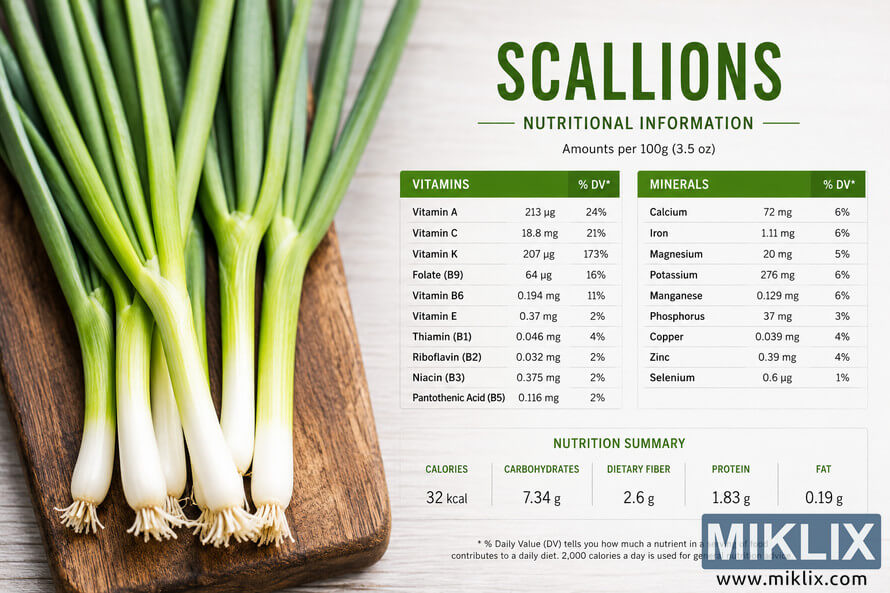
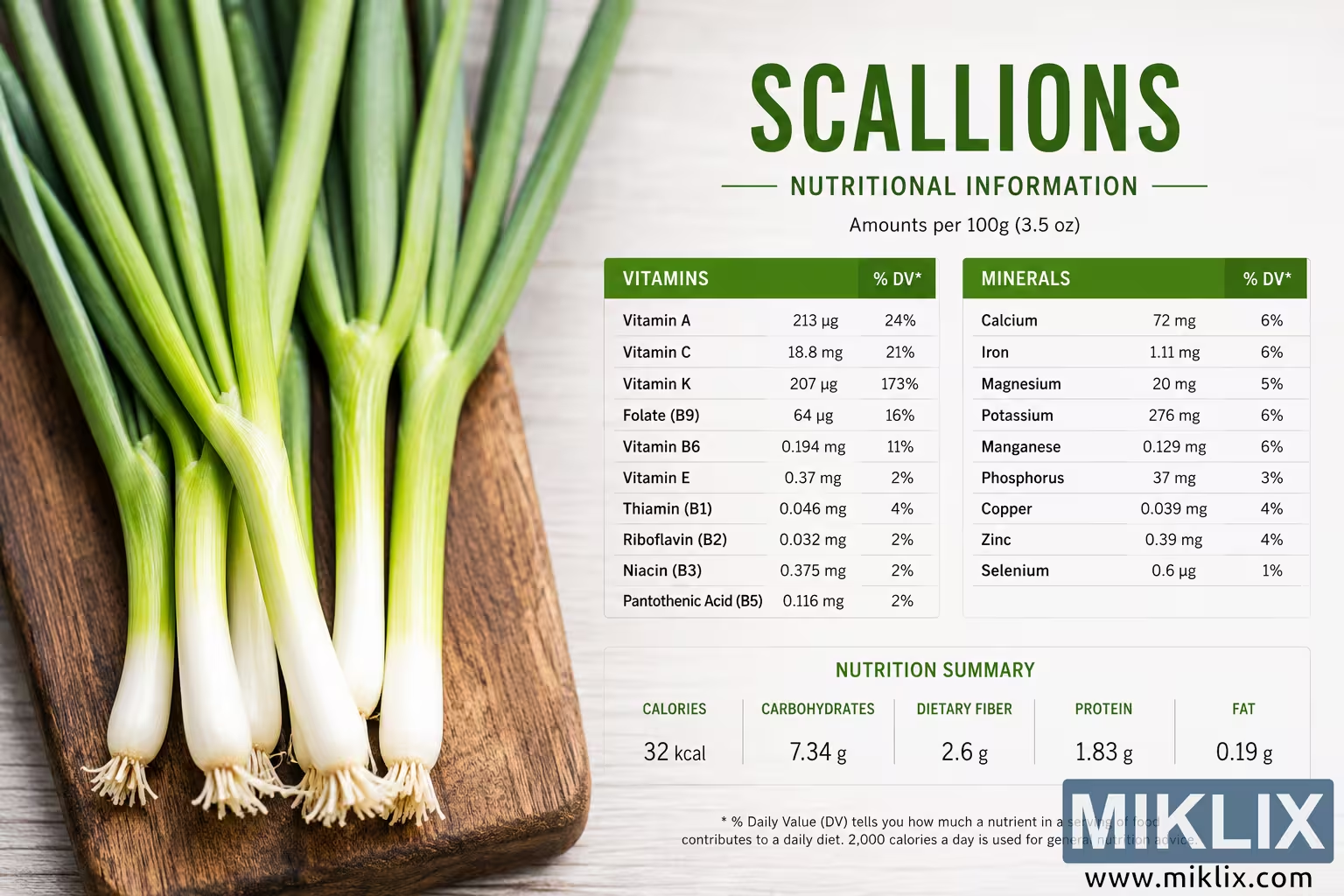
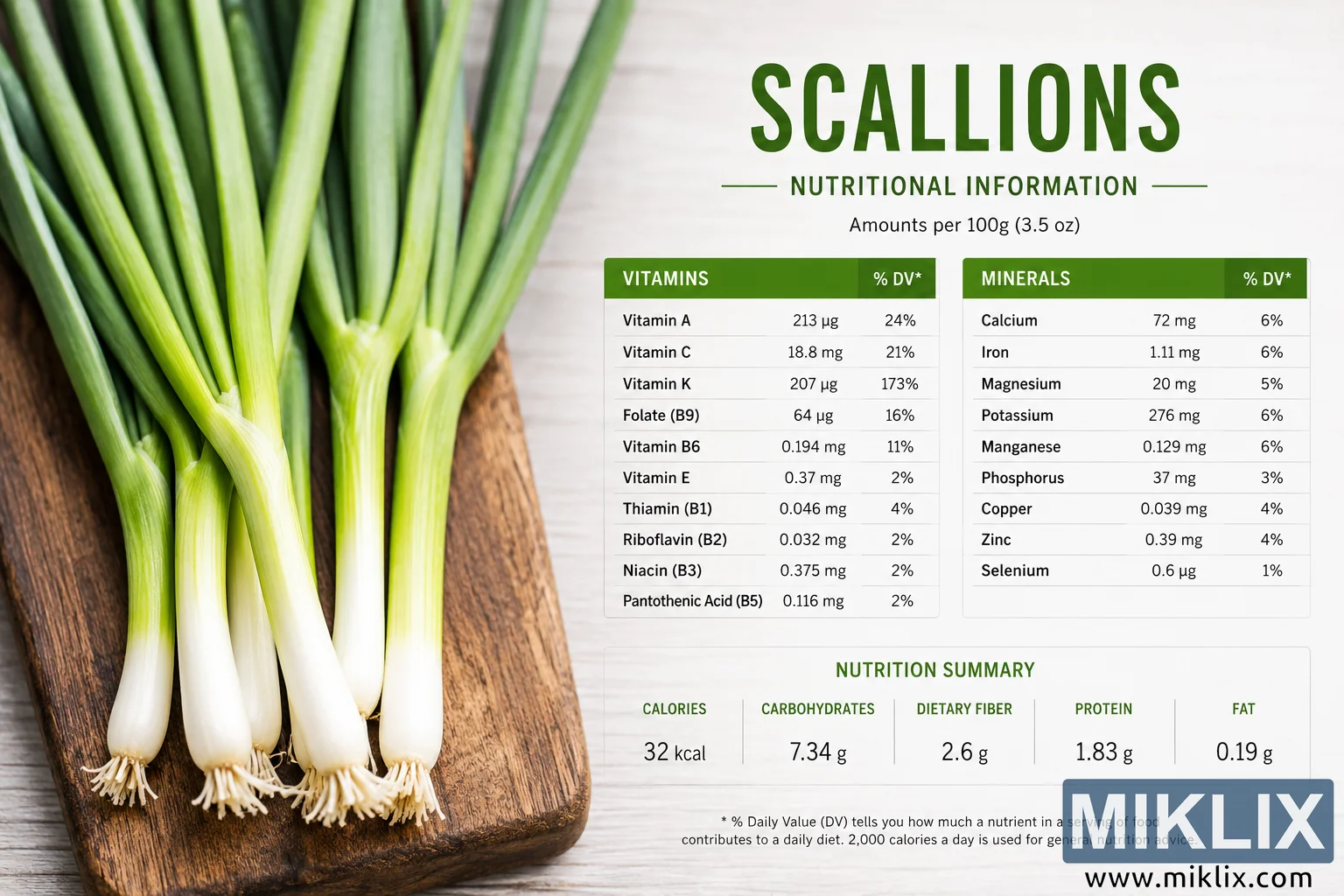
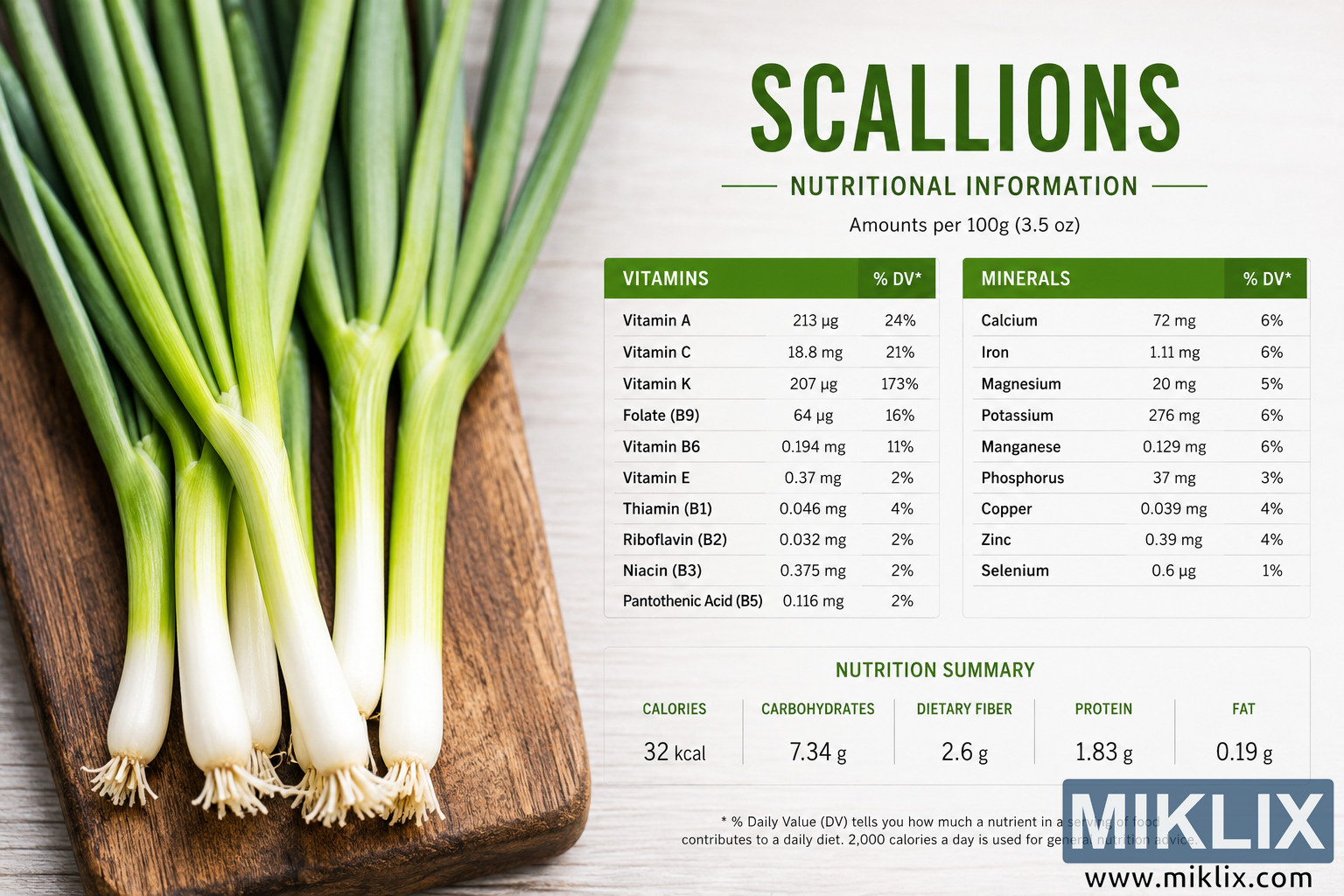
Attēls: Scallions Nutritional Information Chart with Fresh Green Onions and Vitamin Mineral Breakdown
Publicēts:
Pēdējo reizi atjaunināts: 2026. gada 12. jūnijs 20:58:00 UTC
High-resolution landscape infographic of fresh scallions with a comprehensive nutritional information chart displaying vitamins, minerals, calorie values, carbohydrates, dietary fiber, protein, and fat content in a clean modern layout.
Scallions Nutritional Information Chart with Fresh Green Onions and Vitamin Mineral Breakdown
Šī attēla pieejamās versijas
Tālāk lejupielādei pieejamie attēlu faili ir mazāk saspiesti un augstākas izšķirtspējas - un līdz ar to arī augstākas kvalitātes - nekā šīs vietnes rakstos un lapās ievietotie attēli, kuru izmērs ir optimizēts, lai samazinātu joslas platuma patēriņu.
Regulāra izmēra (1,536 x 1,024)
Liels izmērs (3,072 x 2,048)
Ļoti liels izmērs (4,608 x 3,072)
Īpaši liels izmērs (6,144 x 4,096)
Komiski liels izmērs (1,048,576 x 699,051)
- Joprojām augšupielādē... ;-)
Attēla apraksts
This high-resolution landscape-oriented infographic presents a clean and visually appealing nutritional overview of fresh scallions, also commonly known as green onions or spring onions. The composition is divided into two primary visual sections that balance food photography with informative nutritional design. On the left side of the image, several fresh scallions are carefully arranged vertically on a rustic wooden cutting board. The scallions display vibrant deep green stalks that gradually transition into pale green and bright white bulb ends with delicate root fibers still attached. The vegetables appear crisp, freshly harvested, and naturally glossy, emphasizing freshness and healthy eating. The cutting board has a rich dark wood grain texture with slightly rounded edges, providing a warm organic contrast against the lighter background.
The background surrounding the composition is soft, bright, and minimalist, featuring a pale neutral surface with subtle texture that enhances readability and keeps the focus on both the scallions and the nutritional data. Gentle natural-style lighting illuminates the entire composition evenly, creating soft shadows and realistic highlights without harsh contrast. The overall aesthetic is modern, clean, educational, and suitable for use in food blogs, nutrition websites, healthy eating guides, grocery educational materials, wellness articles, recipe platforms, or agricultural informational content.
On the right side of the infographic, a large bold headline reads “SCALLIONS” in uppercase green typography. Directly underneath is a subtitle labeled “Nutritional Information,” followed by a smaller serving reference indicating that the values shown are measured per 100 grams or approximately 3.5 ounces. The typography is modern, sans-serif, and highly legible, using dark green and charcoal gray text colors to maintain a natural and health-focused visual identity.
Below the title area are two structured nutrition tables displayed side-by-side. The first table is labeled “Vitamins” and contains a detailed breakdown of vitamin content commonly found in scallions. Listed nutrients include Vitamin A, Vitamin C, Vitamin K, Folate (Vitamin B9), Vitamin B6, Vitamin E, Thiamin (Vitamin B1), Riboflavin (Vitamin B2), Niacin (Vitamin B3), and Pantothenic Acid (Vitamin B5). Each row displays corresponding nutrient quantities and approximate daily value percentages. The design uses alternating spacing, fine divider lines, and green section headers for improved readability and organization.
Adjacent to the vitamin section is a second table labeled “Minerals.” This section outlines the mineral composition of scallions, including Calcium, Iron, Magnesium, Potassium, Manganese, Phosphorus, Copper, Zinc, and Selenium. Nutrient values and daily value percentages are displayed in aligned columns, maintaining visual consistency across the infographic. The mineral table mirrors the vitamin table in style and formatting, reinforcing the infographic’s clean and balanced structure.
Near the bottom of the right section is a nutritional summary panel that highlights essential macronutrient information. This summary includes calories, carbohydrates, dietary fiber, protein, and fat values per serving. Each nutritional category is separated into evenly spaced columns using minimal divider lines and green text accents. The values indicate that scallions are low in calories and fat while containing moderate dietary fiber and beneficial micronutrients, reinforcing their role as a healthy vegetable commonly used in salads, soups, stir-fries, garnishes, and savory dishes.
At the very bottom of the infographic is a small informational disclaimer noting that percentage daily values are based on a standard daily calorie intake. The fine print is unobtrusive yet clearly legible, contributing to the authenticity and educational quality of the design.
Overall, the image combines realistic food photography with polished infographic styling to create a professional nutritional reference graphic. The layout is spacious and uncluttered, using green accent colors, neutral backgrounds, and organized tabular data presentation to communicate health and nutrition information effectively. The design emphasizes freshness, wellness, and simplicity while providing viewers with an easy-to-understand overview of scallion nutritional content.
Attēls ir saistīts ar: The Ultimate Guide to the Health Benefits of Scallions