
Fermenting Beer with White Labs WLP410 Belgian Wit II Ale Yeast
Објавено:
Последно ажурирано: 13 јули 2026, во 19:42:28 UTC
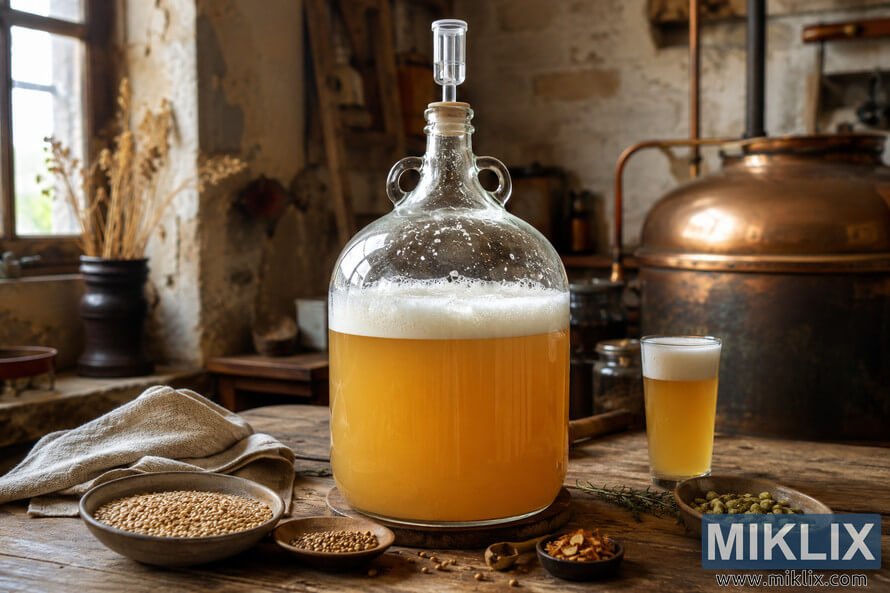
White Labs WLP410 Belgian Wit II Ale Yeast provides a balanced take on traditional Belgian wheat fermentation. It's chosen for its ability to produce spice and subtle fruit without the intense esters or farmhouse funk found in some Belgian strains.
Fermenting Beer with White Labs WLP410 Belgian Wit II Ale Yeast
Кликнете или допрете ја сликата за повеќе информации и поголема резолуција.
Key Takeaways
- White Labs WLP410 Belgian Wit II Ale Yeast delivers spice-forward, citrus-friendly character suited to Belgian-style wits.
- This guide targets homebrewers and small commercial brewers in the United States seeking pitching and temperature specifics.
- Coverage includes strain origin, flavor profiles, and practical handling for reliable fermenting Belgian wit batches.
- Expect clear pitching-rate recommendations, fermentation timelines, and troubleshooting steps later in the article.
- Comparisons to other Belgian wit strains and recipe examples will help you decide when to choose WLP410.
Overview of White Labs WLP410 Belgian Wit II Ale Yeast
White Labs WLP410 Belgian Wit II Ale Yeast provides a balanced take on traditional Belgian wheat fermentation. It's chosen for its ability to produce spice and subtle fruit without the intense esters or farmhouse funk found in some Belgian strains. This balance makes it a dependable choice for both traditional and modern recipes.
Origin and strain background
WLP410's origins are rooted in White Labs in San Diego, California. White Labs created and distributes this proprietary liquid ale strain to meet brewers' needs for restrained phenolics. It draws from traditional wheat and witbier cultures, known for its mild clove-like character and controlled ester production.
Typical flavor and aroma profile
Expect a gentle peppery spice and light clove phenolics. The strain's profile includes soft fruity esters like light banana and pear, but these notes are subtle. A soft wheat character supports adjunct citrus and coriander, leading to a bright, slightly tart finish.
Recommended beer styles
Use this strain for classic Belgian Witbier and American white ales that require a mild yeast presence. It's also suitable for low-ABV Belgian-style saisons or farmhouse ales where restrained phenolics are desired. Brewers looking to enhance citrus- or spice-forward pale wheat beers will find it complements their additions without overpowering them.
Кликнете или допрете ја сликата за повеќе информации и поголема резолуција.
Why Choose White Labs WLP410 Belgian Wit II Ale Yeast for Your Brew
Choosing the right yeast is crucial for a witbier's aroma, mouthfeel, and clarity. Brewers opt for WLP410 for a classic Belgian wheat taste. This yeast keeps spices and citrus in the forefront, offering a predictable fermentation and a soft haze.
Key characteristics that benefit homebrewers
WLP410 exhibits reliable flocculation, leaving a soft haze. Its moderate attenuation ensures a balanced body, avoiding sweetness or thinness. This makes it ideal for novice brewers seeking a consistent fermentation profile. The yeast's neutrality allows coriander and orange peel to dominate, giving brewers control over spice-driven recipes.
How it compares to other Belgian wit strains
In a Belgian wit yeast comparison, WLP410 is notable for its milder phenolics and esters. It offers less banana and clove intensity, perfect for recipes where adjuncts are key. Compared to dry wit strains like Safbrew WB-06, WLP410 provides richer liquid-yeast complexity. However, it requires careful storage and proper pitching to excel.
Brewing scenarios where it excels
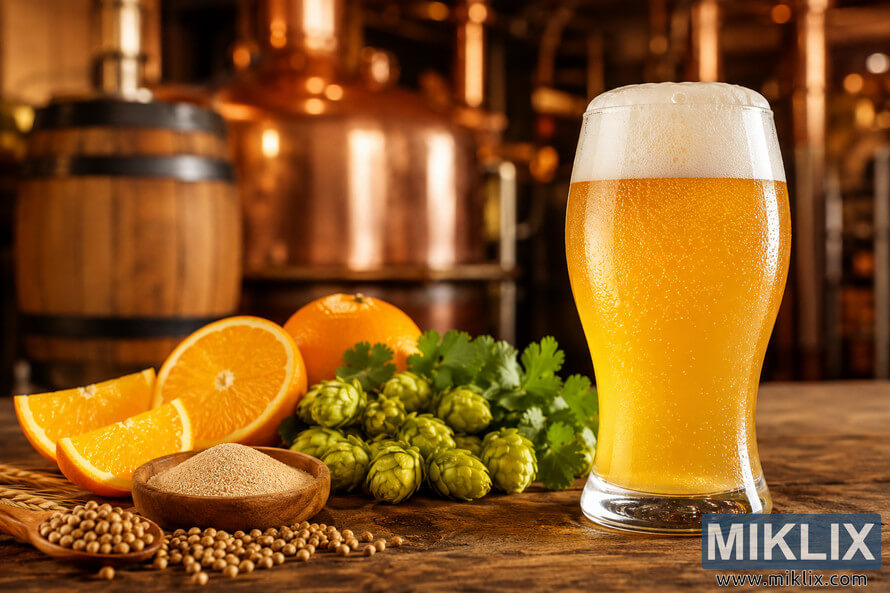
WLP410 is ideal for recipes that emphasize coriander and orange peel. It's perfect for balanced sessionable wheat ales that need body without overpowering esters. The strain complements modern additions like citrus zest and restrained hops, offering a subtle background for experimentation. For brewers seeking the best yeast for witbier, WLP410 is often the top choice.
Кликнете или допрете ја сликата за повеќе информации и поголема резолуција.
Preparing Your Wort for Belgian Wit Fermentation
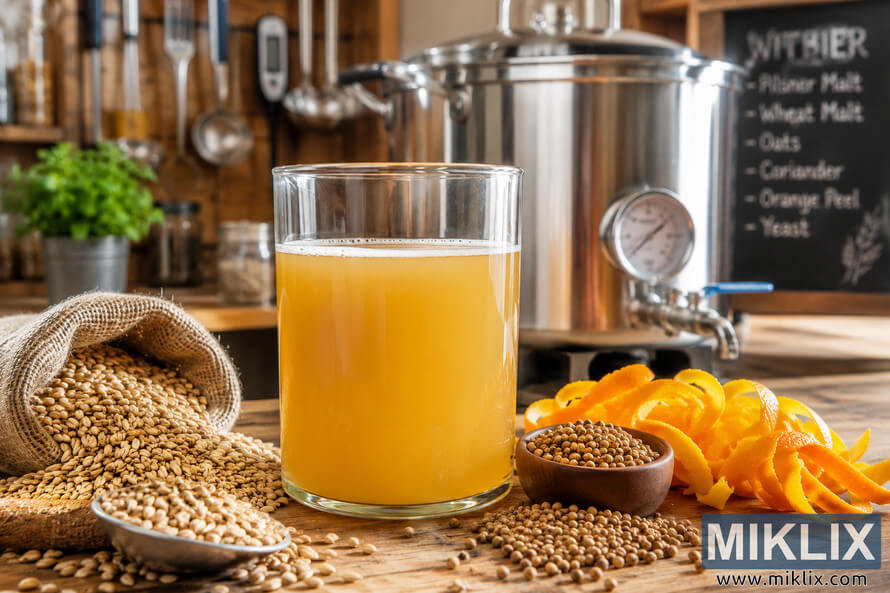
Begin by crafting a wort that enhances the bright, spicy essence of Belgian wit. Aim for a malt backbone that's clean, allowing citrus and coriander to take center stage. Ensure the grain bill and handling are precise, allowing White Labs WLP410 to showcase its unique esters and phenolics.
Target gravity and wort composition
For a classic Belgian wit, target a gravity of 1.044–1.056. This range provides a balanced body and a lively finish. For a lighter, more refreshing session version, aim for 1.040–1.045. A pilsner or pale base malt is ideal, as it avoids heavy flavors that could overshadow the yeast's contribution.
Adjuncts and grist considerations
Incorporate 30–40% wheat, including flaked wheat to achieve 40–50% total grain bill for enhanced haze and head retention. Add a small amount of flaked oats for added silkiness. Opt for light specialty malts like Carapils or small Vienna additions to add depth without overpowering the yeast's character.
- Excluding high-kilned malts from the grist is essential to preserve the citrus and spice notes.
- Adding 1–3% acidulated malt can help maintain mash pH, especially with large wheat percentages.
- Low hopping rates with noble or European aroma hops are recommended to maintain balance and allow the yeast to shine.
Sanitation and wort handling tips
Sanitation is paramount from cooling to transfer, as WLP410 is highly sensitive to contamination. Rapid cooling to pitching temperature is crucial to limit bacterial growth and ensure a clean start for the yeast.
Aerate the wort thoroughly before pitching to foster healthy fermentation. Use sanitized tools for racking, spice additions, and dry-hopping to maintain a contamination-free environment.
Кликнете или допрете ја сликата за повеќе информации и поголема резолуција.
Pitching Rates and Yeast Management
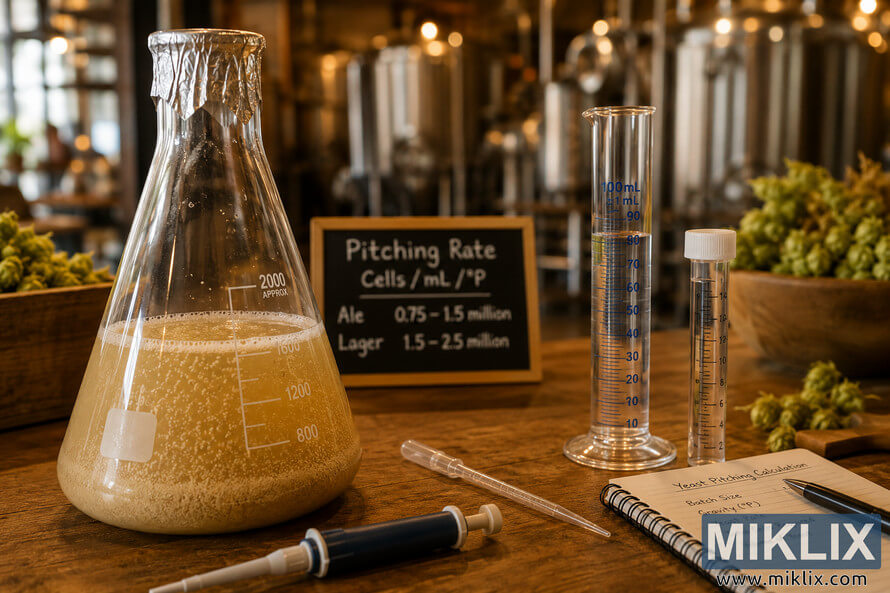
Mastering the WLP410 pitch rate is crucial for achieving vigorous fermentation and optimal flavor. Homebrewers will find practical guidance here on batch sizing, yeast starter creation, and the importance of proper storage and handling of White Labs liquid yeast.
Recommended pitch rates for different batch sizes
- For ale-strength witbiers with OGs between 1.044–1.056, aim for 0.75–1.5 million cells per mL per °P. A standard White Labs vial, containing about 100 billion cells, is suitable for most 5–10 gallon batches, especially at these gravities. For higher gravities or larger volumes, use an online cell calculator to calculate the exact cell count needed.
Practical examples
- For a 5 gallon batch with an OG of 1.048, one fresh vial is often enough.
- With a 10 gallon batch at 1.052 OG, consider using two vials or creating a yeast starter to meet the cell count target.
- For brews with OGs above 1.060, plan for additional cells or a stepped starter to ensure proper fermentation.
Using yeast starters vs. direct pitch
- Opt for a yeast starter when the vial is older, for larger batches, or to enhance attenuation and speed up fermentation. A 1–2 L starter is a reliable choice for most homebrew batches of 5–10 gallons.
- Direct pitching is suitable for fresh, refrigerated vials and standard OG witbiers. However, if you're unsure, a starter is a safer bet to avoid slow fermentation.
Starter tips
- Ensure the starter is well-oxygenated early on to foster healthy cell wall development.
- Use sterile technique when transferring the spent starter wort to avoid contamination.
- Pitch the entire starter for maximum vitality, unless you plan to cold crash and decant later.
Storing and handling White Labs liquid yeast
- Keep White Labs yeast refrigerated at 34–40°F (1–4°C) and use it before the expiration date printed on the vial. Store the vials upright to minimize sediment disturbance.
- Before pitching, gently swirl the vial to resuspend the yeast. Sanitize the cap and maintain sterile conditions when opening or pouring. Avoid freezing and keep the yeast at cool temperatures before use to preserve its viability.
Liquid yeast handling on brew day
- Remove the vial from cold storage just before pitching to allow the yeast to warm slightly. If you've prepared a starter, match the temperatures and pour both into the wort gently. Proper handling minimizes lag time and supports consistent attenuation.
Кликнете или допрете ја сликата за повеќе информации и поголема резолуција.
Optimal Fermentation Temperatures for White Labs WLP410 Belgian Wit II Ale Yeast
Managing fermentation temperature is crucial for a Belgian wit's character. Small temperature changes can significantly alter fruitiness, clove spice, and drinkability. Achieving the right temperature range is key to optimizing yeast performance and consistency.
Temperature ranges for primary fermentation
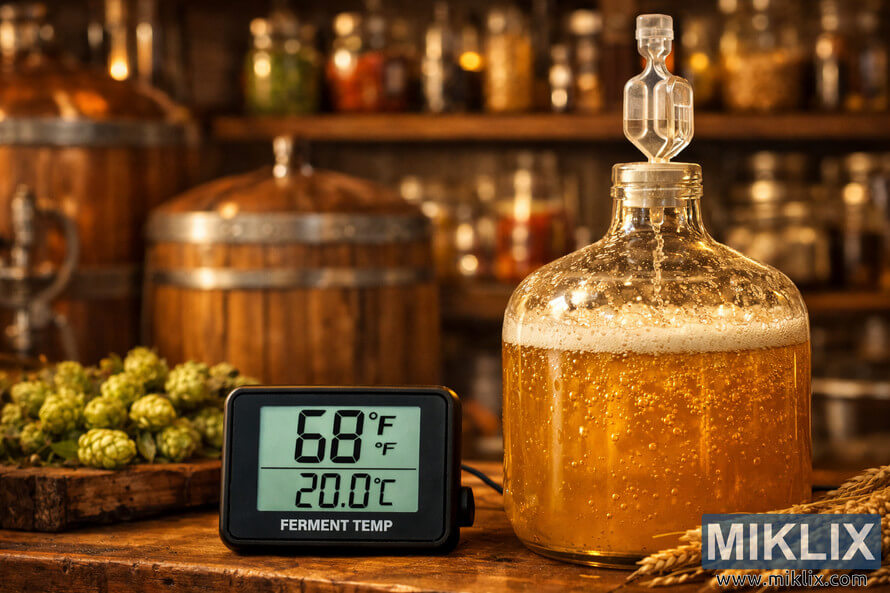
The ideal WLP410 fermentation temperature is between 64–72°F (18–22°C). For a cleaner, wheat-forward profile, aim for the lower end, around 64–68°F. To enhance spice and fruit notes, increase the temperature to 70–72°F.
Effects of temperature on esters and phenolics
Warmer temperatures during fermentation increase yeast esters and phenolics. This results in citrusy esters and clove-like phenols. Cooler temperatures, on the other hand, suppress these compounds, leading to a more restrained, bready character. It's important to avoid late temperature spikes, as they can introduce harsh off-flavors or fusel notes.
Temperature control methods for homebrewers
- Swamp cooler with a thermometer to gently lower temps in warm climates.
- Fermwrap or brew belt for modest heating during cool nights.
- Insulated jacket or dedicated fermentation chamber for steady conditions.
- Temperature controller with a chest freezer for precise control on a budget.
Always monitor fermentation with a reliable probe near the wort. Controlling fermentation temperature ensures predictable yeast behavior and better flavor outcomes.
Кликнете или допрете ја сликата за повеќе информации и поголема резолуција.
Fermentation Timeline and Activity Expectations
Understanding the WLP410 fermentation timeline is crucial for a successful Belgian wit. It helps in making decisions on temperature, sampling, and intervention. This is essential as the yeast establishes itself and works through the wort sugars.
Typical lag phase and visible activity
Expect a short lag phase WLP410 of about 12–36 hours with a fresh vial or a healthy starter. Small bubbles in the airlock and a thin krausen often appear within 24–48 hours. This is when pitching and temperature are correct.
How long primary fermentation usually takes
Active fermentation typically lasts 3–7 days for primary fermentation duration under normal homebrew conditions. It's wise to wait 7–14 days before checking final gravity. This allows for complete attenuation and yeast conditioning, especially for cooler ferments or larger batches.
Signs of a stalled or slow fermentation
- No krausen or little activity after 48–72 hours.
- Very low airlock bubbling and gravity not falling as expected.
- Presence of a film or pellicle, which can point to infection rather than yeast inactivity.
If you notice stalled fermentation signs, try gently warming the fermenter within the yeast’s safe range. Rouse the yeast by swirling a sealed carboy. Check pitch viability and, if needed, add a fresh starter or active strain to restart activity.
Flavor Development and Yeast-Derived Compounds
The interaction between yeast and fermentation conditions is crucial for a witbier's aroma and taste. WLP410 offers a mix of soft fruit esters and gentle phenolic spice, essential for the style. Brewers must carefully manage fermentation variables to achieve the perfect balance of fruit, clove, and peppery notes in the final beer.
Esters and phenols in witbier originate from yeast cell biochemical activity. Esters contribute soft banana or citrus hints, while phenols add clove-like and peppery tones. This yeast-derived spice complements traditional coriander and orange peel, creating a complex aroma in the glass.
Fermentation temperature, oxygen levels, and pitch rate significantly impact these compounds. Higher temperatures enhance esters and phenolics. Low oxygen and underpitching can lead to stressed yeast, resulting in spicy and solvent-like off-flavors. Conversely, overpitching may mute the yeast's distinct traits.
To balance yeast flavors, brewers should align recipe design with yeast characteristics. Opt for a neutral pale malt bill with a modest wheat percentage to highlight WLP410's character. Restrained hopping, at 15–25 IBU, helps avoid overshadowing delicate esters and phenols.
- Control temperature closely during active fermentation to steer ester levels.
- Provide adequate oxygen at pitch for a healthy fermentation and predictable flavor output.
- Adjust pitch rate to hit the desired yeast-derived spice character without stress.
Match final gravity and malt body to WLP410's moderate attenuation for a balanced beer. This approach ensures residual sweetness supports the spice without becoming cloying. Thoughtful balancing of yeast flavors with malt and hops results in a bright, nuanced witbier. It showcases esters and phenols while keeping the yeast-derived spice as a defining feature, not a distraction.
Using Spices and Citrus with White Labs WLP410 Belgian Wit II Ale Yeast
WLP410 yeast offers mild phenolics and soft esters, perfect for bright spices and citrus. Adding spices and citrus thoughtfully can enhance the yeast's flavor while maintaining balance. Here are some practical tips on dosages, timing, and creative pairings for both classic and modern witbiers.
When using traditional witbier spices, it's crucial to use measured amounts. Crushed coriander seed is typically added at 8–15 g per 5 gallons, while bitter or sweet orange peel is added at 8–16 g per 5 gallons. Opt for toasted or lightly crushed coriander to release oils without introducing too much bitterness.
The timing and method of adding spices are key for optimal aroma and flavor. Add spices in the last 5–15 minutes of the boil to sanitize and preserve volatile oils. For a brighter citrus character, add fresh zest or peel in secondary or during conditioning. Sanitize peel by soaking in a neutral spirit or pasteurize briefly to lower infection risk.
- Use coriander and orange peel timing to balance aroma and mouthfeel.
- Add crushed coriander late in the boil for rounded spice notes.
- Introduce fresh citrus zest during conditioning for volatile oil retention.
WLP410 invites both classic and modern spice pairings. Try grains of paradise for a peppery lift or chamomile for a floral touch. Lemongrass and ginger add bright, herbal notes that complement the yeast’s light phenolics.
- Consider bergamot, lemon, or lime when exploring citrus with wit yeast.
- Pair fruit purée cautiously; monitor fermentation and sanitation closely.
- Use hop-forward options like Citra or Amarillo to build modern wit interpretations.
Keep spice levels modest to ensure the yeast character is audible. Track ingredient weights and split additions across boil and conditioning to refine the profile in future brews. Thoughtful use of witbier spices will amplify WLP410’s best traits without masking them.
Measuring and Adjusting Attenuation and Final Gravity
Accurate readings are crucial for making decisions during and after fermentation. WLP410 attenuation falls in a moderate range. Knowing how to measure gravity is key to predicting the beer's balance and body. Below, we outline expectations, reading techniques, and practical fixes for adjusting FG in beer when it's higher than planned.
Expected attenuation range
White Labs WLP410 typically shows attenuation around 70–78% with average wort compositions. For classic witbier original gravities, this range often produces a final gravity witbier around 1.008–1.014. Variations in mash temperature, adjuncts, and pitch rate will shift where a batch lands within that window.
How to read and interpret gravity
Use a calibrated hydrometer or a digital refractometer corrected for alcohol to track gravity. Take an original gravity (OG) before pitching, then take final gravity (FG) readings after fermentation calms. Calculate apparent attenuation as (OG − FG) / (OG − 1) × 100% to assess performance.
Record readings over several days. A steady decline indicates a finishing fermentation. If readings are flat for three days, the beer has likely reached stable gravity.
Adjustments to reach desired final gravity
If your FG is above target, start by giving yeast more time. A slow finish often resolves with extra conditioning. Raise the fermentation temperature by 2–4°F for a few days to encourage residual activity when yeast under-attenuation is suspected.
- Oxygenate and repitch: If yeast health was poor, prepare a healthy starter or use an active dry strain like Safale US-05 for a gentle push. Oxygenate carefully only before repitching.
- Enzyme addition: For high-mash or high-adjunct beers, a measured dose of amyloglucosidase can ferment dextrins and lower FG. Use this selectively to avoid over-thinning body.
- Extended conditioning: Some batches naturally finish slowly. Cold conditioning for a week or two can clarify and reveal a gradual drop in gravity.
Track WLP410 attenuation across batches to refine mash profiles and pitching practices. Consistent measuring gravity habits will improve predictability. This helps you choose the right method to adjust FG in beer when needed.
Conditioning and Carbonation Techniques for Belgian Wit Ales
Wit ales' drinkability is greatly enhanced by final conditioning and carbonation. A brief guide helps brewers select the best method for their equipment, schedule, and desired mouthfeel.
Bottle conditioning vs. force carbonation
Bottle conditioning employs priming sugar and live yeast to create natural CO2. This technique adds a nuanced complexity and a softer mousse. It's crucial to maintain sanitation and use the correct priming rates to avoid overcarbonation.
Force carbonation in a keg offers precise control over carbonation levels and speeds up the process. It produces a cleaner, tighter bubble structure, ideal for draft pours. Both methods work well with WLP410-fermented beers; the choice depends on the equipment and timeline available.
Aging and conditioning timeframes
For bottle conditioning, allow 1–2 weeks at room temperature for carbonation to develop. Then, follow with 1–2 weeks of cold-conditioning to help yeast drop out and flavors integrate.
Kegged beer can be force-carbonated in days. However, a week of conditioning at serving temperature enhances flavor integration. Session wits typically take 3–6 weeks from brew day to glass. More complex variants may require longer aging.
Serving carbonation levels for style authenticity
Witbier's carbonation levels should be between 2.5 and 3.5 volumes of CO2. This range ensures lively effervescence and a creamy head that enhances aroma compounds.
Serve chilled at 40–45°F (4–7°C) in a wheat or tulip glass to highlight aroma and retention. Proper serving carbonation balances acidity and spice while preserving the beer's delicate profile.
- Check priming calculators when bottle conditioning to match carbonation goals.
- When kegging, use measured psi and time to hit desired carbonation levels for witbier.
- Record timing and temperatures for repeatable results in future batches.
Troubleshooting Common Fermentation Issues
Small problems during a wit fermentation can grow fast. This short guide helps you spot common faults, read fermentation signs, and take measured steps to protect your batch. Keep notes as you work so future WLP410 troubleshooting goes smoother.
Off-flavors and odd aromas tell a story about what happened in the fermenter. Phenolic or spicy bitterness beyond style norms often comes from high fermentation temperatures or excess yeast activity. Solventy or harsh alcohol notes point to warm fermentation or oxygen problems early on. A buttery diacetyl sensation usually means yeast were stressed or the beer was packaged before cleanup finished. Sour or sharp tartness most often signals bacterial influence rather than yeast behavior.
To diagnose witbier off-flavors, compare your sensory notes to fermentation records. Check temperature logs and original gravity. If phenolics are high and temps were warm, cool the fermenter and let the yeast finish. If solvent notes appear with low attenuation, oxygen exposure or high temp spikes are likely culprits.
Visible signs of yeast contamination include pellicles, odd films, or an unpleasant sour smell that develops quickly. When you suspect yeast contamination, isolate the vessel to protect other batches. Clean and sanitize all gear that contacted the beer. If a pellicle or strong bacterial sourness is present, safe practice is to discard the batch and deepen sanitation protocols.
Minor bacterial character can sometimes fade with long, cool conditioning and strict oxygen exclusion. This approach carries risk. Evaluate by small sample tastings over weeks before deciding to bottle or keg.
When fermentation stalls, take a methodical approach to fix stalled fermentation. First, check a gravity reading to confirm activity. Verify that the fermenter temperature sits in the recommended range for the yeast. Gently rouse settled yeast by swirling the fermenter or tipping it slightly to suspend trub without introducing oxygen.
If gravity shows little change and temperature is low, raise the fermenter a few degrees to wake the yeast. If underpitching or an old vial was used, consider adding a healthy, active starter of a neutral ale strain to finish attenuation. Maintain strict sanitation when adding yeast or making any intervention.
- Record gravity and temperature before any action.
- Raise temperature by 2–4°F if yeast seem sluggish.
- Gently re-suspend yeast; avoid splashing in oxygen.
- Add a fresh starter only when clear evidence shows yeast shortage.
After interventions, monitor gravity over several days. If readings fall, let the beer complete fermentation and settle again. If no improvement occurs, isolate the batch and weigh the risks of extended conditioning versus discarding.
Good sanitation, careful pitching, and steady temperatures reduce the need for intensive WLP410 troubleshooting. When issues arise, act calmly, document steps, and use measured fixes to protect flavor and avoid yeast contamination in later batches.
Packaging and Serving Considerations
Choosing the right packaging and serving method for Belgian witbier is crucial. It impacts flavor, shelf life, and presentation. This guide will help brewers decide between bottles and kegs, discuss transfer practices, and select the best glassware and temperature. These choices are key to enhancing aroma and mouthfeel.
Bottle or Keg: practical trade-offs
Bottling with natural conditioning offers a traditional touch. It allows flavors to mature in the bottle. This method is popular for retail sales and gifting due to its convenience and appeal.
Kegging, on the other hand, speeds up service and ensures consistent carbonation. It's ideal for taprooms and home draft systems, reducing waste and simplifying distribution. When deciding between bottling and kegging, consider storage duration and serving plans.
Transfer and packaging best practices
Oxygen can spoil the delicate aromas of witbier. Minimize air exposure during cold crash, racking, and filling. Closed transfers help keep dissolved oxygen levels low.
- Purge kegs with CO2 before filling to reduce oxidation and preserve hop and yeast character.
- Sanitize all bottling tools, bottles, and keg fittings to prevent contamination.
- Cold condition to drop yeast and improve clarity, maintaining a slight haze typical of the style.
Serving glassware and temperature tips
Opt for serving glassware that enhances aroma and supports a lively head. Wheat glasses, tulips, or Weizenbier glasses are excellent choices.
Serve witbier between 40–45°F (4–7°C). This temperature range keeps the beer crisp and bright, allowing citrus and spice notes to shine.
Comparative Review: White Labs WLP410 vs. Similar Yeasts
Choosing the right yeast is crucial for a witbier's aroma, spice balance, and mouthfeel. This review compares WLP410 with other Belgian wit strains and dry options. It examines performance, practical brewing choices, and supply factors affecting both hobbyists and professionals.
When comparing WLP410 with other Belgian wit strains, focus on phenolic and ester expression. WLP410 has milder phenolics than White Labs WLP400 and Wyeast 3944. This results in a softer clove note and more subtle banana esters. In head-to-head trials, WLP410 often provides a rounder finish and slightly lower attenuation than punchier Belgian ale yeasts.
The choice between WLP410 and other options depends on the brew's goal. Opt for WLP410 when nuance is key and traditional spice adjuncts like coriander and bitter orange peel are essential. For quicker brews, limited refrigeration, or when cost and shelf stability are more important, dry strains like SafAle WB-06 or Safbrew WB-06 are better. Brewers aiming for competition success or high-quality brewpub offerings often prefer WLP410 for its consistent character.
Cost, availability, and shelf-life are significant factors in daily choices. White Labs liquid yeast is generally pricier per vial than dry packets from Fermentis. Availability in the United States is strong through homebrew shops and online retailers, but shipping requires refrigeration. It's important to consider yeast cost and shelf life: refrigerated vials have a limited lifespan and perform best before the expiration date. Making a starter can revive older vials and extend a purchase across multiple batches.
- Performance: subtle phenolics, balanced esters, softer mouthfeel.
- When to use: best for nuanced, spice-forward witbiers and quality-focused brews.
- Practical trade-offs: liquid vs dry wit yeast covers complexity versus convenience and expense.
- Supply note: higher price, shorter shelf-life; use refrigerated shipping and consider starters for older vials.
Recipe Examples and Brewing Walkthroughs
This section offers practical recipes and a detailed brewing timeline. It helps brewers create an authentic Belgian wit using White Labs WLP410. You'll find ingredient notes, a WLP410 recipe example, and a step-by-step checklist for a smooth brew day and fermentation.
Classic Belgian wit recipe using WLP410
Target OG 1.048. The grain bill includes 40% flaked wheat, 60% Pilsner pale malt, and 2–4% Carapils for head retention. Saaz or Hallertau hops are used to achieve 15–20 IBU. Add 8–12 g coriander per 5 gal with 5–10 minutes left in the boil. Include 8–12 g bitter orange peel in the final 5–10 minutes.
Pitch WLP410 at 66–68°F for a controlled ester profile. Expect primary fermentation in 5–7 days. Condition and carbonate to 2.8–3.2 volumes of CO2 for style-appropriate effervescence.
Modern variations and experimental recipes
Try a light-hop-forward wit using American hops like Citra or Amarillo as late aroma additions. This adds citrus and floral notes while keeping bitterness low. For fruit-forward versions, add pureed citrus or stone fruit in secondary to boost fresh fruit character.
Spiced variants can use grains of paradise, fresh ginger, or chamomile in small amounts. Adjust adjuncts and fermentation temperature to emphasize or mute yeast-driven spice and phenolic qualities in each WLP410 recipe.
Step-by-step brewing timeline and checklist
- Mash 60–75 minutes, targeting 148–152°F for a balanced body.
- Mash out, sparge, then collect wort for a 60-minute boil.
- Add hops and spices per schedule: hops early for bittering, spices in last 10 minutes.
- Chill wort to 66–68°F, aerate vigorously, and pitch WLP410 (direct pitch or starter).
- Primary fermentation 3–7 days. Monitor gravity and airlock activity.
- Optional cold crash, then transfer to keg or prepare for bottle conditioning.
- Carbonate to 2.8–3.2 vols and serve at style-appropriate temperature.
Use this brewing walkthrough for witbier to keep each step clear and repeatable. The checklist covers mash profile, hop and spice timing, pitching practices, and conditioning targets. This way, you can reproduce a reliable classic wit recipe or explore new WLP410 recipe ideas.
Resources for Buying and Handling White Labs WLP410 Belgian Wit II Ale Yeast
Acquiring and managing WLP410 is simple once you know the right sources and what to look for in the vial. Here are some practical tips for U.S. buyers, understanding label details, and tools to enhance yeast performance in your brewery.
Where to purchase in the United States
Homebrew giants like Northern Brewer, MoreBeer, and Midwest Supplies often carry White Labs strains. White Labs also sells directly through its website, and many local brewshops stock WLP410. When purchasing WLP410 US, verify refrigerated shipping options and local laws on live-culture shipments.
How to interpret White Labs labeling and vial info
White Labs vial details include the strain number (WLP410), production and expiration dates, recommended cell counts, and storage tips. Labels usually show an approximate cell count and a suggested pitching temperature. Always follow the printed storage and temperature guidelines. For precise vial size and viability, refer to White Labs technical sheets.
Useful tools and further reading for brewers
Effective yeast management tools are crucial for fermentation success. Utilize yeast calculators like Mr. Malty or Brewer’s Friend for starter sizes. A hydrometer or refractometer is essential for gravity readings, and a temperature controller or fermometer ensures stable fermentation. A basic yeast starter kit is invaluable for high-gravity batches.
- White Labs retailers and technical datasheets for strain specifics.
- Brewing books such as The Homebrewer’s Companion for background and recipes.
- Online communities like HomeBrewTalk and Reddit r/Homebrewing for troubleshooting and ideas.
Proper handling from purchase to pitch minimizes off-flavors and stalled ferments. Combine White Labs vial information with yeast handling resources and choose reputable White Labs retailers to ensure your Belgian wit ales succeed.
Conclusion
WLP410 summary: White Labs WLP410 Belgian Wit II is a reliable liquid strain. It delivers mild phenolic spice and restrained esters. This yeast provides a predictable fermentation profile, enhancing coriander and orange peel without overpowering them. It's ideal for those seeking a classic witbier backbone with room for adjuncts to shine.
When fermenting with WLP410, follow best practices WLP410: pitch appropriate cell counts, consider a starter for older vials or larger batches, and maintain steady fermentation temperatures. These steps control ester and phenolic balance. This helps the strain express the subtle citrus and spice character brewers expect.
Packaging choices and conditioning are crucial for final clarity and mouthfeel. Bottle conditioning or kegging both work; choose based on serving needs and carbonation goals. The review conclusion is that WLP410 is worth the extra handling compared with many dry wit strains. This is especially true when you value liquid-culture nuance and consistency.
For U.S. homebrewers seeking a nuanced, trustworthy Belgian wit yeast, WLP410 offers a strong value proposition. It naturally pairs with traditional wit adjuncts, supports repeatable results, and rewards attention to pitch rate and temperature control for the best final beer.
FAQ
What flavors and aromas can I expect from White Labs WLP410 Belgian Wit II Ale Yeast?
WLP410 Belgian Wit II Ale Yeast brings a unique flavor profile. It offers mild clove-like phenolics and gentle peppery spice. You'll also notice light fruity esters, such as soft banana or pear.
It preserves a bright wheat character. This lets coriander, orange peel, and citrus adjuncts stand out. The yeast is restrained, unlike more aggressive Belgian strains.
What fermentation temperature should I use to control ester and phenolic expression?
For WLP410, aim for a fermentation temperature of 64–72°F (18–22°C). To achieve a cleaner profile and fewer esters, ferment at 64–68°F. For more spicy phenolics and fruity esters, aim for 70–72°F.
Avoid wide temperature swings. They can create harsh off-flavors or fusel alcohols.
How much WLP410 should I pitch for a typical 5-gallon witbier?
A fresh White Labs vial (nominally 100 billion cells) will generally cover a 5–10 gallon batch. This is for typical witbier gravities (OG 1.044–1.056). For best results, target roughly 0.75–1.5 million cells per mL per °P.
Use a yeast calculator (Mr. Malty, Brewer’s Friend) or make a 1–2 L starter for older vials, higher OG, or larger batches.
Should I build a starter or direct-pitch WLP410?
Direct pitching is acceptable for fresh, refrigerated vials and standard-strength witbiers. Build a starter when the vial is near its expiration, for larger volumes (5+ gallons) or high-gravity beers, or for extra fermentation vigor and attenuation.
A 1–2 L starter is a practical safeguard for most homebrewers.
What OG and grist composition work best with WLP410 for a classic witbier?
Target an OG of about 1.044–1.056 for a classic wit. Use a base of pilsner or pale malt with 30–50% total wheat. Often, 40% flaked wheat is used for mouthfeel and head retention.
Light specialty malts like Carapils help body without masking spice and citrus. Avoid dark malts that overwhelm delicate aromas.
How much coriander and orange peel should I add to a 5-gallon batch?
Typical ranges are 8–15 g of crushed coriander seed and 8–16 g of bitter or sweet orange peel per 5 gallons. Add spices in the last 5–15 minutes of the boil for sanitization and aroma retention.
For brighter citrus character, consider a small, sanitized addition of fresh zest in secondary conditioning.
What attenuation and final gravity can I expect from WLP410?
WLP410 generally attenuates in the 70–78% range under normal conditions. For classic witbier OGs, this typically yields a final gravity around 1.008–1.014. Actual FG will depend on mash profile, mash temperature, oxygenation, and pitch rate.
How long should primary fermentation and conditioning take?
Active primary fermentation usually lasts 3–7 days. Allow 7–14 days total before checking final gravity to ensure complete attenuation. For bottle conditioning, allow 1–2 weeks at room temperature for carbonation, then cold condition another 1–2 weeks.
Kegging speeds carbonation but benefits from a week of conditioning for flavor melding.
What carbonation level should I target for serving Belgian witbier?
Target 2.5–3.5 volumes of CO2 for a lively effervescence and creamy head typical of the style. Serve chilled at 40–45°F (4–7°C) in a wheat glass, tulip, or Weizenbier glass to capture aroma and retain head.
How should I store and handle White Labs liquid yeast to maintain viability?
Keep vials refrigerated at 34–40°F (1–4°C) and use before the expiration date. Swirl gently to resuspend yeast before pitching. Sanitize the cap before opening, avoid freezing, and minimize time at warm temperatures.
Make a starter for older vials or when in doubt about cell counts.
What are common fermentation problems with WLP410 and how can I troubleshoot them?
Common issues include delayed fermentation (little krausen after 48–72 hours), stuck fermentation, or excessive phenolic character. Troubleshoot by checking temperature, gently warming the fermenter a few degrees, rousing the yeast, verifying pitch viability, and adding an active starter or fresh yeast if needed.
For infection signs (pellicle, sharp sourness), isolate and sanitize; discard if unsafe.
How does WLP410 compare to other Belgian wit strains like WLP400 or dry strains such as Safbrew WB-06?
WLP410 offers milder phenolics and esters than some classic Belgian ale strains like WLP400 or Wyeast 3944. Compared to dry strains like Safbrew WB-06, WLP410 provides more nuanced liquid-culture complexity but requires refrigerated storage and may cost more.
Choose WLP410 for subtle, spice-friendly profiles; choose dry strains for shelf stability and ease of use.
Can I cold crash WLP410-fermented beer to improve clarity while retaining haze?
Yes. A short cold crash (24–72 hours) can help drop excess yeast and trub while retaining the soft haze characteristic of a witbier. Cold conditioning after carbonation will further stabilize clarity. Avoid overly long cold storage if you want to maintain some yeast suspension for mouthfeel and head retention.
Are there modern adjuncts or hop choices that pair well with WLP410?
Modern variations work well: American aroma hops like Citra or Amarillo for bright citrus notes, fruit additions such as citrus purée or zest, and spices like grains of paradise, ginger, or chamomile. Keep hop bitterness low (15–25 IBU typical) so hops and adjuncts complement rather than overwhelm the yeast and spice character.
Where can I buy White Labs WLP410 in the United States and what should I look for on the vial?
Major suppliers include Northern Brewer, MoreBeer, Midwest Supplies, and the White Labs website. Look for strain number WLP410, manufacture and expiration dates, recommended storage temps, and vial cell counts. Buy from retailers that ship refrigerated when possible and check the product’s freshness before pitching.
Дополнително читање
Ако ви се допадна овој пост, можеби ќе ви се допаднат и овие предлози:
- Ферментирање на пиво со француски сеиски квасец Wyeast 3711
- Ферментирање на пиво со квасец од лондонско пиво White Labs WLP013
- Ферментирање на пиво со квасец Wyest 3944 белгиски Witbier