
Hops in Beer Brewing: Brambling
പ്രസിദ്ധീകരിച്ചത്:
അവസാനം അപ്ഡേറ്റ് ചെയ്തത്: 2026, ജൂലൈ 12 8:29:45 PM UTC
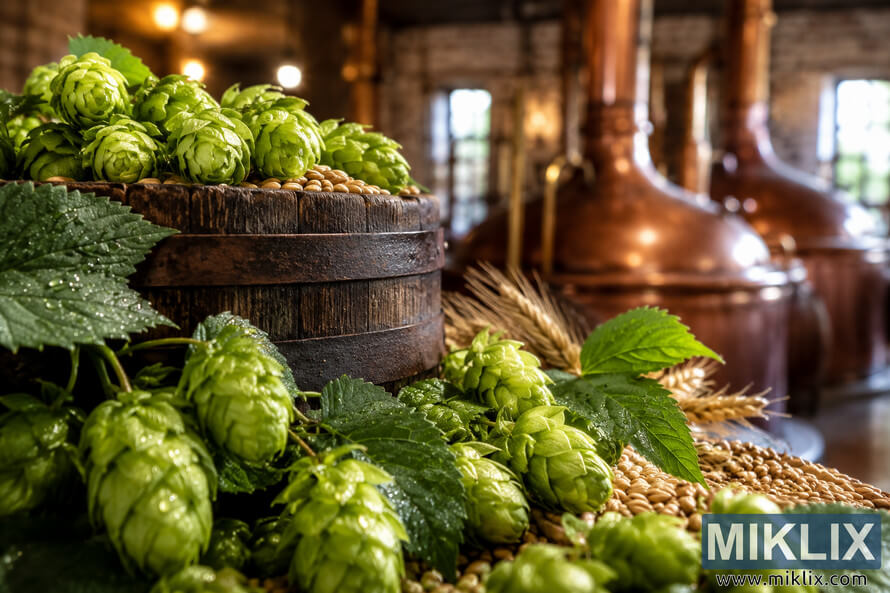
Brambling hops are a modern aroma hop variety that's quickly becoming popular among craft brewers and homebrewers. They are known for their bright, fruit-forward character. This makes them perfect for enhancing IPAs, pale ales, and experimental small batches.
Hops in Beer Brewing: Brambling
കൂടുതൽ വിവരങ്ങൾക്കും ഉയർന്ന റെസല്യൂഷനും ചിത്രത്തിൽ ക്ലിക്ക് ചെയ്യുക അല്ലെങ്കിൽ ടാപ്പ് ചെയ്യുക.
This article delves into the Brambling hop profile, offering practical advice on botanical traits, sensory descriptors, and their use throughout the brew day. You'll get clear guidance on mash and water adjustments, boil timing, whirlpool and dry-hop techniques, along with recipe templates and yeast pairing suggestions.
It's aimed at craft brewing teams, homebrewers, brewery R&D staff, and hop buyers seeking evidence-based, actionable tips. The approach is informative, rooted in brewing science and industry practices. It's designed to help you achieve consistent results when brewing with Brambling.
Key Takeaways
- Brambling hops deliver bright, fruit-forward aromas suited to hop-forward styles.
- Use late additions and whirlpooling to preserve delicate aromatics.
- Adjust water profile for hop clarity and balance with malt backbone.
- Select neutral American ale yeasts to showcase Brambling hop profile.
- Store pellets and cones cold and vacuum-sealed to retain aroma.
Introduction to Brambling hops and their place in craft brewing
Brambling has caught the eye of brewers seeking fresh fruit-forward hop flavors. This introduction explores its origins, unique characteristics, and why it's gaining traction in IPAs and pale ales among small breweries and homebrewers.
Origins and breeding background
Brambling's roots lie in the UK's formal hop breeding programs and US trials focusing on aroma and disease resistance. The James Hutton Institute and commercial breeding houses have been pivotal in modern hop breeding. They've created many new hops that craft brewing relies on today. Brambling's lineage is a result of breeding to enhance fruit esters, maintain good yield, and ensure mildew tolerance.
General characteristics that set Brambling hops apart
- Aroma profile: vivid citrus and stone fruit with a clean floral lift that reads as fruit-forward in tasting panels.
- Plant traits: vigorous but manageable vines, decent cone set and moderate yields for boutique-scale farming.
- Alpha acid range: typically moderate, fitting brewers who want aroma over heavy bitterness.
- Formats: available as pellets and whole-cone, with pellets common for commercial use and whole-cone preferred by some craft brewers for gentle handling.
Why craft brewers are experimenting with this variety
Small and regional breweries like Sierra Nevada and New Belgium have a history of trying new hops. Brambling's appeal lies in its ability to offer brewers fresh flavor options for hop-forward styles. It's used in single-hop trials, blends, and dry hop trials to explore layered fruit tones.
The growth of new hop varieties in craft brewing opens the door for unique ingredients that can define a brewery's seasonal offerings. In the US, Brambling's limited availability adds to its boutique status. Interest in its origins and breeding background encourages growers to increase production. This demand fuels more recipe testing and small-batch releases across the market.
കൂടുതൽ വിവരങ്ങൾക്കും ഉയർന്ന റെസല്യൂഷനും ചിത്രത്തിൽ ക്ലിക്ക് ചെയ്യുക അല്ലെങ്കിൽ ടാപ്പ് ചെയ്യുക.
Brambling hops
Brambling hops stand out with their compact, showy appearance in the hop catalog. This section delves into their growth traits, sensory notes, and brewing implications. It aims to help brewers assess their suitability for recipes and schedules.
Botanical profile and appearance
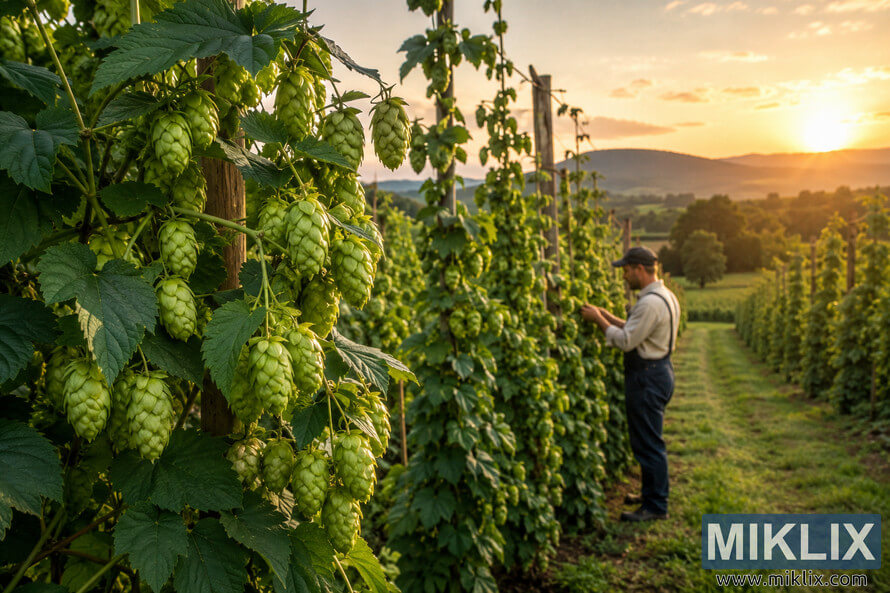
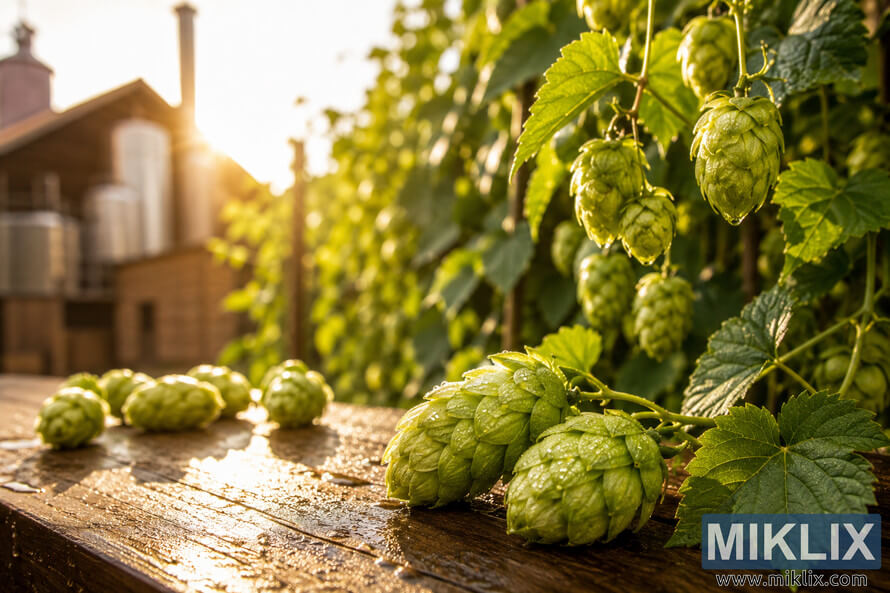
Brambling, a cultivar of Humulus lupulus, boasts medium-sized cones with tight, somewhat compact leaves around the lupulin pocket. Its cone length is short to medium, with a dense feel that many growers appreciate for handling and processing. The lupulin color often ranges from deep gold to amber, indicating ripe aromatic oils.
Plant vigor is solid, without extreme bines, making Brambling suitable for Pacific Northwest yards and select eastern U.S. hop farms. Commercial supply comes as both pellets and whole-cone forms. Some suppliers prefer pellets for their storage stability, while whole-cone lots appeal to brewers seeking intact hop appearance and aroma nuances.
Aroma and flavor descriptors
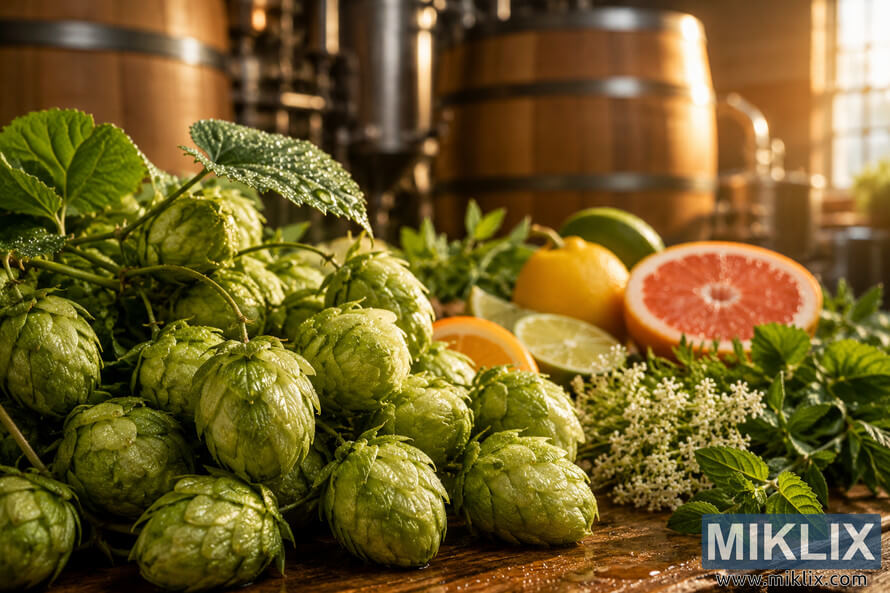
Brambling aroma is known for its layered fruit characters. Sensory panels, growers, and catalogs report citrus notes like grapefruit and mandarin upfront.
Behind the citrus, tropical cues such as mango and pineapple, along with stone fruit hints, add sweetness and depth. Floral and light herbal tones round out the profile, with a subtle spice edge in some harvests. These descriptors guide brewers in planning late additions, dry hops, and blend partners.
Alpha acid range and what it means for brewers
Brambling alpha acids typically fall in a moderate range, often around mid-single digits to low double digits. This range makes the variety flexible for both bittering and aroma uses, depending on the batch assay from a supplier.
Alpha acids drive bitterness and determine utilization in the boil. When assays show higher Brambling alpha acids, it can serve as a dual-purpose hop, reducing the need for separate bittering additions. When assays run lower, reserve Brambling for late additions and dry hopping to showcase its aroma, while choosing a higher-alpha variety for base IBUs.
Account for year-to-year variation by checking the certificate of analysis from growers and adjusting your IBU math. This step preserves intended balance and ensures hop contributions match recipe goals.
കൂടുതൽ വിവരങ്ങൾക്കും ഉയർന്ന റെസല്യൂഷനും ചിത്രത്തിൽ ക്ലിക്ക് ചെയ്യുക അല്ലെങ്കിൽ ടാപ്പ് ചെയ്യുക.
Flavor profiles and sensory expectations
Brambling hops offer a complex aroma that challenges brewers to refine their recipes. This section delves into common descriptors and how they evolve from brew day to storage. These insights help brewers aim for clarity in hop sensory, extend shelf life, and choose complementary malts and yeast.
- Citrus: citrus can range from sharp peel oils to softer pith and tang. In clean pale ales, expect vibrant orange-peel and grapefruit notes. In malt-forward styles, these zest notes will be milder but still refreshing.
- Floral: floral aromas span from fresh meadow flowers to a perfumed, geranium-like quality. When kept light, floral notes are delicate and uplifting. However, if yeast esters rise, floral can merge with other aromas, creating a more complex bouquet.
- Tropical: tropical flavors include underripe mango and guava to candied pineapple. Ripe-fruit tones emerge in warmer-fermented beers or with late hop additions. Candied fruit notes develop with aging or in sweeter malt bills.
Understanding how these attributes manifest across styles is crucial. A session IPA with pilsner malt will highlight peel and fresh floral notes. An English-ale base, on the other hand, will emphasize softer tropical and perfumed traits.
How aroma evolves during fermentation and aging
Hop-derived terpenes are volatile, losing many aromatic compounds during vigorous fermentation. This change impacts the hop sensory profile in the first days post-yeast activity peak.
Yeast esters interact with hop compounds, altering the aroma. Neutral ale strains like Wyeast 1056 or Safale US-05 preserve hop clarity. More expressive strains, such as Wyeast 1318 or certain Belgian strains, add fruity esters that blend with hop notes, creating new aroma combinations.
Over time, hop intensity wanes. Aging effects include the loss of bright citrus oils and a shift towards darker, candied fruit tones. To enhance longevity, store with low oxygen, keep cold, and keg when possible.
Pairing hops with malt and yeast choices
- Light malt bases: pilsner and American pale malt showcase Brambling hops. Keep specialty malts under 10% to avoid masking hop brightness.
- Crystal and light amber: small amounts add body and contrast tropical notes. Avoid heavy crystal to preserve hop lift.
- Yeast selection: choose neutral American ale strains for hop clarity. For interplay, select English or Belgian strains that add ester layers.
- ABV and body targets: aim for 4.5–6.5% ABV and moderate body for hop-forward beers. Higher ABV and heavy dextrins can mute citrus and floral top notes.
When crafting recipes, view Brambling hops as a delicate, fruit-forward tool. Employ late additions, controlled fermentation, and light malt bills to present the ideal Brambling flavor profile. This approach accounts for hop aging effects and pairs well with malts and yeast.
കൂടുതൽ വിവരങ്ങൾക്കും ഉയർന്ന റെസല്യൂഷനും ചിത്രത്തിൽ ക്ലിക്ക് ചെയ്യുക അല്ലെങ്കിൽ ടാപ്പ് ചെയ്യുക.
When to use Brambling hops in the boil
Brambling hops are versatile, suitable for both bittering and flavor additions. Early additions are best for clean bitterness, while late additions enhance aroma. Below, we explore how to portion out additions, estimate utilization, and maintain control over boil bitterness.
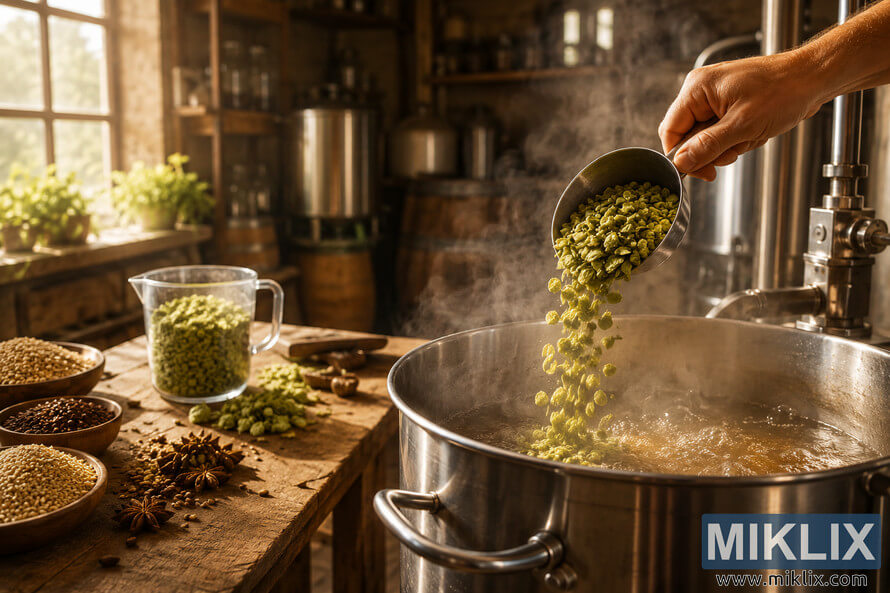
For stable IBUs, use Brambling hops in 60–90 minute additions. Allocate 60–80% of the total bittering hops to the long boil. Reserve the rest for whirlpool or late-kettle flavor additions. This strategy keeps the hop schedule focused on Brambling while avoiding harsh vegetal notes.
Alpha acid tests can vary between suppliers or harvest years. Always verify lab-reported values before calculating IBUs. A single batch can vary significantly if you assume one alpha when the actual value is different. Adjust Brambling boil additions by weight to achieve the desired IBUs.
- Tip: If Brambling alpha is under your target, blend a high-alpha bittering hop such as Magnum or Columbus into the early addition to protect the flavor profile.
- Tip: For hop-forward pale ales, aim for 35–55 IBU when using Brambling as the primary bittering hop.
- Tip: For cleaner lagers or session beers, aim for 20–35 IBU and lean on late additions for aroma.
Isomerization of alpha acids depends on time, temperature, wort gravity, and pH. Higher gravity worts reduce utilization. Lower wort pH also reduces perceived bitterness. Monitor these variables when planning your hop schedule Brambling to maintain consistent results across batches.
Consider hybrid schedules that pair Brambling with a neutral, high-alpha bittering hop for the 60–90 minute charge. Add pure Brambling at 10–20 minutes and at flameout. This approach preserves aroma while delivering predictable boil bitterness control for stylistic targets.
Practical calculation steps:
- Confirm Brambling alpha from the supplier or recent analysis.
- Decide target IBUs for the recipe style.
- Allocate 60–80% of bittering weight to 60–90 minute additions when using Brambling for primary bitterness.
- Top up with whirlpool or late-kettle additions for aroma and balance.
Small-batch testing is crucial. Run a one-gallon or two-gallon trial when a new harvest arrives. This helps refine Brambling boil additions and the hop schedule for consistent boil bitterness control in production batches.
കൂടുതൽ വിവരങ്ങൾക്കും ഉയർന്ന റെസല്യൂഷനും ചിത്രത്തിൽ ക്ലിക്ക് ചെയ്യുക അല്ലെങ്കിൽ ടാപ്പ് ചെയ്യുക.
Late additions and whirlpool techniques with Brambling hops
Late hop additions are key to achieving a bright, fresh aroma in hop-forward beers. Brambling hops thrive in low-temperature contact and brief steeping. This method extracts essential oils while minimizing bitter polyphenols. It's a perfect way to enhance the final nose without introducing green or astringent notes.
Maximizing aroma extraction without harshness
Adding hops in the last 10–20 minutes of the boil and then to a whirlpool concentrates volatile terpenes. These terpenes define Brambling’s fruit and floral character. This approach keeps polyphenol extraction low, resulting in a cleaner fruit-forward aroma and less vegetal harshness.
For an intense aroma, reserve a portion of hops for a post-boil addition or hop stand Brambling treatment. Wet the hops by stirring immediately, then cover to trap volatiles and limit oxygen uptake. This method preserves delicate notes from oxidation while promoting efficient oil transfer.
Temperature and time recommendations for whirlpooling
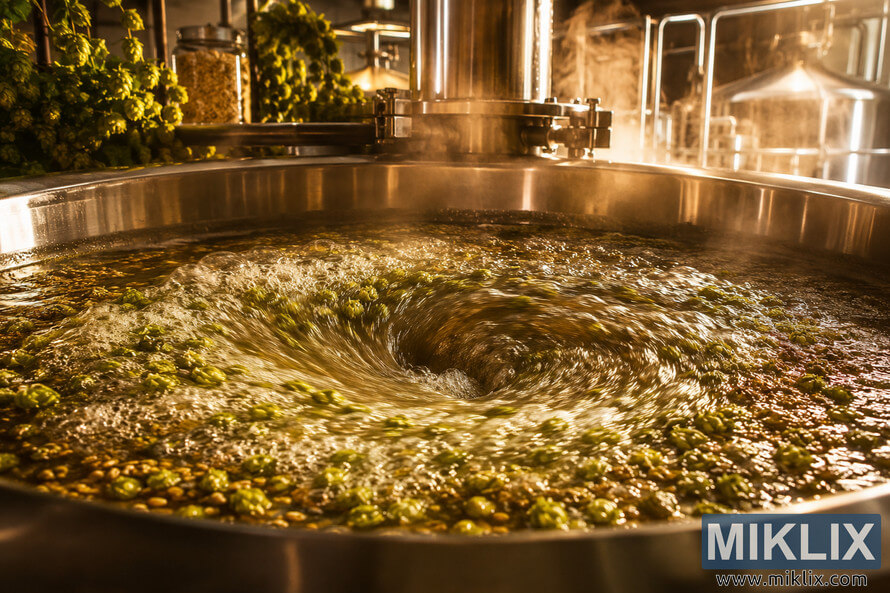
Target a whirlpool temperature between 160–180°F (70–82°C) for optimal results. This range solubilizes aromatic oils without losing the most fragile compounds. Adjust contact time to 15–45 minutes based on the desired aroma strength.
- Short whirlpool (15–20 min): bright, fleeting top notes.
- Moderate whirlpool (20–30 min): fuller aroma, balanced clarity.
- Longer whirlpool (30–45 min): richer extraction but risk of vegetal or astringent lift.
Adjust times for kettle size and natural cooling rate. Large systems cool slower, acting like extended hop stands. Reduce initial contact time. Small kettles cool fast and may need slightly longer rests to reach the same extraction.
കൂടുതൽ വിവരങ്ങൾക്കും ഉയർന്ന റെസല്യൂഷനും ചിത്രത്തിൽ ക്ലിക്ക് ചെയ്യുക അല്ലെങ്കിൽ ടാപ്പ് ചെയ്യുക.
Hop stand considerations for homebrewers
Homebrewers can achieve reliable results with Brambling whirlpool additions using a simple hop-stand workflow. Bring wort to target whirlpool temperature, add hops, stir to wet them fully, then cover the kettle. Covering limits oxygen pickup and helps trap aroma.
- Add hops when wort reaches 160–180°F (70–82°C).
- Stir to ensure even wetting and distribution.
- Cover and hold for 15–45 minutes based on desired intensity.
- Remove hops with sanitized bags or a hop spider for easy cleanup.
Expect some IBU contribution from late hop additions. Estimate utilization lower than boil hops and adjust recipes accordingly. Using sanitized hop bags simplifies removal and reduces trub in the chiller. For precise IBU planning, account for shorter contact and cooler temperatures in hop utilization calculations when you plan a hop stand Brambling.
Dry hopping strategies for showcasing Brambling hops
Brambling dry hopping can elevate a beer's fruit and floral profile when timed and blended with care. Choose between dry-hopping during active fermentation to tap biotransformation, or after fermentation to preserve delicate top notes. Both paths reward attention to dry hop timing, hop contact time, and pairing choices.
Timing dry hops during fermentation vs after fermentation
Dry-hopping during active fermentation encourages biotransformation between yeast esters and hop terpenes. This interaction can boost tropical and stone-fruit characters. Expect a slightly rounder, integrated hop character with more ester-driven complexity.
Post-fermentation dry hopping locks in brighter, more volatile aromatics. Use this route when you want clean citrus or delicate floral notes to dominate. Post-fermentation additions tend to preserve top-end oils better than active-ferment dosing.
Contact time and saturation guidelines
Aim for 48–96 hours of hop contact time when dosing during active fermentation. For post-ferment additions, 3–7 days usually gives strong aroma without harsh vegetal extraction. Monitor gravity for hop creep and adjust handling if attenuation rises unexpectedly.
Typical saturation levels range from 0.5–3.0 oz per 5 gallons depending on style and intensity goals. For a session IPA, stay near the lower end. For bold, late-release aromatics, push toward the higher end while watching for hop creep and astringency.
- Short contact (48–72 hrs): brighter, fresher aroma; less risk of vegetal notes.
- Medium contact (72–96 hrs): fuller aroma and body integration.
- Long contact (beyond 7 days): higher extraction risk; consider cold storage to slow changes.
To mitigate hop creep, consider cold-crashing, using exogenous enzymes cautiously, or pasteurizing packaged beer when appropriate.
Combining Brambling with other varieties for layered aroma
Brambling plays well in hop blends. Pair it with Mosaic to amplify tropical fruit, Citra to lift citrus top notes, or Simcoe to add pine and resin backbone. Sequencing matters: place backbone hops in the whirlpool and layer Brambling in the dry hop for forward fruit clarity.
- Whirlpool: 50–70% of bitter/aroma weight with Simcoe or a neutral resinous hop.
- Primary dry hop: 20–40% Brambling to assert its floral/tropical character.
- Secondary dry hop or late dosing: 10–20% Mosaic or Citra for spark and complexity.
Adjust ratios by style. For balanced American pales, use modest Brambling levels. For hop-forward IPAs, increase Brambling and complementary varieties to build a layered aroma. Track sensory outcomes and tweak dry hop timing and hop blends with each batch to refine results.
Mash and water chemistry considerations
Adjusting water and mash settings is key to showcasing Brambling hops. Small changes in mineral balance and mash temperature can significantly impact bitterness, aroma, and overall balance in hop-forward beers.
Adjusting water profile to complement hop brightness
Begin with a water test to understand your source. Tap water can vary greatly. Softened or high bicarbonate water may require blending with reverse osmosis water to manage ions effectively.
To enhance hop crispness, aim for higher sulfate levels. Target sulfate between 150–250 ppm for hop-forward IPAs. For added body or roundness, increase chloride to 50–150 ppm.
- For bright, punchy bitterness: sulfate 150–250 ppm, chloride 50–80 ppm.
- For malt-forward balance with clear hop notes: chloride 80–150 ppm, sulfate 100–150 ppm.
- Keep total alkalinity low for pale malts; use gypsum or calcium chloride to reach target ions.
Monitor the Brambling water profile when crafting recipes. This helps replicate results and identifies when hops seem muted due to ionic imbalances.
Enzyme activity and mash temperature choices for hop-forward beers
Select mash temperatures based on desired fermentability. For a drier finish that highlights hops, mash between 148–152°F (64–67°C). This range promotes beta-amylase activity, leading to more fermentable wort.
For a fuller body, aim for mash temperatures of 154–158°F (68–70°C). Opt for single infusion mashes for simplicity. Incorporate a short protein rest or step mash with high adjunct or roasted malts.
- Use iodine conversion checks to confirm saccharification before lautering.
- Add dextrin malts or cara-pils sparingly to tune mouthfeel without hiding hop character.
- Plan final gravity targets consistent with the style so hop brightness remains prominent.
Ensuring enzyme stability prevents stuck mashes. Maintain gentle temperature control and consistent mash temperatures to allow Brambling to express its fruit and floral notes cleanly.
Recipe templates that highlight Brambling hops
These templates serve as practical starting points for brewers aiming to showcase Brambling hops. They act as flexible guides for creating house beers and trial runs. Each template simplifies ingredients and timings, focusing on the hop character.
Session IPA designed around hop aroma
The grain bill includes 90% pale malt (pilsner or Maris Otter alternative), 7% Vienna or Munich, and 3% light crystal. Target an original gravity of 1.040, final gravity of 1.008 for an ABV of ~4.0–4.5%. The goal is a light, dry body to enhance hop presence.
Hops are added in stages: 10% at 60 minutes for bitterness, 20% at 10 minutes, 30% in a whirlpool at 180°F for 20 minutes, and 40% in two dry-hop additions. Late additions and a generous dry-hop are emphasized, focusing on Brambling session IPA.
Choose a clean American ale yeast like Safale US-05 or Wyeast 1056. Moderate sulfate levels add hop snap. Ferment cool to preserve hop aroma and avoid esters.
American Pale Ale recipe focusing on drinkability
The grain bill consists of 90–95% US two-row and 5–10% light crystal (10–15L for more malt sweetness). Aim for an ABV of 4.5–5.5%. The body should be moderate for easy drinking.
Hops are balanced with 30–40 IBUs. Early kettle additions provide bitterness, while late additions add flavor. Use 25% of hops at 60 minutes, 25% at 15 minutes, 30% in the whirlpool, and 20% in dry-hop. Highlight Brambling APA aroma in the whirlpool and dry-hop stages.
Choose an attenuative American ale yeast for a crisp finish. Mash at 152°F for balanced fermentability. Adjust the chloride-to-sulfate ratio for a softer mouthfeel that enhances hop aromatics.
Experimental small-batch recipes for testing additions
Conduct 1–2 gallon small-batch hop tests to compare timings, contact times, and yeast impacts. Run single-varietal trials and split fermenter comparisons to control variables.
- Matrix item 1: Addition times — 60 min, 15 min, whirlpool (170–180°F), dry-hop. Record intensity and character for each.
- Matrix item 2: Contact times — 24, 48, 72 hours for dry-hop. Note green vs ripe fruit notes.
- Matrix item 3: Yeast strains — neutral American ale, English ale, and a slightly expressive strain like Vermont ale. Compare how each preserves Brambling aroma.
- Matrix item 4: Dosages — low (0.5 oz/gallon), medium (1.0 oz/gallon), high (1.5 oz/gallon) in dry-hop to quantify saturation points.
For organizational clarity, keep a logbook with sample IDs and tasting notes. These small-batch hop tests accelerate the development of signature Brambling recipes for both session and full-strength beers.
Pairing Brambling hops with yeast strains
Choosing the right yeast is crucial for how Brambling hops express in beer. Yeast affects clarity, ester profile, and volatile hop aromatics' survival during fermentation. Below are practical pairings and temperature tips to help brewers maximize Brambling's potential.
Neutral American ale yeasts preserve hop clarity and highlight delicate top-notes. Opt for strains like Wyeast 1056, White Labs WLP001, or SafAle US-05 for a clean canvas. Ferment at the lower end of the strain’s range for crisper results. A controlled fermentation keeps esters low, ensuring fruit and citrus from the hops remain the main attraction.
Expressive English and Belgian strains add complexity that complements Brambling’s tropical and stone-fruit character. Try Wyeast 1968 for soft English esters or a Belgian strain for spicy, fruity esters. Expect esters to interact with hop aromatics, creating layered fruit notes. Use these strains when you want interplay between yeast-derived esters and hop character, but beware they can mask delicate top-notes if fermentation runs hot.
Fermentation temperature management is key to protecting hop aromatics and reducing off-flavors. For neutral American ales, aim for 64–68°F, with the lower end giving a cleaner profile. For English and Belgian strains, follow the vendor ranges but avoid prolonged high temperatures. Rapid ramps to high temps increase fusel alcohols and mute hop character. Implement gentle temperature control and modest ramps during active fermentation.
- Keep fermentation temp hops steady during peak activity to retain volatile compounds.
- Plan a short diacetyl rest near the end of primary fermentation to ensure clean finish without over-heating.
- Cold condition after fermentation to settle yeast and lock in hop aroma.
For experimental batches, document strain, pitch rate, and exact temps. This record makes future Brambling yeast pairing improvements faster and more reliable.
Synergistic hop blends featuring Brambling hops
Brambling hop blends excel when each variety plays a distinct role. Use Brambling for its bright topnotes, complemented by hops that add depth, resin, or extra fruit. This approach transforms a single-hop concept into a complex, balanced beer through thoughtful blending strategies.
Start with complementary hops that enhance fruitiness in small batches. Use these ratios as a starting point and adjust based on taste feedback from pilot beers.
- 60% Brambling / 40% Mosaic — primary fruit presence with complex, jammy layers.
- 60% Brambling / 40% Citra — pronounced citrus and clean tropical lift.
- 50% Brambling / 30% Galaxy / 20% El Dorado — bold tropical center with crisp stone-fruit edges.
For a pine, resin, or citrus backbone, choose hops that contrast well. Ensure each variety has a clear role to avoid any one overpowering the blend.
- Use Brambling as the topnote for aroma and fleeting citrus highlights.
- Add Simcoe for midnote resin and pine depth that supports fruit.
- Include Centennial or Chinook for bright, bitter citrus backbone and palate lift.
Effective hop blending strategies are crucial for maintaining nuance at both whirlpool and dry-hop stages. Stage additions so volatile aromatics from Brambling are first, followed by heavier resins later.
Recommended staging:
- Whirlpool: gentle extract of Brambling at 170–180°F for 20–30 minutes to capture delicate esters.
- Late whirlpool or hop stand: add backbone hops like Centennial or Chinook to bind citrus and bitterness.
- Dry hop: finish with Mosaic, Galaxy, or El Dorado for fresh tropical lift and to avoid domination by resinous varieties.
Run small pilot boils to refine ratios and document sensory outcomes. Keep detailed notes on weight, timing, and perceived intensity. Consistent documentation ensures reliable future Brambling hop blends.
Common brewing challenges and troubleshooting
Brambling can shine in the glass, yet brewers face a few recurring issues. This brief guide covers practical fixes for muted aroma, vegetal notes, and the tricky move from homebrew to commercial batches. Follow simple checks before changing recipes.
Causes of muted aroma or hop fade often trace back to oxygen exposure, aged hops, or heat stress during packaging. Cold-chain lapses and long storage also reduce volatile oils. A quick audit of handling practices will reveal weak links.
- Use fresher hops and rotate inventory frequently.
- Improve cold-chain logistics from farm to brewery.
- Reduce oxygen pickup during transfer, racking, and canning.
For hop fade solutions, increase late-stage hop additions and consider higher dry-hop dosages. Late whirlpool or hop stand additions preserve volatiles. If dry-hop contact is inefficient, adjust contact time and agitation to improve extraction without harsh bitterness.
Vegetal or grassy off-notes often come from high whirlpool temperatures, extended steeping, or poor-quality cones. Break down the process to isolate the step that introduces green or chlorophyll-like character.
- Lower whirlpool temperatures to 160–180°F and shorten steep time.
- Prefer pellet hops if whole cones produce vegetal flavors in your system.
- Cold-crash after dry hopping to settle particulate and reduce suspended vegetal matter.
Address grassy hop off-notes by checking hop origin and harvest dates. Some suppliers list harvest lots; choose fresher lots from trusted growers. Small adjustments in timing often remove unwanted green tones.
Scaling from 1–5 gallon batches to 5–30+ bbl systems changes hop utilization, whirlpool dynamics, and dry-hop efficiency. Scale-up brewing hops requires more than a linear weight multiplier. Pilot-scale trials reveal real-world differences.
- Run pilot batches to measure utilization and aroma carryover.
- Adjust hop weights for expected utilization losses in larger kettles.
- Work with process engineers to optimize hop contact, circulation, and oxygen control in production lines.
When scaling, use dosage-per-volume guidelines but remain flexible. Track IBU, essential oil retention, and headspace oxygen. Small procedural changes can prevent large aroma losses in finished beer.
Additional resources for experimenting with Brambling hops
For brewers eager to delve into Brambling hops, a blend of printed research, active forums, and practical tools is essential. Below, we highlight trusted references and hands-on resources that aid in hop research and experimental brewing.
Begin with foundational brewing books that delve into hop chemistry and sensory techniques. These texts complement journal articles, providing a scientific backdrop.
- Brewing Science and Practice by D.E. Briggs, et al. — technical chapters on hop compounds.
- Yeast by Chris White and Jamil Zainasheff — guidance on yeast‑hop interactions.
- Articles from the Journal of the American Society of Brewing Chemists — peer‑reviewed work on aroma compounds.
Engage with the brewing community to gather insights and recipes. Active groups offer immediate feedback, surpassing print resources.
- HomebrewTalk and BeerAdvocate recipe threads for U.S. homebrewers.
- Brewer’s Friend and Brewfather communities for recipe sharing and logbooks.
- Grower and supplier resources from Yakima Chief Hops and HopFarm for varietal notes.
Utilize digital tools for planning and tracking. Accurate calculations and logging minimize variables in testing new lots.
- BeerSmith, Brewfather, and Brewer’s Friend calculators for IBU and utilization estimates.
- Hopsteiner utilization tables and vendor alpha reports when adjusting schedules.
- Simple spreadsheet templates to record harvest‑year alpha, lot numbers, and sensory results.
Participate in sensory panels at local homebrew clubs or regional competitions. Structured tastings yield consistent notes, aiding in recipe refinement.
Integrate brewing books, online forums, and hop calculators to craft a systematic testing plan. This methodical approach enhances understanding of Brambling resources, leading to faster discoveries.
Conclusion
Brambling hops summary: Brambling hops offer a unique blend of bright citrus, delicate floral notes, and tropical fruit. This makes them ideal for hop-forward beers. Use them with caution in early additions for bittering. Focus on lower-temperature whirlpool rests to extract volatile oils. Finally, extend dry-hop contact for a vibrant aroma without harshness.
Brewing with Brambling conclusion: Pair Brambling with pale, neutral malts and clean American ale yeasts for clarity. Alternatively, use expressive English or Belgian strains for a complex flavor profile. Adjust mash temperature to enhance mouthfeel. Soften water slightly to highlight hop brightness.
Store pellets or whole-cone hops cold and vacuum-sealed to preserve their quality. Record harvest and lot data to track variability. This ensures consistent results.
Brambling hop takeaways: Begin with small test batches and log whirlpool temperature and dry-hop timing. Experiment by blending Brambling with Citra or Mosaic for added fruit or resinous backbone. Share your results in brewing communities and competitions to refine your technique. Through iterative trials and careful recording, you'll master Brambling's strengths.
FAQ
What are Brambling hops and why should U.S. craft brewers care about them?
Brambling hops are a modern aroma hop variety known for their fruit-forward characteristics. They offer citrus, tropical, and floral notes. For American craft brewers and homebrewers, Brambling provides a unique flavor profile. It's perfect for IPAs, pale ales, and small-batch experiments. Its novelty and boutique status make it attractive for taproom differentiation and R&D trials.
Where did Brambling hops originate and who bred them?
Brambling’s lineage traces to contemporary breeding programs focused on aroma and disease resistance. Breeders in established programs in the U.S. and UK frequently collaborate on new cultivars. Public catalogs and breeding releases typically list parentage and trial dates. Brewers should consult supplier tech sheets or Yakima Chief Hops and John I. Haas catalogs for specific release or trial-year details and documented parentage.
What does a botanical profile of Brambling look like?
Botanically, Brambling is Humulus lupulus with compact cones and noticeable lupulin color. It’s often available as pellets and, less commonly, whole cones. While many commercial suppliers grow hops in the Pacific Northwest, availability depends on grower contracts and release schedules—check lot and harvest information when purchasing.
What aroma and flavor notes can I expect from Brambling hops?
Expect a mix of citrus (zest, peel oils), floral top-notes, and tropical fruit nuances. Some batches may show herbal or spice undertones. Sensory panels and hop catalogs commonly report these descriptors; actual expression varies by harvest year, processing, and beer matrix.
What is the typical alpha acid range for Brambling and how does it affect brewing?
Brambling’s alpha acids are usually in a moderate range suitable for dual-purpose or aroma-focused use. Alpha values influence bitterness and utilization; higher alpha allows for more kettle bitterness, while lower values favor late additions and dry hopping. Always reference the supplier’s alpha-acid certificate for the lot you buy and adjust IBU calculations accordingly.
When should I use Brambling in the boil to get clean bitterness?
Use Brambling in early 60–90 minute additions if its alpha acids meet your bitterness targets. For clean bitterness, allocate a portion of total bittering hops to Brambling based on its alpha test, or pair with a high-alpha bittering hop to hit IBUs while reserving Brambling for late aroma. Wort pH and gravity affect utilization, so adjust based on your system’s historical figures.
How can I maximize Brambling’s aroma with whirlpool and hop stands?
For aroma, target whirlpool temperatures around 160–180°F (70–82°C) with 15–45 minutes contact time. Add hops when the wort cools into that range, stir to wet the hops, and avoid prolonged stands that extract vegetal compounds. Cover to reduce oxygen pickup and remove hops promptly; consider sanitized hop sacks for easy cleanup.
Should I dry hop during active fermentation or after fermentation for Brambling?
Both approaches work. Dry-hopping during active fermentation can produce biotransformation, enhancing tropical and ester-driven notes. Post-fermentation dry-hopping preserves delicate top-notes and offers cleaner aromatics. Choose based on desired character: more ester interplay during active fermentation, or clearer hop aroma after fermentation.
What dry-hop dosages and contact times are recommended for Brambling?
Typical dosages range from 0.5–3.0 oz per 5 gallons, depending on style and intensity. Contact times vary: 48–96 hours during active fermentation or 3–7 days post-fermentation. Monitor for hop creep (fermentable sugars released by hops) and consider gravity checks or short pasteurization for packaged beers if stability is a concern.
Which malt and yeast choices best showcase Brambling hops?
Use lighter malt bills—pilsner or pale malt—with limited crystal to let hop notes shine. For yeast, choose neutral American strains such as Wyeast 1056, White Labs WLP001, or SafAle US-05 to preserve hop clarity. If you want complexity, expressive English or Belgian strains can add estery layers but may mask delicate top-notes; manage fermentation temps accordingly.
How should I adjust water chemistry and mash temps for hop-forward Brambling beers?
For hop brightness, emphasize sulfate (e.g., 150–250 ppm) to accentuate perceived bitterness; raise chloride for malt roundness only when desired. Mash at 148–152°F (64–67°C) for a drier finish that highlights hop crispness. Always start from a water analysis and tweak chloride-to-sulfate ratios to suit the target style.
What hop blends work well with Brambling to build complexity?
Pair Brambling with fruit-forward hops like Mosaic, Citra, Galaxy, or El Dorado for layered tropical and citrus complexity. For pine or resin backbone, combine with Simcoe, Centennial, or Chinook. Typical blend ideas: 60% Brambling / 40% Mosaic for fruit depth, or Brambling as topnote with Simcoe for midnote resin and Centennial for citrus lift. Stage additions across whirlpool and dry hop to balance dominance.
How should I store Brambling pellets and whole-cone hops to preserve freshness?
Vacuum-seal and freeze hops at -10 to 0°F (-23 to -18°C) when possible. Use opaque foil packaging, minimize oxygen exposure, and store in the freezer until use. Pellets typically keep longer frozen (12–18 months) than whole cones. Check for oxidation signs—damp cardboard aromas, muted top-notes—and test aroma before large-scale use.
Where can I source Brambling hops and what should I check when buying?
Buy from reputable suppliers and homebrew retailers such as Yakima Chief Hops, John I. Haas distributors, HopsDirect, MoreBeer, or Northern Brewer. Verify harvest year, lot numbers, and alpha-acid certificates. For commercial quantities, compare offers from hop merchants and consider small trial buys before committing to large lots.
Why might Brambling aroma be muted in my finished beer and how can I fix it?
Muted aroma often results from hop age/oxidation, oxygen exposure during packaging, excessive heat, or inefficient dry-hop contact. Remedies include sourcing fresher hops, improving cold-chain handling, increasing late-hop or dry-hop dosage, shortening storage, reducing oxygen pickup, and using airtight kegging or packaging with low dissolved oxygen.
What causes vegetal or grassy off-notes and how do I avoid them with Brambling?
Vegetal notes come from high-temperature extraction, long whirlpool times, or poor hop quality. Avoid steeping hops above recommended whirlpool temps, shorten hop-stand times, favor pellets if whole cones cause issues, and cold-crash to settle particulates. Use quality-assured hops and validate contact times on a small-scale test before full production.
How do I scale Brambling hop usage from homebrew to commercial batches?
Scaling changes hop utilization, whirlpool dynamics, and dry-hop efficiency. Run pilot-scale trials, adjust hop weights for system-specific utilization, and document lot numbers and outcomes. Work with process engineers to optimize mass transfer in larger vessels and maintain oxygen control strategies used at small scale.
What experimental approaches help evaluate Brambling in small-batch trials?
Use 1–2 gallon split batches to test variables: single-varietal runs with staggered addition times, split fermenters to compare yeast strains, and incremental dry-hop dosages. Build a simple matrix tracking addition time, contact time, yeast, and water profile. Log sensory outcomes and alpha/lot info to refine recipes for larger batches.
What reference books, communities, and tools support experiments with Brambling hops?
Useful books include Brewing Science and Practice by Christopher Briggs and Yeast by Chris White and Jamil Zainasheff. Online communities and resources: HomebrewTalk, Brewer’s Friend, Brewfather, and Yakima Chief Hops technical pages. Tools: BeerSmith, Brewfather, Brewer’s Friend calculators, and lab IBU calculators for planning and tracking hop utilization and sensory results.
കൂടുതൽ വായനയ്ക്ക്
നിങ്ങൾക്ക് ഈ പോസ്റ്റ് ഇഷ്ടപ്പെട്ടെങ്കിൽ, ഈ നിർദ്ദേശങ്ങളും നിങ്ങൾക്ക് ഇഷ്ടപ്പെട്ടേക്കാം: