
Зураг: European Hop Varieties: Cekin, Styrian Golding and Saaz
Нийтэлсэн:
Хамгийн сүүлд шинэчлэгдсэн: 2026 оны есдүгээр сарын 19 10:23:01 (UTC)
Explore a visual comparison of European hop varieties Cekin, Styrian Golding and Saaz, including their origins, aromatic characteristics and traditional brewing heritage.
European Hop Varieties: Cekin, Styrian Golding and Saaz
Энэ зургийн боломжтой хувилбарууд
Доор татаж авах боломжтой зургийн файлууд нь энэ вэбсайт дээрх нийтлэл, хуудсанд оруулсан зургуудаас бага шахагдсан, өндөр нягтралтай бөгөөд үүний үр дүнд чанар нь өндөр байдаг бөгөөд зурвасын өргөний хэрэглээг багасгахын тулд файлын хэмжээнд илүү оновчтой болгосон.
Ердийн хэмжээ (1,536 x 1,024)
Том хэмжээтэй (3,072 x 2,048)
Маш том хэмжээтэй (4,608 x 3,072)
Маш том хэмжээтэй (6,144 x 4,096)
Инээдмийн том хэмжээтэй (1,048,576 x 699,051)
- Байршуулалт хийсээр л байна... ;-)
Зургийн тайлбар
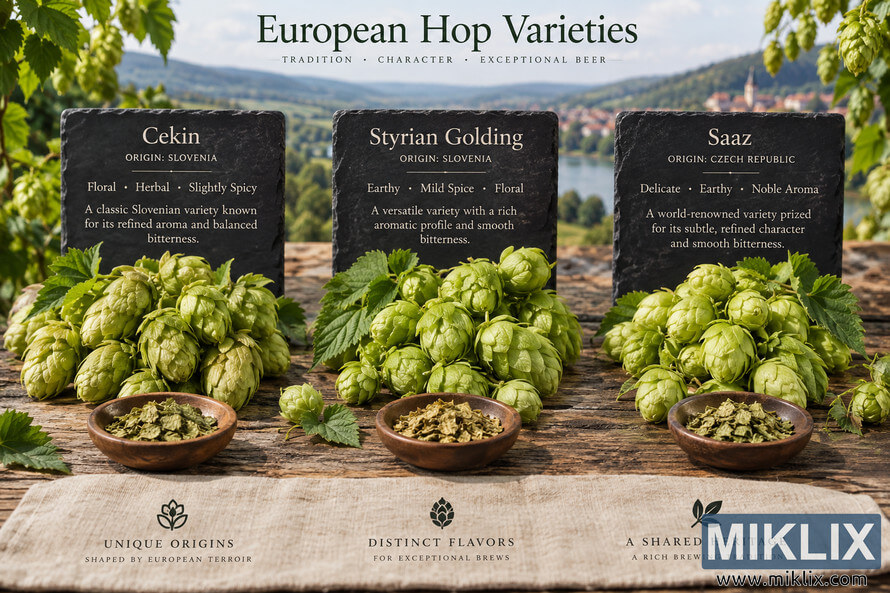
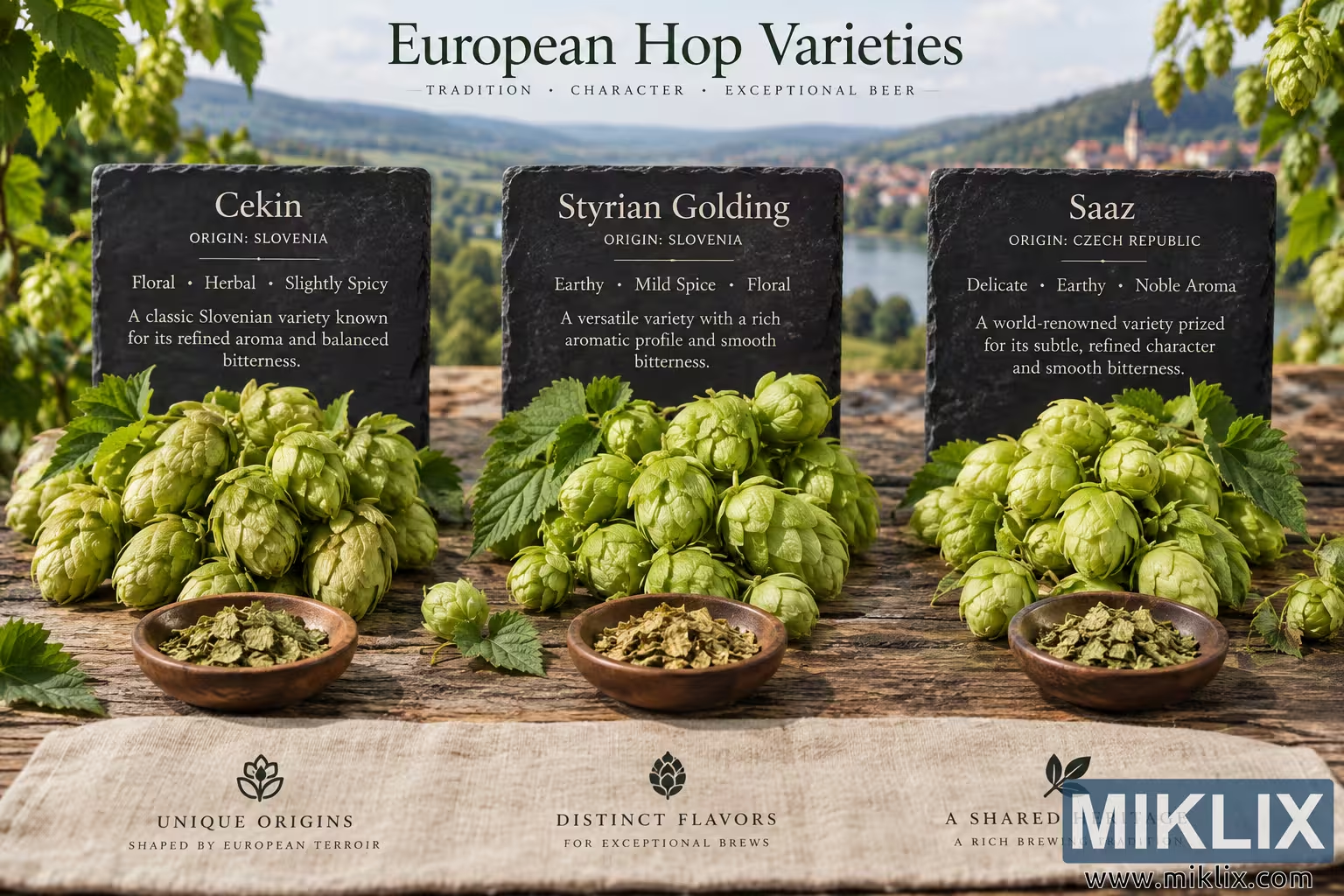
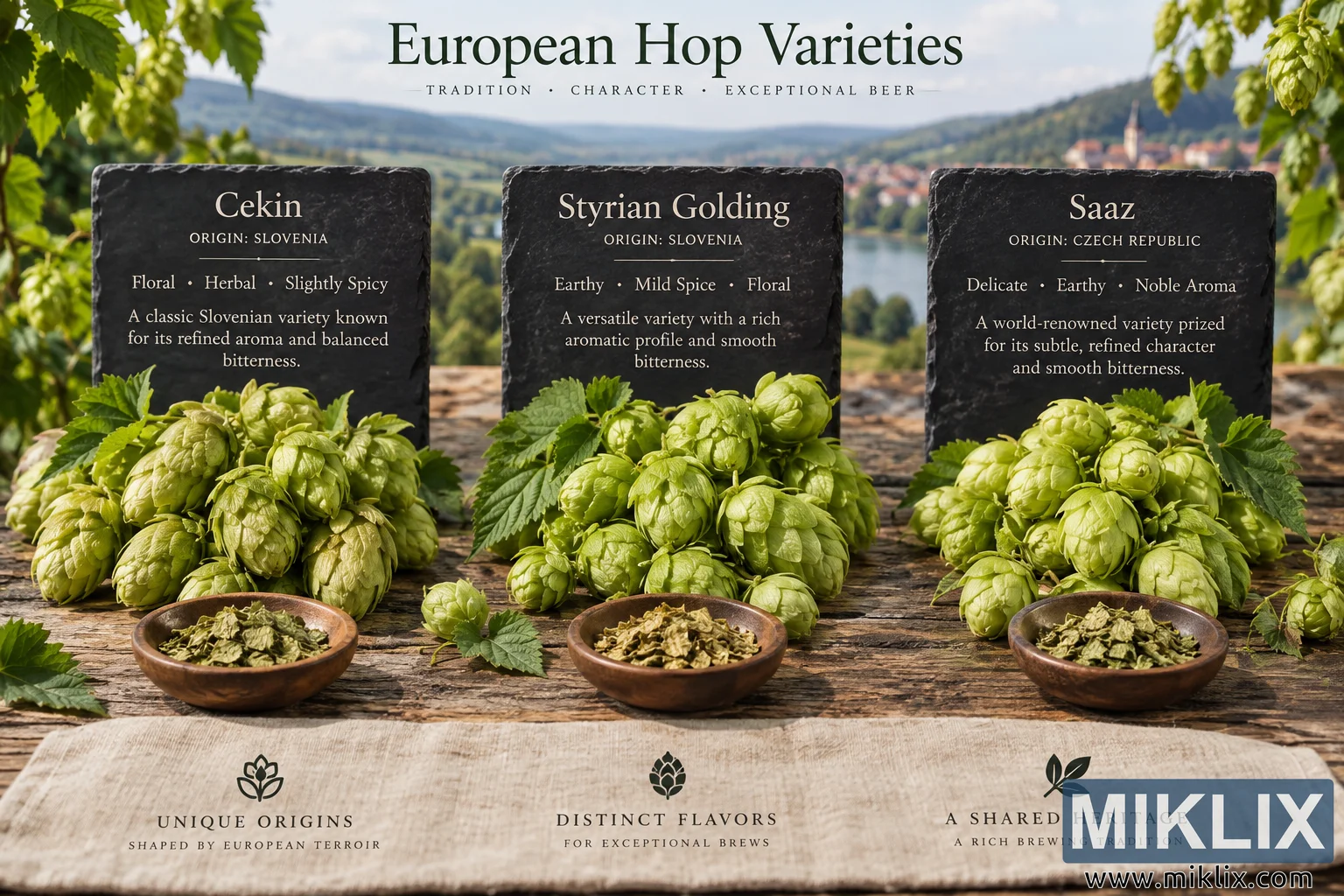
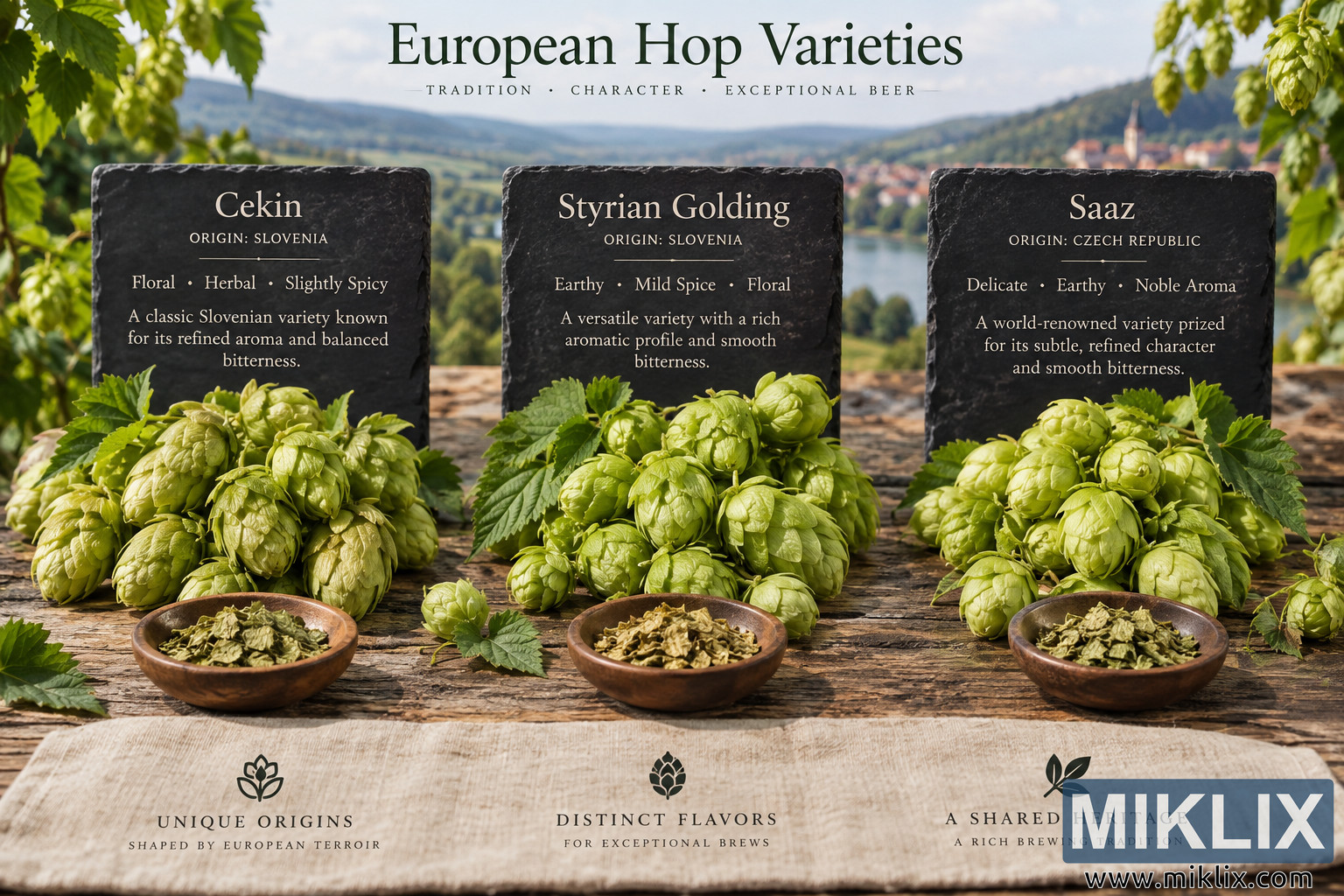
A wide, landscape-format editorial still-life image presents a visual comparison of three European hop varieties: Cekin, Styrian Golding, and Saaz. The composition combines realistic botanical photography with an elegant educational infographic aesthetic. Three large, dark charcoal slate panels are arranged horizontally across the middle of the scene, with each panel dedicated to one hop variety. In front of every panel is a generous pile of fresh green hop cones accompanied by serrated hop leaves, while small wooden bowls containing dried hop material sit closer to the foreground. The arrangement makes the three varieties easy to compare while retaining the natural, agricultural character associated with traditional European hop cultivation and brewing.
The left-hand section is devoted to Cekin. Its name appears prominently in a large, refined serif typeface near the top of the dark slate panel. Directly underneath, the origin is identified as Slovenia. A short sensory profile describes the variety with the terms floral, herbal, and slightly spicy. Additional explanatory copy characterizes Cekin as a classic Slovenian variety associated with a refined aroma and balanced bitterness. Below the information panel is a substantial cluster of fresh hop cones. The cones are pale to medium green, with overlapping papery bracts that create a layered, almost sculptural texture. Bright green leaves are interspersed among the cones, and the sunlight catches their veins and serrated edges. A small, rounded wooden bowl in the foreground contains dried, fragmented hop material, visually contrasting with the fresh cones behind it.
The center section presents Styrian Golding. Like the other varieties, its name is displayed prominently against a dark slate background, followed by Slovenia as its stated origin. The accompanying sensory terms describe an earthy, mildly spicy, and floral character. The supporting text emphasizes a rich aromatic profile and smooth bitterness. The fresh Styrian Golding cones are arranged in a dense mound immediately below the panel, surrounded by broad green leaves. Their vivid green coloration and detailed overlapping scales are strongly illuminated by the warm natural light. A wooden bowl positioned near the bottom center of the image contains dried hop pieces in muted yellow-green and olive tones. This central grouping forms the visual anchor of the composition and establishes a symmetrical transition between the Cekin display on the left and the Saaz display on the right.
The right-hand section focuses on Saaz. The variety name is written in the same sophisticated serif typography used throughout the comparison, creating a consistent visual hierarchy. The panel identifies the origin as the Czech Republic. Its sensory descriptors include delicate, earthy, and noble aroma, while the accompanying description highlights the variety's subtle, refined character and smooth bitterness. A large pile of fresh green Saaz hop cones occupies the area beneath the slate panel. The cones are surrounded by textured green foliage and illuminated by direct sunlight, which produces bright highlights along the edges of the bracts and deeper shadows between them. A third wooden bowl filled with dried hop material sits in front of this group, reinforcing the repeated visual structure used for all three varieties.
The three dark information panels have rough, irregular edges and a natural stone texture. Their matte charcoal surfaces contrast strongly with the luminous green hops and the warm brown wooden table. Cream-colored typography gives the panels a handcrafted, premium appearance reminiscent of traditional agricultural displays, tasting-room signage, or artisanal brewing materials. The repeated layout of name, origin, flavor or aroma descriptors, explanatory text, fresh hops, and dried hops establishes a clear comparison framework without relying on commercial packaging or recognizable product branding.
Across the top of the image, a large heading reads 'European Hop Varieties'. Beneath it is a smaller decorative line emphasizing tradition, character, and exceptional beer. The typography is restrained and classical, complementing the European agricultural theme. Hop vines and leaves enter the frame from the upper corners and sides, creating a natural botanical border. Several hanging hop cones can be seen among the foliage, making the cultivated plant itself part of the framing device rather than limiting the hops to the tabletop displays.
The background depicts an idyllic European rural landscape rendered with a shallow depth of field. Rolling green hills stretch across the horizon beneath a pale blue sky with soft clouds. Cultivated fields, patches of woodland, and a body of water are visible in the middle distance. On the right side of the background is a small village with warm-toned rooftops and a prominent church or historic tower rising above the surrounding buildings. The distant scenery is intentionally blurred, allowing the hop cones and comparison panels in the foreground to remain crisp and dominant while still establishing a strong sense of European terroir and agricultural heritage.
The foreground consists of a weathered wooden tabletop with visible grain, cracks, knots, and uneven coloration. Warm sunlight falls across the wood and creates natural shadows beneath the hop cones, leaves, bowls, and slate panels. At the very bottom is a broad strip of light beige linen or woven fabric. Three simple botanical-style icons and short thematic captions are arranged across this textile area. The left section refers to unique origins and European terroir, the center emphasizes distinct flavors for brewing, and the right evokes shared heritage and brewing tradition. These elements reinforce the educational comparison while functioning as a visual footer.
The overall lighting is warm, clear, and natural, resembling late-morning or afternoon sunlight in a hop-growing region. The combination of vivid green plants, dark slate, rustic timber, neutral linen, and softly blurred countryside gives the image an artisanal yet polished character. Fine details in the hop cones, including their layered bracts, subtle wrinkles, and variations in green tone, provide a tactile quality. The bowls of dried hops introduce another stage of the ingredient's preparation and visually suggest the transition from cultivated plant to brewing material.
No actual commercial brands, logos, branded packages, bottles, brewery trademarks, or identifiable branded products appear in the scene. Instead, the image concentrates entirely on the hop varieties themselves and on generic brewing and agricultural heritage. The three-column organization communicates comparison immediately: Cekin on the left, Styrian Golding in the center, and Saaz on the right. Each receives approximately equal visual prominence, making the image suitable as an educational illustration about European hops, a brewing-related editorial visual, or a general reference image about hop aroma traditions. The final impression is one of European provenance, botanical freshness, craftsmanship, and brewing history, presented through a photorealistic landscape composition that balances informative typography with abundant natural detail.
Зураг нь дараахтай холбоотой: Hops in Beer Brewing: Cekin