
Зураг: Shallot Planting Guide Calendar
Нийтэлсэн:
Хамгийн сүүлд шинэчлэгдсэн: 2026 оны гуравдугаар сарын 22 21:44:42 (UTC)
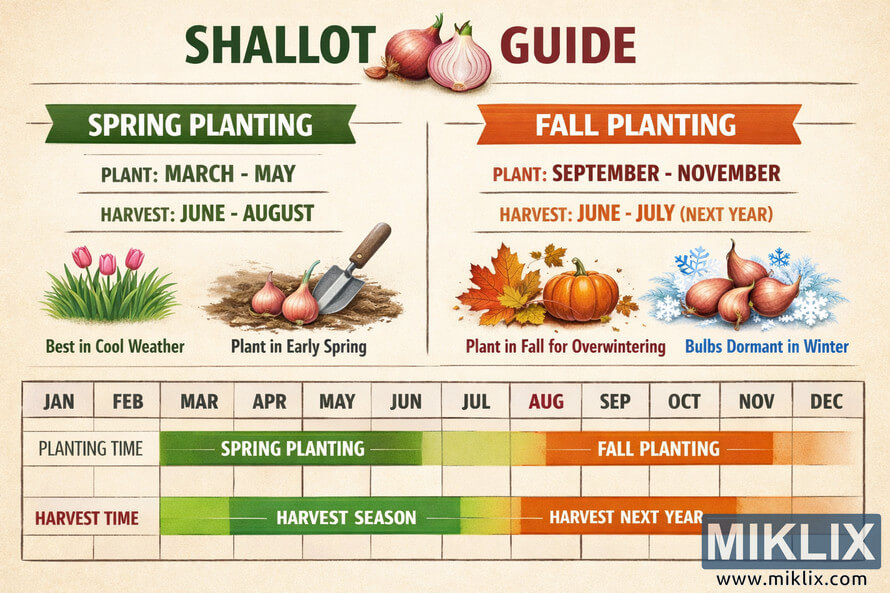
Landscape infographic showing a shallot planting calendar with spring and fall planting windows, harvest periods, seasonal illustrations, and a month-by-month guide for gardeners.
Shallot Planting Guide Calendar
Энэ зургийн боломжтой хувилбарууд
Доор татаж авах боломжтой зургийн файлууд нь энэ вэбсайт дээрх нийтлэл, хуудсанд оруулсан зургуудаас бага шахагдсан, өндөр нягтралтай бөгөөд үүний үр дүнд чанар нь өндөр байдаг бөгөөд зурвасын өргөний хэрэглээг багасгахын тулд файлын хэмжээнд илүү оновчтой болгосон.
Ердийн хэмжээ (1,536 x 1,024)
Том хэмжээтэй (3,072 x 2,048)
Маш том хэмжээтэй (4,608 x 3,072)
Маш том хэмжээтэй (6,144 x 4,096)
Инээдмийн том хэмжээтэй (1,048,576 x 699,051)
- Байршуулалт хийсээр л байна... ;-)
Зургийн тайлбар
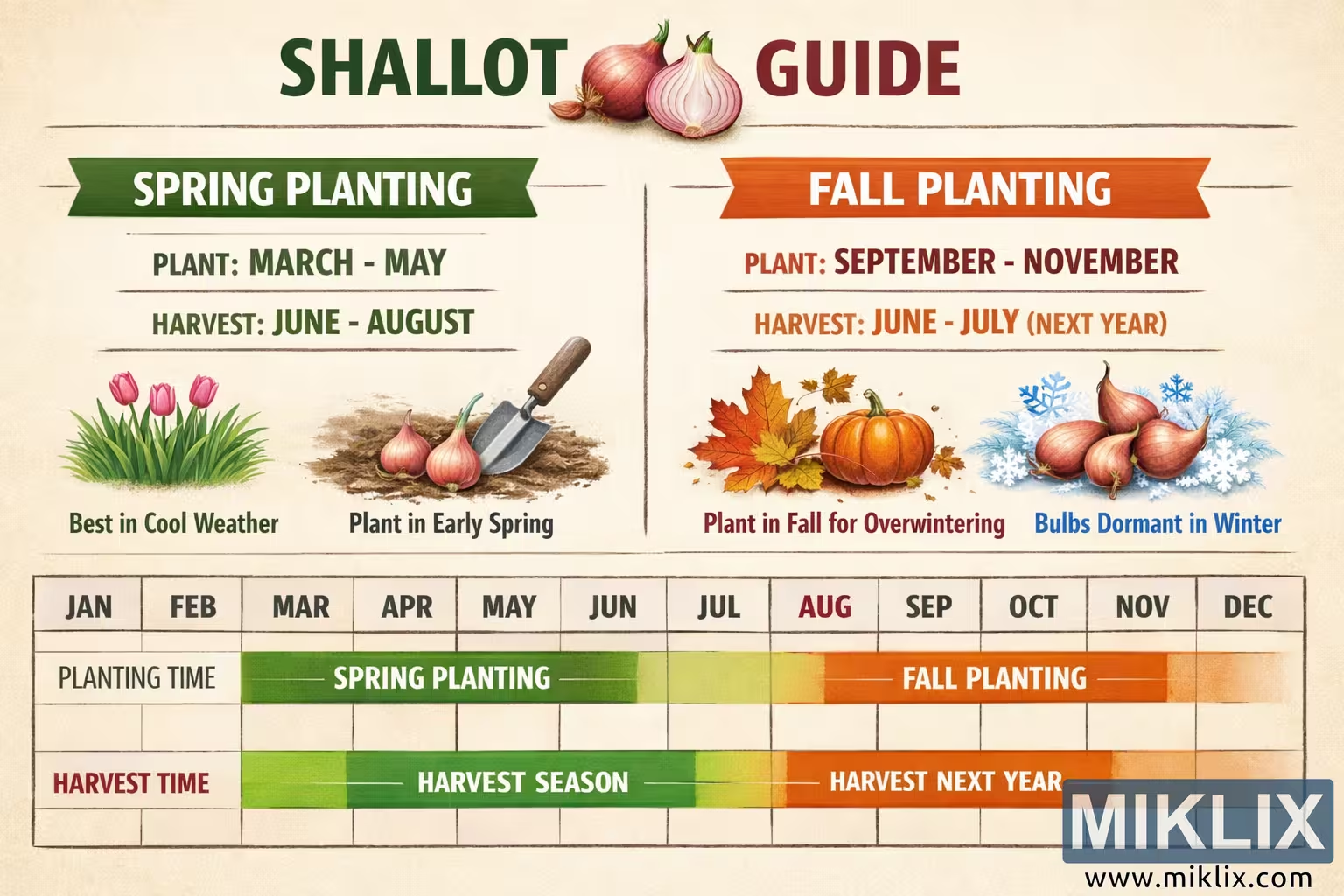
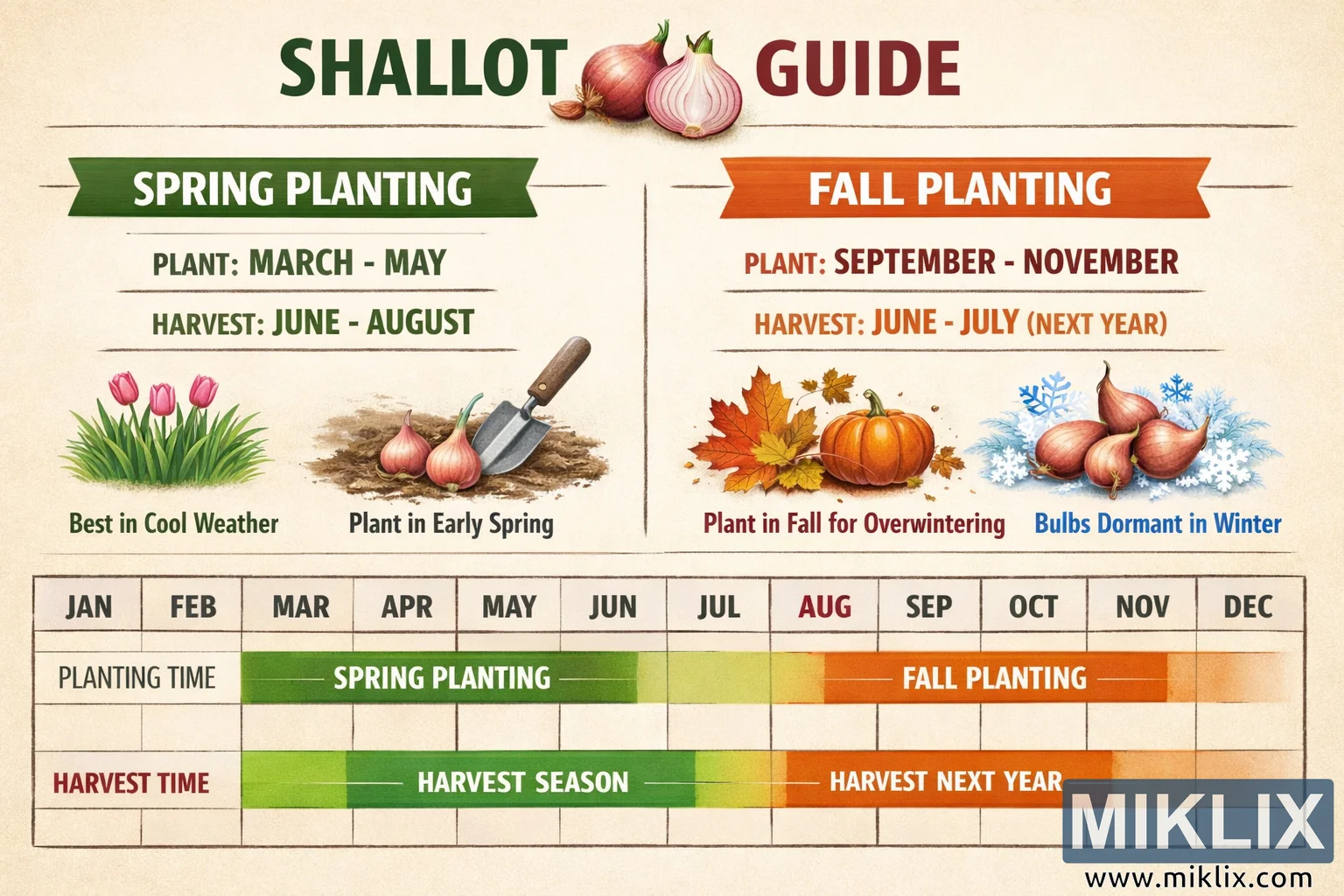
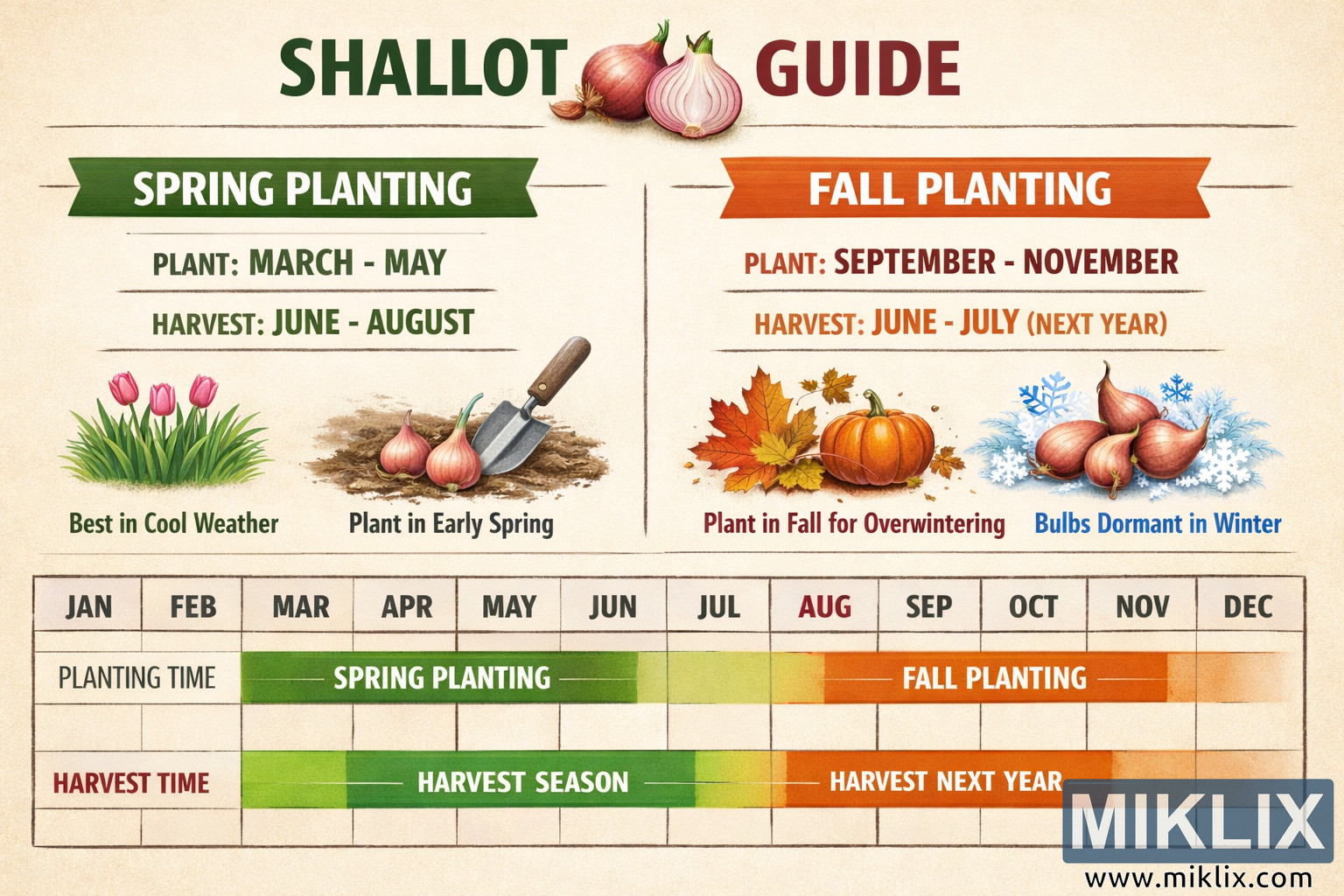
A landscape-format infographic titled "SHALLOT GUIDE" presents a visual calendar for spring and fall planting seasons for shallots. The overall design uses a warm, lightly textured cream background that resembles aged paper, giving the image a rustic garden-almanac feel. At the very top center, the title is split into two large words: "SHALLOT" in dark green on the left and "GUIDE" in deep reddish brown on the right. Between the words is a detailed illustration of shallot bulbs, including one whole bulb and one cut-open bulb that reveals pale pink layers. Thin horizontal divider lines extend outward from the title area to frame the header.
The infographic is divided into two main sections beneath the title. On the left is a green banner labeled "SPRING PLANTING" in bold white uppercase letters. Below it, two lines of text explain the timing: "PLANT: MARCH - MAY" and "HARVEST: JUNE - AUGUST." Supporting illustrations sit below these lines. One shows pink tulip-like flowers growing in grass, paired with the caption "Best in Cool Weather." Another shows two shallot bulbs placed on freshly turned soil beside a hand trowel, with the caption "Plant in Early Spring." The imagery reinforces the idea of cool-season planting and active garden preparation.
On the right is an orange banner labeled "FALL PLANTING" in bold white uppercase letters. Under it, the schedule reads: "PLANT: SEPTEMBER - NOVEMBER" and "HARVEST: JUNE - JULY (NEXT YEAR)." Two seasonal illustrations appear below. One shows autumn leaves and a pumpkin, captioned "Plant in Fall for Overwintering." The other shows several shallot bulbs resting beside blue snowflakes, captioned "Bulbs Dormant in Winter." These elements visually communicate the transition from autumn planting into winter dormancy before harvest the following year.
A vertical dividing line runs between the spring and fall sections, emphasizing the side-by-side comparison. The lower third of the image contains a horizontal calendar grid covering all twelve months from JAN through DEC. The month names appear in bold uppercase text across the top row of the grid. Beneath the month row are two labeled bands: "PLANTING TIME" and "HARVEST TIME."
In the planting row, a green bar labeled "SPRING PLANTING" stretches across the spring months, visually corresponding to March through May and blending slightly into early summer tones. Farther right, an orange bar labeled "FALL PLANTING" spans the autumn months, corresponding to roughly September through November. In the harvest row, a green bar labeled "HARVEST SEASON" runs through the summer harvest window for spring-planted shallots, while an orange bar labeled "HARVEST NEXT YEAR" aligns with the later harvest period associated with fall planting and overwintering.
The color palette is organized for clarity: green represents spring activity and conventional seasonal growth, while orange represents fall planting and next-year harvest timing. Small decorative agricultural illustrations, bold typography, and a neatly structured month-by-month chart make the image function as both an attractive poster and an easy-reference planting calendar for shallot growers.
Зураг нь дараахтай холбоотой: Growing Shallots: Your Complete Guide to a Bountiful Harvest