
Зураг: Planting Honeydew Melon Seeds in a Prepared Garden Bed
Нийтэлсэн:
Хамгийн сүүлд шинэчлэгдсэн: 2026 оны наймдугаар сарын 20 14:19:07 (UTC)
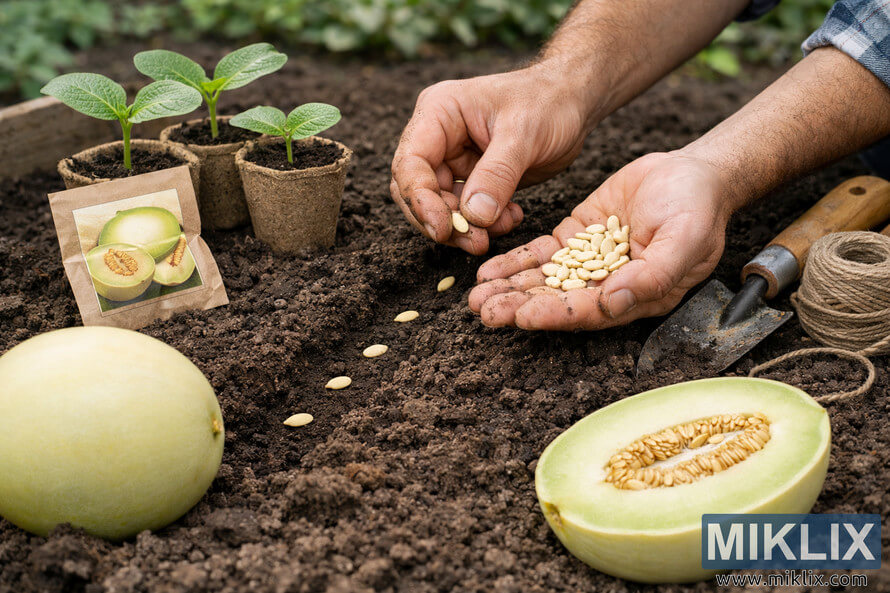
High-resolution landscape photo showing honeydew melon seeds being planted in rich garden soil, surrounded by seedlings, tools, and ripe melons, capturing the full cycle of gardening from seed to harvest.
Planting Honeydew Melon Seeds in a Prepared Garden Bed
Энэ зургийн боломжтой хувилбарууд
Доор татаж авах боломжтой зургийн файлууд нь энэ вэбсайт дээрх нийтлэл, хуудсанд оруулсан зургуудаас бага шахагдсан, өндөр нягтралтай бөгөөд үүний үр дүнд чанар нь өндөр байдаг бөгөөд зурвасын өргөний хэрэглээг багасгахын тулд файлын хэмжээнд илүү оновчтой болгосон.
Ердийн хэмжээ (1,536 x 1,024)
Том хэмжээтэй (3,072 x 2,048)
Маш том хэмжээтэй (4,608 x 3,072)
Маш том хэмжээтэй (6,144 x 4,096)
Инээдмийн том хэмжээтэй (1,048,576 x 699,051)
- Байршуулалт хийсээр л байна... ;-)
Зургийн тайлбар
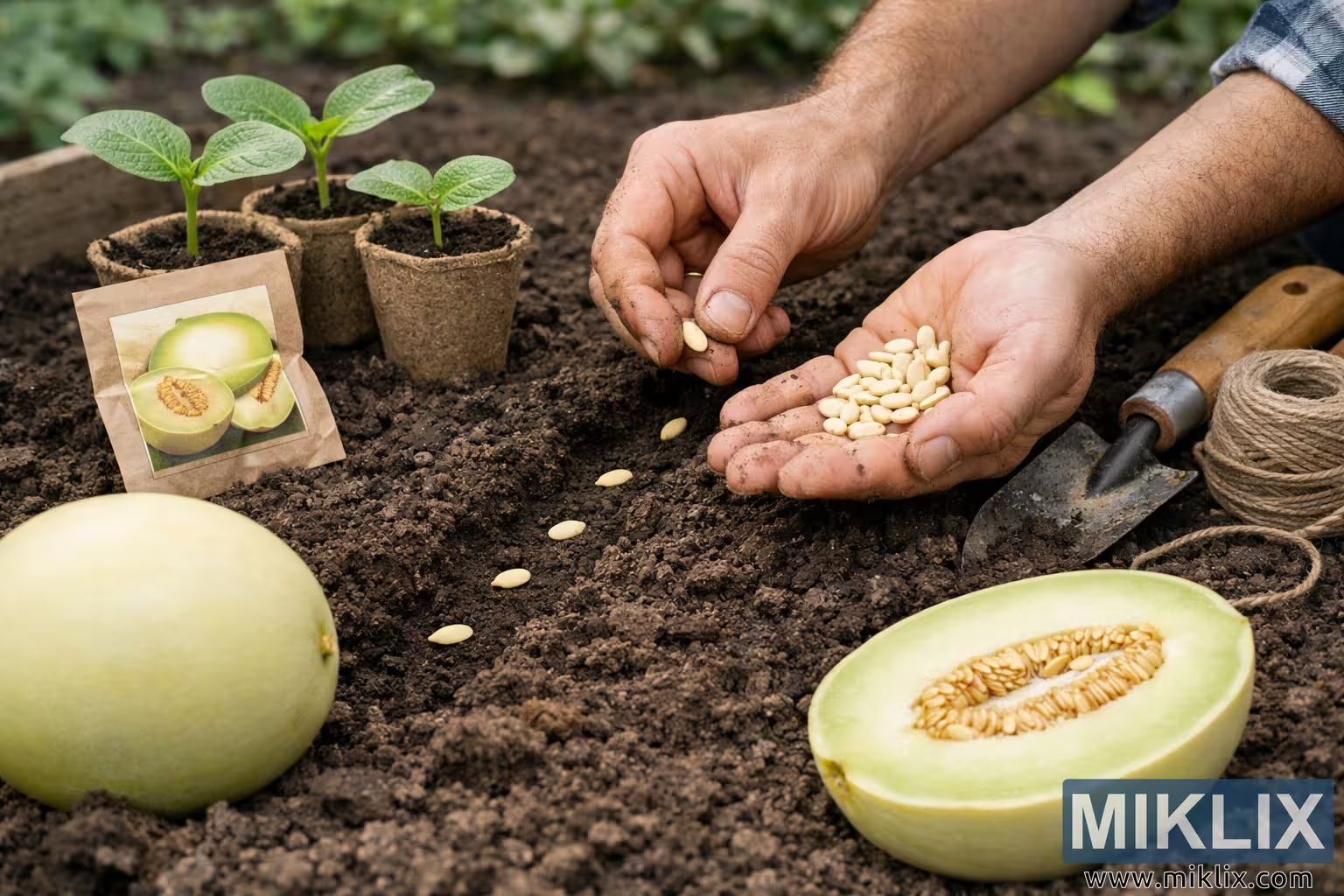
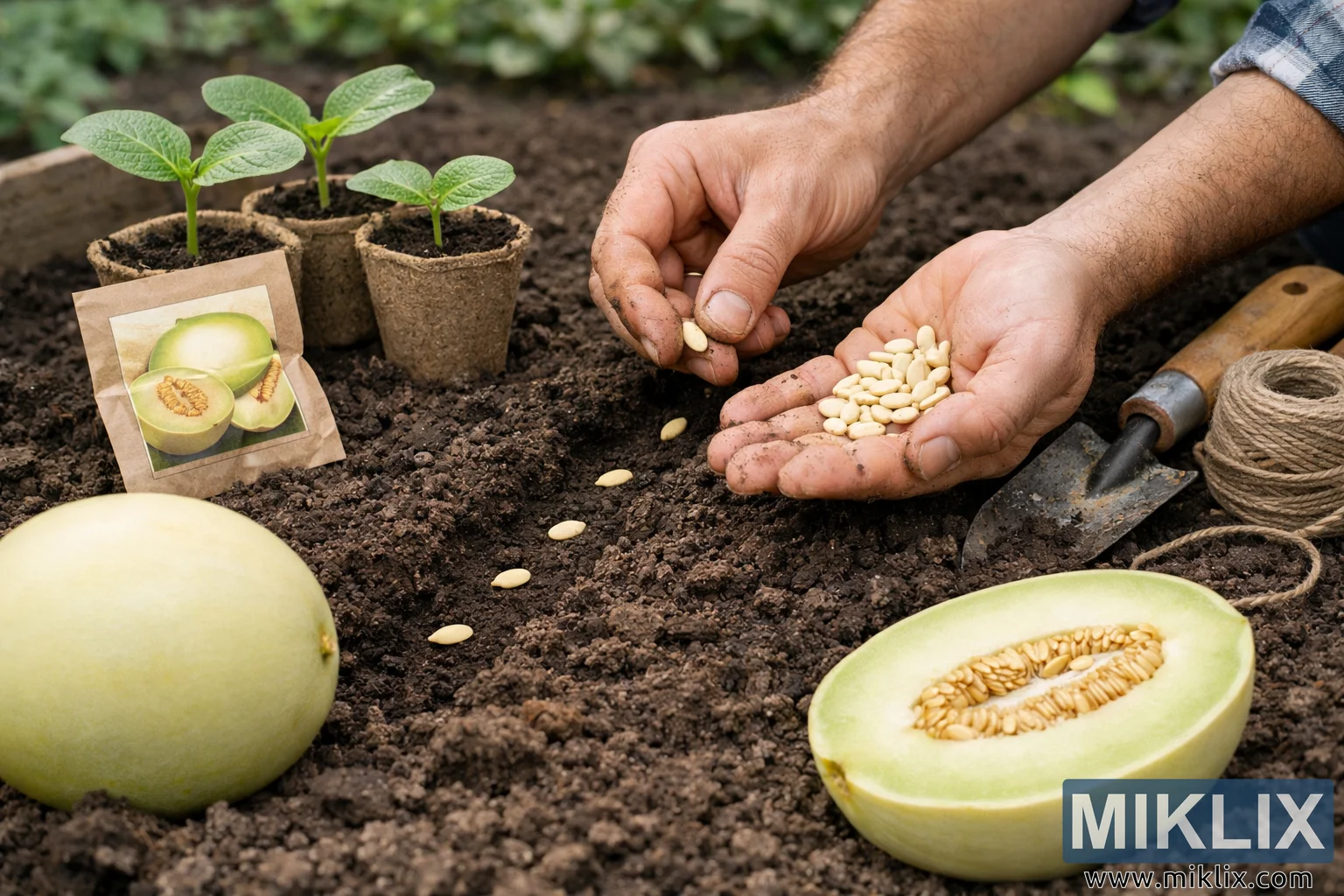
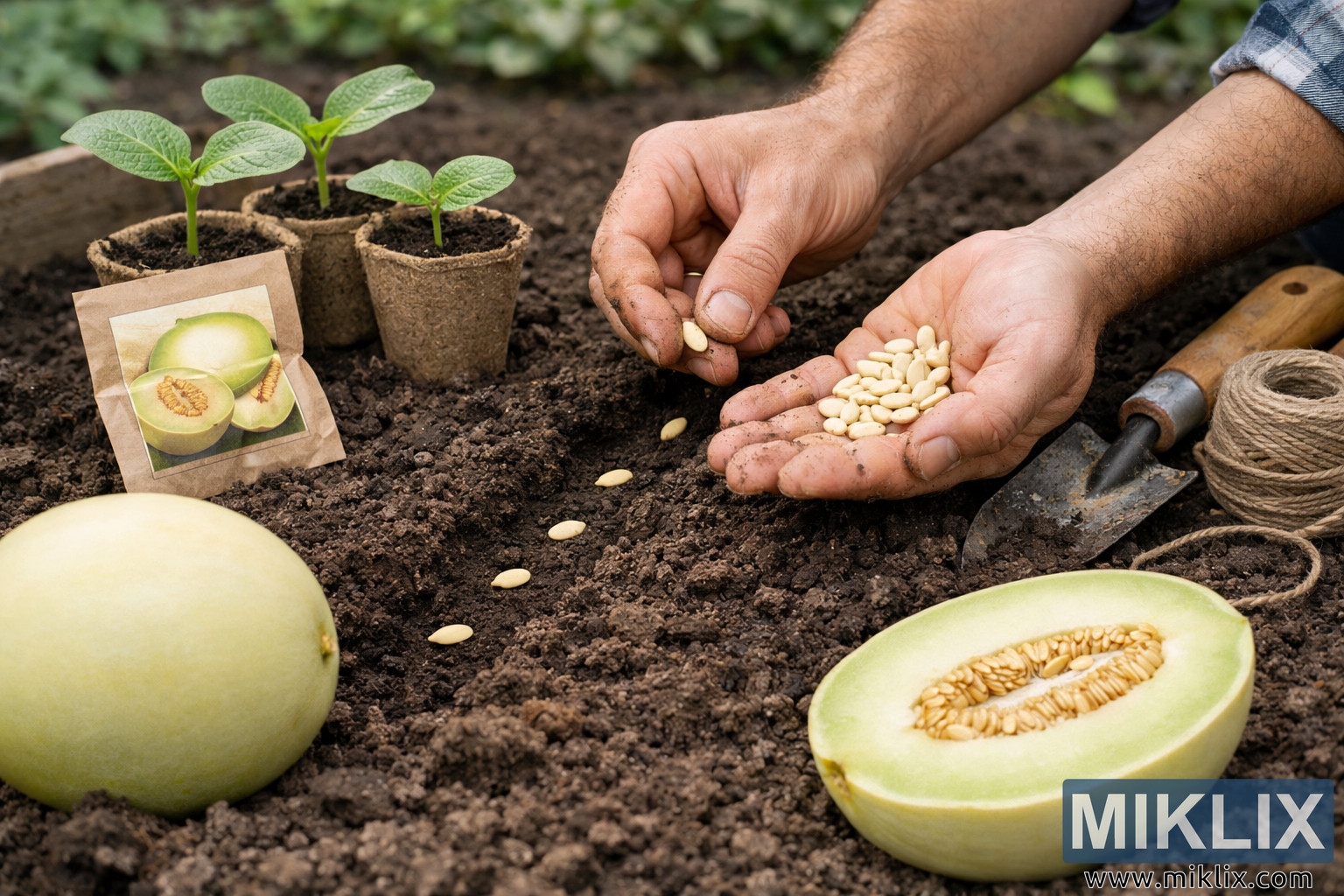
A high-resolution, landscape-oriented photograph captures a quiet, focused moment in a home garden where honeydew melon seeds are being planted into carefully prepared soil. The scene is bathed in soft, natural daylight, suggesting a mild, pleasant day that is ideal for gardening. At the center of the image, a gardener’s hands become the main focal point, conveying both care and intention. The left hand rests gently on the dark, rich soil, fingers slightly spread, stabilizing the earth while guiding the seeds into a neat row of shallow holes. The skin on the hands shows subtle signs of work—small traces of soil cling to the fingers and nestle under the fingernails, hinting at time already spent tending to the garden.
The right hand hovers just above the soil, holding a small handful of honeydew melon seeds. These seeds are pale, off-white, and oval-shaped, with a smooth, slightly glossy surface that catches the light. One seed is poised between the gardener’s fingers, ready to be dropped into a waiting hole in the soil. The row of holes runs diagonally from the lower center of the frame toward the upper right, creating a sense of direction and rhythm. Each hole is evenly spaced, suggesting careful planning and a methodical approach to planting. Within several of these holes, individual seeds are already visible, resting at the bottom before being gently covered with soil.
To the left of the gardener’s hands, a small, biodegradable seed packet made of brown kraft paper lies open on the soil. The packet looks simple and rustic, with a printed label on the front. The label features an illustration of two ripe honeydew melons, one whole and one sliced open to reveal its pale green flesh and central cavity filled with seeds. The illustration is stylized but realistic enough to clearly identify the fruit as honeydew melon. The packet’s open top suggests that the seeds currently being planted were taken from it, reinforcing the narrative of a gardener following a plan for growing this particular crop.
Near the seed packet, three small honeydew seedlings sit in biodegradable peat pots. Each seedling has two vibrant green leaves—cotyledons—that stand out against the dark soil. The leaves are smooth, slightly rounded, and fresh-looking, indicating healthy growth. The peat pots themselves are a muted brown color and have a slightly rough texture, emphasizing their organic, compostable nature. These seedlings represent the next stage of growth, visually connecting the act of planting seeds with the promise of future plants that will eventually bear fruit.
To the right of the gardener’s hands, a wooden-handled gardening trowel rests on the soil. The trowel’s metal blade is partially embedded in the earth, as if it was just used to create the row of planting holes. The wooden handle has a warm, natural tone and a slightly worn appearance, suggesting that it is a well-used and trusted tool. Nearby, a ball of natural jute twine and a spool of twine lie on the ground. The twine is a light brown color and has a fibrous texture, hinting at its use for tying plants, marking rows, or supporting vines as they grow.
In the foreground, on the lower left side of the frame, a large, ripe honeydew melon rests on the soil. Its rind is smooth and pale yellow, with a subtle sheen that reflects the daylight. Next to it, slightly to the right, a halved honeydew melon reveals its interior. The flesh is a soft, light green color, appearing juicy and fresh. At the center of the halved melon, a cavity filled with pale tan seeds is clearly visible, echoing the seeds being planted in the soil nearby. This visual repetition reinforces the cycle of growth—from seed to fruit and back to seed.
The soil itself is dark, freshly tilled, and rich in texture. Small clumps and fine particles are visible, giving the impression of fertile ground ready to support new life. The row of holes containing seeds is clearly defined, and the soil around them appears slightly disturbed, as though recently worked by the gardener’s hands and tools. The diagonal orientation of the row adds a dynamic element to the composition, guiding the viewer’s eye through the scene.
In the background, the garden extends beyond the immediate area of planting. The background is softly blurred, creating a shallow depth of field that keeps the viewer’s attention on the gardener’s hands, the seeds, and the nearby objects. Despite the blur, hints of green plants and a wooden raised garden bed can be seen, suggesting a well-maintained garden space with multiple planting areas. The raised bed’s wooden boards are a natural brown color, complementing the earthy tones of the soil and tools.
The overall color palette of the image is harmonious and grounded in nature. Earthy browns dominate the soil, trowel handle, peat pots, and seed packet, while the greens of the seedlings and background plants add vibrancy and life. The pale yellow and light green hues of the honeydew melons provide a gentle contrast, drawing attention to the fruit and reinforcing the theme of growth and harvest. The lighting is even and natural, with no harsh shadows, creating a calm and inviting atmosphere.
This photograph tells a quiet story of gardening and patience. The presence of both seeds and mature fruit in the same frame symbolizes the full cycle of cultivation—from preparation and planting to growth and eventual harvest. The gardener’s hands, slightly dirty yet careful and deliberate, embody the human effort and care that go into nurturing plants. The tools and materials scattered around the scene—trowel, twine, seed packet, peat pots—suggest a thoughtful, organized approach to gardening, where each item has a purpose in supporting the plants’ development.
The image captures not just a single moment of planting, but the broader idea of tending to the earth and investing time and attention into something that will grow over weeks and months. It evokes a sense of calm, focus, and connection to nature, inviting the viewer to imagine the future vines, leaves, and fruits that will emerge from these small seeds now being placed into the soil.
Зураг нь дараахтай холбоотой: Honeydew Melon: The Refreshing Fruit Packed with Nutrients