
Fermenting Beer with White Labs WLP820 Oktoberfest Märzen Lager Yeast
Diterbitkan:
Kemas kini terakhir: 22 Mei 2026 pada 4:38:59 PTG UTC
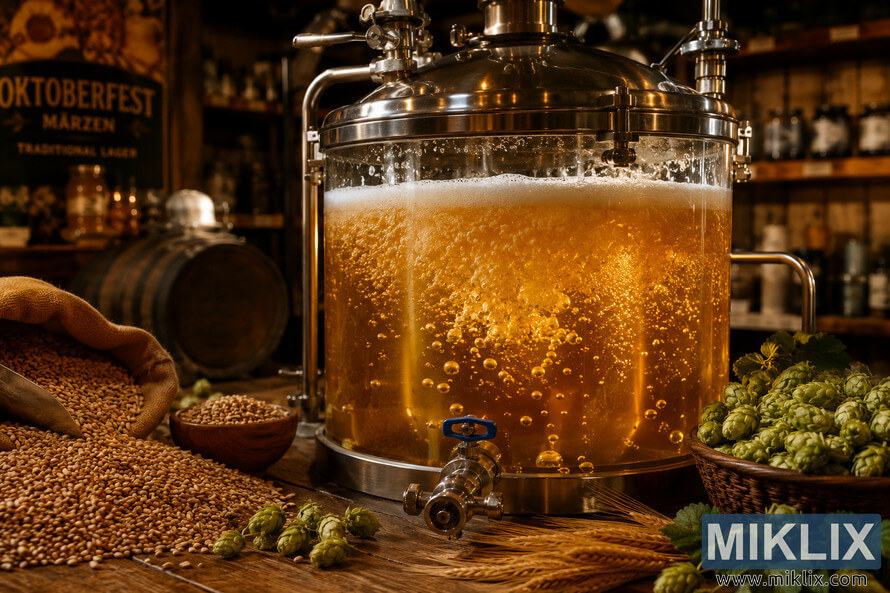
The White Labs WLP820 strain brings a classic German lager character to home and professional brewers. It was chosen for malt-forward styles and offers predictable performance with lager care. Below, we outline its background, tasting tendencies, and why brewers prefer it for Märzen and Oktoberfest beers.
Fermenting Beer with White Labs WLP820 Oktoberfest Märzen Lager Yeast
Klik atau ketik imej untuk maklumat lanjut dan resolusi yang lebih tinggi.
Key Takeaways
- White Labs WLP820 targets lager-style Märzen and Oktoberfest brews with balanced attenuation and clean character.
- Expect practical guidance on pitching, temperature control, and diacetyl management.
- Recipes and process notes will reflect common homebrew equipment and small production batches.
- Recommendations are grounded in White Labs data, brewing literature, and community-tested tips.
- The review aims to help you get consistent, traditional flavor while avoiding common lager pitfalls.
Overview of White Labs WLP820 Oktoberfest Märzen Lager Yeast
Origin and strain background
WLP820's origin is rooted in White Labs' propagation of historic German lager families. They source strains with ties to Munich, Helles, and Oktoberfest brewing traditions. These are adapted through lab propagation for modern brewing. Brewers appreciate its clean fermentation and reliable flocculation, aligning with traditional German lagers.
Typical flavor profile and attenuation
The Märzen yeast profile of WLP820 showcases rounded maltiness with low-to-moderate esters. This balances caramel, Munich, and biscuit malts, adding subtle complexity. Its attenuation falls in the mid-70s range, around 72–78%. This leaves enough residual body for a satisfying mouthfeel without cloying sweetness.
Why this strain suits Oktoberfest and Märzen styles
WLP820 highlights malt layers and preserves delicate toasty notes from specialty malts. Its balance of attenuation and flocculation yields a clear, drinkable profile expected at festivals. Brewers choose this strain for authentic Oktoberfest lager yeast history in aroma and body, with dependable lager yeast attenuation for consistent results.
Key Features and Specifications of the Yeast
Understanding WLP820 specs and brewing details is crucial for brewers. It helps in planning starters, fermentation schedules, and packaging. This strain aims for a clean lager character, tolerating modest temperature swings. Review cell counts and handling before brewing to achieve target attenuation and clarity.
Pitching rates and cell counts
White Labs technical guidance suggests lager pitching rates are higher than for ales. The recommended rate is 0.5–0.75 million viable cells per mL per °P for lagers. For a 5-gallon (19 L) batch at about 12 °P (roughly 1.048 OG), a starter or multiple vials are often needed for adequate cell counts.
Use calculators like Mr. Malty or Brewer's Friend to size starters and confirm viable cells. When planning your pitching rate WLP820, consider yeast age and storage conditions. Viability decreases over time.
Flocculation, attenuation, and temperature range
The yeast flocculation for this strain is medium to high, promoting good clarity after lagering. Expect moderate attenuation in the 72–78% range. Mash composition and fermentation temperature affect final gravity.
Recommended primary fermentation is around 46–55°F (8–13°C). Best results are often in the mid-40s to low-50s °F. Maintaining steady temperatures is crucial as ester production and attenuation are sensitive to small temperature shifts.
Packaging formats and shelf life
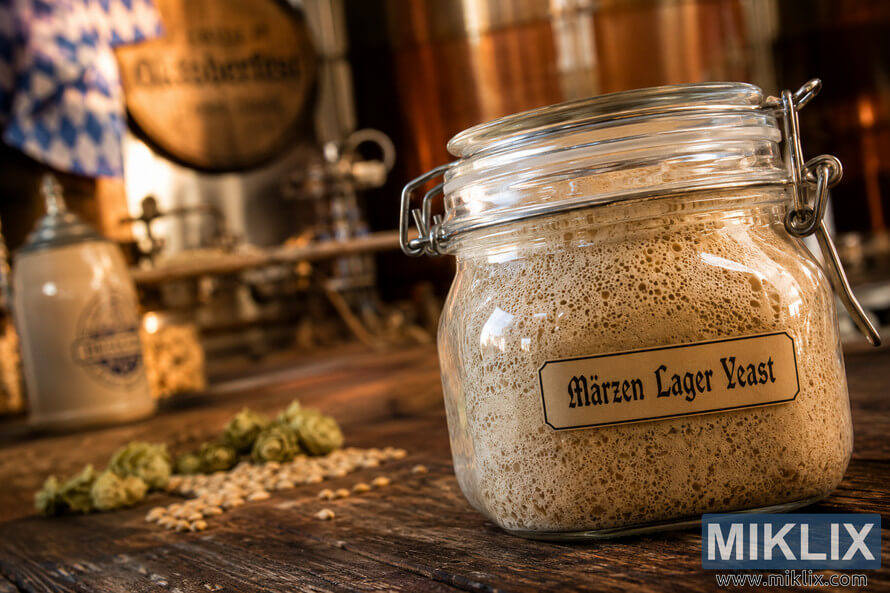
White Labs offers this strain as liquid yeast in vials or tubes and in lab-propagated pitching packs. You can also obtain slants or lab-grown starters from White Labs or authorized retailers for repitching or small-scale propagation.
Yeast packaging from White Labs has a limited refrigerated shelf life. Viability on vials declines over weeks to months, depending on production date. Store packs at 36–46°F (2–8°C) and check the production date before use. This ensures you plan starters or buy fresh stock.
Klik atau ketik imej untuk maklumat lanjut dan resolusi yang lebih tinggi.
Fermentation Temperature Management
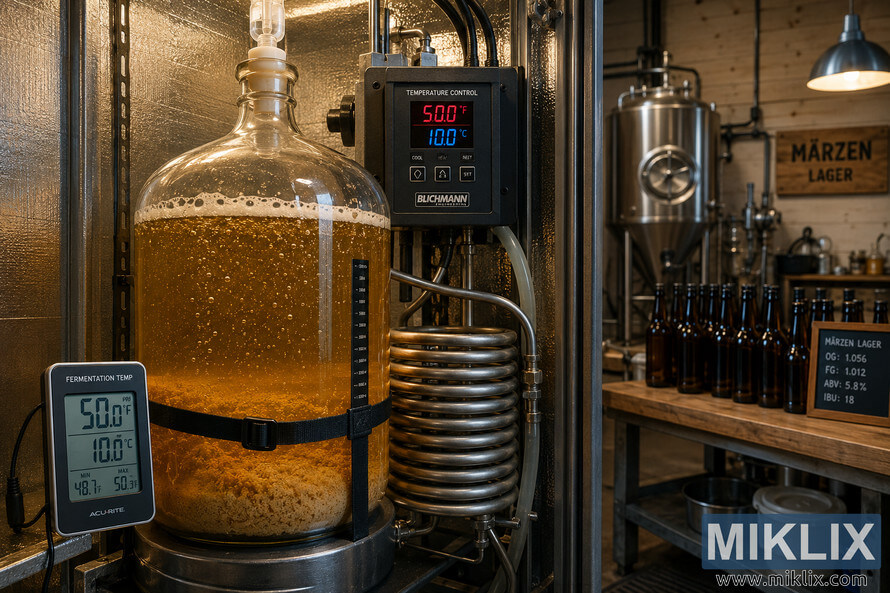
Controlling temperature is crucial for flavor and clarity with White Labs WLP820. Maintain steady conditions from the start to lagering to minimize esters and ensure clean attenuation. Small, gradual temperature adjustments are better than sudden ones for optimal results.
Recommended primary fermentation temperatures
For primary fermentation, aim for 46–52°F (8–11°C) with WLP820. This range supports steady attenuation and controlled ester formation. Begin with a lower temperature to reduce fruity notes. However, avoid temperatures below 46°F to prevent a slow start and stalled fermentation.
Managing diacetyl and ester production
Diacetyl forms early in fermentation and decreases as yeast reabsorbs it later. Effective diacetyl management involves a brief warm-up near the end of primary fermentation. Raise the beer to 55–60°F (13–15°C) for 24–72 hours to allow yeast to remove diacetyl.
To control esters, maintain primary fermentation temperatures within the recommended range and minimize oxygen exposure after aeration. Avoid temperature fluctuations and rough handling. For stronger ester suppression, keep temperatures at the lower end and ensure a healthy, properly pitched starter.
Cooling and lagering schedules for clean profiles
After the diacetyl rest, cool the beer slowly to near-freezing. Adhere to a suitable lagering schedule to refine flavors and enhance clarity. For Märzen and Oktoberfest styles, a typical lagering period is 4–8 weeks at 32–38°F (0–3°C).
Many brewers extend conditioning to 6–12 weeks for enhanced smoothness. Gradual temperature adjustments are key to avoid chill haze and yeast stress. This approach results in a clean profile with well-controlled esters and diacetyl.
Klik atau ketik imej untuk maklumat lanjut dan resolusi yang lebih tinggi.
Mashing and Wort Considerations for Märzen and Oktoberfest
Creating a true Märzen or Oktoberfest begins at the mash tun. A well-thought-out grain bill, a detailed mash plan, and a water profile tailored for Märzen are crucial. These elements determine the beer's color, body, and malt flavor. Follow the advice below to achieve a traditional amber hue and a rich malt backbone.
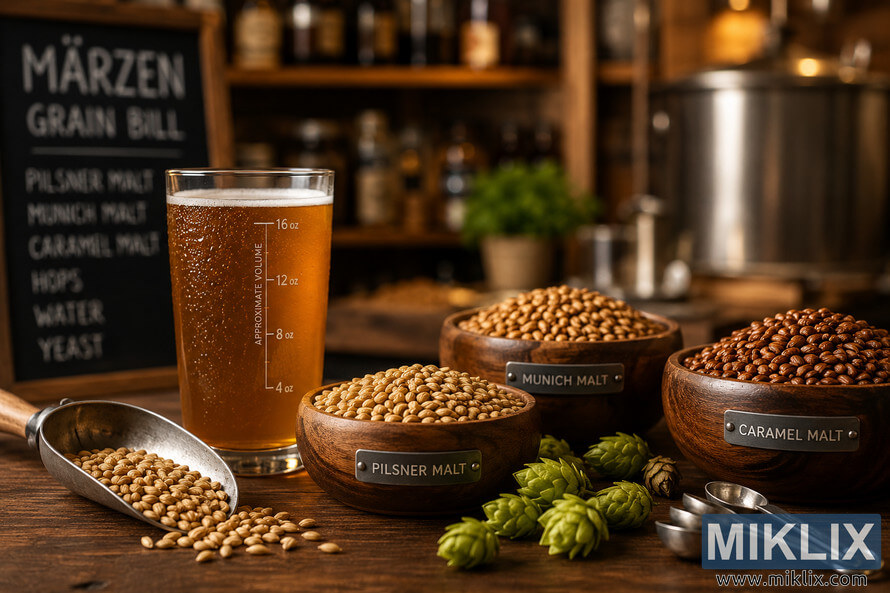
Grain bill recommendations include a Pilsner base with a significant Munich presence. Aim for 70–80% Pilsner malt and 20–30% Munich or Vienna malt for a deeper color and toasty flavor. Add small amounts of CaraMunich or Caraamber to enhance body and head retention. Keep crystal malts low and avoid dark roasts to preserve a clear amber to deep copper SRM range of about 6–14.
For lighter Oktoberfest versions, reduce Munich to 15–20% and keep the base malt dominant. For full-bodied Märzen, push Munich toward the higher end and consider a touch of Munich dunkel for extra malt complexity.
- Target base malt: German Pilsner or high-quality domestic Pilsner.
- Specialty: Munich 20–30%, Vienna optional 5–10%.
- Caramel: 2–6% CaraMunich or Caraamber.
- Roast: minimal, avoid >1–2% dark specialty malts.
Choose a mash approach that fits your equipment and time. A single infusion mash at 150–154°F (65–68°C) gives a fuller body and more dextrins. This method is simple, repeatable, and reliable for home brewers and smaller systems.
For traditionalists, a decoction mash will deepen malt complexity and color. A practical decoction mash pulls about one-third of the mash, boils it, then returns it to the main mash to raise the temperature. That process boosts melanoidin formation and amplifies bready, toasty notes.
- Single infusion: 150–154°F for 60 minutes for a round mouthfeel.
- 1-step decoction: remove ~30% mash, boil 10–20 minutes, return to rest.
- 2-step decoction: useful for precise rests but adds time and heat stress.
Decoction mash benefits include richer malt depth and slightly darker color without extra specialty malts. Drawbacks include longer brew day, more stirring, and higher heat use. Plan sanitation and careful temperature control to avoid tannin extraction when lautering.
Water matters. Aim for a chloride-to-sulfate balance that favors chloride to emphasize maltiness. A good starting water profile for Märzen targets calcium 50–100 ppm, sulfate 50–100 ppm, and chloride 50–150 ppm. Keep magnesium low and adjust with calcium chloride or gypsum as needed.
Test your source water with a lab such as Ward Laboratories and adjust salts to match Munich-like water. Monitor mash pH and aim for 5.2–5.4 at room temperature to protect enzymes and lock in correct color and efficiency.
Small adjustments go far. Add calcium chloride to round malt flavors and increase chloride. Add gypsum if hop crispness is desired, but avoid pushing sulfate above chloride if you want a malt-forward Oktoberfest. Check final mash pH before lautering and tweak with lactic acid or brewing salts when required.
Klik atau ketik imej untuk maklumat lanjut dan resolusi yang lebih tinggi.
Pitching Rates and Oxygenation Best Practices
Mastering the lager pitching rate and selecting the right oxygenation methods is crucial for a clean, balanced Märzen or Oktoberfest. This guide will help you calculate cell counts for lagers, dissolve oxygen into cooled wort, and understand how pitch rate effects can alter flavor.
To determine cell counts for a 5-gallon batch, use a cell calculator like Brewer’s Friend or Mr. Malty. Lagers require more cells than ales. For instance, a 5-gallon, 1.050 OG lager needs about 300–400 billion cells, depending on your target pitch rate and degrees Plato. Plan your starter size or number of WLP820 pitching vials accordingly.
Here are practical steps for planning cell counts:
- Enter batch size and gravity into a calculator to get a target cell count.
- Adjust starter volume upward if yeasts are older and viability is lower.
- For repitching, check total cell numbers and resting time since last harvest.
Oxygenation methods are more critical for lagers than for many ales. Yeast needs oxygen at the start to build sterols and membranes for healthy fermentation. Aim for dissolved oxygen levels that match your pitching plan.
Common approaches include:
- Pure oxygen with a diffusion stone to reach 8–10 ppm DO for best consistency.
- Vigorous aeration with a sanitized aquarium pump and stone to approach 6–8 ppm when oxygen tanks are not available.
- Ensure wort is cooled below 80°F before aeration to avoid oxygen loss and thermal stress on yeast.
Pitch rate effects significantly shape final aroma and mouthfeel. Under-pitching often lengthens lag phase and stresses yeast, leading to higher ester and fusel alcohol production. Over-pitching tends to mute esters and deliver a very clean but sometimes thin profile.
For WLP820 pitching, aim for recommended lager rates to preserve malt character and body. Matching the lager pitching rate to your oxygenation methods keeps fermentation on schedule and reduces the risk of off-flavors.
Primary Fermentation: Timeline and Monitoring
When brewing an Oktoberfest or Märzen with White Labs WLP820, timing and observation are key. A steady, cool primary fermentation is crucial. Keeping simple records of activity and gravity is essential. Use the timeline below to set expectations and know when to act.
- Expect active fermentation to start within 12–72 hours. Krausen forms early and often peaks in the first few days.
- Most of the gravity drop happens in the first 7 days. A full primary can run 7–14 days depending on pitch rate and temperature.
- Colder ferments trend toward the longer end. Allow extra time for attenuation and yeast cleanup before lagering.
How to track gravity and activity
- Take hydrometer or digital refractometer readings every 48 hours once activity begins. Convert refractometer values for alcohol to get true specific gravity.
- Watch krausen, foam collapse, and consistent gravity drops rather than just airlock bubbles. Those tell you progress better than surface activity alone.
- Use a simple log to note date, temperature, gravity, and any additions. This improves future batches and aids in monitoring lager fermentation reliably.
Troubleshooting stalled or sluggish fermentations
- If gravity stalls, first check temperature. Raise into the recommended range gently for 24–48 hours to encourage yeast activity.
- Confirm wort oxygenation and nutrients. Add a measured dose of yeast nutrient or energizer if wort was lean.
- When a stronger intervention is needed, prepare a fresh, healthy starter or repitch a vigorous lager strain. Avoid sudden, extreme changes; warming slightly and waiting often resolves issues without stress on the yeast.
- If signs of infection appear—off-aromas, pellicle, or unexpected souring—segregate the batch and evaluate. At that point a stuck fermentation fix may not salvage flavor, but it helps diagnose and protect future brews.
Diacetyl Management and Cleaning Up Off-Flavors
Attaining a clean lager profile demands diligence in fermentation and conditioning. Diacetyl can ruin a Märzen or Oktoberfest, but using White Labs WLP820 can mitigate this risk. Below, we outline why diacetyl forms, how to reduce it, and solutions for other common issues.
- Yeast release alpha-acetolactate during growth. This compound oxidizes into diacetyl if yeast do not reabsorb it before cooling.
- Poor yeast health, low cell counts, or weak oxygenation reduce the yeast’s clean-up ability. Cold-crashing too soon traps diacetyl in the beer.
- Long, cool fermentations may let diacetyl form and persist if the yeast lack vitality late in primary.
Techniques to reduce diacetyl with WLP820
- Pitch adequate cells and oxygenate wort well. Healthy populations finish fermentation strongly and lower diacetyl in lagers.
- Implement a diacetyl rest WLP820 users trust: raise temp near the end of primary to about 55–60°F (13–15°C) for 24–72 hours. Keep fermenter slightly active so yeast can reabsorb diacetyl.
- Hold off on cold crashing until after the rest. Add yeast nutrients when needed and avoid excessive fatty acids that impair yeast performance.
Addressing other common off-flavors
- Acetaldehyde (green apple): let fermentation finish and give extra time for yeast reduction before lagering. Full attenuation is key.
- Sulfur (rotten egg): many lager strains show this early. Proper oxygenation at pitching and extended lagering usually clear it.
- Esters and fusels: control fermentation temperature and pitch rate to prevent excessive fruity or solvent notes.
- Corrective steps: extended cold conditioning, racking off heavy trub, or blending small amounts with cleaner beer can help salvage a batch.
Managing diacetyl in lagers and pursuing clean lager off-flavors are part science, part timing. With correct pitching, oxygenation, and a well-timed diacetyl rest WLP820 will deliver the crisp, malt-forward profile expected from classic Oktoberfest and Märzen lagers.
Conditioning and Lagering Techniques
Cold conditioning and gentle handling after fermentation are key to Märzen and Oktoberfest beers' clarity and balance. A steady, cool schedule and simple fining methods help reduce haze and soften harsh notes. Traditional carbonation and proper transfer practice complete the beer, ensuring the expected mouthfeel.
The cold conditioning duration varies by style and taste. Most lagers benefit from 4–12 weeks at near-freezing temperatures (32–38°F / 0–3°C). Classic Märzen often requires a longer lagering duration Märzen of 6–12 weeks. This allows flavors to mellow and any sulfur or diacetyl traces to decline.
Before extended cold storage, rack gently off the gross lees. This reduces the risk of autolysis and keeps the beer cleaner during lagering. Handle transfers slowly to avoid oxygen pickup that can dull fresh malt character.
Clarity comes from a combination of time, chill, and fining methods. Add Irish moss during the boil to help kettle finings form. Cold crash the fermenter to encourage protein-polyphenol drop-out. Post-fermentation finings such as gelatin or isinglass speed clearing for homebrewers.
- Use cold conditioning Oktoberfest to compact yeast and particulates.
- Employ gentle racking to leave behind heavy lees.
- Consider filtration or centrifugation only for commercial batches.
Traditional carbonation completes the style with a moderate effervescence. Aim for 2.2–2.6 volumes CO2 to preserve a fuller mouthfeel and a soft foam. Choose bottle priming with calculated sugar for living conditioning, or keg and force carbonate to exact volumes for consistent pours.
If you bottle condition, allow extra time at serving temperature after priming so flavors integrate. For kegging, set CO2 to the target volumes and let the beer settle at cold conditioning temperatures for a few days to a week before service.
Patience during lagering duration Märzen and careful use of fining methods will reward you with a clean, polished Oktoberfest. Balance moderate carbonation with the malt body to keep the beer true to tradition and ready for tasting.
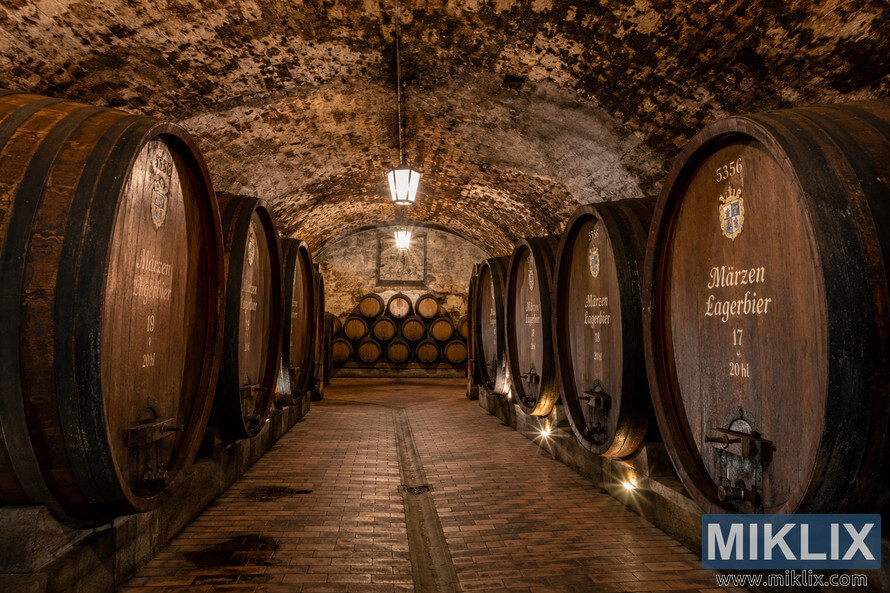
Klik atau ketik imej untuk maklumat lanjut dan resolusi yang lebih tinggi.
Tasting Notes and Sensory Expectations
WLP820 tasting notes guide brewers toward a malt-forward, balanced Märzen. Expect to notice toasty, bready, and light caramel aromas with restrained noble-hop presence. The yeast keeps esters low, so the malt character from Munich and Vienna malts stays central to the profile.
Expected aroma, flavor, and mouthfeel characteristics
- Clean, malty aroma with gentle toast and biscuit notes that match a classic Märzen aroma profile.
- Flavor leans toward toasted malt, mild caramel, and a subtle grainy sweetness. Bitterness stays low to moderate.
- Mouthfeel is medium-bodied with a smooth, rounded finish. Moderate carbonation supports the malt without drying the palate.
How malt, hops, and yeast interact in this strain
- WLP820 preserves malt complexity, letting Munich and Vienna malts provide depth and color.
- Hop varieties such as Saaz, Hallertau, or Tettnang should be used sparingly so malt remains dominant.
- The yeast contributes a supportive, neutral backbone. That balance creates authentic Oktoberfest sensory expectations without strong fruity esters.
Scoring and comparing to commercial examples
- Use a simple scoring sheet: aroma, appearance, flavor, mouthfeel, overall impression. Score each area 1–10 for clear benchmarking.
- Compare homebrews blind against established bottles like Paulaner Märzen or Spaten Oktoberfest to calibrate expectations and appreciation for clarity and balance.
- Refer back to WLP820 tasting notes after each comparison to refine mash, hopping, and fermentation choices for desired results.
Recipe Examples and Batch Notes
Below are practical recipes and a simple record system to help brewers replicate classic Märzen and Oktoberfest beers with White Labs WLP820. Each entry includes process notes, mash targets, and items to track in your lager batch notes and fermentation log template.
Classic Märzen outline
Ingredient overview for a 5-gallon batch:
- 11 lb Pilsner malt
- 3 lb Munich 10L
- 1 lb Vienna
- 0.5 lb CaraMunich
- Hops: Hallertau or Tettnang to 20–30 IBU
Mash at 152°F for 60 minutes. Boil 60–90 minutes. Aim OG ~1.054–1.058. Adjust water to favor chloride for a fuller malt mouthfeel.
Pitch White Labs WLP820 at recommended lager cell count. Expect 48–72 hours of active fermentation, then a diacetyl rest before extended lagering. Record each step in your lager batch notes.
Oktoberfest Marzen hybrid variations
For a more sessionable Oktoberfest, reduce OG to 1.050–1.056. Increase Munich malt for deeper amber color and toasty malt character for stronger Oktoberfest notes.
Consider a single decoction mash to boost malt complexity and body. Keep hop additions modest so bitterness remains balanced and hop flavor stays restrained.
Small tweaks such as swapping 0.5–1 lb of Pilsner for Munich or using Vienna in lieu of some Pilsner will shift profile without changing process dramatically. Note all changes in your fermentation log template for comparison.
Batch record and fermentation log suggestions
Use a clear batch sheet to track the full timeline and any corrective actions. Essential fields include:
- Recipe name and date
- Grain bill and hop schedule
- Water profile and any salt additions
- Mash schedule and temperatures
- OG and FG readings
- Pitch date/time, yeast source, and starter size
- Fermentation temperatures and ambient temps
- Gravity readings with dates and times
- Diacetyl rest start/end dates and lagering duration
- Tasting notes and any corrective actions taken
Suggested column layout for a fermentation log template:
- Date / Time
- Specific Gravity
- Wort Temp (°F)
- Ambient Temp (°F)
- Activity observed
- Actions taken
Keeping consistent lager batch notes helps you refine the Märzen recipe WLP820 and replicate successful Oktoberfest recipe variants. Regular, simple entries make troubleshooting easier and improve future brews.
Common Troubleshooting and Practical Tips from Brewers
When a lager slows or stops, clear steps help recover the beer without risking off-flavors. Start with simple checks, then move to more involved fixes if needed.
Handling stuck fermentations and low attenuation
- Confirm gravity with a hydrometer and cross-check refractometer readings using a wort correction calculator. Inaccurate readings can misdiagnose a stuck fermentation.
- Raise the fermenter temperature slowly into the upper end of the WLP820 range. A gentle 4–6°F bump often wakes sluggish yeast without creating esters.
- Gently swirl or roll the fermenter to resuspend yeast trapped by trub. Avoid vigorous shaking that introduces oxygen late in fermentation.
- Pitch a fresh, active starter or a healthy commercial pack if the yeast shows little activity after temperature changes. Add yeast nutrient when gravity is high or the wort was high in adjuncts.
- Prevent issues by calculating proper pitching rates, oxygenating wort well before pitching, and maintaining a balanced mash to avoid unfermentable dextrins that lower apparent attenuation.
Storage, reuse, and repitching advice
- Store WLP820 refrigerated at the temperature on the vial until you use it. Check the production or expiration date and avoid expired packs for lagers that need vigor.
- Harvest yeast from a clean fermenter below the beer layer. Wash harvested yeast if the trub contains heavy hop or protein debris to reduce off-flavor carryover.
- Always build a starter to restore cell counts and vitality before repitching lager yeast into another batch. A healthy starter reduces lag time and diacetyl risk.
- Limit repitches to a few generations. Commercial labs and professional brewers recommend rotating in fresh cultures to avoid genetic drift and contamination.
Equipment tips for homebrewers fermenting lagers
- Use a temperature-controlled fridge with a reliable controller or a small glycol system for steady low temps. Stable control beats rapid swings every time.
- Invest in an accurate digital thermometer and a calibrated hydrometer or refractometer. Good data guides right decisions during fermentation and lagering.
- Oxygenate wort thoroughly before pitching. An oxygen tank with a stone gives consistent dissolved oxygen for lagers that need strong early growth.
- Choose a quality fermenter such as a conical for easy yeast harvesting or a sanitized bucket with good seals. Tight sanitation prevents infections that mimic fermentation problems.
- Keep a fermentation log with temperatures, gravity readings, pitch rates, and oxygenation details. Clear records make future WLP820 troubleshooting and repitching lager yeast decisions faster and more confident.
Conclusion
White Labs WLP820 emerges as a top choice for those brewing Märzen or Oktoberfest at home or in small breweries. This yeast offers a malt-forward, clean taste with moderate attenuation and solid flocculation. It's ideal for achieving the classic festival balance.
Success with WLP820 hinges on meticulous process management. This includes proper pitching rates, tight temperature control, and a diacetyl rest. A well-designed mash and water profile also plays a crucial role. Additionally, attention to oxygenation, fermentation monitoring, and patient lagering are key to reducing off-flavors and enhancing clarity and mouthfeel.
For those dedicated to brewing excellence, WLP820 is a standout yeast for Märzen. By following White Labs' technical notes and using yeast calculators, brewers can achieve consistent, high-quality results. With the right starter and temperature regimen, WLP820 delivers an authentic, polished Oktoberfest lager.

Klik atau ketik imej untuk maklumat lanjut dan resolusi yang lebih tinggi.
FAQ
What makes White Labs WLP820 Oktoberfest Märzen Lager Yeast a good choice for Märzen and Oktoberfest beers?
WLP820 is a lager strain chosen for its malt-forward, rounded character. It produces low-to-moderate esters. This strain allows for enough residual body through moderate attenuation (about 72–78%) to highlight Munich and Vienna malt flavors. Its medium-to-high flocculation aids in achieving clarity after proper lagering, making it ideal for traditional Märzen and Oktoberfest beers.
What pitching rate should I use for a 5-gallon Märzen with WLP820?
For lagers, aim for roughly 0.5–0.75 million viable cells per mL per °P. For a standard 5-gallon (19 L) batch at ~1.048 OG (≈12 °P), you'll need to produce a starter or use multiple vials to reach adequate cell counts. Use calculators such as Mr. Malty or Brewer’s Friend to size the starter precisely.
Should I rehydrate WLP820 or make a starter?
WLP820 is sold as a liquid culture; many brewers pitch the vial directly if cell counts are sufficient. For lagers, however, a starter is strongly recommended to reach higher cell numbers and vitality. A 2–4 L starter is common for a single vial when brewing a 5-gallon lager; scale up for higher gravity beers.
What fermentation temperatures give the best results with WLP820?
Target primary fermentation around 46–52°F (8–11°C) to balance attenuation and minimal esters. If you need a diacetyl rest, raise the beer to ~55–60°F (13–15°C) for 24–72 hours near the end of primary. After cleanup, slowly cool to near-freezing for lagering.
How long should I lager a Märzen or Oktoberfest fermented with WLP820?
Cold-conditioning times vary, but 4–12 weeks at 32–38°F (0–3°C) is typical. Classic Märzen often benefits from 6–12 weeks to allow flavors to mellow and clarity to improve. Longer lagering usually yields a cleaner, more polished beer.
How can I manage diacetyl when using WLP820?
Prevent diacetyl by pitching adequate yeast, ensuring proper oxygenation at pitching, and allowing a diacetyl rest near the end of primary fermentation (raise to ~55–60°F / 13–15°C for 24–72 hours). Maintain yeast health with nutrients if needed and avoid prematurely cooling the beer before yeast clean-up.
What mash profile and grain bill should I use for an authentic Märzen?
Emphasize Munich and Vienna malts with a Pilsner base. A common 5-gallon bill might include Pilsner malt as the base with 20–30% Munich and modest amounts of Vienna and CaraMunich for color and body. Mash at 150–154°F (65–68°C) for a fuller mouthfeel; decoction can be used for added malt complexity if desired.
How should I adjust my water for a malt-forward Märzen/Oktoberfest?
Favor a chloride-forward profile to accentuate maltiness. Target moderate minerals (e.g., Ca 50–100 ppm, sulfate 50–100 ppm, chloride 50–150 ppm) and control mash pH to about 5.2–5.4. Use calcium chloride and gypsum as needed, guided by a water test such as Ward Labs.
What oxygenation method is recommended for lagers with WLP820?
Aim for thorough wort oxygenation before pitching. Best practice is pure oxygen with a diffusion stone to reach ~8–10 ppm DO. If oxygen is not available, vigorous aeration with an aquarium pump and sanitized tubing to reach ~6–8 ppm is an alternative. Oxygenate once, and only before pitching.
What are signs of a stuck or sluggish fermentation and how do I fix it?
Signs include little or no gravity change, minimal krausen, or extended lag time. First check temperature and raise to the recommended fermentation range. Gently swirl to resuspend yeast, add a healthy starter or active yeast if needed, and consider yeast nutrients. Avoid hasty interventions; often a modest temperature increase and time will restart activity.
How many times can I harvest and repitch WLP820 yeast?
Liquid lager strains like WLP820 can be harvested and reused, but viability and character decline with repeated repitches. Limit reuse to a few generations, wash yeast to remove hops and trub if desired, and build a starter before repitching. Periodically refresh from a new White Labs vial to avoid genetic drift or contamination.
What carbonation level suits Märzen and Oktoberfest?
Traditional carbonation is moderate, about 2.2–2.6 volumes CO2. This produces the fuller mouthfeel and proper head retention expected in these styles. For kegs use the CO2 set point to reach desired volumes; for bottles calculate priming sugar carefully for consistent carbonation.
Which hops pair best with WLP820-fermented Märzen/Oktoberfest?
Use noble or mild continental hops that keep a low-to-moderate bitterness so malt remains the star. Saaz, Hallertau, and Tettnang are traditional choices. Aim for conservative hopping (around 20–30 IBU) and use late additions sparingly to avoid masking malt complexity.
How should I record my fermentation to reproduce a successful batch?
Keep a batch log noting recipe, water profile, mash schedule, OG and FG, yeast source and starter size, pitch date/time, fermentation temperatures, gravity readings, diacetyl rest dates, and lagering duration. Include tasting notes and any adjustments so you can refine the process in future batches.
Where can I find technical guidance and community experiences for using WLP820?
Consult White Labs product pages and technical data sheets for lab information and handling. Supplement with brewing literature such as John Palmer’s How to Brew and community resources like the American Homebrewers Association, Brew Your Own, and forum threads on HomebrewTalk or Brewer’s Friend for practical tips and recipe variations.
Bacaan Selanjutnya
Jika anda menyukai siaran ini, anda juga mungkin menyukai cadangan ini:
- Menapai Bir dengan Ragi Asal CellarScience
- Menapai Bir dengan Bakteria Fermentis SafSour LP 652
- Menapai Bir dengan Yis Bump Fist Bump White Labs WLP1983 Charlie