
Imej: Flea Beetle Damage on Mustard Leaf
Diterbitkan:
Kemas kini terakhir: 7 Mac 2026 pada 6:30:31 PTG UTC
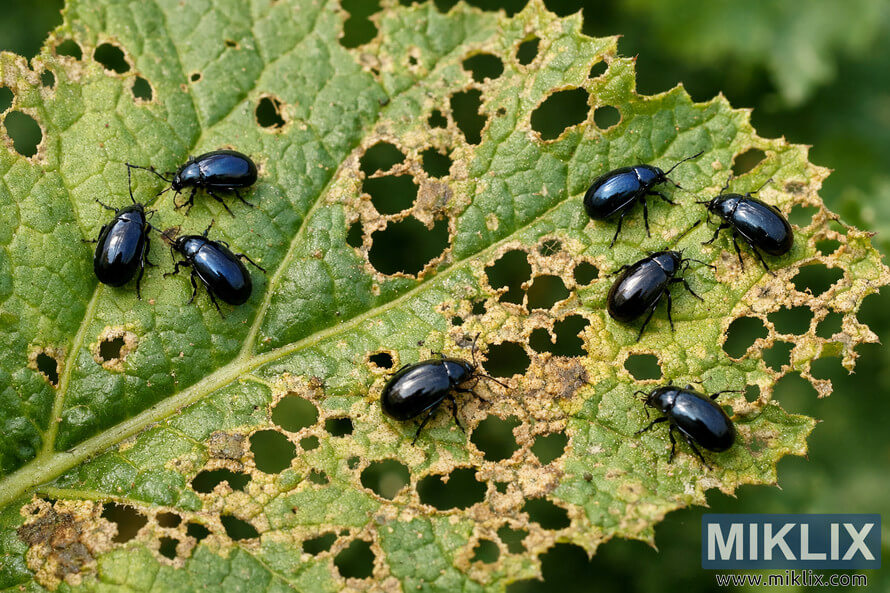
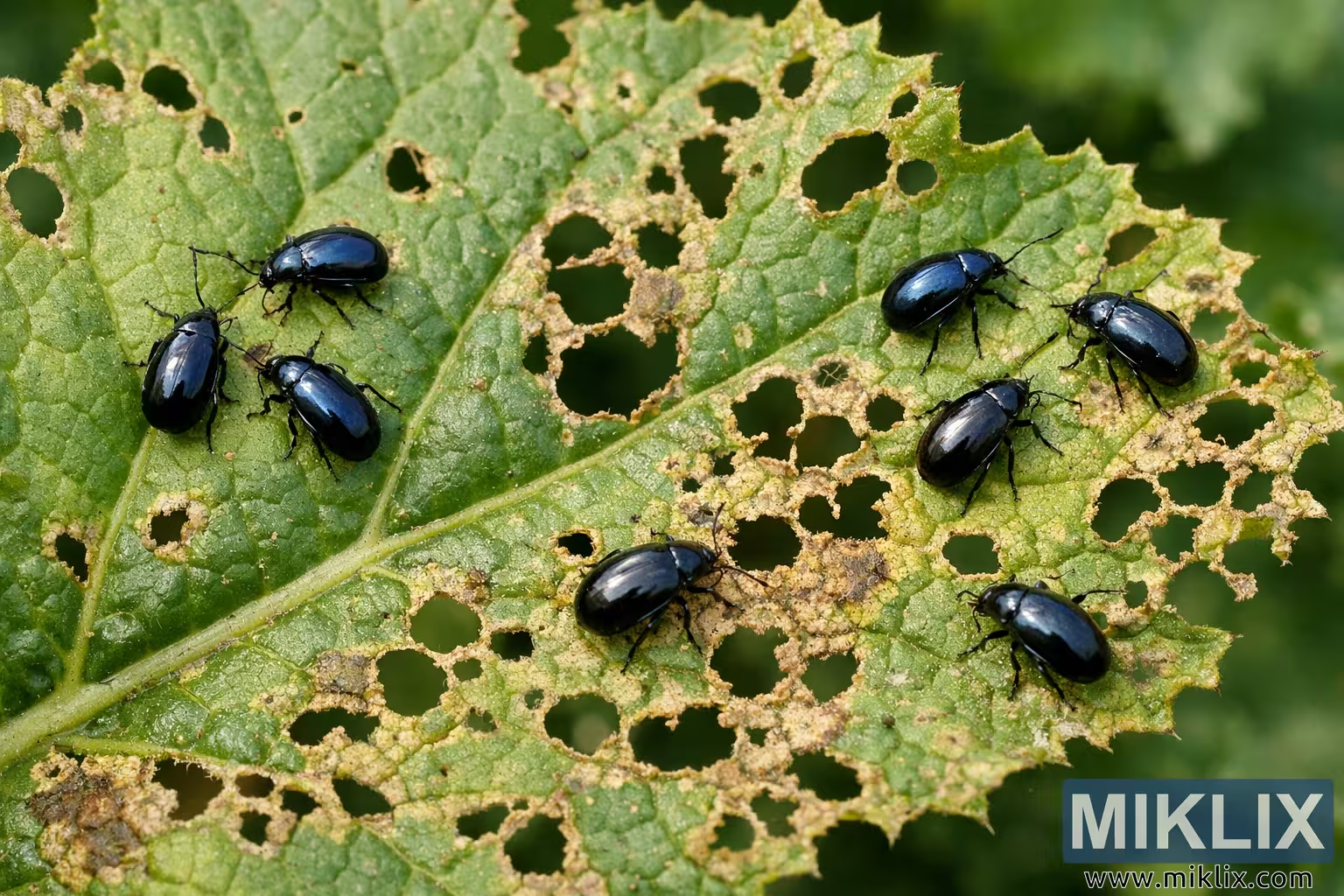
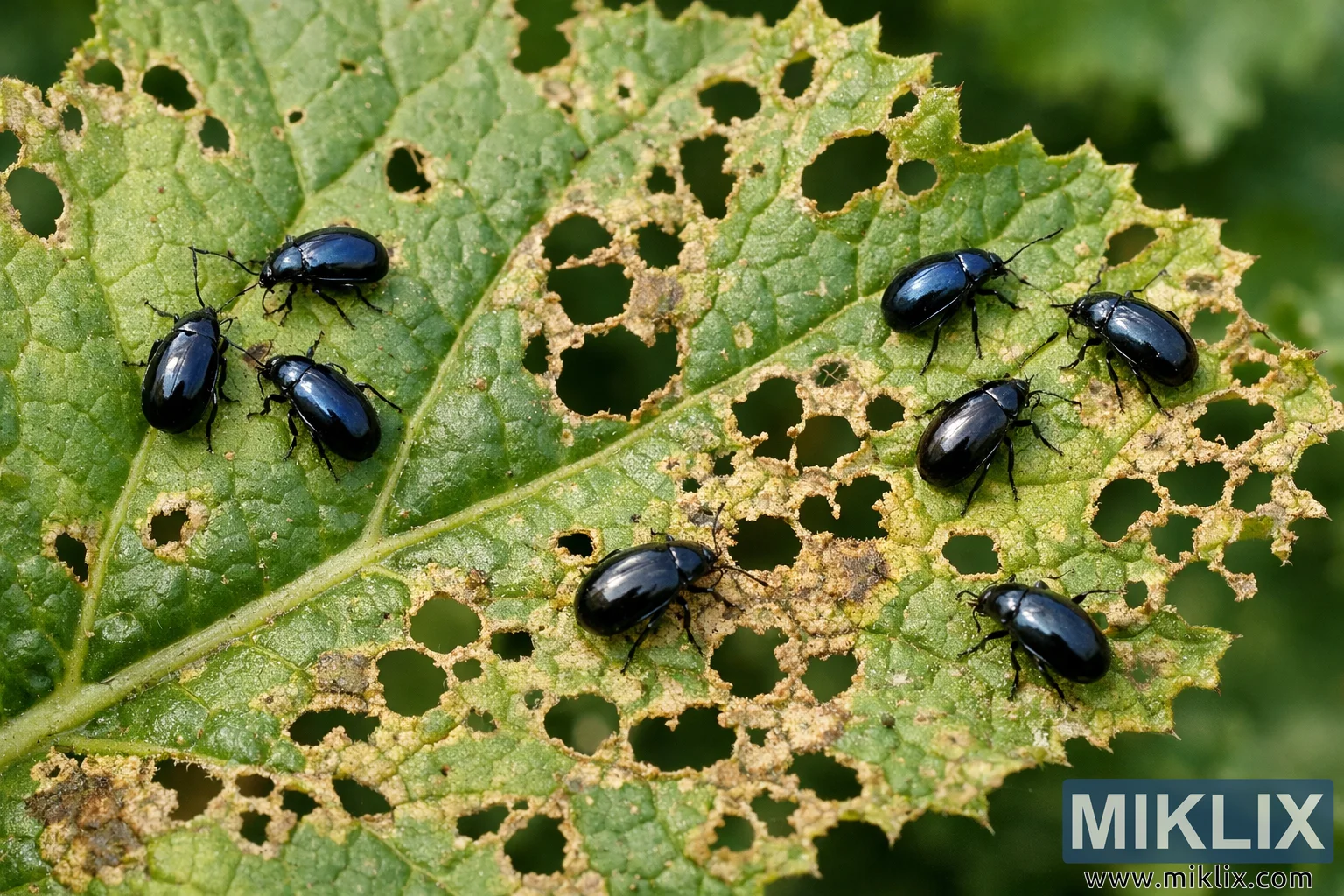
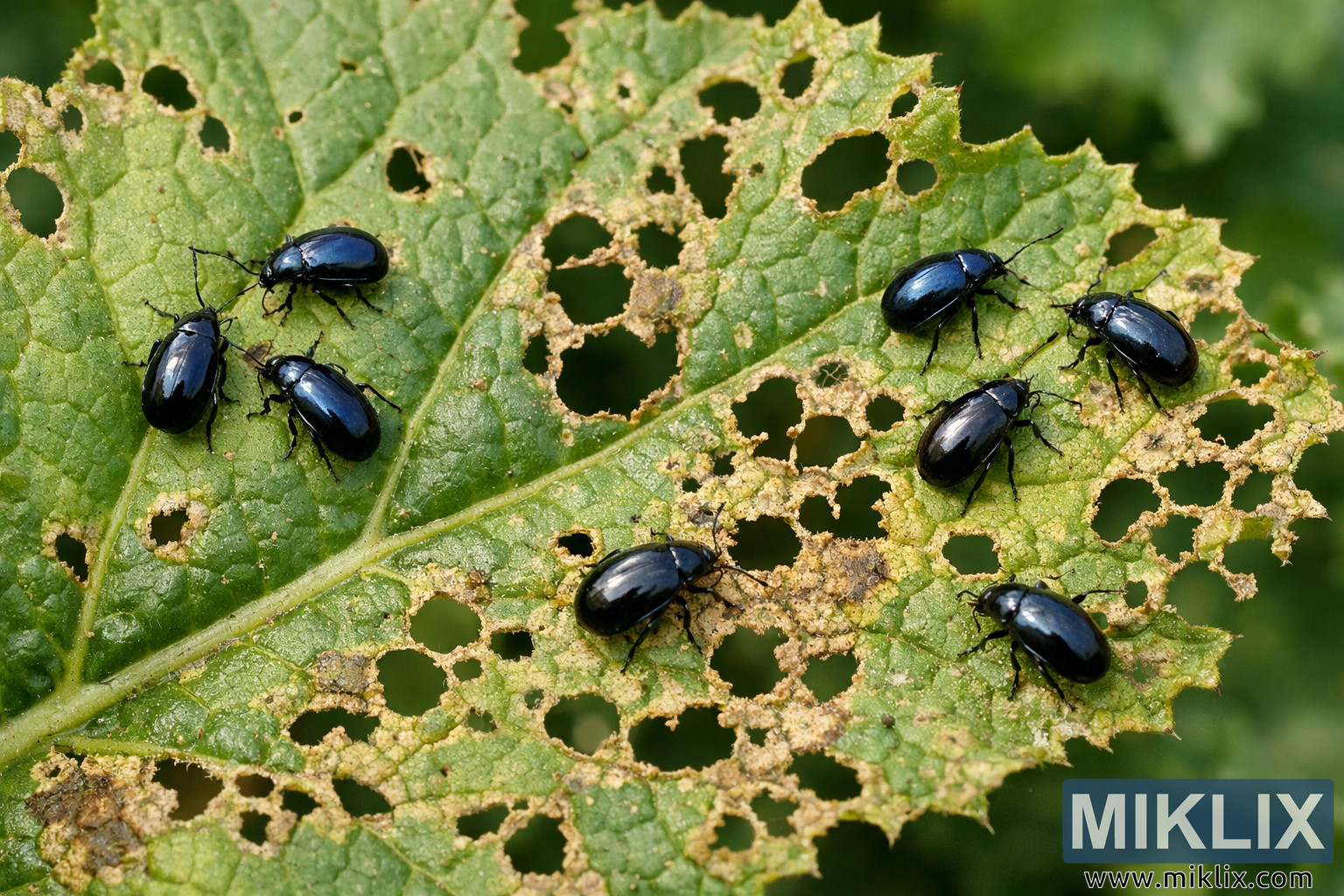
High-resolution landscape image showing flea beetles on a mustard leaf with characteristic shot-hole feeding damage, illustrating typical pest infestation symptoms.
Flea Beetle Damage on Mustard Leaf
Versi imej ini yang tersedia
Fail imej yang tersedia untuk dimuat turun di bawah adalah kurang mampat dan beresolusi lebih tinggi - dan hasilnya, kualitinya lebih tinggi - berbanding imej yang dibenamkan dalam artikel dan halaman di laman web ini, yang lebih dioptimumkan untuk saiz fail bagi mengurangkan penggunaan lebar jalur.
Saiz biasa (1,536 x 1,024)
Saiz besar (3,072 x 2,048)
Saiz yang sangat besar (4,608 x 3,072)
Saiz yang sangat besar (6,144 x 4,096)
Saiz yang sangat besar (1,048,576 x 699,051)
- Masih memuat naik... ;-)
Huraian imej
The image presents a high-resolution, landscape-oriented close-up of a mustard leaf that has suffered extensive feeding damage from flea beetles. The leaf dominates the frame, stretching diagonally from the lower left toward the upper right, its once vibrant green surface now punctured by numerous irregular holes of varying sizes. These perforations create a lace-like or shot-hole appearance, a classic symptom of flea beetle infestation. The edges of many holes appear slightly browned and ragged, suggesting ongoing feeding activity and tissue desiccation. The leaf’s surface texture is clearly visible, with fine veins branching outward from the central midrib and a faintly puckered structure between them. Subtle variations in green tones—from bright fresh growth to duller, slightly yellowed patches—add depth and realism to the scene.
Scattered across the leaf are several small flea beetles, each glossy and oval-shaped, with smooth, reflective exoskeletons. Their coloration ranges from deep metallic black to hints of dark blue iridescence, which catches the light and produces small highlights along their curved backs. The beetles are positioned at different points on the leaf, some near larger holes and others along intact sections of tissue, emphasizing the widespread nature of the damage. Their legs and antennae are slender and sharply defined, splayed outward as they cling to the leaf surface. The insects’ compact bodies contrast strongly against the matte green background, making them stand out as the primary agents of destruction.
The composition focuses tightly on the interaction between pest and plant, with the background softly blurred into a green wash that suggests surrounding foliage. This shallow depth of field isolates the damaged leaf and the beetles, directing attention to the feeding patterns and the severity of the infestation. The lighting appears natural and diffused, likely daylight, illuminating the leaf evenly without harsh shadows. This balanced lighting enhances the visibility of textures: the slightly rough leaf surface, the delicate network of veins, and the smooth, almost polished shells of the beetles.
Overall, the image documents a clear example of typical flea beetle damage on mustard foliage. The numerous round and irregular holes, combined with the visible presence of multiple beetles actively resting and feeding, create a compelling visual representation of agricultural pest impact. The scene conveys both biological detail and practical significance, illustrating how small insects can cause substantial harm to leafy crops. It serves as an informative visual reference for farmers, agronomists, gardeners, and students studying plant pathology or integrated pest management, highlighting the characteristic "shot-hole" pattern that distinguishes flea beetle injury from other types of leaf damage.
Gambar berkaitan dengan: Complete Guide to Growing Your Own Mustard Plants