
Imej: Scientific Research Laboratory Studying Plant Compounds
Diterbitkan:
Kemas kini terakhir: 22 Mei 2026 pada 6:04:24 PTG UTC
A detailed depiction of a scientific research laboratory where scientists study plant compounds using advanced equipment, hydroponic systems, and molecular analysis.
Scientific Research Laboratory Studying Plant Compounds
Versi imej ini yang tersedia
Fail imej yang tersedia untuk dimuat turun di bawah adalah kurang mampat dan beresolusi lebih tinggi - dan hasilnya, kualitinya lebih tinggi - berbanding imej yang dibenamkan dalam artikel dan halaman di laman web ini, yang lebih dioptimumkan untuk saiz fail bagi mengurangkan penggunaan lebar jalur.
Saiz biasa (1,536 x 1,024)
Saiz besar (3,072 x 2,048)
Saiz yang sangat besar (4,608 x 3,072)
Saiz yang sangat besar (6,144 x 4,096)
Saiz yang sangat besar (1,048,576 x 699,051)
- Masih memuat naik... ;-)
Huraian imej
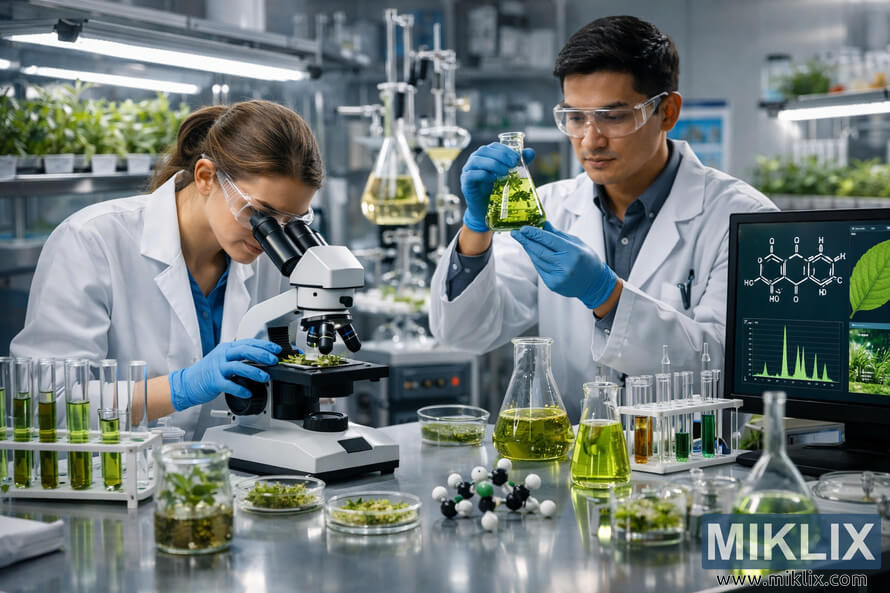
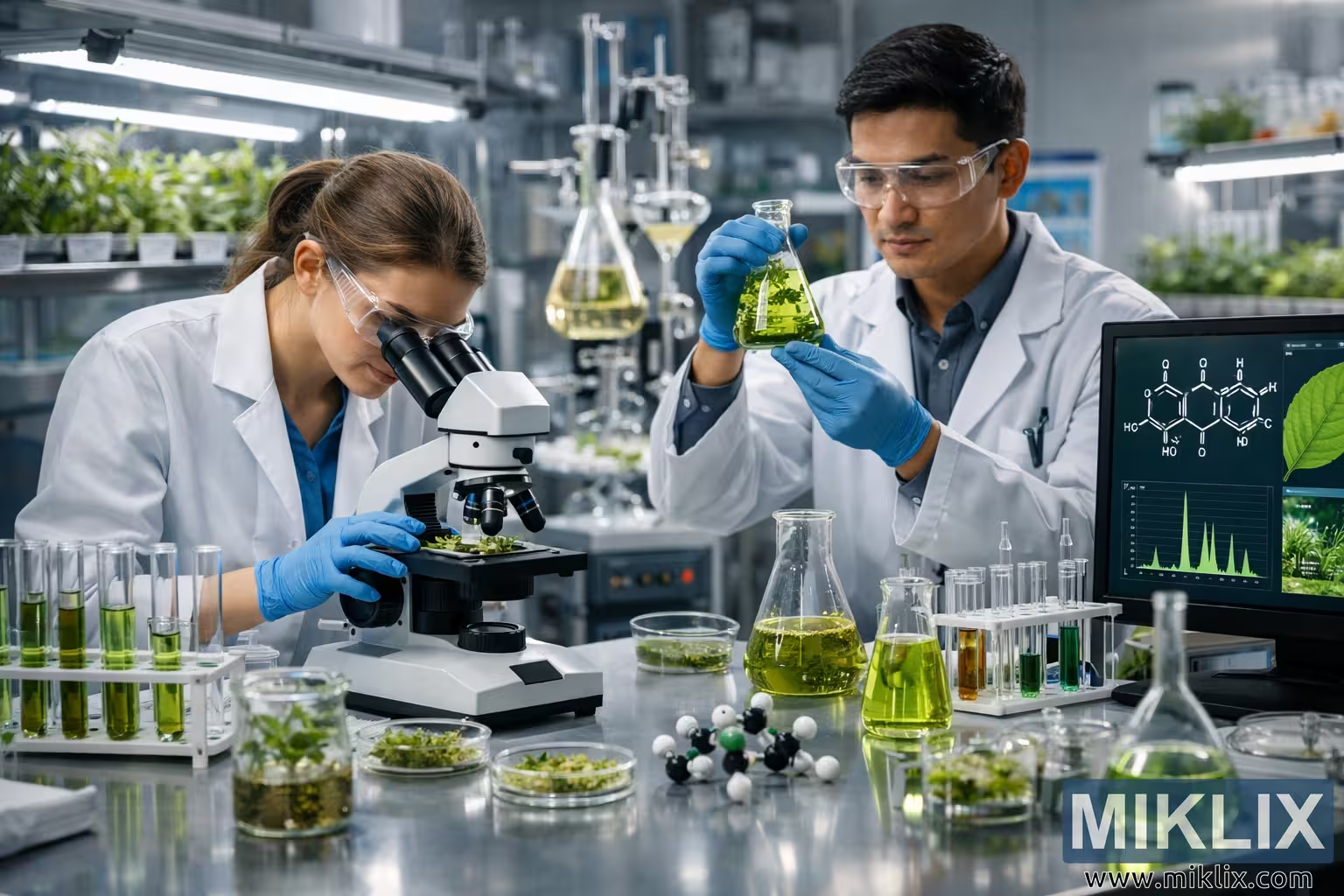
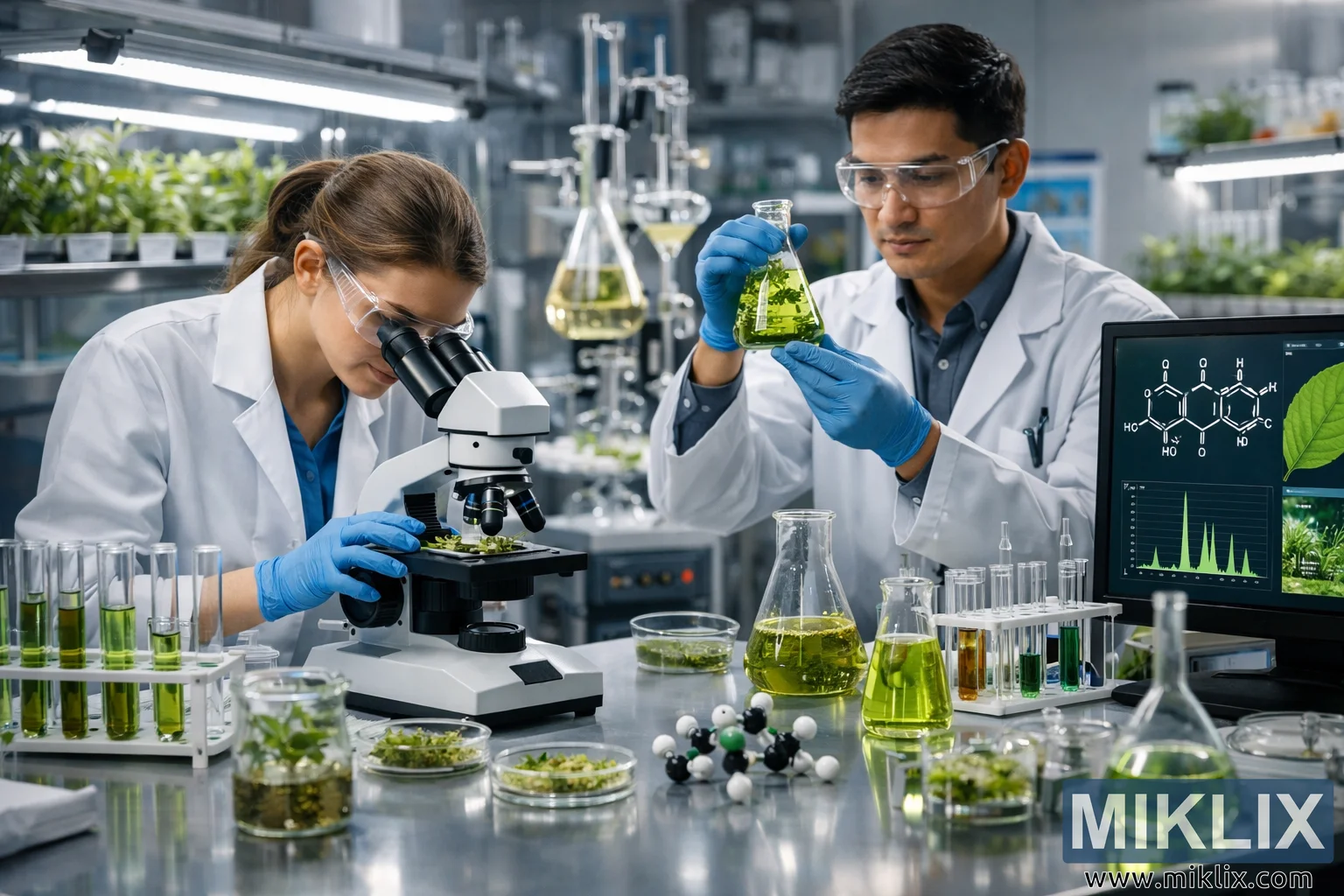
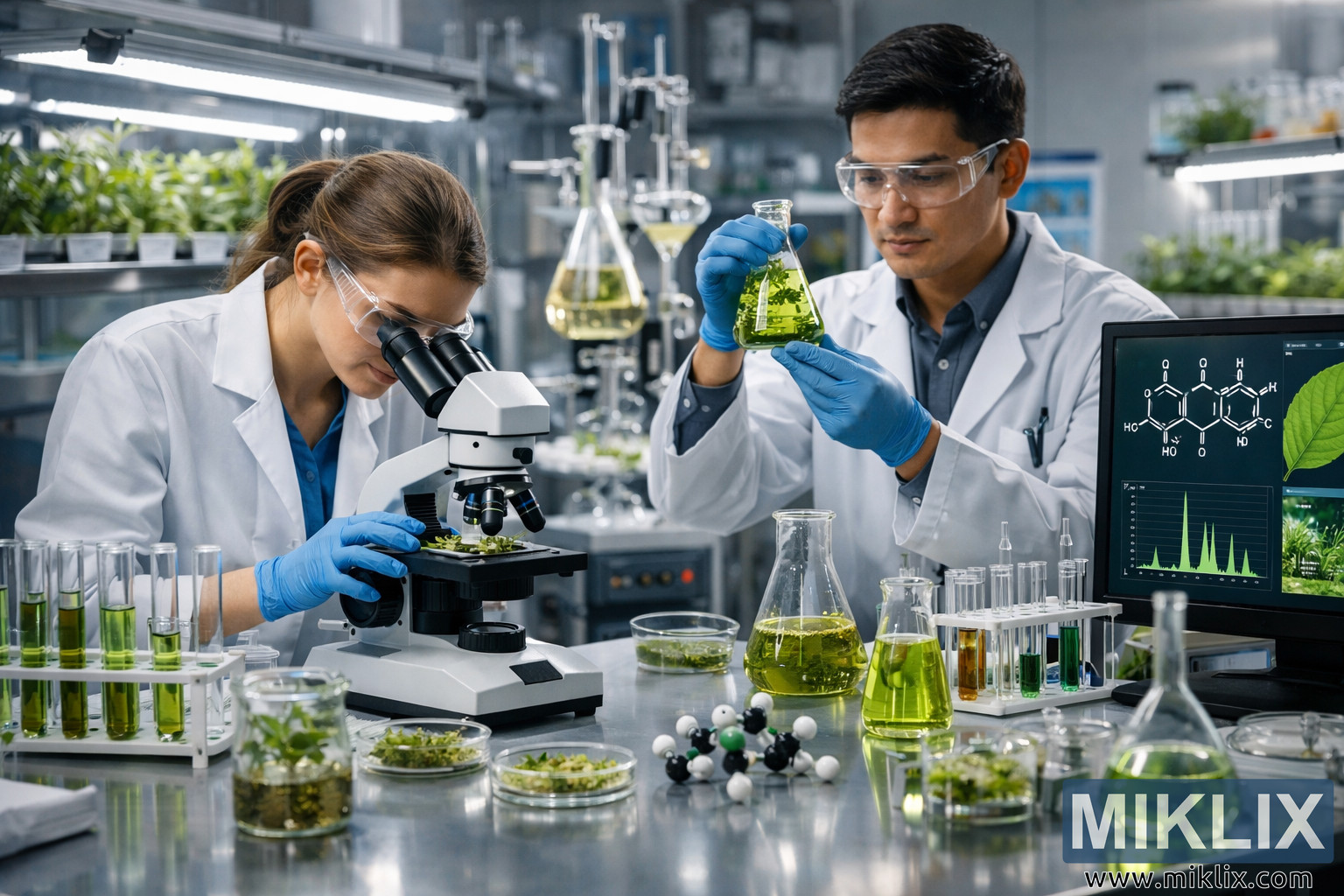
A high-resolution landscape photograph captures a modern scientific research laboratory dedicated to the study of plant compounds. The scene is meticulously arranged to convey the precision, cleanliness, and technological sophistication of contemporary botanical science. In the foreground, a long stainless-steel workbench gleams under bright, cool lighting. On it, an array of glassware—beakers, Erlenmeyer flasks, test tubes, and Petri dishes—contains liquids in shades of green and yellow, symbolizing various plant extracts and chemical solutions. A molecular model composed of black, white, and green spheres connected by rods sits prominently near the center, representing the structural complexity of organic compounds derived from plants.
To the left, a female scientist with light skin and brown hair tied back neatly wears a white lab coat, protective eyewear, and blue latex gloves. She leans forward, focusing intently through the eyepiece of a compound microscope. Her posture and expression convey deep concentration as she adjusts the focus knob with her right hand, examining a plant sample placed in a Petri dish. The microscope’s metallic body reflects the surrounding light, emphasizing the sterile environment. Nearby, a rack of test tubes filled with green liquid stands upright, and a glass beaker containing a translucent green solution adds to the visual harmony of the workspace.
On the right side of the image, a male scientist of Asian descent, also wearing a white lab coat, safety goggles, and blue gloves, holds a glass flask containing a small plant suspended in a vivid green liquid. He observes it closely, his expression thoughtful and analytical. Behind him, a computer monitor displays a digital rendering of a chemical structure, an image of a green leaf, and chromatographic data—visual evidence of the laboratory’s focus on molecular analysis and compound identification. The monitor’s glow adds a subtle technological accent to the otherwise organic palette of greens and silvers.
In the background, hydroponic containers filled with young plants are arranged under adjustable grow lights emitting bright white illumination. The plants appear healthy and vibrant, their leaves reflecting the light in soft gradients of green. Additional laboratory equipment, including separating funnels, pipettes, and racks of test tubes, fills the space, reinforcing the sense of scientific rigor and ongoing experimentation. The overall composition balances human presence with technological precision, highlighting the collaborative relationship between researchers and their tools.
The lighting is even and well-balanced, creating a crisp, clinical atmosphere while maintaining warmth through the natural tones of the plants. The depth of field is moderate—sharp focus on the scientists and immediate equipment, with a gentle blur in the background to suggest spatial depth. The color palette is dominated by cool neutrals—white, silver, and gray—contrasted by the vivid greens of the plant samples and solutions. This interplay of color symbolizes the fusion of nature and science, organic life and analytical inquiry.
Every detail contributes to the narrative of discovery: the careful handling of samples, the precision instruments, and the data visualization on the monitor. The image evokes themes of sustainability, innovation, and the pursuit of knowledge through empirical research. It portrays a world where biology and chemistry intersect, where scientists decode the secrets of plant compounds to unlock potential applications in medicine, agriculture, and environmental science. The atmosphere is one of quiet intensity and purpose, capturing the essence of modern scientific exploration in the field of plant biochemistry.
Gambar berkaitan dengan: A Guide to the Health Benefits of Dandelions