
Imej: Scientific Research Concept Linking Lemongrass to Cancer Cell Study
Diterbitkan:
Kemas kini terakhir: 26 Ogos 2026 pada 3:36:39 PTG UTC
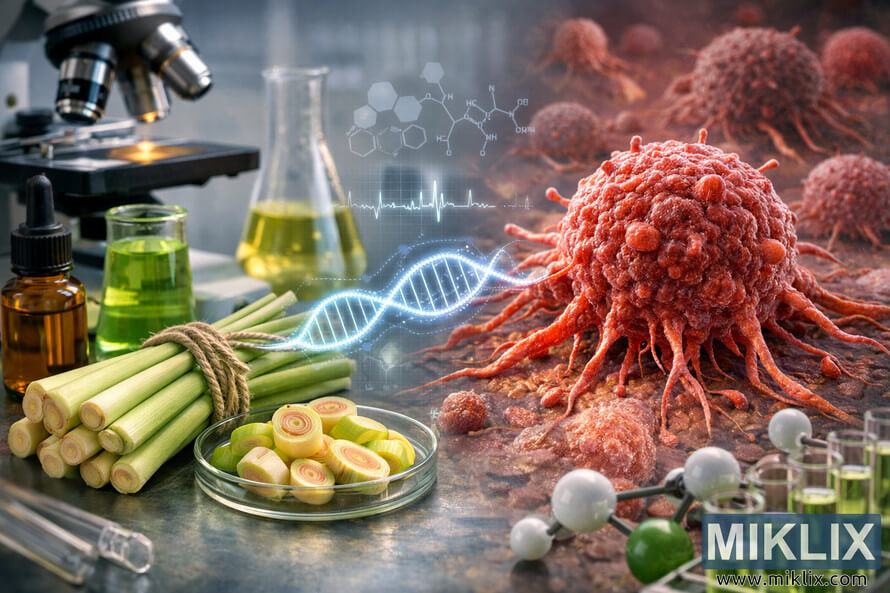
High-resolution scientific concept image illustrating research on lemongrass and cancer cells, featuring lab equipment, molecular diagrams, and a glowing DNA-like strand connecting plant-based compounds to cellular pathology.
Scientific Research Concept Linking Lemongrass to Cancer Cell Study
Versi imej ini yang tersedia
Fail imej yang tersedia untuk dimuat turun di bawah adalah kurang mampat dan beresolusi lebih tinggi - dan hasilnya, kualitinya lebih tinggi - berbanding imej yang dibenamkan dalam artikel dan halaman di laman web ini, yang lebih dioptimumkan untuk saiz fail bagi mengurangkan penggunaan lebar jalur.
Saiz biasa (1,536 x 1,024)
Saiz besar (3,072 x 2,048)
Saiz yang sangat besar (4,608 x 3,072)
Saiz yang sangat besar (6,144 x 4,096)
Saiz yang sangat besar (1,048,576 x 699,051)
- Masih memuat naik... ;-)
Huraian imej
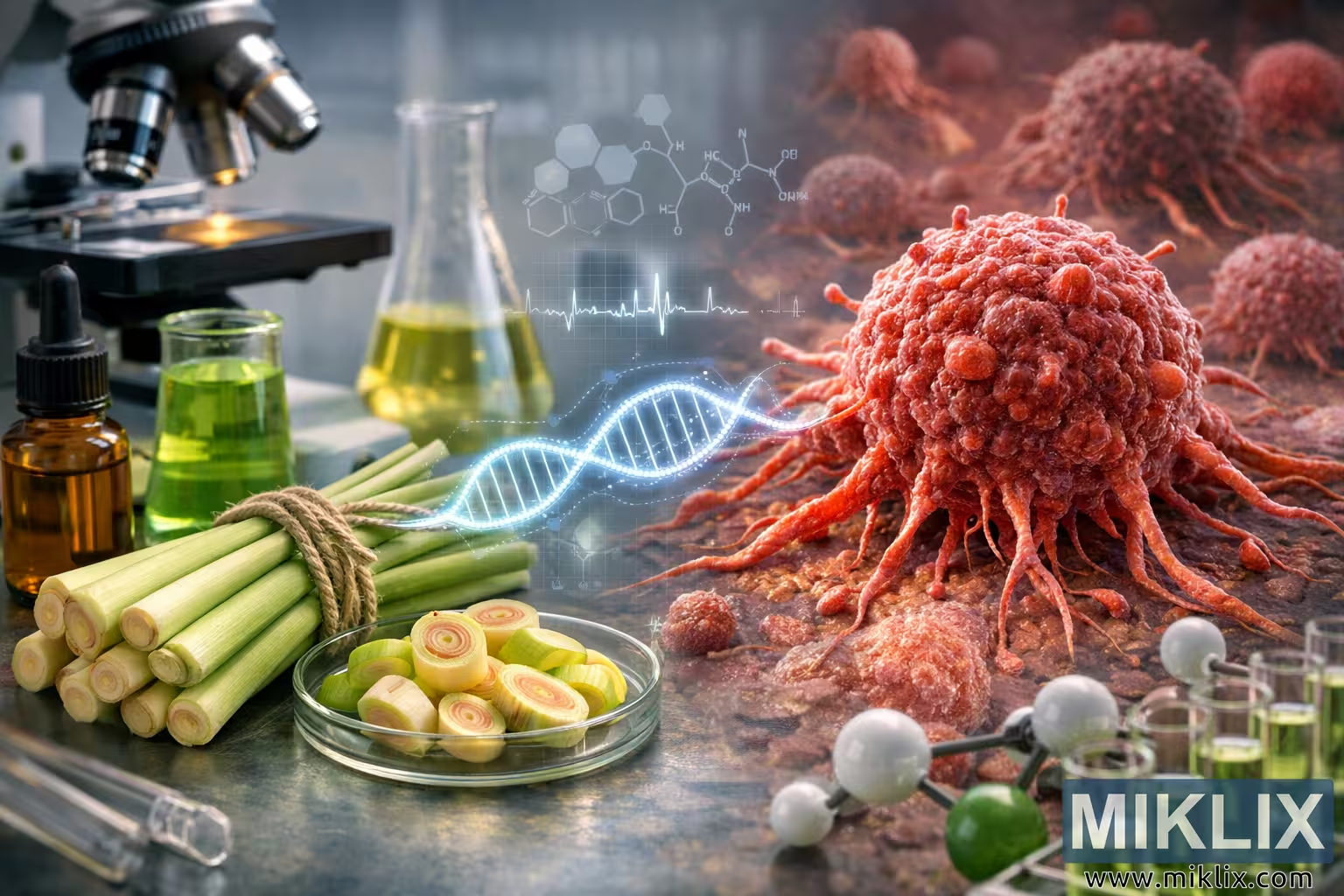
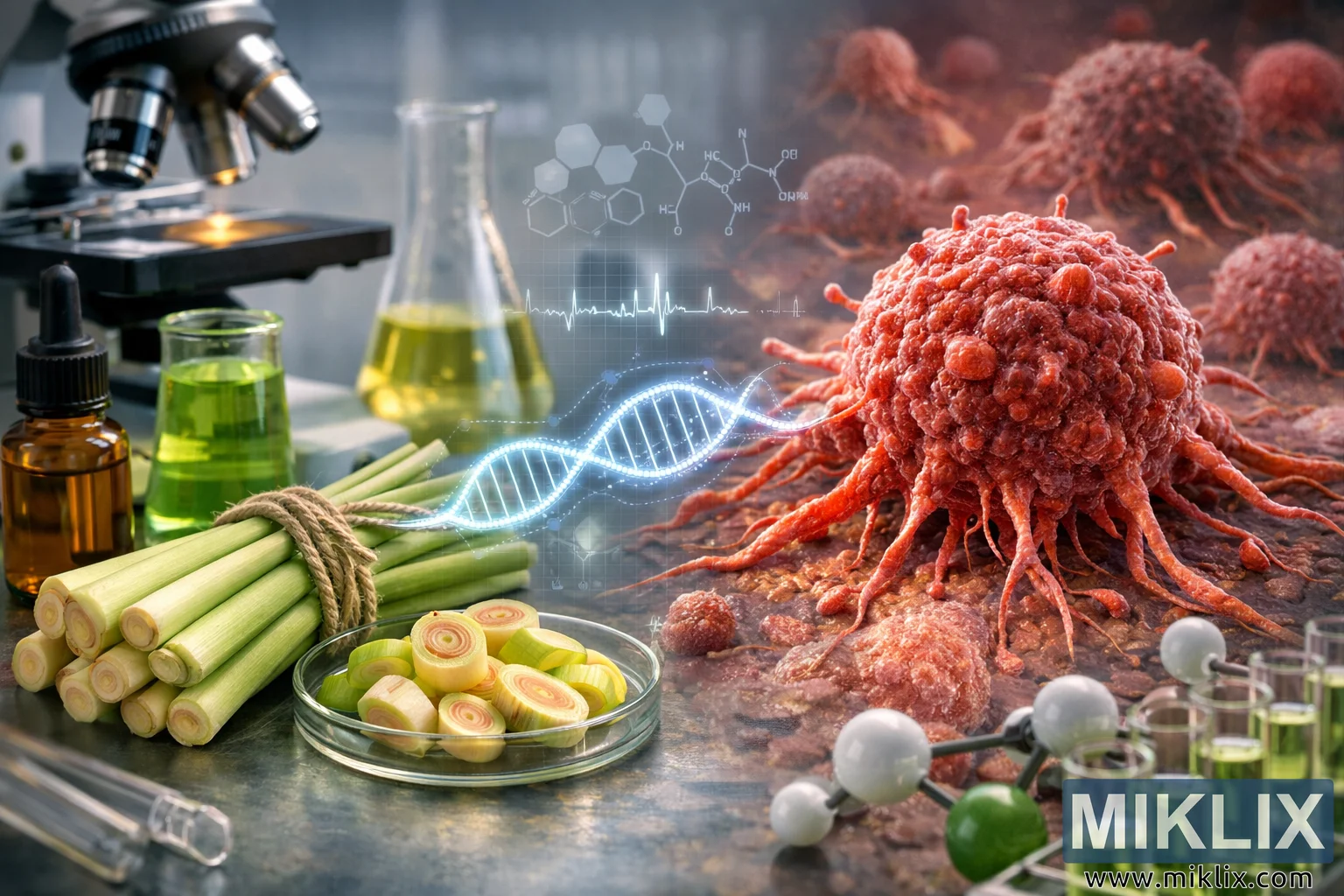
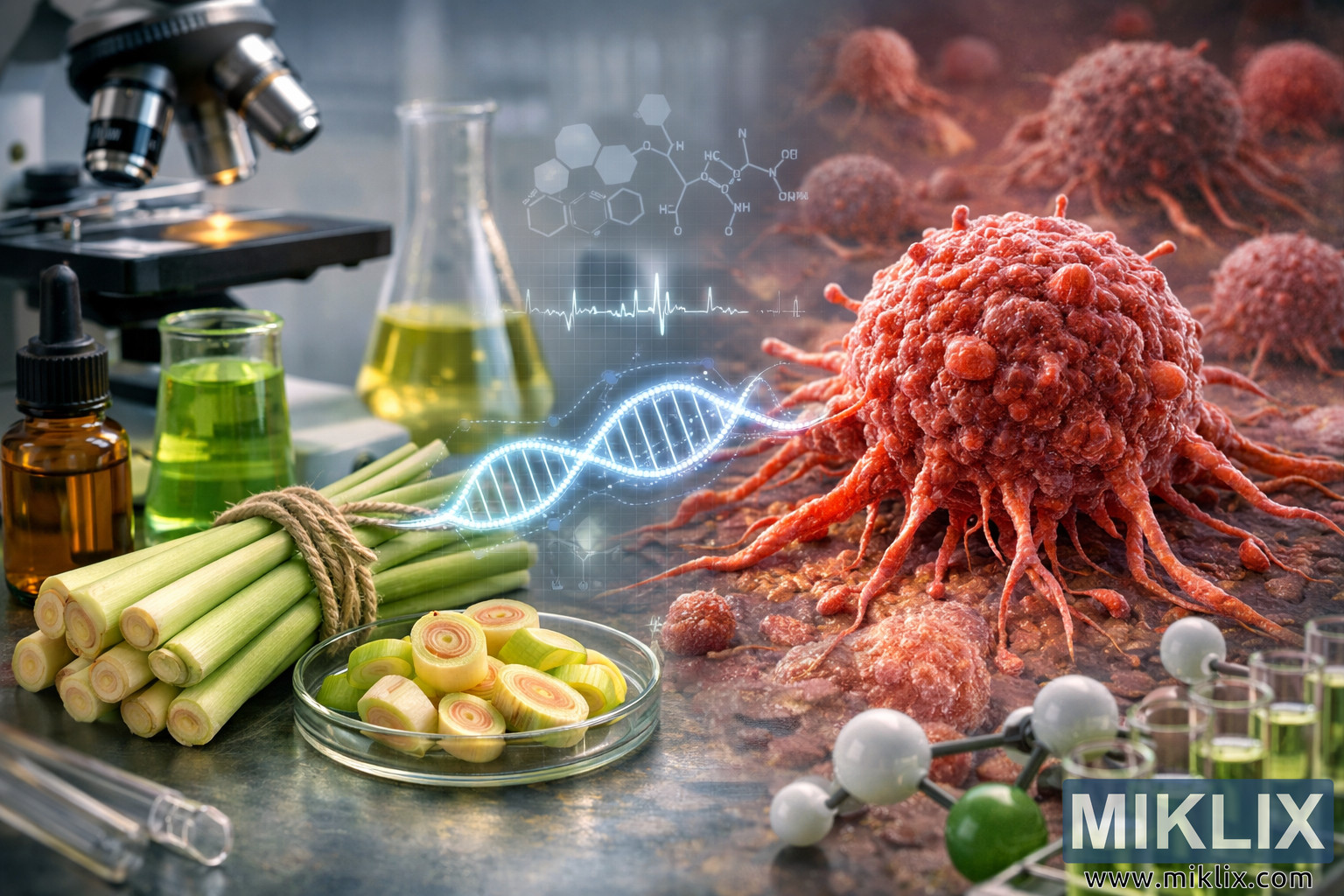
The image presents a high-resolution, landscape-oriented scientific research concept that visually explores the potential relationship between lemongrass and cancer cell studies. The composition is carefully divided into two main thematic zones—nature and laboratory science on the left, and cellular pathology and molecular visualization on the right—connected by a striking, glowing DNA-like strand that runs diagonally across the frame.
On the left side of the image, a bundle of fresh lemongrass stalks rests on a clean laboratory bench. The stalks are tied together with simple twine, emphasizing a natural, organic origin. Their long, slender leaves and pale green stalks convey freshness and botanical purity. In front of the bundle, a glass petri dish holds neatly sliced pieces of lemongrass, revealing their pale yellow and slightly pinkish interiors. The cross-sections highlight the plant’s fibrous texture and subtle color variations, suggesting the presence of complex natural compounds.
Next to the lemongrass, a small amber glass bottle filled with a yellowish essential oil stands upright, fitted with a dropper cap. The bottle hints at extracted plant-based substances that might be used in experiments or formulations. Behind this, a transparent glass beaker containing a vivid green liquid and a conical flask filled with a pale yellow solution add to the sense of an active laboratory environment. These vessels suggest ongoing chemical analysis, extraction, or testing of lemongrass-derived compounds.
In the foreground, various pieces of scientific equipment reinforce the research setting. A microscope is positioned with its objective lens directed toward a petri dish, implying close examination of samples at the microscopic level. Nearby, a rack of test tubes filled with green liquid stands in orderly alignment, each tube representing a different sample, concentration, or stage of experimentation. A molecular model composed of white and green spheres connected by silver rods sits on the bench, symbolizing the structural representation of chemical compounds, possibly derived from lemongrass or related to cancer treatment pathways.
Overlaying this entire left section are subtle, transparent digital diagrams. These include a DNA helix, chemical formulas, molecular structures, and heartbeat-like graphs. The overlays are rendered in soft, glowing lines and geometric shapes, such as hexagons and interconnected nodes, suggesting data visualization, bioinformatics, and advanced analytical techniques. The presence of these diagrams implies that the research is not only physical and experimental but also computational and theoretical, integrating multiple scientific disciplines.
On the right side of the image, the focus shifts dramatically to a detailed 3D illustration of a cancer cell. The cell is enlarged and rendered in intense shades of red, with an irregular shape and numerous tentacle-like protrusions extending outward. These protrusions give the cell an aggressive, invasive appearance, symbolizing the destructive nature of malignant growth. Surrounding the central cancer cell are smaller, more subdued cells that appear healthier and less irregular, creating a visual contrast between diseased and normal tissue.
The background behind the cancer cell is slightly blurred, with soft gradients of dark reds, purples, and blues, enhancing the sense of depth and emphasizing the central cell as the primary subject. The lighting around the cancer cell is dramatic, with subtle highlights and shadows that accentuate its texture and complexity. This visual treatment underscores the seriousness of cancer as a medical challenge and the importance of understanding its behavior at the cellular level.
Connecting the lemongrass on the left to the cancer cell on the right is a luminous, blue, DNA-like strand that arcs across the middle of the image. This strand appears to emerge from the vicinity of the lemongrass and laboratory equipment, then extends toward the cancer cell, symbolizing a conceptual link between plant-based compounds and genetic or molecular mechanisms involved in cancer. The strand glows with an electric blue hue, standing out against the warmer colors of the lemongrass and the intense reds of the cancer cell. Along its length, faint markers, nodes, or small molecular icons suggest points of interaction, research data, or potential therapeutic targets.
Additional transparent overlays continue across the right side, including more molecular diagrams, chemical structures, and waveform-like graphs. These elements unify the two halves of the image, indicating that the same scientific framework is being applied to both natural products and cancer biology. The hexagonal shapes and chemical structures appear to float in front of the cancer cell, hinting at ongoing analysis of how certain compounds might influence cell growth, apoptosis, or other critical processes.
The overall lighting of the scene is well-balanced. On the left, natural greens and yellows dominate, reflecting the botanical origin of lemongrass and the idea of plant-based medicine. On the right, reds and blues create a more clinical, high-stakes atmosphere, emphasizing the urgency of cancer research. The background is softly blurred to keep the viewer’s attention on the main subjects: the lemongrass bundle, the laboratory tools, the cancer cell, and the connecting DNA strand.
The depth of field is moderate, ensuring that both the lemongrass and the cancer cell remain in sharp focus, while the background elements fade gently into softness. This visual choice reinforces the conceptual narrative: the image is not merely a still life of laboratory objects, but a symbolic representation of scientific inquiry into how natural plant compounds, such as those found in lemongrass, might interact with or influence cancer cells. The combination of realistic photographic elements and stylized digital overlays creates a hybrid aesthetic that feels both grounded in real-world science and open to future possibilities.
Overall, the image communicates a sense of hope and curiosity. It suggests that within the humble stalks of lemongrass, there may be complex molecules worthy of investigation, and that through careful research, microscopy, chemical analysis, and molecular modeling, scientists may uncover new insights into cancer treatment. The glowing DNA strand serves as a visual metaphor for the bridge between nature and advanced biomedical science, inviting viewers to imagine how plant-based research could contribute to understanding and potentially combating cancer.
Gambar berkaitan dengan: Lemongrass: The Aromatic Herb with Powerful Wellness Benefits