
Afbeelding: Homebrewing Equipment Setup for Timed Hop Additions
Gepubliceerd:
Laatst bijgewerkt: 20 september 2026 om 09:57:48 UTC
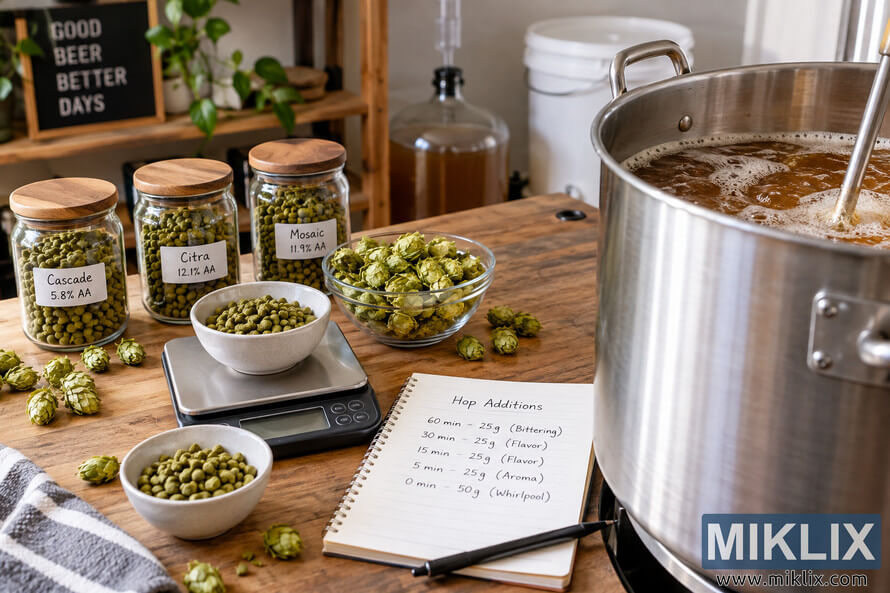
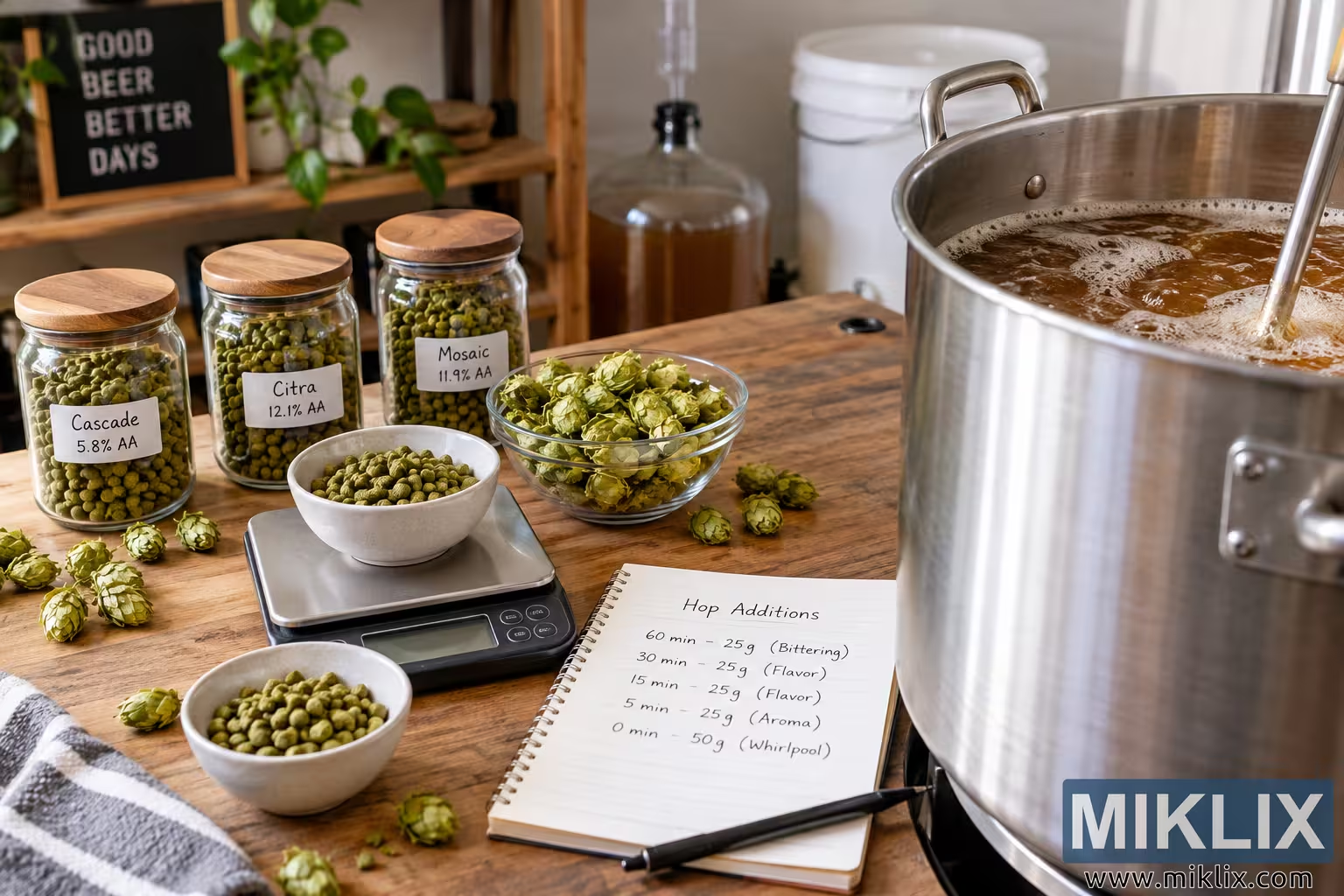
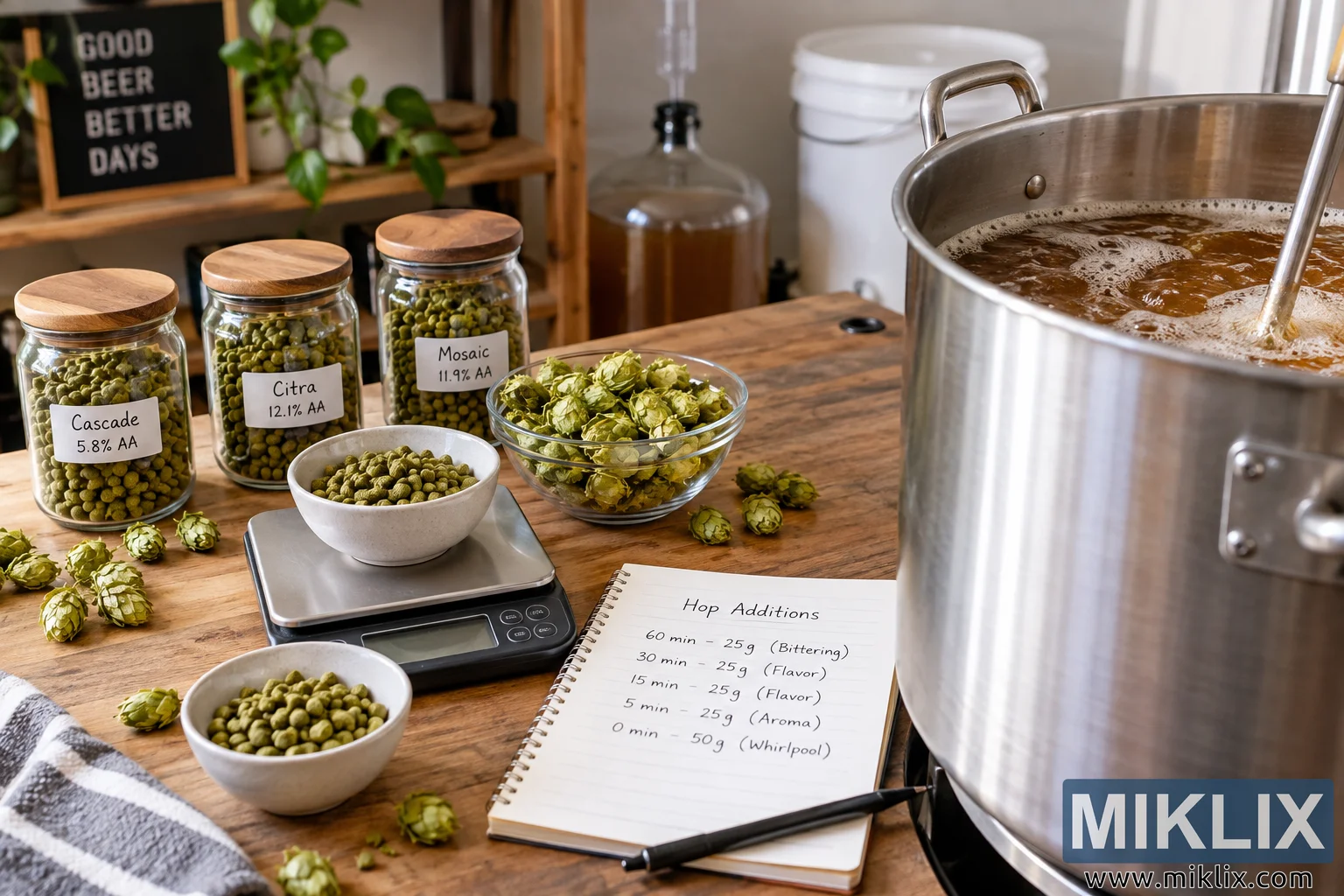
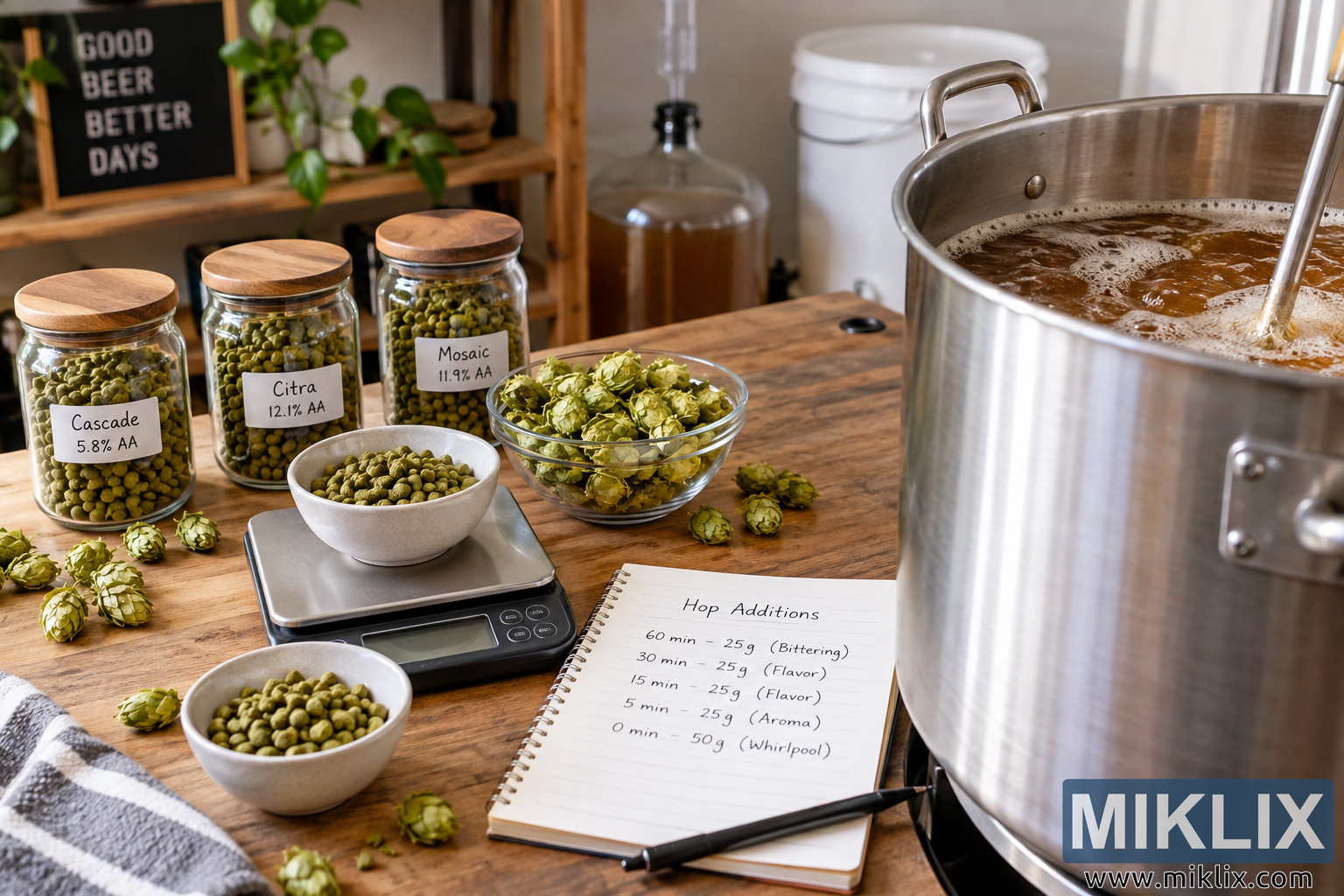
Realistic homebrewing workspace with a stainless brew kettle, hop pellets and cones, digital scale, fermentation equipment, and a timed hop-addition recipe.
Homebrewing Equipment Setup for Timed Hop Additions
Beschikbare versies van deze afbeelding
De afbeeldingsbestanden die hieronder kunnen worden gedownload, zijn minder gecomprimeerd en hebben een hogere resolutie - en daardoor een hogere kwaliteit - dan de afbeeldingen die zijn ingesloten in artikelen en pagina's op deze website, die meer zijn geoptimaliseerd voor bestandsgrootte om het bandbreedtegebruik te beperken.
Normale maat (1,536 x 1,024)
Groot formaat (3,072 x 2,048)
Zeer groot formaat (4,608 x 3,072)
Extra groot formaat (6,144 x 4,096)
Komisch groot formaat (1,048,576 x 699,051)
- Nog steeds aan het uploaden... ;-)
Beschrijving afbeelding
A realistic, warmly lit landscape photograph shows a carefully arranged homebrewing workspace prepared for timed hop additions during the boil. The setting has the inviting character of a practical home kitchen or small brewing room, with natural wood surfaces, stainless steel equipment, glass containers, and brewing ingredients organized within easy reach. The dominant object is a large stainless steel brew kettle positioned on the right side of the frame. The kettle is partially cropped by the edge of the image, which emphasizes its substantial size and places the viewer close to the brewing process. Inside the kettle is a rich amber-brown liquid with a thin layer of pale foam and bubbles scattered across the surface, suggesting hot wort in an active brewing stage. A long stainless steel utensil or brewing tool extends diagonally into the kettle from the upper-right area, ready for stirring or handling the wort. Reflections across the brushed metal exterior of the pot reinforce the clean, functional atmosphere of the brewing setup. Across the wooden worktop to the left of the kettle are several forms of hops and the tools needed to measure additions accurately. Three clear glass storage jars with simple wooden lids stand in a row toward the left and center of the scene. Each jar contains green hop pellets and carries a plain handwritten-style label identifying a hop variety and its alpha-acid percentage. The visible varieties are Cascade, Citra, and Mosaic. The labels are deliberately simple and generic rather than commercial packaging, so the setup feels like a personal homebrewing collection rather than a branded product display. The Cascade jar indicates 5.8% AA, the Citra jar indicates 12.1% AA, and the Mosaic jar indicates 11.9% AA. Their different alpha-acid values subtly reinforce the technical side of recipe formulation and hop selection. In front of the jars is a compact digital kitchen scale with a stainless weighing platform. A small light-colored ceramic bowl filled with green hop pellets rests on top of the scale, suggesting that a measured hop charge is being prepared for the kettle. Another ceramic bowl containing additional pellets sits closer to the foreground. Between the jars and the kettle is a transparent glass bowl generously filled with whole dried hop cones. Several loose cones are scattered naturally across the wooden table, adding texture and an organic contrast to the smooth metal, glass, and ceramic surfaces. The hops range from muted yellow-green to deeper olive tones, with their layered cone structures clearly visible. The combination of whole cones and compressed pellets visually communicates the different forms in which hops can be handled by homebrewers. A spiral-bound notebook occupies a prominent position in the lower center of the composition. Its open page is headed 'Hop Additions' and contains a handwritten schedule for adding hops at different stages of the boil. The notes list additions at 60 minutes, 30 minutes, 15 minutes, 5 minutes, and 0 minutes, accompanied by quantities and brewing purposes such as bittering, flavor, aroma, and whirlpool. The sequence makes the photograph particularly focused on hop timing rather than merely presenting generic beer-making equipment. A dark pen lies diagonally across the bottom of the notebook, as though the brewer has just finished recording the recipe or is ready to make adjustments during the session. The notebook, measured ingredients, scale, and steaming kettle together create the impression of an active but temporarily unattended brewing process. In the background, wooden shelving contributes warmth and visual depth. A leafy green houseplant trails from one of the shelves, softening the utilitarian brewing environment. A dark decorative letter board with light lettering is also visible on the shelving, giving the room a casual craft-oriented personality without displaying a commercial brand. Behind the main work surface stands a large transparent glass fermentation vessel containing amber-colored liquid. An airlock is fitted at the top, indicating another stage of beer production and expanding the scene beyond the immediate boiling process. A large plain white bucket is visible farther back, suggesting additional fermentation, cleaning, or ingredient-handling equipment. These background objects are slightly softer in focus than the foreground, keeping attention on the hop additions while still establishing a complete homebrewing environment. A striped cloth enters the lower-left corner of the image, introducing a domestic kitchen detail and balancing the otherwise equipment-heavy composition. The lighting is bright yet warm, resembling soft daylight mixed with comfortable indoor illumination. Highlights on the stainless steel kettle and scale are controlled rather than harsh, while the wood grain of the table and shelving is clearly rendered. The shallow-to-moderate depth of field gives the photograph a polished editorial quality: the principal brewing ingredients and tools remain crisp, while the background gently recedes. The composition guides the eye from the labeled hop jars on the left, across the measured pellets, whole hop cones, scale, and recipe notebook, and finally toward the large kettle on the right. No people appear in the image, allowing the equipment and brewing process to tell the story. There are also no commercial logos or recognizable product brands. Instead, the scene concentrates on generic homebrewing equipment, hop varieties, careful measurement, recipe notes, and the practical workflow of making hop additions. Overall, the photograph conveys an organized, hands-on homebrewing session at the moment when precise hop timing matters most. It combines the technical elements of brewing—measurement, alpha-acid information, timed additions, fermentation equipment, and a boiling vessel—with the approachable warmth of a home workshop. The resulting scene feels authentic, instructional, and inviting, suitable for illustrating an article, guide, tutorial, or educational resource about adding hops during the beer-brewing process.
De afbeelding is gerelateerd aan: Hops in Beer Brewing: Columbus