
Fermenting Beer with Wyeast 1007 German Ale Yeast
Gepubliceerd:
Laatst bijgewerkt: 16 juli 2026 om 20:36:17 UTC
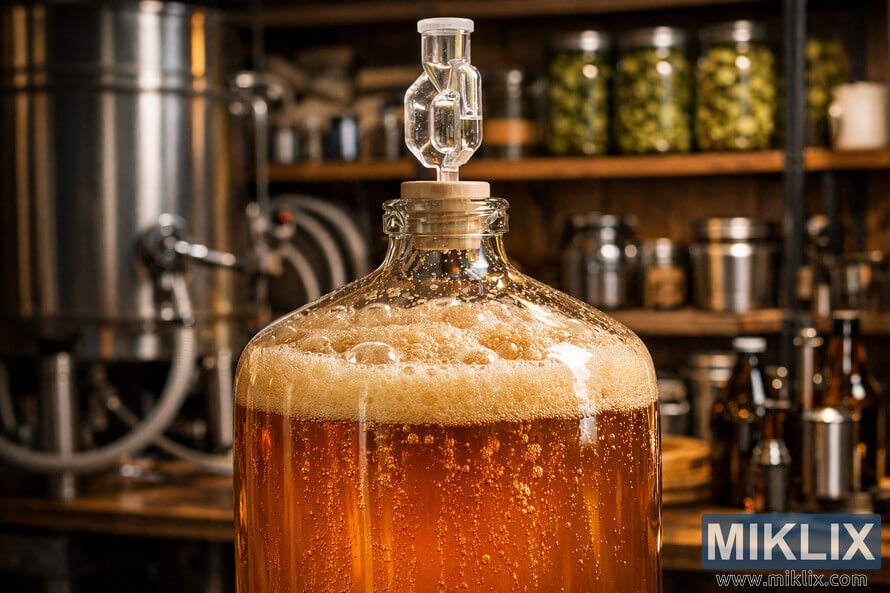
Wyeast 1007 German Ale Yeast is celebrated for its clean fermentation profile and consistent attenuation. It was initially chosen for German-style ales, offering minimal esters and moderate flocculation. This allows the malt and hop flavors to shine through. It's a favorite among brewers who prefer a subtle yeast influence, ideal for session-strength German ales, Kölsch-like beers, or hybrid styles.
Fermenting Beer with Wyeast 1007 German Ale Yeast
Klik of tik op de afbeelding voor meer informatie en hogere resoluties.
Key Takeaways
- Wyeast 1007 German Ale Yeast offers a clean, neutral ester profile suited to traditional German ales.
- It performs well across session-strength beers and Kölsch-style recipes.
- Lab specs and community reviews provide useful guidance for pitching and temperature control.
- Use proper activation or a starter to ensure healthy fermentation and predictable attenuation.
- Wyeast 1007 review consensus: reliable and versatile for brewers seeking subtle yeast character.
Introduction to Wyeast 1007 German Ale Yeast
This introduction provides a concise overview of the yeast strain. Wyeast 1007 is celebrated for its clean fermentation and moderate esters. It's the go-to for brewers who prioritize malt and hop flavors.
The Wyeast 1007 overview includes lab specifications and common applications. It has a mid-60s to low-70s percent attenuation and medium flocculation. It excels in Kölsch-style beers, German ales, and sessionable styles.
The German ale yeast background highlights its significance. Homebrewers appreciate its predictability and neutral profile. This allows the recipe's intent to shine through. Professional brewers also favor it for its ale-like fermentation without the need for lagering.
Choosing Wyeast 1007 is about reliability and finesse. It maintains delicate malt balance, supports clean hop expression, and keeps esters in check. This results in approachable beers.
This article will delve into practical aspects of using Wyeast 1007. Topics include selection, starters, pitching rates, temperature management, troubleshooting, harvesting, lab data interpretation, and a recipe example.
- Overview of the strain: performance metrics and typical applications.
- Why this yeast matters to brewers: practical benefits for home and pro setups.
- Article scope and learning outcomes: from prep to reuse and tasting notes.
Klik of tik op de afbeelding voor meer informatie en hogere resoluties.
Key Characteristics of Wyeast 1007 German Ale Yeast
Wyeast 1007 is a top pick for brewers aiming for a clean, malt-forward taste with subtle complexity. It remains neutral at cooler temperatures, highlighting malt and hop flavors. Small adjustments in handling and temperature can influence the yeast's fruitiness, ranging from a hint to a crispness.
Aroma and flavor profile
The yeast's aroma is delicate. At the cooler end, it offers a clean, almost pilsner-like clarity. As temperatures rise, light fruity esters emerge, adding soft apple or pear notes that enhance many German-style ales.
Attenuation and flocculation behavior
Wyeast 1007's attenuation is typically in the mid-60s to low-70s, ensuring a balanced final gravity. This supports drinkability without thinning the beer. Its flocculation is medium to medium-high, achieving decent clarity after conditioning without trapping desirable flavors.
Typical fermentation temperature range
The ideal fermentation temperature range is between 58°F and 68°F (14°C–20°C). Fermenting at 58°F yields a very clean result. However, fermenting closer to 68°F increases ester presence, bringing brighter fruit notes to the aroma.
- Wyeast 1007 characteristics favor malt expression and balance.
- Manage attenuation expectations to hit target final gravities.
- Use the fermentation temp range to dial aroma profile and ester levels.
Klik of tik op de afbeelding voor meer informatie en hogere resoluties.
Comparing Wyeast 1007 to Other Ale and German Strains
Wyeast 1007 bridges the gap between traditional German ale characteristics and contemporary ale performance. This section highlights key distinctions to guide brewers in selecting 1007 and understanding its position relative to other ale and lager strains.
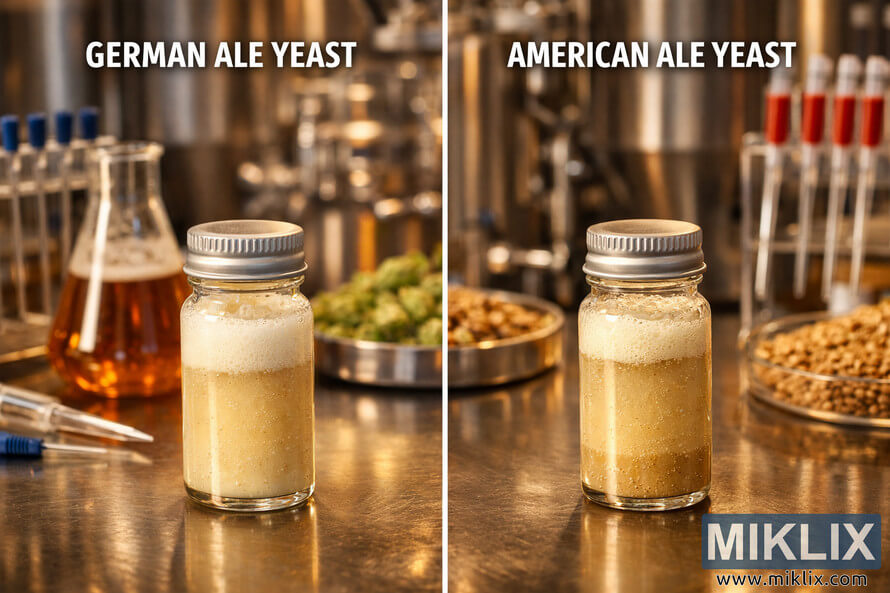
Begin with American ale strains. Favorites like Safale US-05 and Wyeast 1056 offer a clean, neutral profile. They ferment quickly, allowing hops to take center stage. In contrast, Wyeast 1007 presents a more malt-forward, restrained character. This makes it ideal for achieving subtle German traits without overpowering fruity esters.
Now, let's examine lager strains. Yeasts such as Wyeast 2124 Bohemian Lager and Wyeast 2308 Munich Lager thrive at cooler temperatures. They produce crisp, clean finishes, benefiting from prolonged cold conditioning. When comparing to lagers, remember that Wyeast 1007 ferments warmer, resulting in more esters. It cannot match the glassy lager crispness or the diacetyl polishing that cold lagering achieves.
Consider practical applications. Employ Wyeast 1007 for Kölsch-style ales, altbier approaches, or lighter Dunkel interpretations where a clean yet slightly malt-forward ale is desired. For those weighing Wyeast 1007 against American ale yeast, choose 1007 for its subtle malt character over bold hop presence. Opt for lager strains only when true lager texture and temperature-driven clarity are essential.
- Differences from American ales: more malt-forward, milder esters, gentler attenuation.
- Compare to lager strains: warmer fermentation, more esters, less cold-conditioned crispness.
- When to choose 1007: German-style ales, session beers, or when ale fermentation convenience matters.
Klik of tik op de afbeelding voor meer informatie en hogere resoluties.
Selecting Beer Styles Best Suited for Wyeast 1007 German Ale Yeast
Wyeast 1007 is known for its clean fermentation, making it perfect for delicate malt bills and restrained hopping. It's chosen for clarity and balance, avoiding strong fruity esters. Below are practical style matches and recipe ideas to help you plan brews that showcase the yeast.
German styles that complement the strain tend to be light to medium in body. They rely on subtle malt and noble hop profiles. Examples include Kölsch, lighter Altbier interpretations, session German ales, and some pale Dunkel or Maibock variants fermented on the ale side. These are among the best beers for Wyeast 1007 because the yeast preserves malt nuance and keeps hop bitterness crisp.
- Kölsch: Pilsner and Vienna malts, small carahell addition, mash 148–152°F for a balanced finish.
- Altbier (lighter take): Pilsner plus a touch of Munich, mash 152°F for a touch more body.
- Session German ale: Low to moderate OG, gentle noble hopping, emphasis on drinkability.
International styles where 1007 performs well include restrained English bitters, pale ales, and hybrid takes such as American Kölsch or alt-inspired American ales. Use this strain when you want subdued esters and a crisp, clean backbone that lets malt and hop choices speak plainly.
- English-style bitters: Moderate malt and low ester profile keeps bitterness and toffee notes clear.
- American Kölsch: Use German malt with light American hop accents for a hybrid character.
- Hybrid alt-inspired ales: Add American or New World hops sparingly to preserve the yeast’s neutrality.
Here are practical recipe ideas with 1007 and suggested mash profiles to get started. These examples aim for clarity and balance rather than heavy ester or phenolic expression.
- Kölsch-style (5.0–5.5% ABV)
- Grains: 90% Pilsner, 8% Vienna, 2% Carahell.
- Mash: Single infusion at 150°F (65.5°C) or step 148–152°F for body control.
- Hops: Hallertau or Tettnang, low to moderate IBU, yeast-driven finish.
- Session Alt (4.0–4.8% ABV)
- Grains: 70% Pilsner, 25% Munich, 5% Carahell or CaraMunich.
- Mash: 152–154°F for a fuller mouthfeel without heaviness.
- Hops: Spalt or Hallertau, restrained additions to highlight malt.
- Alt-inspired American Ale (5.5–6.0% ABV)
- Grains: Pilsner base, light Munich, small crystal for color.
- Mash: 150–152°F for balanced attenuation.
- Hops: Blend of noble-like German hops and light American varieties for aroma.
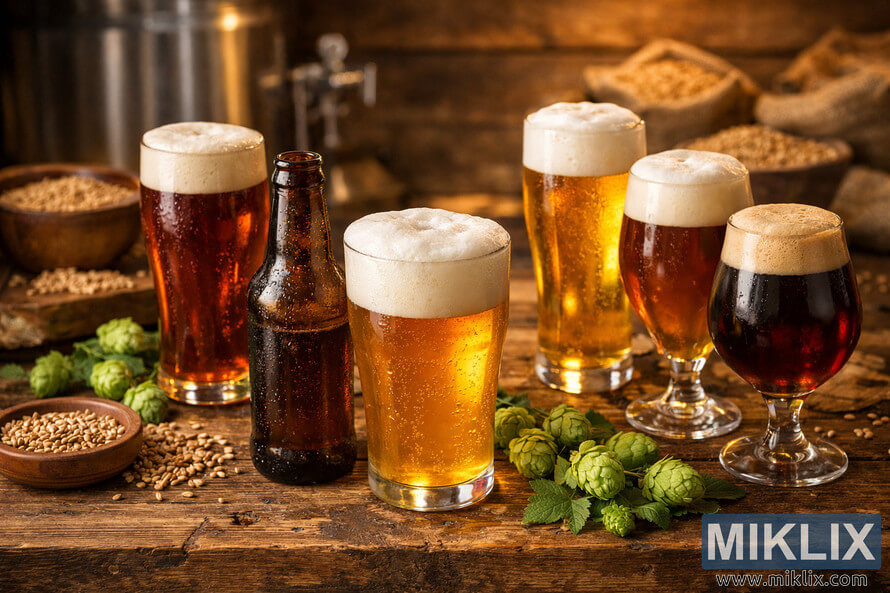
When planning any brew with Wyeast 1007, aim for moderate mash temps and simple grain bills to let the yeast’s clean character shine. These recipe ideas with 1007 and the listed styles for German ale yeast will help you brew focused beers where clarity and balance matter most.
Klik of tik op de afbeelding voor meer informatie en hogere resoluties.
Preparing Your Yeast: Smack Packs, Starters, and Storage
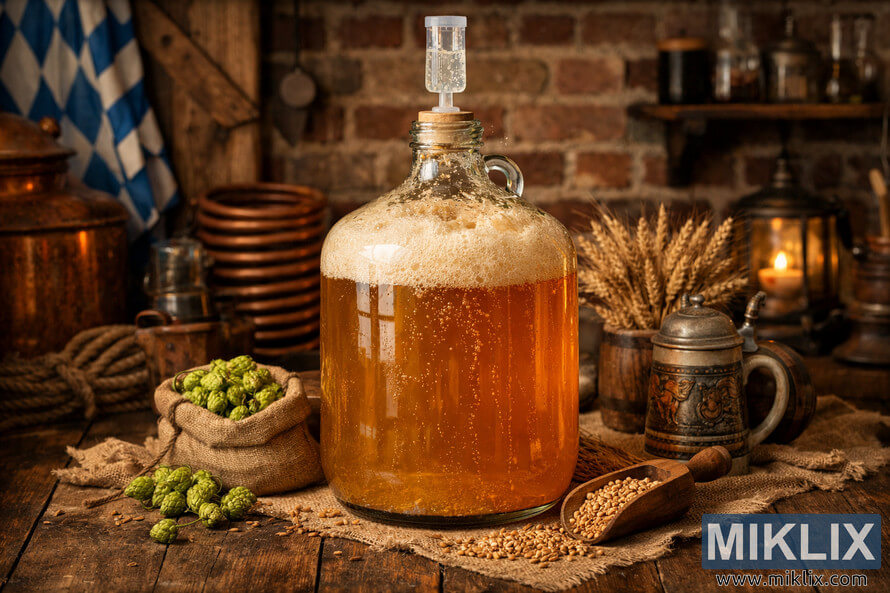
Working with Wyeast 1007 requires careful handling of liquid yeast. A few simple steps on activation, sizing a starter, and fridge storage will protect yeast vitality and improve fermentation reliability.
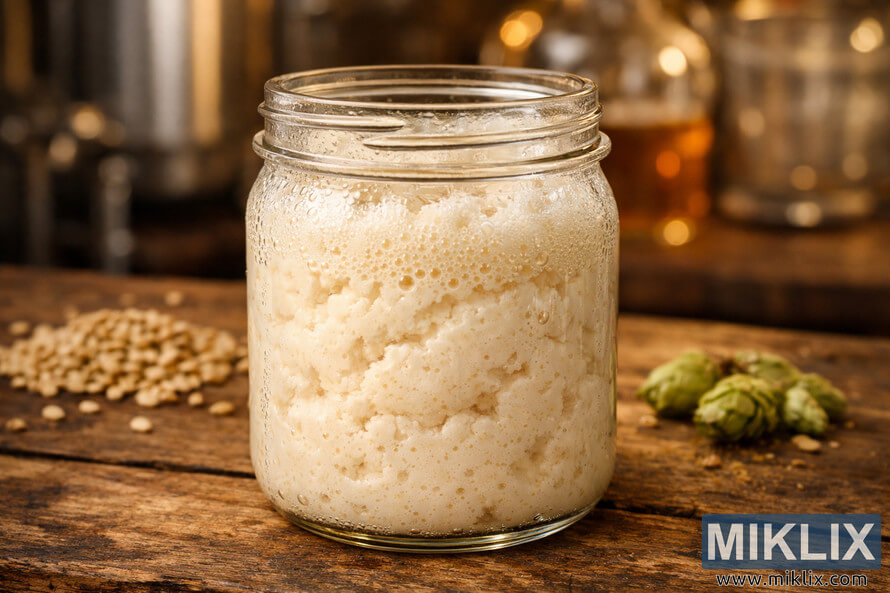
Using Wyeast smack packs is straightforward. Bring the pack to room temperature, flex the inner nutrient pouch to break it, then wait as the pack swells. Wyeast smack pack activation usually shows visible activity within 12–36 hours. Look for a creamy krausen and a thick yeast slurry before pitching. For beers with higher gravity, or when the pack shows weak activity, build a starter rather than pitching directly.
Deciding when to make a starter is crucial. Make a yeast starter for beers above 1.060 original gravity, for large batches over ten gallons, or when a pack is near its expiry date. Use a reliable calculator to size the starter. For a typical five-gallon, average-gravity ale, a 1–2 L starter is often enough. Stronger beers need larger starters or multiple packs to reach proper cell counts.
Practical steps to build a starter include sanitizing the flask, preparing wort at about 1.036–1.040 specific gravity, and aerating well before adding the yeast. Swirl or use a stir plate to keep the yeast in suspension while it grows. Monitor the starter until it shows a decline in activity, then chill, decant, and pitch the refreshed slurry.
Proper storage keeps Wyeast 1007 performing at its best. Store packs refrigerated at 35–40°F (2–4°C) and use them by the manufacturer’s date. Liquid yeast viability drops over time. If a pack has been stored past peak, plan to make a starter to restore vigor. Never freeze Wyeast packs; freezing can damage cell membranes and reduce viability.
- Signs a pack needs a starter: slow swelling, weak krausen, or storage near expiry.
- Starter sizing tip: use Mr. Malty or Brewer’s Friend calculators for accurate cell counts.
- Long-term options: harvest fresh slurry after a healthy fermentation or follow best-practice yeast harvesting for extended use.
Klik of tik op de afbeelding voor meer informatie en hogere resoluties.
Pitching Rates and Yeast Health for Wyeast 1007 German Ale Yeast
Optimal pitching rates for Wyeast 1007 German Ale Yeast significantly impact fermentation outcomes. This guide outlines how to determine the correct pitch rate for various batch sizes and gravities. It also discusses how to identify signs of underpitching or overpitching. Additionally, it provides tips for maintaining yeast health throughout fermentation.
To calculate the ideal pitch rate, start with a standard target for ales: 0.75–1.0 million cells per mL per °Plato. For a 5-gallon (19 L) batch at 1.048 OG, use a pitching calculator like Mr. Malty or Brewer’s Friend. This will help convert the target into starter volume or pack equivalents. Remember, liquid yeast packs vary in viability, so consider age and storage when estimating viable cell count.
For high-gravity worts, a higher cell count is necessary. If your recipe exceeds 1.060 OG, aim for 1.25–1.5 million cells/mL/°P or plan a larger starter. When reusing harvested yeast, verify viability with a stain or quick counting method. Adjust the starter accordingly to restore cell numbers and vitality.
Signs of underpitching include a long lag time and slow initial CO2 production. You might also notice increased fruity esters, higher fusel alcohols, or a sluggish attenuation curve. Overpitching, on the other hand, can mute desired ester character and sometimes cause unusual flocculation or rapid fermentation that finishes before flavor development is complete.
To ensure yeast health, oxygenate or aerate the wort before pitching, especially for stronger beers. Provide a yeast nutrient in adjunct-heavy or low-mineral worts. Maintain clean, sanitary equipment to prevent infection-related stress on cells. Keep fermentation temperature stable to avoid added stress that reduces viability.
When planning starters for Wyeast 1007, start with the ideal pitch rate. Grow a starter large enough to meet the calculated cell count. Give it time to build cell walls and glycogen, then decant spent wort where appropriate. For commercial smack packs, confirm activation and use a starter if the pack is old or if your gravity requires more cells than a single pack supplies.
Regularly monitoring yeast health ensures consistent results. Track lag time, krausen behavior, and attenuation versus expected values. If persistent underpitch signs appear across batches, increase starter size or switch to fresher yeast. Good pitching practice preserves the strain’s clean profile, allowing Wyeast 1007 to express the subtle German ale character you expect.
Fermentation Temperature Management
Temperature control is crucial when brewing with Wyeast 1007. It influences flavor, attenuation, and beer clarity. Below, we discuss ideal temperature ranges, how temperature affects esters and phenolics, and practical methods for maintaining stable temperatures at home.
For clean fermentation, aim for temperatures between 58°F and 68°F (14°C and 20°C). The lower end of this range, 58–62°F, is best for a clean profile. If you prefer a hint of fruitiness or faster attenuation, 64–68°F is suitable but will introduce more esters.
Temperature significantly impacts flavor chemistry. Higher temperatures increase ester production, leading to fruitier flavors. However, temperatures above the optimal range can result in solvent-like or phenolic notes. Conversely, cooler temperatures suppress esters, resulting in a crisper character without the complexity of lagers.
Homebrewers have various strategies to manage fermentation temperatures. Simple methods include using a chest freezer or a dedicated fermentation fridge with a controller. For those without refrigeration, water baths with thermal mass can help stabilize temperatures.
- Swamp coolers: place fermenter in a container of water and cover with a towel for passive cooling; monitor with a digital thermometer.
- Heat belts and small thermostatic heaters: useful when ambient temps dip below target; pair with a controller for safety.
- Insulation: wrap fermenters in a jacket or blanket to smooth short-term ambient changes.
Position temperature probes at the fermenter’s liquid level or use a thermowell. Accurate readings enable timely adjustments to prevent ester shifts. Monitor temperatures throughout the active and conditioning phases to maintain consistent ester production.
For most homebrewers, stability is more important than exact temperature control. Minimizing temperature fluctuations and responding quickly with a controller or thermal mass helps preserve the balanced character sought from fermentation temps Wyeast 1007.
Fermentation Timeline and Expected Behavior
Grasping the fermentation timeline for Wyeast 1007 is crucial for managing brew expectations. A well-defined timeline eases early-stage anxieties and aids in making timely decisions. Below, we outline typical phases, yeast cake duration, and strategies for overcoming stalled fermentation.
Typical lag time and active fermentation phases
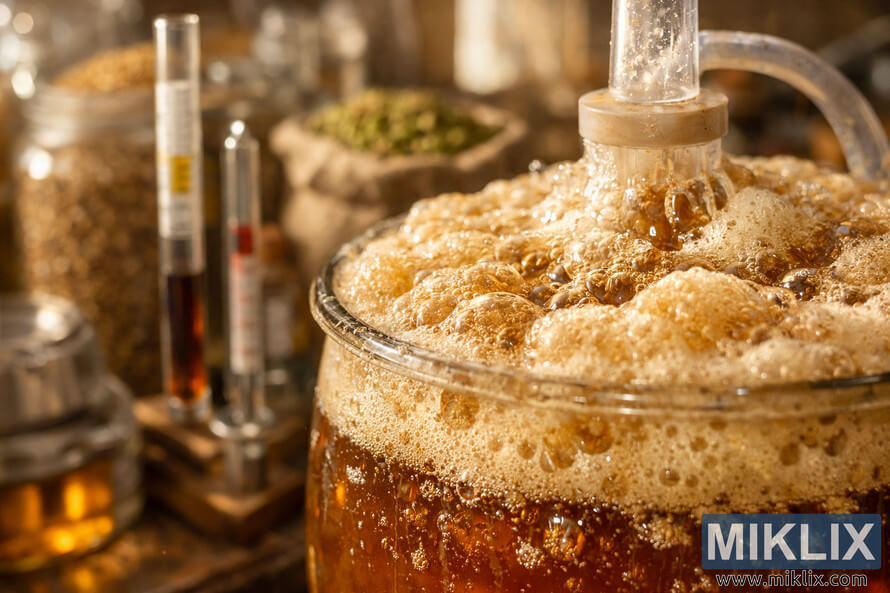
Lag time typically ranges from 12–48 hours post-pitching. A shorter lag indicates a healthy starter and proper pitching. Active fermentation peaks in 24–72 hours, marked by a robust krausen and vigorous CO2 production.
Primary fermentation usually concludes in 5–10 days. Factors like temperature, original gravity, and yeast health dictate the pace. Monitoring gravity readings is more reliable than visual signs alone.
How long to leave beer on the yeast cake
Post-terminal gravity, rest the beer on the yeast cake for 3–7 days. This period aids in diacetyl reduction and initial clearing. It ensures Wyeast 1007 completes secondary metabolites and refines flavors.
For enhanced clarity or maturation, transfer to secondary or conditioning vessels. Allow 1–3 weeks, depending on style and desired outcome. Heavier or higher-gravity beers might require longer conditioning.
Signs of a stalled or slow fermentation and remedies
Stalled fermentation signs include persistent high gravity, minimal krausen, and low CO2 activity. These symptoms necessitate immediate attention.
- Ensure fermentation temperature is within the recommended range. Raise it slightly if too low.
- Gently rouse the yeast by swirling the fermenter to resuspend it into the wort.
- If still in lag, consider adding a small amount of sterile oxygen early, with caution to avoid oxidation later.
- Pitch a fresh, active starter or additional Wyeast cells when underpitching is likely.
- Add yeast nutrient if a nutrient deficiency is suspected.
If contamination or a significantly incorrect original gravity is the cause, assess whether blending or restarting is best. This decision hinges on batch importance and severity.
Flavor Development and Off-Flavor Prevention
Wyeast 1007 can produce a clean, malty flavor in the right conditions. Small adjustments in pitching, temperature, oxygen, and nutrients significantly impact the beer's taste. Careful management is key to guiding flavor development and avoiding common flaws.
Stress or poor handling can lead to off-flavors with Wyeast 1007. Underpitching or fermenting too warm can increase esters and fusel alcohols. Poor sanitation or extended wort exposure can introduce phenolic notes or sourness. Leaving beer on the yeast too long can result in diacetyl.
To minimize diacetyl and ensure clean fermentation, follow these steps.
- Ferment within the recommended temperature range for 1007 to limit ester and fusel production.
- Pitch an adequate cell count or build a starter to prevent underpitching stress.
- Allow a post-fermentation rest on the yeast to give the culture time to reduce diacetyl before cold-crashing.
To prevent sulfur, focus on yeast health and oxygen at pitching. Sulfur compounds often diminish as fermentation progresses with healthy yeast. Avoid cold-crashing too soon when sulfur is still present.
Consistent oxygen management during wort preparation is crucial. Aerate or oxygenate wort to ale-level targets before pitching. Use yeast nutrient for high adjunct or extract worts and for recipes with large amounts of unmalted grain.
Simple sanitation and mash care can prevent phenolic or sour off-flavors. Maintain clean equipment, control mash pH and mineral balance, and use fresh, viable packs or starters. Be vigilant for signs of infection and address them promptly.
If a batch shows sluggish activity or odd aromas, consider these remedies.
- Check gravity and temperature, then warm slightly to reactivate yeast if safe.
- Gently stir or rouse the yeast to encourage activity without introducing oxygen late.
- Add a small pitch of healthy yeast if underpitching is suspected and fermentation remains stuck.
Consistent attention to pitching rates, oxygen management, and sanitation ensures Wyeast 1007 performs well. These practices reduce off-flavors Wyeast 1007 is prone to when stressed, preserving its clean character in the finished beer.
Secondary Fermentation, Conditioning, and Maturation
Deciding on aging beer and whether to move it off the primary yeast cake impacts clarity, flavor, and oxidation risk. Wyeast 1007's predictable behavior allows brewers to keep beer on the primary for most conditioning times. This is unless they plan to add ingredients that benefit from extra time. Clear guidance is essential for each recipe's best path.
Transferring to a secondary depends on your goals. Adding fruit, wood, or lactose requires space and time for integration. For pure German-style ales, staying on the primary reduces oxygen exposure and simplifies handling.
For Kölsch-like and session German ales, plan 2–4 weeks of total conditioning. This includes the primary fermentation and a cold rest to clear yeast and mellow esters. Stronger or fuller-bodied ales need 4–8 weeks to soften harsh alcohol and round the mouthfeel.
Consider the style when choosing carbonation methods. Bottle conditioning with priming sugar adds yeast-driven complexity and softens the beer's texture. Force carbonation in a keg offers speed and exact control, producing a crisper, cleaner profile.
- For Kölsch or bright German ales: target 2.4–2.6 volumes CO2 for lively effervescence and a lighter mouthfeel.
- For fuller ales: aim lower, near 1.8–2.2 volumes CO2 to enhance perceived body and creaminess.
- When using bottle conditioning, allow extra conditioning times after priming so carbonation completes and flavors meld.
Monitor beer during conditioning for clarity and taste. If off-flavors persist, longer cold conditioning or gentle filtration before packaging can help. Match your conditioning times and carbonation methods to the style and desired mouthfeel for the best results with Wyeast 1007.
Reusing and Harvesting Wyeast 1007 German Ale Yeast
Harvesting and repitching yeast can save money and maintain consistency in your brews. Here, we'll guide you through the process of safely harvesting Wyeast 1007. We'll also cover how to reuse yeast across different brews and when it's best to opt for a fresh starter.
- After fermentation is complete, keep the beer cold to allow solids to settle at the bottom.
- Decant the beer carefully from the top, working in a clean, sanitized area to prevent contamination.
- Transfer the remaining yeast slurry into sanitized jars or bottles using sanitized tools.
- Allow the slurry to settle upright; separate the darker trub layer below from the creamy, viable yeast above by decanting gently.
- Minimize oxygen exposure during transfers to protect cell health.
Storage and repitching practices for subsequent brews:
- Refrigerate harvested slurry for short-term storage, ideally no more than a few weeks while monitoring viability.
- When planning to reuse yeast, build a small starter to wake and recondition cells before pitching into the next batch.
- Track generation count. After repeated repitches, vitality drops and contamination risk rises, so limit reuse to a few cycles.
- For high-gravity beers or large batches, increase starter size or use multiple jars of slurry to reach an adequate pitch rate.
When to make a fresh starter instead of reusing:
- Make a fresh starter if the yeast slurry looks pale, smells off, or has been stored too long.
- Replace yeast after three to five repitches, depending on yeast condition and brewing intensity.
- Always use a fresh starter for high-gravity beers or when the strain’s character changes from expected performance.
- Starting from a fresh Wyeast pack or a new starter reduces risk and ensures consistent fermentations.
Troubleshooting Common Issues with Wyeast 1007
Wyeast 1007 typically ferments cleanly, but issues can arise. Begin by checking aroma, taste, gravity readings, and fermentation temperature. These simple steps can help you troubleshoot Wyeast 1007 before resorting to more drastic measures.
Identifying off-flavors and their likely causes
Fruity esters often indicate high fermentation temperatures or underpitching. Solvent or fusel notes suggest stressed yeast or extreme temperature fluctuations. Diacetyl, with its buttery flavor, can result from premature racking or yeast stress. Phenolic or spicy notes may stem from contamination or specific yeast strains.
Remedial steps for stalled or sluggish fermentations
First, verify the specific gravity with a sanitized hydrometer or refractometer. Then, check the fermenter temperature. If the beer is below the yeast's optimal range, slowly increase the temperature into the recommended zone.
- Gently swirl or rock the fermenter to resuspend yeast without introducing oxygen late in the run.
- If underpitched or inactive, pitch a fresh active starter or a reliable rescue strain such as Wyeast 1056.
- Consider oxygenation early in fermentation and add yeast nutrient or energizer if you suspect a deficiency.
When to discard and restart vs. salvage the batch
Before deciding, assess smell, taste, and gravity. Minor stress-related off-flavors can diminish with conditioning, allowing for salvage through extended aging or blending. However, significant bacterial infection, sharp sourness, or strong solvent profiles usually necessitate discarding and restarting.
- If gravity is steady and off-flavors are mild, condition longer and retaste periodically.
- For uncertain cases, take a sample to your local homebrew shop or consult experienced brewers for a second opinion.
- When in doubt about contamination that risks health or quality, discard the batch and sanitize equipment thoroughly before reuse.
By following these steps, you can effectively troubleshoot Wyeast 1007, address stalled fermentations, identify off-flavors, and make an informed decision on whether to salvage the beer or start anew.
Equipment and Sanitation Recommendations for Best Results
Effective fermentation relies on the right tools and strict sanitation. Below, we outline essential equipment and sanitation practices. These will safeguard yeast health and reduce contamination in every batch.
Essential fermentation equipment for homebrewers
Begin with a reliable primary fermenter and an airlock. A temperature-control device, like a fermentation fridge with an Inkbird controller, ensures consistent results. Include an accurate thermometer or digital probe and a hydrometer or digital refractometer for tracking gravity.
- Sanitized transfer gear, such as an auto-siphon, minimizes exposure during beer transfers.
- Use glass or food-grade HDPE containers for starters and slurry storage, ensuring thorough cleaning.
- For force carbonation, a CO2 tank, regulator, and kegs streamline the process and reduce handling risks.
Sanitation protocols that protect yeast performance
Clean surfaces before sanitizing. Removing residue is more effective than disinfecting a dirty surface. Employ a no-rinse sanitizer like Star San for all surfaces in contact with wort or beer.
Adhere to the manufacturer's guidelines for contact time and dilution. Sanitize hands and work surfaces before pitching or transfers. Tools, lids, and airlocks must receive the same attention as fermenters.
Tips for minimizing contamination risk
Reduce transfers to minimize contamination risk. Each transfer opens a window for microbes. When transfers are unavoidable, keep them brief and work in a clean environment.
- Purge headspace with CO2 when feasible to limit oxygen and airborne microbes.
- Seal the fermenter except for planned sampling. Use a sanitized sampling thief instead of opening the lid.
- Sanitize any adjuncts like fruit or spices. Freeze, pasteurize, or use sanitizing washes to lower microbial load before adding to the fermenter.
Consistent use of quality homebrew gear and strict sanitation for Wyeast 1007 protects yeast vitality. This approach minimizes contamination across multiple brews. Small habits, such as sanitizing transfer lines and limiting exposure, significantly enhance beer quality.
Practical Recipe Example Using Wyeast 1007 German Ale Yeast
This guide takes you through crafting a 5-gallon Kölsch-style brew with Wyeast 1007. It includes a detailed recipe, a step-by-step fermentation schedule, and tasting notes. Follow these steps to brew a clean, delicate German ale with a subtle malt and hop profile.
- Malt bill: 90% Pilsner malt — 10 lb, 5% Vienna malt — 0.5 lb, 3% Carahell or light crystal — 0.3 lb, 2% Munich — 0.2 lb.
- Hops: Hallertau or Tettnang to ~30–40 IBU total, split across early additions for bitterness and a small late aroma addition.
- Water: soft to moderately hard. Aim for a chloride-to-sulfate ratio favoring sulfate for a drier finish.
- OG target: 1.046–1.050. Final gravity often lands in the 1.008–1.012 range for a crisp finish.
- Yeast: Wyeast 1007 German Ale. Use a fresh smack pack or a 1–2 L starter if wort gravity is toward the top of the range.
Step-by-step fermentation schedule using 1007
- Prepare yeast: Rehydrate Wyeast 1007 or build a 1–2 L starter. Healthy yeast improves attenuation and consistency.
- Oxygenation: Aerate wort before pitching to support a clean fermentation and yeast growth.
- Pitching temperature: Aim to pitch at 58–62°F to minimize esters and keep the profile clean.
- Active fermentation: Expect visible activity in 24–48 hours. Active stage typically lasts 2–5 days.
- Primary conditioning: Leave on the yeast for ~7 days total or until terminal gravity is reached, then allow an extra 3–7 days for yeast cleanup if needed.
- Cold conditioning: Rack or cold-crash and condition near 35–45°F for 1–3 weeks to improve clarity and mouthfeel.
- Carbonation: Force carbonate or bottle to 2.4–2.6 volumes CO2 for a traditional Kölsch lively finish.
Expected tasting notes and serving suggestions
Expect a delicate, slightly bready malt character with light floral hop notes. Wyeast 1007 recipe use typically yields restrained fruit esters and a crisp, dry finish. Bitterness is moderate to brisk to balance the malt backbone.
Serve cold, about 45–50°F, in a narrow-rimmed glass to highlight the clean profile and subtle aroma. A Kölsch recipe with 1007 makes a refreshing session beer with light to medium body and a smooth, crisp mouthfeel.
Conclusion
Wyeast 1007 conclusion: This strain offers a clean fermentation, preserving malt and hop flavors. It provides predictable attenuation and moderate flocculation, ideal for Kölsch and session German ales. The 58–62°F range allows for controlled ester expression, minimizing unwanted phenolics.
Practical brewer takeaways include using fresh packs or a starter for higher-gravity beers. Maintain correct pitching rates and ensure adequate oxygen at pitch. Control fermentation temperature closely and allow time on the yeast cake for diacetyl reduction. Harvest and repitch cautiously, and monitor viability across reuse cycles to avoid sluggish fermentations.
Final thoughts on 1007: For those seeking a neutral-to-gently-fruity German ale strain without lagering complexity, Wyeast 1007 is a top choice. Check vendor handling and consider a starter when in doubt. With consistent care, 1007 will consistently produce stylistically appropriate beers.
FAQ
What is Wyeast 1007 German Ale yeast and what beers is it best for?
Wyeast 1007 German Ale is a liquid ale yeast strain known for clean fermentation and moderate ester production. It's ideal for Kölsch, light Alt-style ales, and session German ales. It also works well in hybrid beers focusing on malt and hop balance. This yeast highlights malt character while being relatively neutral compared to high-ester English strains or lager yeasts.
What are the typical attenuation and flocculation characteristics of 1007?
The attenuation of 1007 is generally in the mid-60s to low-70s percent. Flocculation is medium to medium-high. This means you can expect a clear beer after standard conditioning without excessive yeast drop-out.
What fermentation temperature range should I use for Wyeast 1007?
The recommended fermentation temperature range is 58°F–68°F (14°C–20°C). For the cleanest profile, ferment at the lower end (58–62°F). Warmer fermentation (64–68°F) increases ester production and can speed attenuation. However, it also raises the risk of fusels or off-flavors if pushed too high.
Should I use a Wyeast smack pack as-is or build a starter?
For average 5-gallon ales at typical gravities (~1.048), a single healthy smack pack often suffices if fresh. Build a starter when brewing higher gravity beers (above ~1.060), for larger volumes, when the pack is near expiry, or if the pack shows low activity. Starters also reduce lag time and improve yeast vitality.
How long is the typical lag time and active fermentation with 1007?
Expect an initial lag of 12–48 hours depending on pitch rate and starter use. Active fermentation usually peaks within 24–72 hours. Primary fermentation commonly completes in 5–10 days, though colder or higher-gravity batches may take longer.
What pitching rate should I aim for with Wyeast 1007?
Use standard ale pitching targets of roughly 0.75–1.5 million cells per mL per °Plato. This is commonly simplified to ~0.75–1.0 million cells/mL/°P. Use online calculators (Mr. Malty, Brewer’s Friend) to size starters or determine how many packs you need for a given batch gravity and volume.
How do I prevent common off-flavors when fermenting with this strain?
Prevent off-flavors by pitching an appropriate cell count, oxygenating or aerating wort before pitching, fermenting within the recommended temperature range, and allowing adequate time on the yeast cake for diacetyl reduction. Maintain good sanitation to avoid bacterial or wild-yeast-derived phenolics and sourness.
Can I reuse and harvest Wyeast 1007 slurry from a previous batch?
Yes. After fermentation, decant beer from the yeast cake, separate the creamy yeast layer from heavier trub, and store refrigerated for short-term reuse. Build a starter before repitching to restore vitality. Track repitch generations; after several repitches (commonly 3–5) viability and performance may decline, and a fresh starter or new pack is recommended.
What are signs of underpitching or overpitching with 1007?
Underpitching often causes long lag times, higher ester and fusel production, and sluggish fermentation. Overpitching can mute ester character, produce an overly rapid fermentation, and sometimes affect flocculation. Aim for correct pitching rates to retain the yeast’s expected flavor profile.
How long should I leave beer on the yeast cake and when should I cold-condition?
After reaching terminal gravity, leave beer on the yeast cake 3–7 days to ensure diacetyl cleanup. For Kölsch-like beers and clarity, follow with cold-conditioning at near 35–45°F (2–7°C) for 1–3 weeks. Total conditioning time depends on style and clarity goals.
What equipment helps control fermentation temperature for best results?
Effective options include a dedicated fermentation fridge or freezer with a digital controller (Inkbird or similar), temperature probes placed at fermenter liquid level, water-bath swamp coolers with insulation, and heat belts/controllers for cold environments. Stable temperatures and minimal swings yield the most consistent results.
How should I treat a slow or stalled fermentation with Wyeast 1007?
First check temperature and raise it into the optimal range if too cool. Gently rouse yeast by swirling the fermenter. If lag persists, pitch a fresh active starter or additional healthy ale yeast. Oxygenation early in fermentation can help, as can yeast nutrient if nutrient deficiency is suspected.
Does Wyeast 1007 produce sulfur or diacetyl issues?
When managed correctly, 1007 is not especially prone to sulfur. Diacetyl can occur if yeast are stressed or removed too early. Prevent these by proper pitching rates, oxygenation, controlled fermentation temperature, and allowing time on the yeast cake for maturation and diacetyl reduction.
How does 1007 compare to common American ale and German lager strains?
Compared with American ale strains like Safale US-05 or Wyeast 1056, 1007 is similarly clean but slightly more malt-forward and restrained. Compared with lager strains (Wyeast 2124, 2308), 1007 ferments warmer, produces more esters, and won’t reproduce true lager crispness achieved by cold fermentation and lager yeast metabolism.
What recipe and mash profile work well with Wyeast 1007?
For Kölsch-style beers use a Pilsner-dominant malt bill with small Vienna or Munich additions and a low percentage of dextrin malt. Mash around 148–152°F for a balanced body. For session alts, mash 152–154°F for fuller mouthfeel. Hop choices should favor noble or noble-like varieties for traditional German character.
How should I interpret variability in performance between different 1007 packs or vendors?
Variability often stems from pack age, cold-chain handling, and storage conditions. Vendors with rapid turnover and proper refrigeration tend to supply more vigorous packs. When in doubt, build a starter to normalize vigor and reduce the risk of underperformance.
What carbonation level suits Kölsch and similar beers fermented with 1007?
Kölsch-like beers benefit from moderate to lively carbonation, typically around 2.4–2.6 volumes CO2. Bottle conditioning adds subtle complexity, while force carbonation offers precise control and a cleaner finish. Adjust volumes to match style and mouthfeel preferences.
When should I discard a batch versus trying to salvage it?
Minor stress-related off-flavors can sometimes be improved with extended conditioning or blending. Significant bacterial infection, strong sourness, or severe solvent profiles usually mean the batch should be discarded. Use gravity readings, aroma, and taste to assess severity; consult experienced brewers or a local homebrew shop if uncertain.
Verder lezen
Als je dit bericht leuk vond, vind je deze suggesties misschien ook interessant:
- Bier fermenteren met Wyeast 1203-PC Burton IPA Blend gist.
- Bier fermenteren met White Labs WLP099 Super High Gravity Ale-gist.
- Bier vergisten met Fermentis SafAle BE-256 gist