
Fermenting Beer with Wyeast 2278 Czech Pils Yeast
ਪ੍ਰਕਾਸ਼ਿਤ:
ਆਖਰੀ ਵਾਰ ਅੱਪਡੇਟ ਕੀਤਾ ਗਿਆ: 14 ਅਪ੍ਰੈਲ 2026 9:08:38 ਬਾ.ਦੁ. UTC
Wyeast 2278 Czech Pils Yeast is a top choice for brewers aiming to create a crisp Bohemian pilsner. It finishes dry, with medium-high flocculation and an attenuation of 70–74%. This makes it ideal for German Pilsner malt bills and recipes with small amounts of Cara-Pils or Melanoidin for added body and color.
Fermenting Beer with Wyeast 2278 Czech Pils Yeast
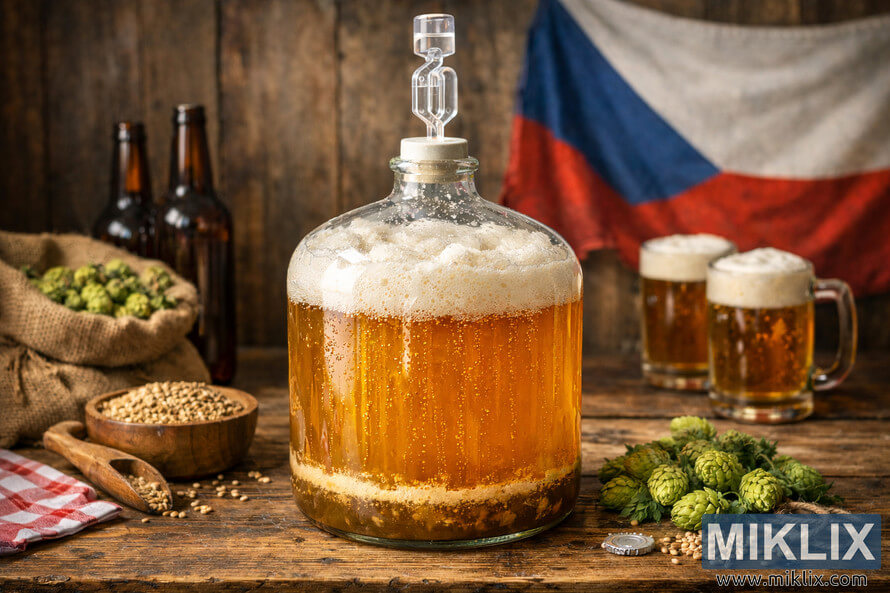
ਹੋਰ ਜਾਣਕਾਰੀ ਅਤੇ ਉੱਚ ਰੈਜ਼ੋਲਿਊਸ਼ਨ ਲਈ ਚਿੱਤਰ 'ਤੇ ਕਲਿੱਕ ਜਾਂ ਟੈਪ ਕਰੋ।
When fermenting with Wyeast 2278, brewers often chill the wort to low 40s°F. They then pitch chilled or decanted starters and ferment in the mid-to-high 40s. Later, they raise the temperature for cleanup. Some follow a Brülosophy-style schedule, pitching at 48–53°F and fermenting near 50–55°F until halfway. Then, they briefly warm it to promote diacetyl cleanup before cold conditioning.
Some batches may exhibit sulfur notes or light esters, especially early in conditioning. These aromas tend to dissipate with proper lagering — several brewers report that four weeks at 35°F clears sulfur and refines the profile. The outcome depends on yeast handling, starter size, and mash schedule, as much as the strain itself.
Key Takeaways
- Wyeast 2278 Czech Pils Yeast finishes fairly dry with 70–74% attenuation and medium-high flocculation.
- Pitfalls and strengths depend on pitching temperature, starter health, and mash composition.
- Common practice: chill wort, pitch a decanted starter, hold low-mid 40s°F for bulk fermentation.
- Brülosophy-style accelerated methods offer faster turnaround by warming for cleanup then cold-conditioning.
- Long lagering at near-freezing temperatures often removes sulfur and improves clarity.
Why Wyeast 2278 Czech Pils Yeast is a Popular Choice for Bohemian Pilsners
Wyeast 2278 originates from the Czech Republic, deeply rooted in the Pilsner tradition of České Budějovice. It's the go-to Bohemian Pilsner yeast for brewers aiming at a clean, dry beer. This beer showcases noble-hop character and a firm malt backbone.
Below are the key points that explain the strain's appeal and how it behaves in the brewery.
- Origin and stylistic fit
- Wyeast origin is rooted in Central Europe and carries the lineage of Czech lagering practices.
- Use this strain for classic Bohemian-style Pilsners to emphasize a crisp profile with restrained esters and a soft malt presence.
- Typical fermentation profile and expected attenuation
- Community reports and manufacturer data place finishing attenuation near 70–74% in ordinary gravity worts.
- Fermentation tends to be clean with occasional slight sulfur character that often resolves during conditioning.
- Flocculation, alcohol tolerance, and common beer styles
- Czech pilsner strain characteristics include medium-high flocculation, which aids clarity after proper lagering.
- Alcohol tolerance sits around 9% ABV, giving flexibility for stronger lagers like Vienna or Schwarzbier.
- Recommended styles beyond Bohemian Pilsner include Classic American Pilsner, Vienna Lager, Munich Dunkel, and Dark American Lager.
Keep in mind that attenuation and flocculation interact with mash profile and fermentation management. Adjust mash temperature, oxygenation, and pitching rate to fine-tune body and finish.
ਹੋਰ ਜਾਣਕਾਰੀ ਅਤੇ ਉੱਚ ਰੈਜ਼ੋਲਿਊਸ਼ਨ ਲਈ ਚਿੱਤਰ 'ਤੇ ਕਲਿੱਕ ਜਾਂ ਟੈਪ ਕਰੋ।
Pitching and Starter Recommendations for Healthy Fermentation
For a clean, timely fermentation with Wyeast 2278, the right starter strategy and careful handling are key. Determine your starter size based on the original gravity and desired cell count. Ensure the pitching temperature and decanting practices are optimal for the culture's success.
Starter sizing for optimal cell counts
- Calculate cells needed based on gravity and batch size. Then, create a starter that meets that target. A larger Wyeast 2278 starter size accelerates the ramp-up and minimizes lag time.
- Adhering to the Brülosophy-style approach, a decanted liquid yeast starter often surpasses a small or no-starter pitch for lagers.
- Liquid yeast and slurry that begin active fermentation achieve high cell activity more quickly than rehydrated dry yeast. Therefore, size the starter to prevent sluggish starts.
Decanting and pitching temperatures
- Once the starter is fully active and has settled, decanting starter wort concentrates healthy cells and lowers the chance of off-flavors from spent wort.
- Pitch the concentrated yeast into wort cooled to the recommended pitching temp lager yeast range. Many brewers aim for 48–53°F, while some chill to the low 40s and allow the temperature to rise slowly.
- Decanting starter before pitching reduces extra carbohydrates in the fermenter and helps maintain a clean flavor profile.
Re-pitching considerations and yeast age effects
- Re-pitch Wyeast 2278 when you have fresh, well-handled slurry. Performance can drop with age or poor storage.
- Older slurries or improperly harvested starters may produce sulfur or atypical esters and can slow fermentation starts.
- When in doubt, build a fresh starter rather than relying on multiple re-pitch episodes that might compromise yeast vitality.
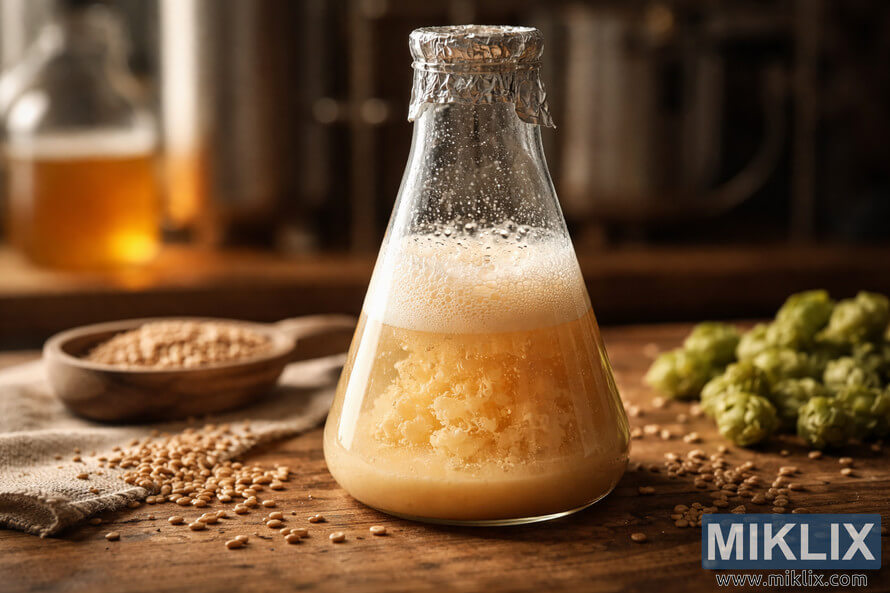
ਹੋਰ ਜਾਣਕਾਰੀ ਅਤੇ ਉੱਚ ਰੈਜ਼ੋਲਿਊਸ਼ਨ ਲਈ ਚਿੱਤਰ 'ਤੇ ਕਲਿੱਕ ਜਾਂ ਟੈਪ ਕਰੋ।
Ideal Fermentation Temperature Range and What It Means
Wyeast 2278 operates within a narrow temperature range, impacting aroma, sulfur levels, and beer character. Brewers must align the manufacturer's guidelines with practical experience to achieve the desired Czech pilsner crispness. Effective temperature control is more crucial than recipe adjustments for this strain.
Manufacturer range vs. brewer experience
Wyeast suggests a temperature range of 50–58°F (10–14°C) for Wyeast 2278. However, many homebrewers adjust this based on their equipment and goals.
Experienced lagers often start with a cold pitch in the mid-40s, allowing the yeast to warm up to the low 50s as fermentation begins. Others prefer an initial pitch between 48–53°F, maintaining this temperature for a consistent fermentation.
How temperature influences ester and sulfur production
Colder temperatures during the growth phase can increase sulfur compound formation and slow yeast cleanup. Warmer fermentations, closer to the upper limit of the Wyeast 2278 range, enhance metabolic activity and often decrease sulfur levels in beer.
Higher temperatures can also increase ester production, such as isoamyl acetate, if fermentation management or oxygenation is not optimal. To avoid unwanted esters, control mash schedule, oxygen, and starter practices. Use lager fermentation temperatures to speed up cleanup when necessary.
Practical tips to maintain stable lager temperatures in the US
- Utilize a temperature-controlled fermentation chamber or keezer with a reliable controller to maintain the fermentation temperature.
- Position the probe strategically: attach it to the fermenter for wort temperature tracking or measure ambient temperature for chamber control.
- Implement gentle ramp-ups for cleanup. A common strategy is to maintain primary fermentation in the low 50s, then increase by a few degrees for 24–72 hours to aid yeast in reducing sulfur.
- To minimize sulfur in beer, avoid prolonged cold stalls during active growth. A modest temperature increase late in primary fermentation often facilitates yeast in completing reduction reactions.
- Monitor temperatures and gravity regularly. Small daily checks can help detect stalls and adjust the chamber before off-flavors develop.
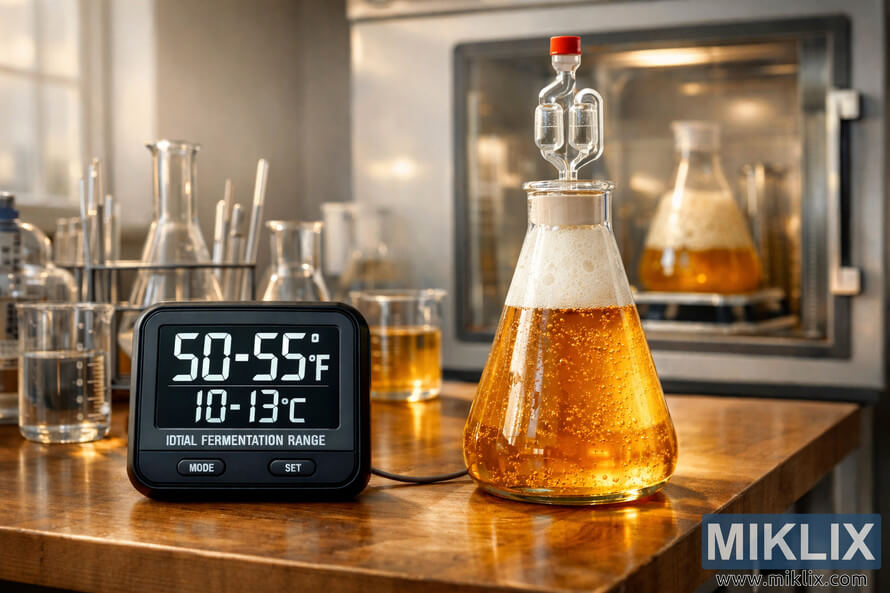
ਹੋਰ ਜਾਣਕਾਰੀ ਅਤੇ ਉੱਚ ਰੈਜ਼ੋਲਿਊਸ਼ਨ ਲਈ ਚਿੱਤਰ 'ਤੇ ਕਲਿੱਕ ਜਾਂ ਟੈਪ ਕਰੋ।
Fermentation Schedules: Traditional Lagering Versus Accelerated Methods
The choice between a slow cool program and a speedier ramp-and-rest approach shapes flavor, clarity, and turnaround time. Brewers aim to balance yeast behavior, sulfur cleanup, and desired ester suppression when planning a schedule for a Czech-style pilsner.
Classic multi-week lager schedule and benefits
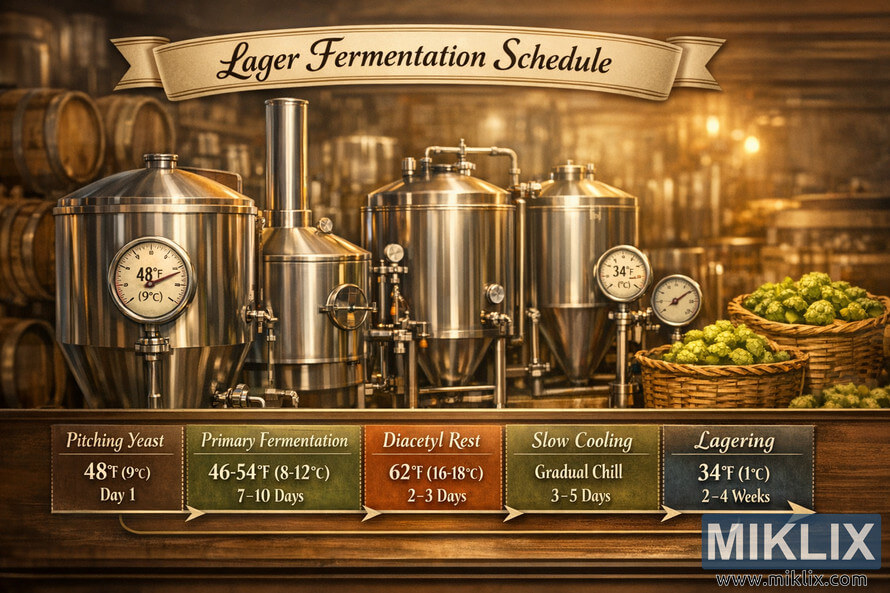
A traditional lager schedule keeps beer cold for extended periods. Primary fermentation starts at the low end of the yeast range, then beer rests for weeks to months at 30–40°F. This long conditioning helps sulfur compounds fade, tames harsh yeast byproducts, and yields crisp flavor with excellent clarity and stability.
Brülosophy-style accelerated schedule for faster turnaround
The Brülosophy lager method trims time while aiming for a clean result. Pitch near 48–53°F, hold primary around 50–55°F until about half complete, then raise to 65–68°F for a short cleanup. Fermentation often finishes in 4–10 days. Drop to near-freezing for a few days, then package. Total time can fall into a two-week lager window for lower OG beers or extend to 3–4 weeks if extra clearing is desired.
When to choose slowed cold fermentation vs. warmer ferment-and-rise approaches
Opt for slowed cold fermentation when purity and classic lager character matter most. That route minimizes esters and rewards patience with a round, restrained profile. Pick the accelerated warm-ramp when schedules are tight and temperature control is reliable. Make sure to include a deliberate cleanup stage to finish attenuation and reduce diacetyl before chilling.
Practical trade-offs matter. A traditional lager schedule favors long-term drinkability and low sulfur risk. Accelerated lagering gives speed and acceptable quality if you monitor fermentation and allow an effective cleanup step. Choose based on time, equipment, and the style goal for the batch.
ਹੋਰ ਜਾਣਕਾਰੀ ਅਤੇ ਉੱਚ ਰੈਜ਼ੋਲਿਊਸ਼ਨ ਲਈ ਚਿੱਤਰ 'ਤੇ ਕਲਿੱਕ ਜਾਂ ਟੈਪ ਕਰੋ।
Managing Off-Flavors: Sulfur, Diacetyl, and Banana Esters
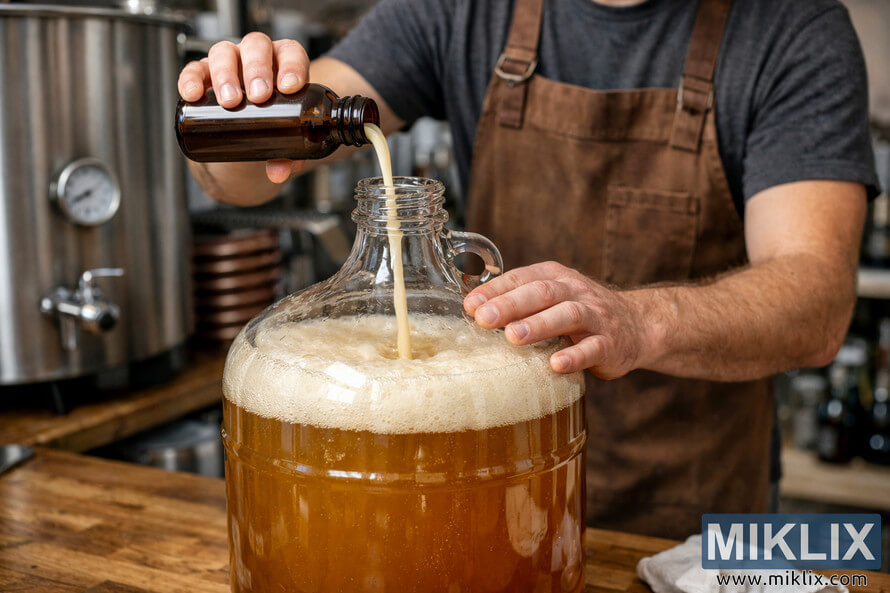
Wyeast 2278 can bring out the best in pilsners, but some batches may develop unwanted flavors. Here, we'll discuss how to minimize sulfur, plan a diacetyl rest, and address banana esters in pilsners.
Why sulfur shows up and how to minimize it
- Sulfur often appears during active fermentation as hydrogen sulfide. A healthy pitching rate and good oxygenation at transfer cut stress and lower sulfur formation.
- Fermenting slightly warmer during the growth phase, toward 58°F (14°C), helps yeast process sulfur compounds faster and can reduce long-term presence.
- Cold conditioning for an extended period lets residual sulfur dissipate. Patience during lagering often fixes smells that seemed persistent in primary.
Diacetyl rest timing and temperatures
- Begin a diacetyl rest lager once active fermentation slows and most gravity drop has occurred. Raise the beer into the mid-60s°F (65–68°F / 18–20°C) for cleanup.
- Hold the rest until diacetyl tasting and gravity checks indicate yeast have reabsorbed the compound. Typical timing ranges from 4 to 10 days depending on original gravity.
- After the rest, cool steadily to lager temps to encourage clarification and long-term stability.
Addressing unexpected banana esters: causes and fixes
- Banana esters in pilsner often come from temperature spikes during yeast growth, stressed yeast from low oxygen or undersized starters, or occasional cross-contamination with an ester-prone strain.
- To fix off-flavors, ensure proper wort oxygenation, build a sufficient starter, and maintain the recommended temperature window throughout primary.
- If esters persist, extend the warm cleanup so yeast can reabsorb esters and follow with a long, cold conditioning to let volatile notes fade.
By combining preventive measures and post-fermentation cleanup, you can eliminate off-flavors and preserve the delicate character of a Czech pilsner fermented with Wyeast 2278.
ਹੋਰ ਜਾਣਕਾਰੀ ਅਤੇ ਉੱਚ ਰੈਜ਼ੋਲਿਊਸ਼ਨ ਲਈ ਚਿੱਤਰ 'ਤੇ ਕਲਿੱਕ ਜਾਂ ਟੈਪ ਕਰੋ।
Step‑by‑Step Practical Fermentation Plan for Wyeast 2278
This detailed plan ensures a smooth step-by-step Wyeast 2278 fermentation. It blends traditional lager methods with efficient shortcuts. The process includes chilling, pitching, primary fermentation monitoring, and controlled temperature ramps for finishing and clarity.
- Chill and pitch
- Cool the wort to 48-53°F (9–12°C) for pitching. Use a healthy, well-sized liquid starter and pitch gently to avoid oxygen. Some prefer ~44°F for a slower start, while others choose low 50s for faster fermentation.
- Initial setpoint and early check
- Keep the fermenter at 50–55°F (10–13°C) for a steady lag and clean attenuation. Start monitoring primary fermentation by checking gravity after 48–72 hours. Then, check again at day 4 to track early trends.
- Mid‑fermentation management
- When gravity shows 40–60% attenuation, monitor daily. Always check specific gravity before temperature changes. For worts ≤1.060 OG, expect activity in 4–7 days with liquid yeast.
- Ramp-up for completion
- Increase temperature in 5°F (3°C) steps every 12 hours until 65–68°F (18–20°C). Hold this temperature until fermentation is complete and yeast clean up off-flavors, usually 4–10 days.
- Cleanup and cold conditioning
- After final gravity stabilizes, lower temperature in 5–8°F steps every 12 hours to 30–32°F (-1–0°C). Condition at cold temperatures for 3–5 days or longer for clarity. Gelatin fining at ~50°F can also enhance clarity.
- Alternate timelines
- For a quicker process, ramp directly to cleanup temperature after active fermentation or crash to cold and use fining. Monitor primary fermentation closely to avoid stressing yeast or locking in diacetyl.
Stick to this plan and keep detailed notes at each stage. Consistent pitching temperature and diligent primary fermentation monitoring are key to achieving a clean, well-attenuated Czech pilsner with Wyeast 2278.
Mash and Wort Considerations That Affect Yeast Performance
Small adjustments in mash and wort handling can significantly alter fermentation outcomes. This guide focuses on practical choices that impact attenuation, body, and ester formation. These changes occur without modifying your core recipe.
Mash schedule impacts on attenuation and body
Rest temperatures and durations directly influence fermentability. A protein rest at 131°F softens the beer's body and enhances clarity. A maltose rest around 143°F increases maltose levels, boosting attenuation.
An alpha rest near 161°F leaves more dextrins, resulting in a fuller mouthfeel. Employing a multi-step mash with these rests can lead to a drier, more attenuated beer. Monitor mash pH and conversion with iodine to achieve the desired yeast performance.
Adjuncts and specialty malts and flavor contribution
Small amounts of melanoidin or Cara-Pils significantly impact malt character and head retention. Melanoidin adds bready, malty flavors, while Cara-Pils contributes dextrins for body and foam.
Many brewers question the melanoidin Cara-Pils effects on ester perception. Used at 3–5% each, these malts generally alter mouthfeel and malt flavor more than yeast-derived esters. Sensory changes can be assessed by comparing split batches if ester shifts are noted.
Oxygenation, pitching gravity, and their roles in ester production
Proper oxygenation is crucial for healthy lager fermentations. Wort oxygenation supports sterol and fatty acid synthesis, essential for strong cell walls. Under-oxygenated yeast may become stressed, leading to excessive ester production.
Pitching gravity and cell counts interact to shape flavor. High pitching gravity with low cell counts can result in solventy or fruity esters. Ensure consistent oxygenation and match starter size to OG to minimize pitching gravity esters.
- Test dissolved oxygen for reliable oxygenation lager yeast practice.
- Adjust starter volumes to support expected attenuation and clean fermentation.
- Keep mash targets and specialty malt percentages modest when chasing a neutral lager profile.
Using Wyeast 2278 Czech Pils Yeast for Different Pilsner Styles
Wyeast 2278 is versatile across various pilsner styles, provided brewers adjust mash, temperature, and conditioning. Below, we outline practical expectations and adjustments for achieving excellence in classic Czech beers, American interpretations, and darker lagers.
Bohemian/classic expectations
Expect a dry, bready finish with an earthy noble-hop lift in a Bohemian pilsner. Wyeast 2278 for Bohemian pilsner may exhibit subtle sulfur early in conditioning. To manage this, maintain cool and steady fermentation temperatures. Also, allow ample lagering time to eliminate sulfur and settle esters.
American-style and similar lagers
Homebrewers often choose this strain for American pilsners, seeking a crisp backbone with moderate flocculation. In lighter American pilsners, it offers a clean profile, perfect for showcasing brighter American hops. To avoid sluggish starts, use slightly higher pitch rates and strict oxygenation.
Adjusting process for darker lagers
When brewing dunkels or schwarzbier-style beers with 2278, adhere to standard fermentation and conditioning practices. For dunkels, adjust the mash to deepen color and add Munich or Vienna malts for toast and caramel. Expect similar attenuation but plan for longer conditioning to integrate roast notes and any yeast-derived sulfur.
- Control temperatures to limit fruity esters and minimize sulfur holdover.
- Balance mash fermentability to reach the dry finish typical for pilsner styles.
- Allow extended cold conditioning for darker lagers to meld malt complexity with yeast character.
Conditioning, Lagering, and Clearing Strategies
Proper conditioning is key to achieving balance and clarity in lagers made with Wyeast 2278 Czech Pils. Below, we explore practical methods to reduce sulfur, speed up clarification, and select the best packaging method for a clear, clean pint.
How long to lager to remove sulfur and smooth flavors
Sulfur can linger after primary fermentation. Brewing guides and community reports suggest extended cold conditioning may be necessary to eliminate odors. One brewer noted nearly four weeks at 35°F to remove strong sulfur notes.
Expect variation. Light sulfur may fade in days, while stronger cases take weeks. Aim for at least two weeks of lagering for routine smoothing. If sulfur persists, extend lagering in one- or two-week increments, monitoring aroma and gravity.
Cold crashing, gelatin fining, and alternative clarifying methods
- Cold crash: Drop temperature near 30–32°F for several days to promote flocculation. This helps yeast and haze particles settle.
- Gelatin fining: Use gelatin at about 50°F after a gentle warm conditioning or after rousing has settled. Many brewers see dramatic clarity gains within 24–48 hours, making kegging or packaging easier.
- Alternatives: Extended cold lagering, Irish moss in the boil, or isinglass for bottle ales are options for those avoiding animal-derived finings. Each method trades time for results.
Packaging after conditioning: kegging vs. bottling recommendations
For kegging, transfer cold and clear to a sanitized keg. Carbonate with CO2 and let the beer sit under pressure for 3–5 days in a cold kegging fridge. This produces drinkable clarity quickly and preserves subtle pilsner character.
For bottling, use standard priming sugar calculations and bottle condition warm at 68–72°F for 2–3 weeks. After carbonation, move bottles to cold storage for at least five days to help additional clearing and flavor settling.
Practical checklist
- Start with a baseline lagering time Wyeast 2278: aim two to four weeks at 34–38°F for routine smoothing.
- If you need to remove sulfur in lager faster, combine a short warm rest, then cold crash plus gelatin fining.
- Decide keg vs bottle lager based on time and clarity needs: kegs shorten wait time, bottles need longer warm conditioning then cold storage.
Troubleshooting Common Problems with Wyeast 2278 Fermentations
Wyeast 2278 can deliver classic Czech pils character, but brewers sometimes face issues that need methodical checks. This short troubleshooting guide helps you decide when to wait, when to act, and how to separate yeast behavior from process or sanitation problems. Use the steps below to troubleshoot Wyeast 2278 without guessing.
Persistent sulfur smell after primary often fades with time. Cold conditioning at 35–40°F for several weeks usually lets sulfur volatiles drop out. If sulfur persists after fermentation despite extended lagering, review oxygenation levels, pitching rate, and fermentation temperature control before making big changes.
Slow starts and stuck fermentation require quick, clear checks. Track gravity every 24–48 hours, watch krausen development, and confirm active yeast character. For stuck fermentation diagnosis, check starter size, pitch temperature, wort oxygenation, and fermentation vessel temperature. Simple fixes include gently rousing yeast, raising the temperature into the recommended range, or adding a healthy active starter.
Deciding between yeast behavior and contamination matters for corrective action. Compare the beer to expected 2278 traits — sulfur can be typical, while strong fruity esters or solvent notes may suggest contamination. Use sanitation records, starter purity, and recent recipe changes to separate yeast vs contamination causes.
- Signs to wait: steady gravity decline, mild sulfur, clear lagering progress.
- Signs to intervene: flat gravity, no krausen, or off-aromas that worsen with time.
- Interventions: warm the fermenter, pitch fresh active yeast, check oxygen only early in fermentation.
When troubleshooting Wyeast 2278, method matters. Keep good records of pitch rates, oxygenation method, and temps. That data makes stuck fermentation diagnosis faster and helps pinpoint whether odd aromas come from the strain itself or from contamination or recipe variables.
Comparing Wyeast 2278 to Other Pilsner Strains
Choosing between common Czech lager strains impacts aroma, sulfur behavior, and fermentation timing. Brewers must balance subtle flavor cues against practical needs like lag time and starter work. Below is a concise outline to guide comparisons and trials.
Wyeast 2278 vs 2001 vs 2000 is a common topic in forums and lab notes. WY2001 and WY2000 trace back to Pilsner Urquell and Budvar. These strains show slightly different sulfur and ester tendencies than 2278. Many brewers report WY2278 produces noticeable sulfur early, with esters that sometimes linger if conditioning is short.
Liquid vs dry lager yeast impacts schedule and handling. Liquid strains like Wyeast options usually need a starter to reach target cell counts. This can lead to faster visible fermentation and a brisker finish. Dry lager strains simplify rehydration and storage but may take longer to show activity once pitched.
- Flavor: WY2001 and WY2000 aim for classic Bohemian notes. WY2278 can lean toward more sulfur and occasional fruity esters.
- Activity: Liquid vs dry lager yeast comparisons show liquids often start within 12–36 hours earlier when properly prepared.
- Practicality: Dry yeasts are convenient for small batches and quick turnarounds.
Consider a WLP802 alternative when you need a specific Budějovice profile. White Labs WLP802 often behaves closer to historic Budvar strains than some modern Wyeast packages. Trying WLP802 can reduce recurring sulfur or ester issues that stubbornly persist with 2278 in some setups.
When to swap strains depends on repeatability. If multiple batches with Wyeast 2278 produce off aromas that do not clear with extended lagering, test WY2000, WY2001, or WLP802 on a single batch. Small comparative brews reveal which strain matches your malt bill and conditioning routine.
Use measured trials and keep variables tight. Hold mash schedule, oxygenation, and pitch rates steady so differences reflect yeast behavior rather than process variance. This approach gives a reliable comparison among Wyeast 2278 vs 2001 vs 2000, liquid vs dry lager yeast, and whether WLP802 alternative better fits your target pilsner profile.
Conclusion
The Wyeast 2278 review highlights its status as a genuine Czech-origin lager strain. It offers a dry, malty finish with an attenuation of roughly 70–74% and medium-high flocculation. When fermenting Czech Pils yeast, a preferred temperature range of 50–58°F (10–14°C) is recommended. Additionally, expect transient sulfur during active fermentation, which typically clears with a proper diacetyl rest and patient cold lagering.
Best practices for Wyeast 2278 include preparing a fresh liquid starter and proper wort oxygenation. Pitch the yeast into wort chilled to the low 50s. Maintain stable temperatures during primary fermentation, and consider a short warm rest if necessary. Use controlled temperature ramps to finish clean, reducing off-flavors and ensuring a reliable outcome. This approach works whether you follow a classic lager schedule or an accelerated Brülosophy-style plan.
If sulfur or odd esters persist, consider trialing Wyeast 2001, Wyeast 2000, or White Labs WLP802 Budejovice Lager. These alternatives can help gauge differences in character. Overall, this Wyeast 2278 review and the outlined best practices offer a clear path to achieving authentic Bohemian pilsner flavor and clarity.
FAQ
What are the defining characteristics of Wyeast 2278 Czech Pils yeast and why is it popular for Bohemian pilsners?
Wyeast 2278 is a Czech-origin lager strain known for its dry, malty finish. It's perfect for showcasing noble hop flavors. This yeast attenuates around 70–74% and has medium-high flocculation. It can tolerate up to about 9% ABV.
Its flavor profile supports classic Bohemian and other pilsner styles. Brewers choose it for traditional Czech pilsner character with a clean finish. Sulfur may appear during active fermentation but usually disappears with proper conditioning.
What fermentation profile and attenuation should I expect from this strain?
Expect finishing attenuation in the 70–74% range, yielding a relatively dry beer. Fermentation character is generally clean-to-maltypreserving, with possible sulfur during active stages. Final flavor depends on pitching health, temperature control, mash fermentability, and conditioning.
With proper practices, the strain finishes dry and produces classic pilsner character.
What are the manufacturer specs for flocculation, attenuation, and temperature range?
Manufacturer specs list medium‑high flocculation, 70–74% attenuation, and a recommended temperature window of roughly 50–58°F (10–14°C). Alcohol tolerance is around 9% ABV. These specs are a baseline; many brewers adapt temps and schedules to suit their timeline and equipment.
How large should a starter be for Wyeast 2278?
Size a liquid starter to match your wort gravity and desired cell count. For typical pilsner gravities (up to ~1.060), a decanted starter large enough to provide a healthy pitching rate avoids sluggish starts and reduces stress-related off-flavors. Brülosophy‑style accelerated methods and community experience both stress adequately sized, decanted starters for reliable, timely fermentation.
Should I decant my starter and what temperature should I pitch at?
Yes—decanting spent starter wort concentrates active cells and reduces undesired starter flavors. Aim to pitch into wort chilled to roughly 48–53°F (9–12°C) for accelerated schedules. Community reports show some brewers pitch cooler (~44°F) then allow a controlled rise; both approaches work if you plan temperature ramps and maintain yeast health.
Is it safe to re‑pitch Wyeast 2278 and how does yeast age affect performance?
Re‑pitching is common but performance can vary. Freshly harvested slurry performs best. Older or poorly stored slurries may produce sulfur, atypical esters, or slow starts. If in doubt, build a new starter. Maintain clean harvest practices, proper storage (cold and aerated if appropriate), and avoid excessive repitches without refreshing the culture.
What is the ideal fermentation temperature range and how do brewers adapt it?
Manufacturer range is about 50–58°F (10–14°C). Community practice varies: some pitch colder and let temps rise; Brülosophy recommends pitching 48–53°F and holding primary at 50–55°F before a warm cleanup. Choose a setpoint that balances clean character with reasonable turnaround time and plan rests and ramps to manage sulfur and ester profiles.
How does temperature affect ester and sulfur production with this strain?
Cooler fermentation and slow growth phases can encourage sulfur production and slower cleanup. Warmer fermentations (toward the higher end of the range, near 58°F / 14°C) tend to reduce sulfur and speed ester cleanup. Unintended temperature spikes, poor oxygenation, or stressed yeast can increase fruity esters like isoamyl acetate (banana). Control oxygenation, pitching rate, and temperature ramps to manage these compounds.
What practical steps help maintain stable lager temperatures in the U.S. homebrew setup?
Use a temperature‑controlled chamber or keezer with a reliable controller. Place the probe where it best represents your wort temperature (wort vs. ambient) depending on your control method. Insulate fermenters, avoid frequent opening, and program gentle ramps to prevent thermal shock. A consistent environment reduces ester and sulfur variability.
What are the benefits of a classic multi‑week lager schedule?
Traditional long lagering (weeks to months at near‑freezing temps) encourages sulfur dissipation, mellows yeast-derived compounds, and improves clarity and stability. Many brewers report that four weeks or more at ~35°F removes stubborn sulfur and integrates flavors, producing a cleaner, crisper pilsner.
How does the Brülosophy‑style accelerated lager schedule work?
The accelerated method chills wort to ~48–53°F, pitches a decanted, adequately sized liquid starter, ferments primary at ~50–55°F until about 50% attenuation, then ramps up to ~65–68°F for a cleanup/diacetyl rest until fermentation completes (often 4–10 days). After cleanup, you rapidly ramp down to near‑freezing (30–32°F) for conditioning. Gelatin fining and cold crashing can shorten clearing times. Typical turnaround is 2–4 weeks depending on OG and clarification choices.
When should I pick a slow cold fermentation versus a warmer ferment‑and‑rise strategy?
Use slow cold fermentation when authenticity and minimal ester profile are top priorities and you can afford extended lagering. Choose the warmer ferment‑and‑rise approach if you need faster results and have tight temperature control to execute a proper cleanup rest. Both can yield excellent beer when managed correctly.
Why does Wyeast 2278 often produce sulfur and how can I minimize it?
Sulfur formation is a known trait for some Czech strains, including 2278. It typically appears during active fermentation and often dissipates during warmer cleanup and extended cold conditioning. Minimize sulfur by pitching healthy cell counts, ensuring adequate oxygenation, fermenting slightly warmer during active cleanup (near 58°F), and allowing sufficient lagering time to let volatiles off‑gas.
When and how long should I perform a diacetyl rest?
Perform a diacetyl rest after active fermentation slows—raise temperature into the mid‑60s°F (65–68°F / 18–20°C) and hold until yeast reabsorbs diacetyl and other off‑flavors, typically 1–7 days depending on gravity. For accelerated schedules, this cleanup stage is often 4–10 days. Confirm by gravity and taste when possible before crashing.
What causes unexpected banana esters and how do I fix them?
Banana esters (isoamyl acetate) can result from stressed yeast, inadequate oxygenation, weak or contaminated starters, or temperature mismanagement during growth phase. Fixes include building a proper starter, ensuring good oxygenation before pitching, maintaining stable temps, allowing a warm cleanup so yeast can reabsorb esters, and extended cold conditioning. If contamination is suspected, consider replacing the strain and reviewing sanitation and starter practices.
What is the recommended chill and pitch protocol for wort?
Chill wort to about 48–53°F (9–12°C) for accelerated methods and pitch a decanted, adequately sized liquid starter. Some brewers pitch colder (~44°F) and allow a controlled rise into the mid‑40s to low‑50s. Decant to concentrate cells and reduce starter wort contribution. Match your pitch temp and ramp plan to the fermentation schedule you intend to follow.
What primary fermentation targets and timing should I follow and when should I check gravity?
For accelerated schedules, maintain primary near 50–55°F until about 50% attenuation. Check gravity before changing temperatures to ensure fermentation is progressing. Typical times for ≤1.060 OG with healthy liquid yeast are 4–7 days for the first half of attenuation; higher OG or dry yeasts can take longer. Always confirm progression with gravity readings rather than fixed days.
How should I ramp temperatures to finish fermentation and clarify the beer?
After achieving ~50% attenuation, raise temperature gradually—5°F increments every 12–24 hours—to a cleanup range of 65–68°F and hold until fermentation completes and off‑flavors are reduced (4–10 days). Then lower in steps to near‑freezing (30–32°F) for conditioning. Alternatives include an immediate cleanup step or using gelatin fining at ~50°F to speed clarification. Adjust ramps to avoid shocking yeast.
How do mash schedules affect attenuation and body with 2278?
Mash rests determine fermentability. A multi‑step mash with a protein rest, maltose rest, and higher alpha rest increases conversion and can produce a more fermentable wort and drier finish. The community example (protein rest 131°F, maltose rest 143°F, alpha rest 161°F) favored a relatively fermentable wort, supporting the strain’s tendency to finish dry. Adjust mash to target body and final attenuation.
Do adjuncts like Melanoidin and Cara‑Pils influence ester or sulfur perception?
Melanoidin adds malty, bready notes and Cara‑Pils contributes dextrins for body and head retention. Small percentages used in pilsner recipes (3–5%) are unlikely to cause banana esters, though they can alter the beer’s flavor matrix and make esters or sulfur more or less noticeable. Most reported banana incidents are linked to fermentation or yeast health rather than these adjuncts alone.
How do oxygenation and pitching gravity affect ester production?
Poor oxygenation or pitching too few cells for a given gravity stresses yeast, increasing ester and sulfur formation. High pitching gravity without proper oxygen and yeast mass exacerbates off‑flavors. Provide adequate dissolved oxygen for the wort, size your starter to the OG, and use proper aeration techniques for consistent flavor outcomes.
What should I expect when brewing Bohemian or Classic Czech pilsners with 2278?
Expect a dry, malty backbone with a clean finish that showcases noble hop character. Manage fermentation temperature and conditioning to mitigate sulfur and ensure a crisp profile. With correct practice you can achieve an authentic Bohemian pilsner character using this strain.
Can Wyeast 2278 be used for American pilsners and darker lagers?
Yes. 2278 works well for Classic American Pilsners and darker lagers like Munich Dunkel, Schwarzbier, and Dark American Lager. Adjust mash and specialty malts to achieve desired color and roast, and allow adequate conditioning—darker malt matrices may mask or emphasize yeast‑derived compounds, so plan lagering accordingly.
How long should I lager to remove sulfur and smooth flavors?
Time varies with sulfur intensity. Community reports show that several weeks of cold lagering often resolve sulfur; one brewer cited ~4 weeks at 35°F to remove a strong sulfur odor. Lighter sulfur issues may clear in days to weeks. If sulfur persists, reassess oxygenation, pitching rates, and fermentation temps.
What clarifying methods work best for speeding beer clarity?
Cold crashing near 30–32°F for several days promotes flocculation. Gelatin fining at around 50°F can rapidly clear beer within 24–48 hours. Extended cold lagering and natural settling also work but take longer. Choose methods that match your timeline and handling preferences.
Should I keg or bottle after conditioning, and what are the recommendations?
Both are fine. Kegging allows rapid serving after cold conditioning and easier force carbonation. Many find beer drinkable in the keg after 3–5 days in the keezer. Bottling requires priming at 68–72°F for 2–3 weeks, then cold bottle‑lagering for several days to encourage clarity. Choose based on storage, serving needs, and convenience.
If sulfur persists after primary, should I wait or change process?
Start with patience—extended cold conditioning often resolves sulfur. If sulfur is extreme or remains after reasonable lagering, review and correct oxygenation, starter sizing, pitching rates, and temperature management for the next batch. Repeated persistent issues may justify testing an alternate strain.
How do I diagnose slow starts or stuck fermentation with 2278?
Check gravity progression, krausen, and fermentation temperature. Slow starts often come from inadequate starter size, pitching too cold, or poor oxygenation. Remedies include gently warming the fermenter to the recommended range, rousing yeast, or adding a fresh active starter early in fermentation. If stuck, verify gravity, consider nutrient addition, and evaluate yeast viability.
How can I tell if an off‑flavor is yeast strain behavior or contamination?
Compare aromas and flavors to the strain’s known tendencies—2278 commonly produces transient sulfur but not normally persistent banana esters. Sudden or unusual esters, lactobacillus sourness, or phenolic medicinal notes may indicate contamination. Review sanitation, starter purity, and process variables. A clean lab practice and a fresh starter help isolate strain behavior from contamination.
How does Wyeast 2278 compare to Wyeast 2001 and 2000?
Brewers note subtle differences: WY2001 (Pilsner Urquell) and WY2000 (Budvar) are other Ceske Budejovice‑region strains with distinct flavor nuances. Some preferring WY2001 or WY2000 report different sulfur/ester tendencies. If 2278 consistently gives results you dislike, trial WY2001, WY2000, or WLP802 to compare profiles.
Are liquid strains faster or more reliable than dry lager yeasts?
Liquid strains, when prepared as decanted starters, typically show faster visible fermentation and can finish sooner than rehydrated dry yeasts. Dry yeasts are convenient and reliable but may take longer to start. Choose based on timeline, convenience, and your willingness to build starters.
When should I try alternatives like White Labs WLP802 Budejovice Lager?
Try an alternative when repeated batches with 2278 yield undesirable, persistent off‑flavors despite process corrections. WLP802, WY2000, or WY2001 can offer different sulfur/ester balances and might better match your flavor goals for a given recipe.
What have brewers reported about sulfur and banana ester incidents with 2278?
Community reports vary—some brewers experienced noticeable sulfur during active fermentation that cleared with lagering, while a minority reported banana esters in isolated batches. Factors cited include starter issues, oxygenation, temperature control, mash and adjunct choices, and potential cross‑contamination. Many others report clean, excellent results when following starter and temperature best practices.
What did successful brewers do differently when using 2278?
Successful reports commonly cite: building a fresh, adequately sized decanted starter; precise temperature control (pitching in the low‑50s or following a traditional slow lager); performing a diacetyl rest or warm cleanup when appropriate; and allowing adequate cold lagering. These steps consistently reduce off‑flavors and yield crisp pilsner results.
What lessons come from repeated uses and re‑pitching of 2278?
Re‑pitching can work but increases the importance of good harvest, storage, and starter practices. Some brewers see consistent results across repitches; others observe drift toward off‑flavors over time. When performance degrades, refresh the culture with a new starter or source a new pack of yeast.
What is a concise practical plan for fermenting Wyeast 2278?
Practical plan: chill wort to ~48–53°F, pitch a decanted, properly sized starter, hold primary around 50–55°F until about 50% attenuation, then ramp to ~65–68°F for cleanup until FG is stable. After cleanup, ramp down to near‑freezing for conditioning and clarity. Use adequate oxygenation, monitor gravity, and cold‑lager long enough to remove sulfur—often multiple weeks for best polish.
What is the short practical summary of expectations using this strain?
Expect a dry, malty pilsner profile with good flocculation and 70–74% attenuation. Watch for transient sulfur during active fermentation that usually dissipates with a warm cleanup and extended cold lagering. Use healthy starters, controlled temperatures, and proper oxygenation to minimize off‑flavors. If problems persist, consider WY2001, WY2000, or WLP802 as alternatives.
ਹੋਰ ਪੜ੍ਹਨਾ
ਜੇਕਰ ਤੁਹਾਨੂੰ ਇਹ ਪੋਸਟ ਪਸੰਦ ਆਈ ਹੈ, ਤਾਂ ਤੁਹਾਨੂੰ ਇਹ ਸੁਝਾਅ ਵੀ ਪਸੰਦ ਆ ਸਕਦੇ ਹਨ:
- ਵ੍ਹਾਈਟ ਲੈਬਜ਼ WLP005 ਬ੍ਰਿਟਿਸ਼ ਏਲ ਖਮੀਰ ਨਾਲ ਬੀਅਰ ਨੂੰ ਫਰਮੈਂਟ ਕਰਨਾ
- ਵ੍ਹਾਈਟ ਲੈਬਜ਼ WLP320 ਅਮਰੀਕਨ ਹੇਫਵੇਈਜ਼ਨ ਏਲ ਖਮੀਰ ਨਾਲ ਬੀਅਰ ਨੂੰ ਫਰਮੈਂਟ ਕਰਨਾ
- ਮੈਂਗਰੋਵ ਜੈਕ ਦੇ M29 ਫ੍ਰੈਂਚ ਸੈਸਨ ਖਮੀਰ ਨਾਲ ਬੀਅਰ ਨੂੰ ਫਰਮੈਂਟ ਕਰਨਾ