
Obraz: Traditional Bramling Cross Hop Cultivation in the English Countryside
Opublikowano:
Ostatnia aktualizacja: 18 września 2026 16:08:38 UTC
Historical English hop farm featuring traditional Bramling Cross cultivation, mature hop cones, timber poles, a rustic field gate, and rolling countryside.
Traditional Bramling Cross Hop Cultivation in the English Countryside
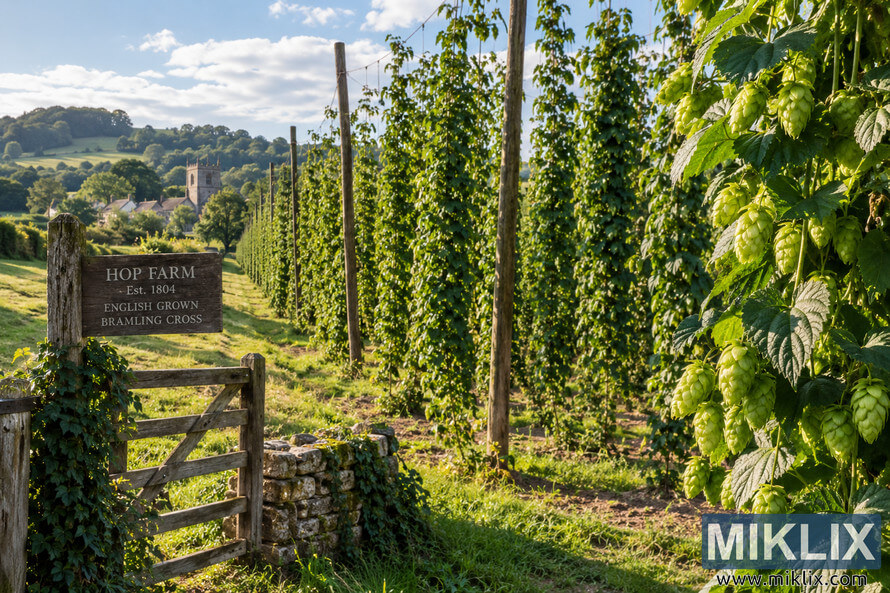
Dostępne wersje tego obrazu
Pliki graficzne dostępne do pobrania poniżej są mniej skompresowane i mają wyższą rozdzielczość - a w rezultacie wyższą jakość - niż obrazy osadzone w artykułach i stronach na tej stronie, które są bardziej zoptymalizowane pod kątem rozmiaru pliku w celu zmniejszenia zużycia przepustowości.
Rozmiar regularny (1,536 x 1,024)
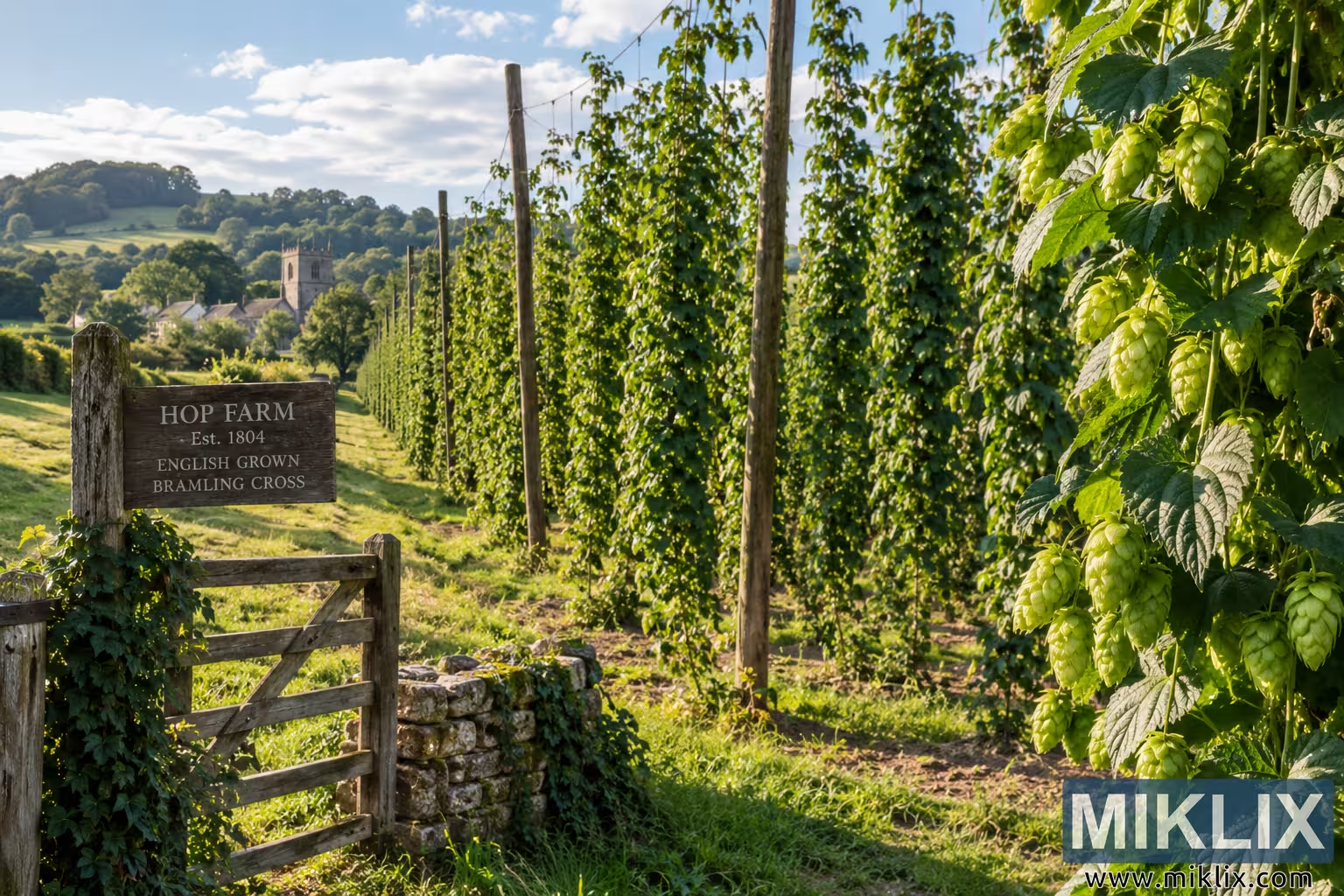
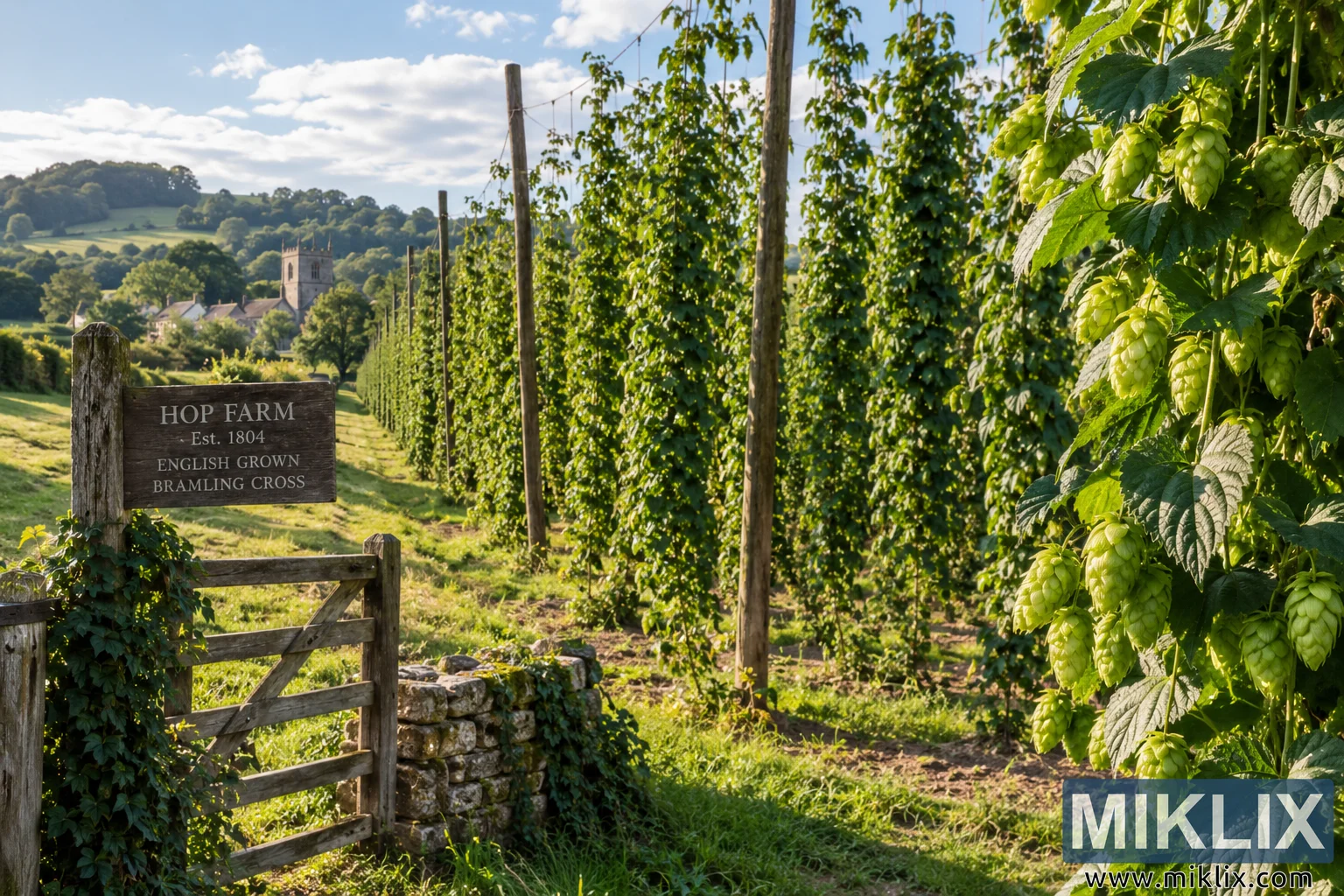
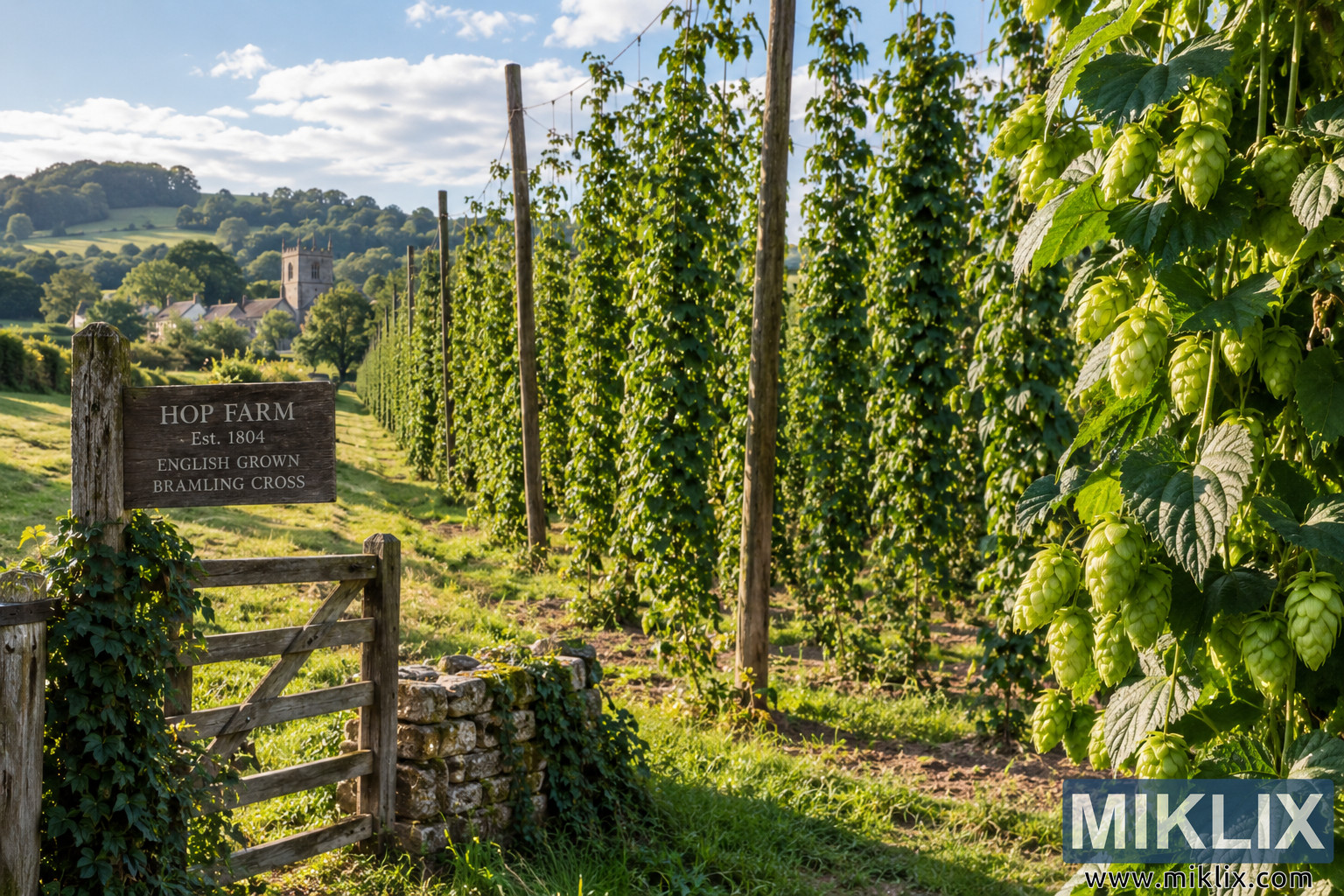
Duży rozmiar (3,072 x 2,048)
Bardzo duży rozmiar (4,608 x 3,072)
Bardzo duży rozmiar (6,144 x 4,096)
Komicznie duży rozmiar (1,048,576 x 699,051)
- Wciąż wgrywam... ;-)
Opis obrazu
A wide, photorealistic landscape photograph depicts a traditional English hop farm on a bright, clear day, presenting the cultivated field as part of an established rural landscape. The composition looks across long, orderly rows of mature hop plants trained vertically on a historic-style system of tall wooden poles and overhead wires. The hop vines form dense green columns that recede into the distance, emphasizing both the scale of the planting and the characteristic structure used for traditional hop cultivation. Warm sunlight enters from the upper right and illuminates the leaves, hop cones, grass, timber, and surrounding countryside, creating a rich mixture of bright highlights and soft shadows.
The most prominent detail appears along the right side of the image, where a vigorous hop bine fills much of the foreground. Large, textured, serrated leaves overlap one another, and numerous pale green hop cones hang in clusters among them. The cones are clearly defined, with their layered bracts producing the distinctive compact, slightly elongated shape associated with mature hops. Several clusters catch the sunlight directly and appear almost luminous against the darker foliage behind them. This close foreground detail provides a clear botanical reference while also establishing depth, because the sharply rendered cones contrast with the progressively more distant rows of plants extending toward the center and left of the scene.
Across the middle of the photograph, tall weathered wooden poles stand at regular intervals. Thin wires connect the structures overhead, supporting the climbing hop plants. The vines rise high above the ground and create vertical walls of foliage, while narrow grassy and cultivated passages run between the rows. The perspective of these parallel lines draws the eye deeper into the field. The construction appears practical and agricultural rather than modern or industrial, reinforcing the historical character requested for the scene. The wood has natural variations in tone and surface texture, and the planting is tidy without looking artificially perfect.
In the lower-left foreground is a rustic wooden field gate attached to a substantial weathered post. Ivy and other vegetation grow around the base and sides of the timber, integrating the gate naturally into the landscape. Immediately behind and beside it is a low wall constructed from irregular pale and gray stones, with additional greenery growing around the masonry. Mounted near the gate is a dark wooden farm sign with light lettering. It identifies the location as a hop farm, gives an establishment date of 1804, states that the crop is English grown, and names Bramling Cross. The sign is intentionally simple and traditional in appearance rather than resembling commercial packaging or contemporary corporate branding. No recognizable commercial brand, trademark, or branded product is visible anywhere in the scene.
Beyond the gate, the ground slopes gently through the hop field. Closely cut grass occupies the paths and margins, while exposed brown soil can be seen beneath some of the plants. Sunlight creates long, irregular shadows across these areas, adding texture and suggesting a relatively low sun despite the bright blue sky. The field feels actively cultivated but remains closely connected to the surrounding pastoral environment. Small details such as ivy, stones, uneven grass, timber grain, and naturally varied foliage prevent the setting from appearing overly manicured.
The background opens onto rolling English countryside composed of green hills, hedgerows, mature deciduous trees, and patches of agricultural land. A small village is visible in the middle distance toward the left side of the image. Its most distinctive architectural feature is a traditional stone church with a square tower rising above nearby rooftops and trees. Light-colored houses and farm buildings are partially obscured by vegetation, allowing the settlement to feel embedded within the landscape rather than dominating it. Behind the village, wooded slopes and fields continue toward the horizon in overlapping layers of green.
Above the countryside is a broad blue sky containing scattered white cumulus clouds. The clouds are concentrated mainly across the upper-left and central portions of the sky, leaving substantial areas of clear blue. Their soft forms contrast with the strong vertical geometry of the hop poles and vines. Bright natural light gives the entire photograph a fresh late-summer or harvest-season atmosphere. The illuminated hop cones in particular suggest plants approaching or reaching maturity, which suits the agricultural subject.
The overall visual style combines historical rural character with crisp contemporary photographic detail. The image uses a deep landscape composition: botanical detail dominates the immediate foreground, the cultivated hop rows structure the middle ground, and the village, church, trees, and rolling hills provide geographical context in the distance. The eye can move naturally from the hop cones on the right to the central rows, then toward the gate and sign on the left and finally into the village and countryside beyond. The scene communicates the heritage of English hop growing through recognizable agricultural structures and a traditional pastoral setting rather than through staged historical costumes or machinery. Bramling Cross is represented as the cultivated hop variety, with abundant green cones and climbing bines forming the central agricultural subject. The resulting image is serene, productive, and strongly associated with the English countryside, presenting hop cultivation as a longstanding part of a broader rural landscape.
Obraz jest powiązany z: Hops in Beer Brewing: Bramling Cross