
Obraz: Dew-Kissed Golding Hops at Sunset
Opublikowano:
Ostatnia aktualizacja: 20 maja 2026 19:47:14 UTC
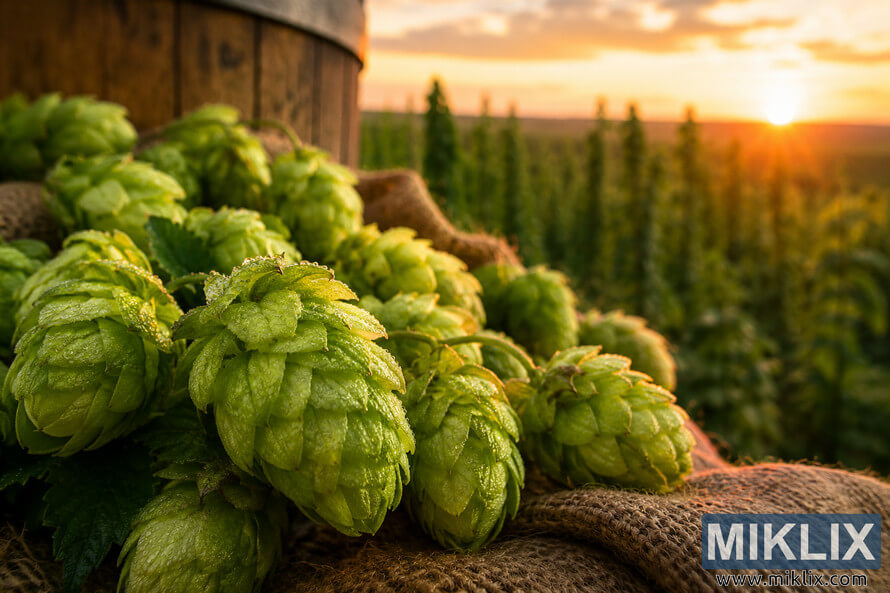
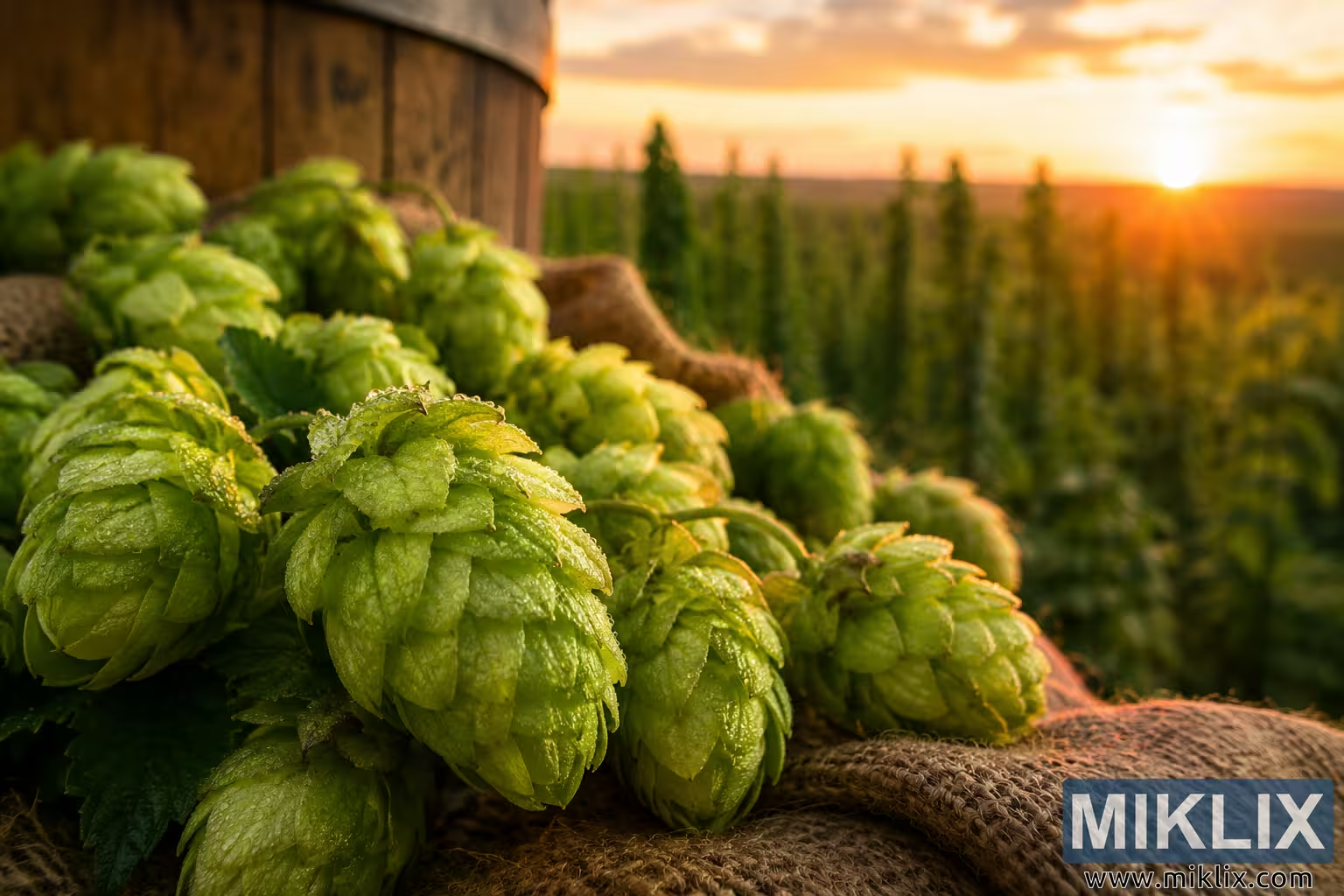
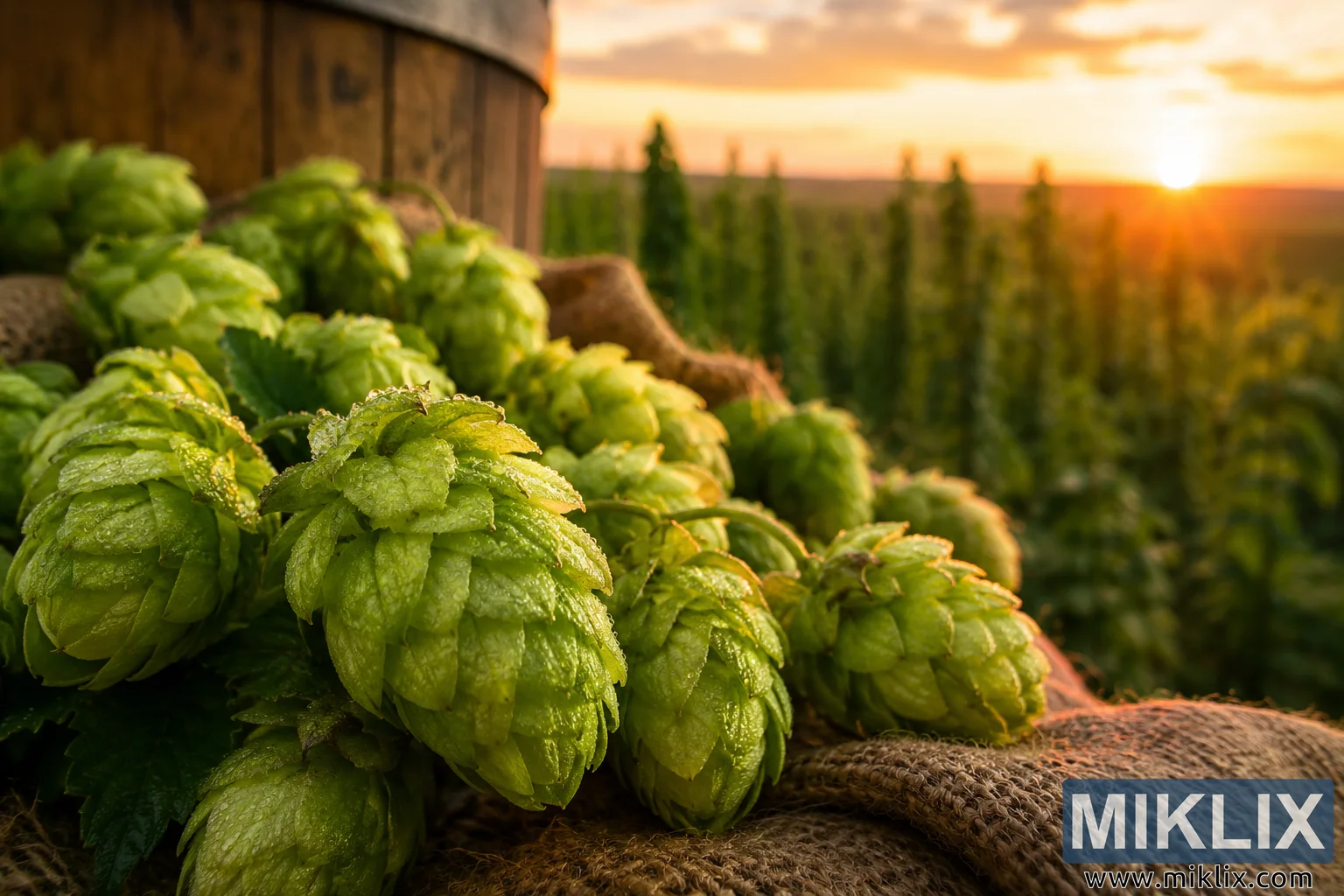
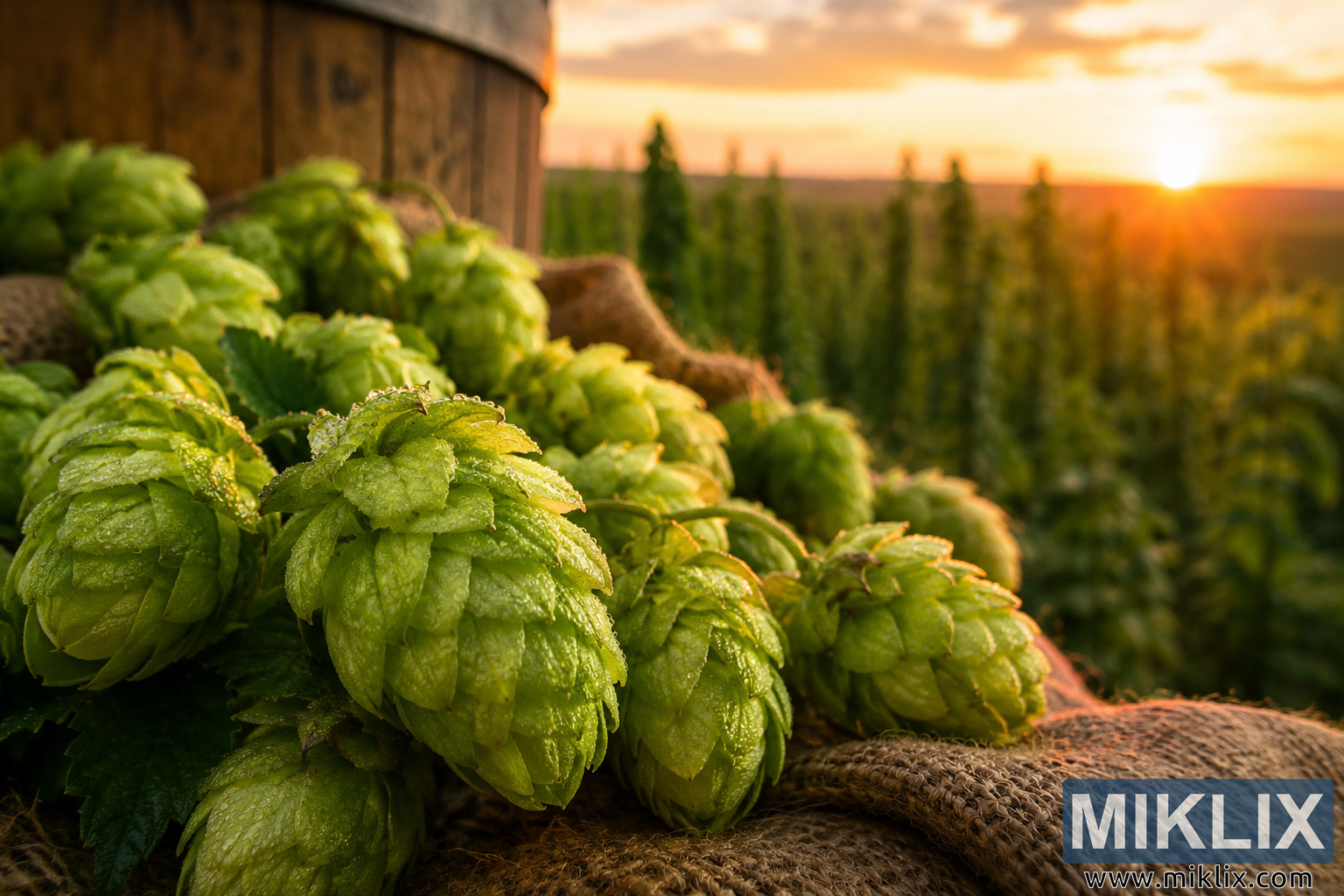
A macro-style landscape image of fresh Golding hops with dew, burlap, a rustic barrel, blurred hop fields, and warm sunset light evoking traditional brewing.
Dew-Kissed Golding Hops at Sunset
Dostępne wersje tego obrazu
Pliki graficzne dostępne do pobrania poniżej są mniej skompresowane i mają wyższą rozdzielczość - a w rezultacie wyższą jakość - niż obrazy osadzone w artykułach i stronach na tej stronie, które są bardziej zoptymalizowane pod kątem rozmiaru pliku w celu zmniejszenia zużycia przepustowości.
Rozmiar regularny (1,536 x 1,024)
Duży rozmiar (3,072 x 2,048)
Bardzo duży rozmiar (4,608 x 3,072)
Bardzo duży rozmiar (6,144 x 4,096)
Komicznie duży rozmiar (1,048,576 x 699,051)
- Wciąż wgrywam... ;-)
Opis obrazu
A richly detailed landscape photograph presents a close-up view of vibrant green Golding hops arranged across coarse burlap in a warm, rustic brewery-inspired setting. The foreground is dominated by plump, cone-shaped hop flowers, their layered bracts overlapping like delicate scales and curling softly at the edges. Tiny dew droplets cling to the textured surfaces, catching the golden light and revealing the velvety, slightly translucent quality of the fresh cones. The macro lens effect draws attention to the natural architecture of the hops, emphasizing their compact form, subtle ridges, and finely defined plant fibers. Within the folds of the bracts, the suggestion of lupulin glands adds a sense of botanical richness, hinting at the aromatic oils and brewing character associated with traditional hop varieties. The vivid greens range from bright lime to deeper herbal tones, creating a fresh, lively contrast against the earthy brown burlap beneath them. In the middle ground, several clusters of hops are arranged artistically, spilling toward a weathered wooden barrel that rises softly along the left side of the composition. The barrel’s curved planks and muted wood grain add depth and an old-world brewing atmosphere without drawing attention away from the botanical subject. A loose fold of burlap winds through the hop clusters, reinforcing the handcrafted, agricultural mood and suggesting harvest, storage, and preparation for brewing. The scene feels tactile and organic, with the softness of the hops balanced by the rough weave of the sack and the aged surface of the barrel. Beyond the immediate still life, the background opens into a softly blurred field of lush hop plants stretching into the distance. Tall green rows fade into a creamy bokeh, creating a sense of place while preserving the intimate focus on the foreground cones. A golden sunset glows near the horizon, casting warm amber light across the entire image and bathing the hops in a serene, inviting radiance. The sunlight creates gentle highlights along the dew drops and bract edges, while the shadows remain soft and natural. The overall mood is calm, traditional, and quietly celebratory, evoking the essence of hop cultivation and brewing heritage. The composition combines agricultural realism with a refined photographic style, using shallow depth of field, warm backlighting, and close-up detail to transform the humble hop cone into a vivid symbol of craft, harvest, and natural flavor.
Obraz jest powiązany z: Hops in Beer Brewing: Golding (BC)