
Obraz: Dew-Kissed Midseason Hops on a Rustic Garden Trellis
Opublikowano:
Ostatnia aktualizacja: 22 maja 2026 17:20:55 UTC
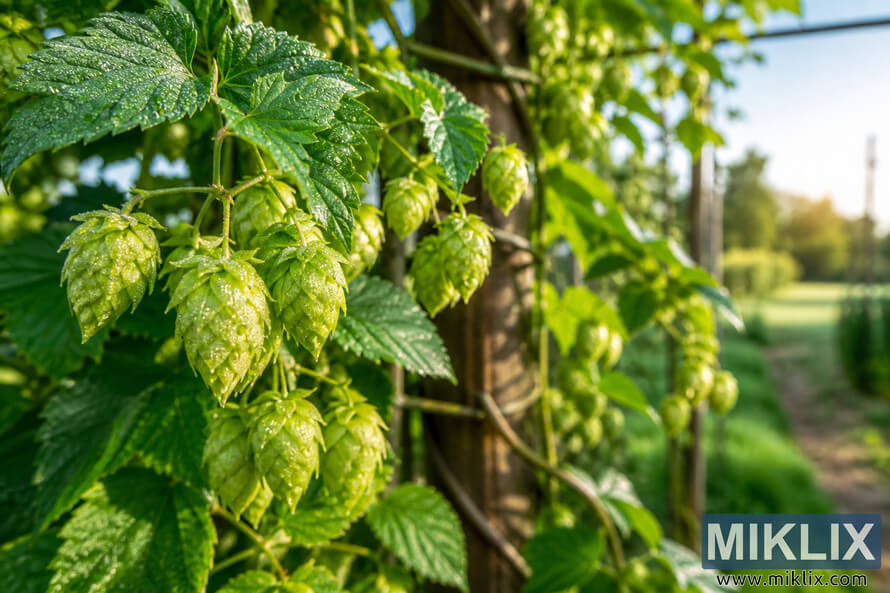
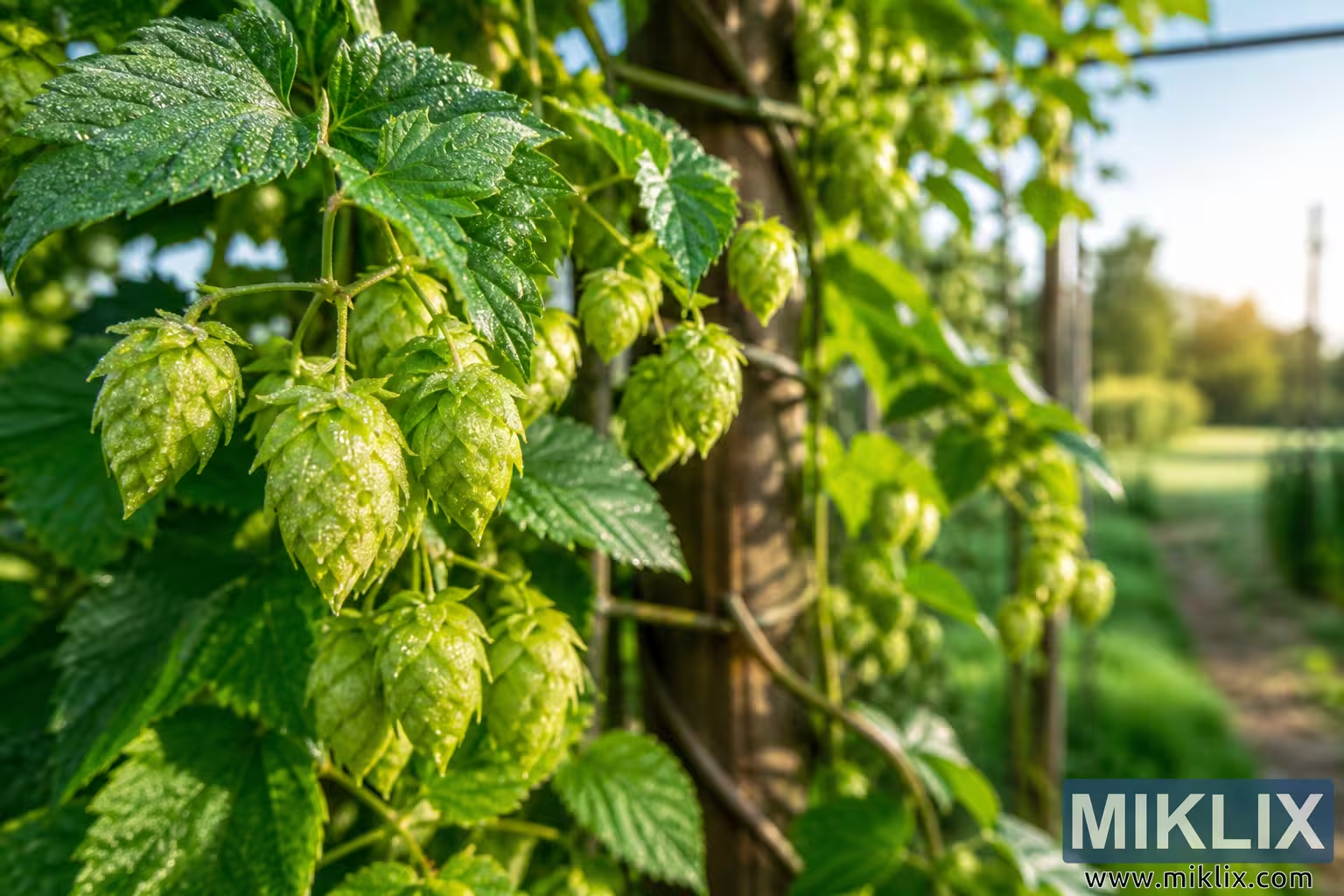
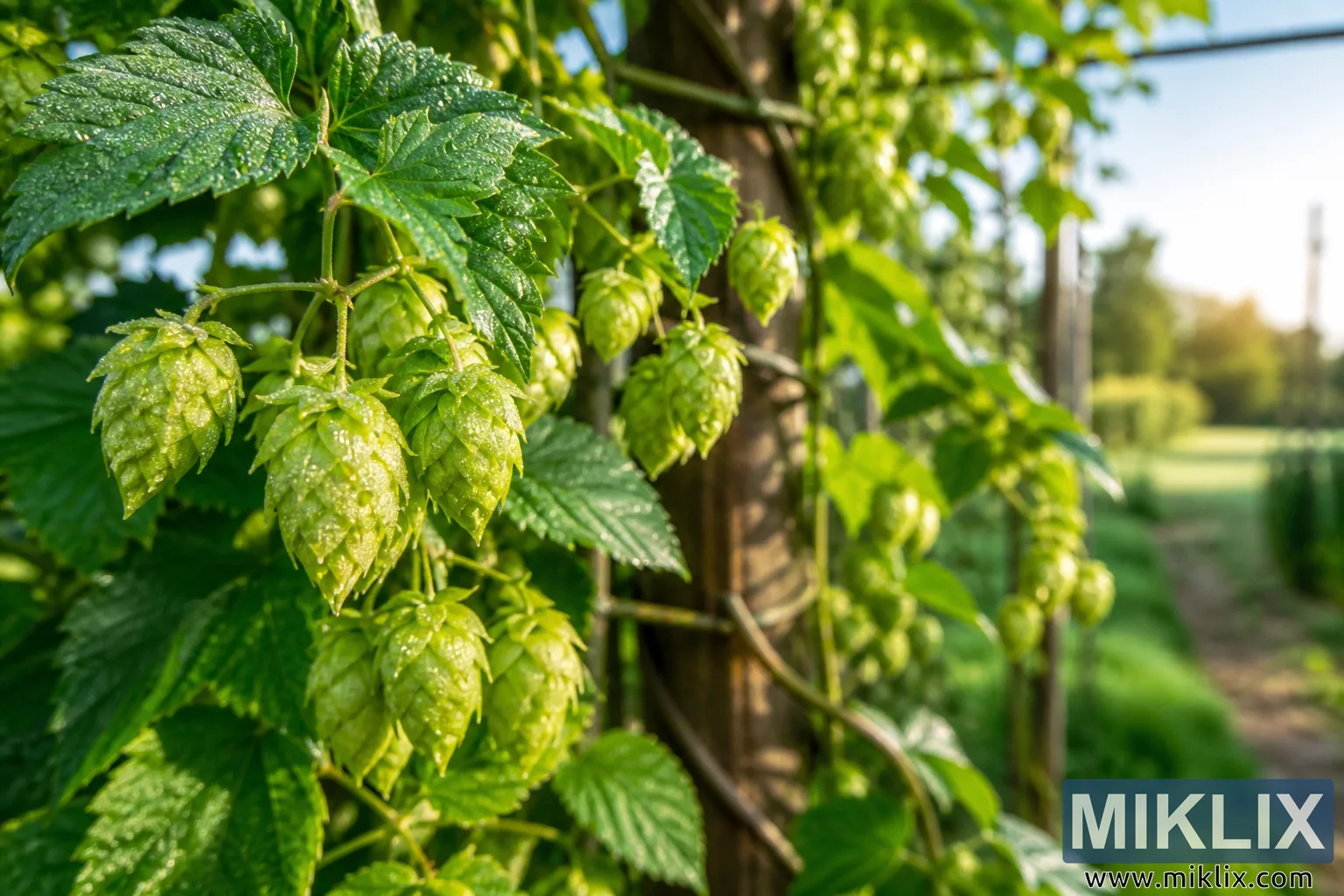
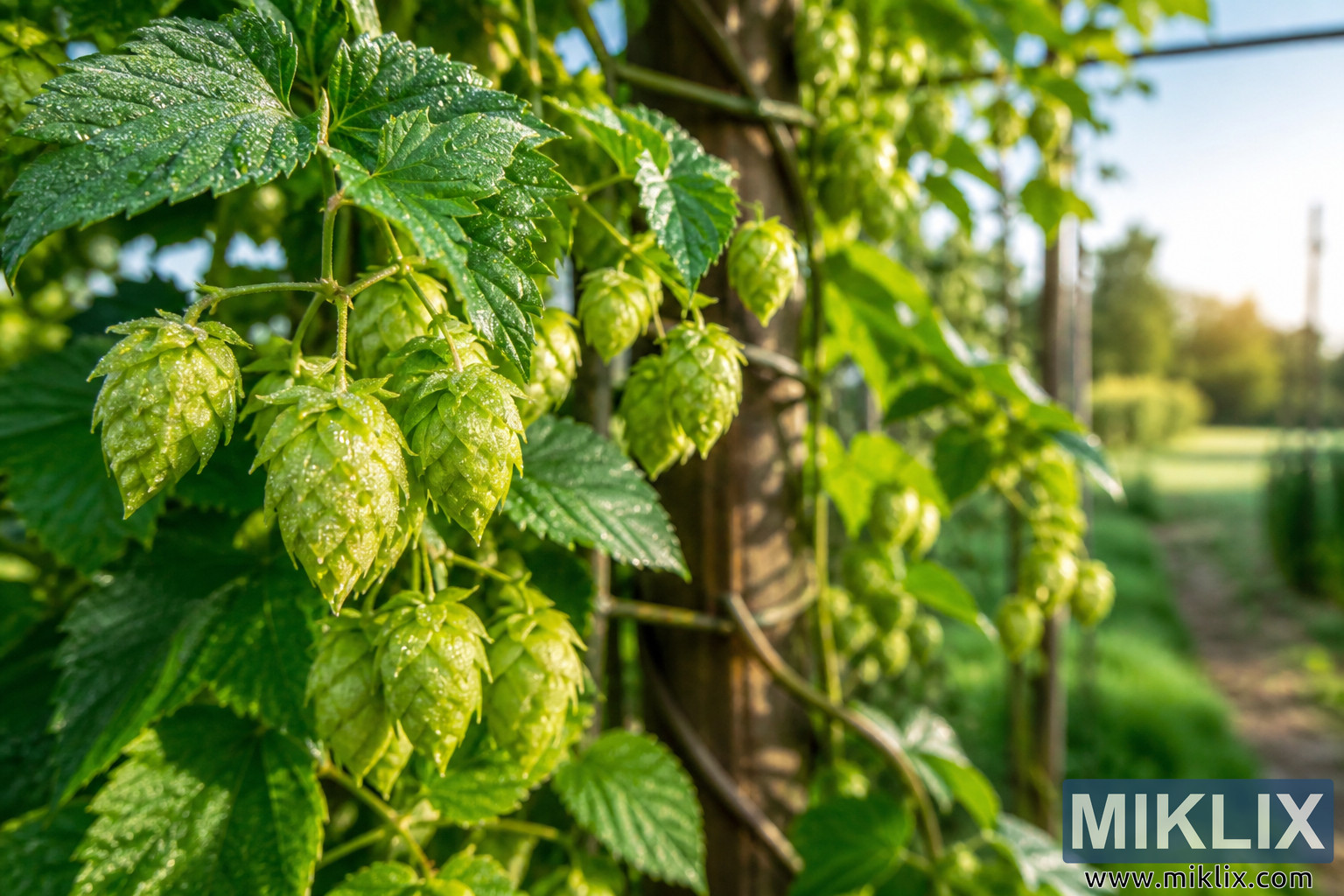
A close-up photo of vibrant green midseason hops with morning dew, leafy vines, and a rustic trellis in a softly blurred sunlit garden.
Dew-Kissed Midseason Hops on a Rustic Garden Trellis
Dostępne wersje tego obrazu
Pliki graficzne dostępne do pobrania poniżej są mniej skompresowane i mają wyższą rozdzielczość - a w rezultacie wyższą jakość - niż obrazy osadzone w artykułach i stronach na tej stronie, które są bardziej zoptymalizowane pod kątem rozmiaru pliku w celu zmniejszenia zużycia przepustowości.
Rozmiar regularny (1,536 x 1,024)
Duży rozmiar (3,072 x 2,048)
Bardzo duży rozmiar (4,608 x 3,072)
Bardzo duży rozmiar (6,144 x 4,096)
Komicznie duży rozmiar (1,048,576 x 699,051)
- Wciąż wgrywam... ;-)
Opis obrazu
A luminous close-up photograph captures fresh midseason hop cones growing in a sunlit garden, presenting the plant with crisp botanical detail and a warm, pastoral atmosphere. In the foreground, clusters of plump green hops hang from slender stems beneath broad, serrated leaves. The cones appear full and healthy, their layered bracts forming rounded, pointed shapes that suggest freshness, vigor, and readiness for traditional brewing use. Tiny droplets of morning dew cling to the hop cones and surrounding leaves, catching the sunlight like small beads of glass and emphasizing the cool, early-day freshness of the scene. The vivid greens range from pale lime on the youngest cones to deeper emerald tones across the mature foliage, creating a rich natural palette that feels both refreshing and organic. The hop cones are positioned close to the viewer, allowing their distinctive texture to stand out clearly: overlapping papery petals, softly tapered tips, and subtle variations in color across each cone. Around them, large hop leaves spread outward with deeply veined surfaces and toothed edges, adding structure and contrast to the composition. In the middle of the image, winding vines spiral around a rustic wooden trellis, showing the climbing habit of the hop plant. The trellis has a weathered, natural appearance, with vertical posts and supporting lines partially wrapped by curling stems. This central structure gives the photograph a sense of cultivation and craft, connecting the living plant to the traditions of small-scale farming and artisanal beer making. The vines appear vigorous and abundant, weaving through the frame and leading the eye from the sharp foreground details toward the softer garden beyond. In the background, the scene gently falls out of focus, revealing hints of more greenery, trellis posts, open garden rows, and warm sunlight filtering through the leaves. The shallow depth of field creates a serene farm-like setting without distracting from the featured hops. Bright natural light enters from the side, illuminating the dew, casting delicate shadows, and enhancing the glossy surfaces of the leaves. The overall mood is calm, fresh, and inviting, evoking an early morning visit to a hop garden at the height of the growing season. The image celebrates the beauty of hop cultivation, the tactile richness of the plant, and the quiet connection between agricultural care and the ingredients used in traditional brewing.
Obraz jest powiązany z: Hops in Beer Brewing: Keyworth’s Midseason