
Hops in Beer Brewing: Whitbread Golding
Opublikowano:
Ostatnia aktualizacja: 5 sierpnia 2026 22:31:49 UTC
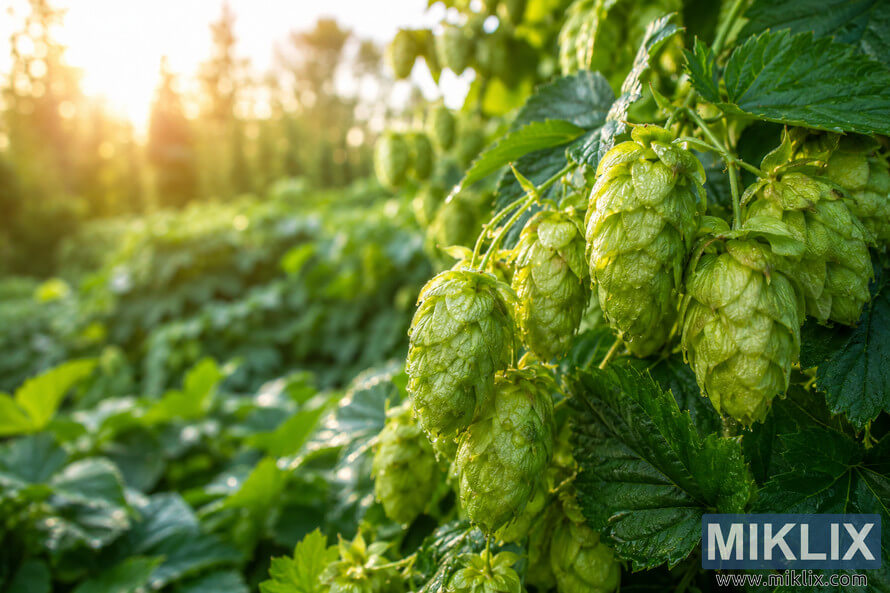
Whitbread Golding hops are a cornerstone of traditional English brewing and a valuable tool for modern craft brewers. This hop variety brings a delicate floral, earthy, and lightly spicy character.
Hops in Beer Brewing: Whitbread Golding
Kliknij lub dotknij obrazu, aby uzyskać więcej informacji i wyższą rozdzielczość.
Brewing with Whitbread Golding focuses on preserving subtle aroma and balance rather than aggressive bitterness. It suits session ales, bitters, and nuanced pale ales.
Key Takeaways
- Whitbread Golding hops deliver a subtle floral and earthy aroma ideal for traditional English ales and session beers.
- Brewing with Goldings emphasizes late additions and gentle handling to preserve delicate hop character.
- Expect moderate alpha acids; focus on aroma oils and balance rather than high bitterness.
- Suppliers such as Charles Faram and BarthHaas Group provide authentic Golding varieties sourced from East Kent and other regions.
- This guide will cover recipes, water and mash adjustments, yeast choices, storage, scaling, and troubleshooting for Golding-forward beers.
Introduction to Whitbread Golding hops and their brewing significance
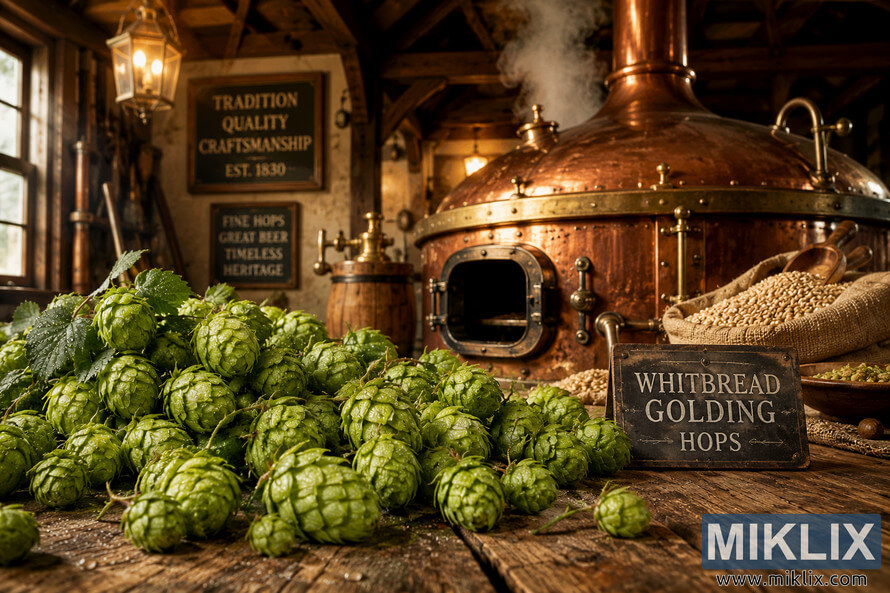
Whitbread Golding hops are a timeless choice for brewers aiming for a delicate, floral essence in traditional ales. This brief overview delves into the hop's role in brewing, its origins, and the beer styles that benefit from its subtle nuances.
Historical background and origin of the variety
The history of Whitbread Golding is deeply rooted in English hop cultivation, particularly in Kent. Whitbread, a renowned brewer, played a significant role in its popularity through commercial brewing. Over time, growers cultivated various Golding strains, making the origin of Goldings hops a collection of regional varieties rather than a single genetic line.
The differences between East Kent Goldings, Whitbread Golding, and other regional Goldings are small but significant. These distinctions are crucial for brewers and growers aiming to create authentic English beers.
Why brewers choose Whitbread Golding hops
Brewers opt for Whitbread Golding hops for their classic English character. They offer floral notes, mild earth, and spice, providing balanced bitterness without overpowering malt and yeast flavors.
The appeal of Golding hops lies in their drinkability and sessionability. They are ideal for beers where a subtle aroma is desired, without the boldness of citrus or resin. Whitbread Golding adds a layered, yet delicate presence that complements rather than overwhelms a beer.
Overview of styles that suit this hop
Golding hops are versatile, suitable for a variety of traditional and hybrid beers. They are particularly well-suited for bitters, pale ales, ESBs, and milds. In these styles, their delicate floral and honey notes enhance the malt.
- Traditional English ales and bitters
- Session pale ales and milds
- Brown ales and farmhouse-style beers that favor subtle spice
- Specialty hybrids where a soft hop backbone is preferred over bold citrus
Within the English hop varieties, Whitbread Golding stands out as a dependable choice. It is favored by brewers who value balance and classic aroma over the bold, modern hop character.
Kliknij lub dotknij obrazu, aby uzyskać więcej informacji i wyższą rozdzielczość.
Flavor profile and aroma characteristics of Whitbread Golding hops
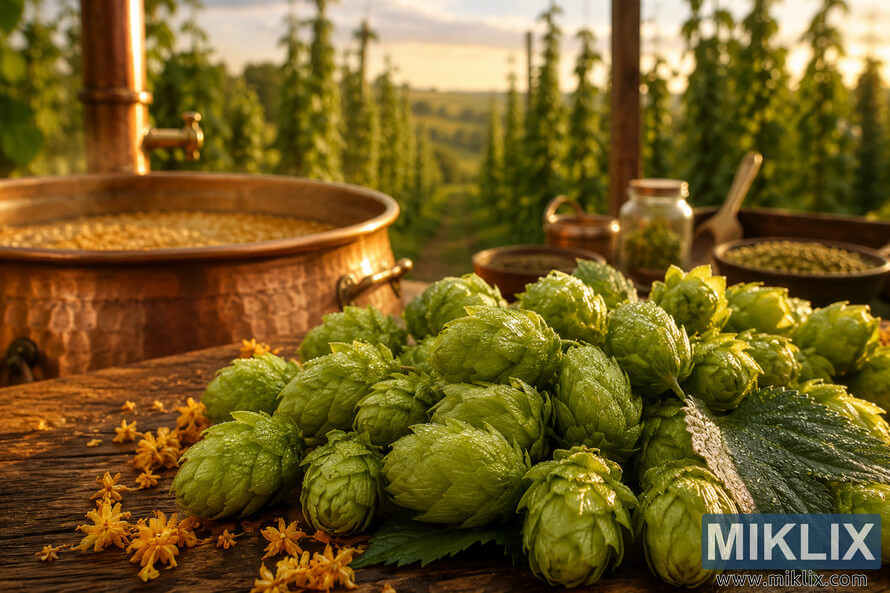
This hop embodies a gentle, classic character, perfect for traditional ales. The Golding hop flavor profile is characterized by delicate florals, light honey notes, and a mild biscuit-like malt interplay. The Whitbread Golding aroma is softly floral, lacking the sharpness or resinous qualities often found in other hops.
Primary tasting notes include gardenia- or camellia-like floral tones, a whisper of honeyed sweetness, and subtle biscuit or light toast from the malt. Gentle herbaceous and earthy elements, along with a touch of peppery or sweet spice, round out the finish. These floral earthy spicy hops do not emphasize citrus or pine.
Usage and timing significantly influence the hop's expression. Early additions for bittering mute the aroma, allowing bitterness to dominate. Mid-boil or 15–30 minute additions enhance floral and mild spice notes.
Very late additions at flameout or a 5–0 minute steep maximize the delicate floral and honey-like aromatics. For a 5-gallon batch, 0.5–1.5 oz for late additions will provide a pleasant aroma lift. Larger late doses will increase hop usage aroma intensity, yet Goldings remain restrained compared to modern high-oil varieties.
Dry hopping yields a refined, soft aromatic lift rather than an aggressive perfume. Expect a smooth, integrated nose that complements malt and yeast without dominating them.
Malts and yeast significantly influence how Goldings are perceived in the beer. Biscuit, light caramel, or toasted malts provide a supportive backbone, allowing floral notes to shine. Sweeter or darker crystal malts can mute delicate aromatics.
English ale yeasts, such as Wyeast 1968 or White Labs WLP002, produce fruity esters that meld with Golding notes, adding complexity. A clean American ale strain will let the hop’s subtle Whitbread Golding aroma stand out more plainly. Match malt, yeast, and hop usage aroma intensity to the beer’s intent for best balance.
Kliknij lub dotknij obrazu, aby uzyskać więcej informacji i wyższą rozdzielczość.
Alpha acids, beta acids, and essential oil composition
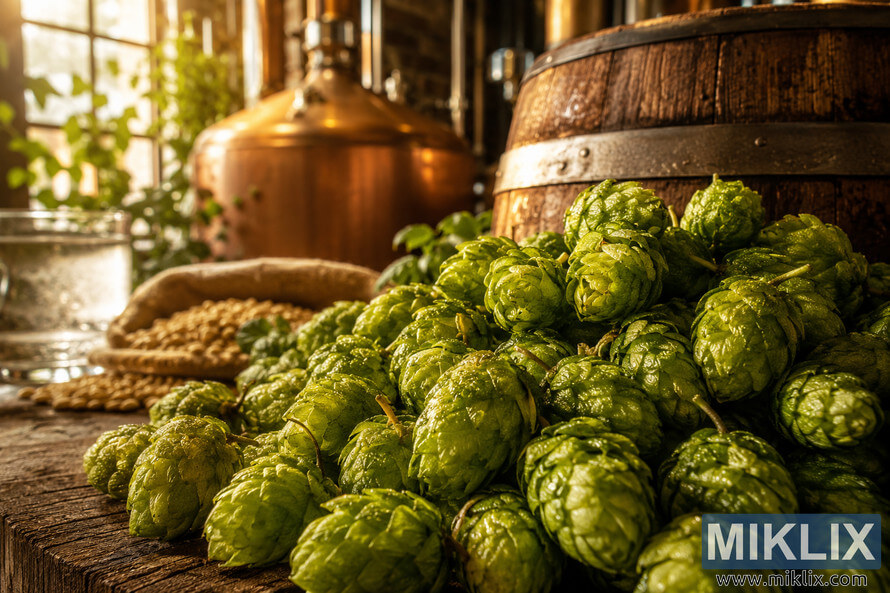
Exploring hop chemistry is key for brewers to forecast bitterness and aroma. Whitbread Golding alpha acids fall into the lower to moderate range. This characteristic influences how brewers incorporate Goldings into their recipes.
Typical alpha acid range and bitterness contribution
Whitbread Golding alpha acids usually range from 3.5% to 5.5%. This range indicates a moderate bittering effect per ounce. To achieve specific IBUs, brewers may use more Goldings or combine them with higher-alpha varieties for primary bittering.
Key essential oils and their sensory roles
- Myrcene: adds green, resinous, and leafy notes, though it is often lower in Goldings.
- Humulene: brings a woody, herbal backbone that supports earthy character.
- Linalool and farnesene: offer floral and sweet highlights that shape the honeylike aroma.
- Geraniol and citronellol (traces): provide subtle floral and citrus facets that lift delicate profiles.
The floral, honey, and earthy signature of Goldings comes from a balance of humulene, linalool, and geraniol. For aroma, using late additions or whirlpool hops helps preserve these oils better than long boil times.
Variability between harvests and suppliers
Hop chemical composition varies by season, region, and processing. East Kent Goldings can differ from Whitbread Golding in oil balance and alpha content. Drying, pelletizing, and storage also impact aroma retention.
- Check supplier certificates of analysis for alpha and oil percentages when precise IBUs or aromas are needed.
- Adjust quantities based on the provided Goldings alpha range to hit target bitterness.
- Store hops cold and in low oxygen to preserve Golding hop oils and maintain consistency across batches.
Kliknij lub dotknij obrazu, aby uzyskać więcej informacji i wyższą rozdzielczość.
Best beer styles to brew with Whitbread Golding hops
Whitbread Golding adds a soft, floral-earthy touch to many traditional and modern British styles. It's perfect for those who prefer restraint over boldness. This hop enhances the body of the beer, allowing malt and yeast to shine while Goldings add a subtle nuance.
Traditional English ales are a great match for Goldings' balanced bitterness and delicate aroma. In ordinary bitter, best bitter, and ESB, Goldings complement malt sweetness, creating a classic finish. Aim for original gravities between 1.040–1.056 and IBUs from 20–35 to stay true to the style.
For the best results, use Goldings throughout the boil and for late additions. This will layer subtle floral notes. A small dry hop or whirlpool at low temperature can enhance aroma without introducing grassy tones. This method ensures English bitters Goldings deliver that quintessential pub-style profile.
Pale ales and session beers also benefit from Goldings. For session ales with ABV between 3.2–4.5%, Goldings provide a drinkable bitterness and gentle aroma, encouraging repeat pours.
- Hop rates: 0.5–1.0 oz per gallon for noticeable flavor in session-strength beers.
- Timing: favor 10–5 minute additions and a short whirlpool for aroma.
Whitbread Golding excels in session beers by adding complexity without overpowering the malt. These beers remain crisp and quaffable, showcasing a polite hop signature.
Seasonal and specialty beers also benefit from Goldings' subtle spice and floral notes. Brown ales, blonde ales, milds, and some farmhouse styles profit from restrained hop character. Consider Goldings in honey-infused ales or lightly hopped cask ales where the hop must not mask specialty ingredients.
- For brown and blonde ales, keep IBUs 15–28 so hops support but do not dominate.
- In spiced or fruit beers, add Goldings late or use minimal dry hop to avoid clashing with adjuncts.
- For saisons that need a gentler herbal touch, pair Goldings with an expressive farmhouse yeast.
Whether crafting pub classics or small-batch experiments, beers for Goldings hops reward subtlety. Use measured rates and careful timing to preserve the variety's gentle charm across styles.
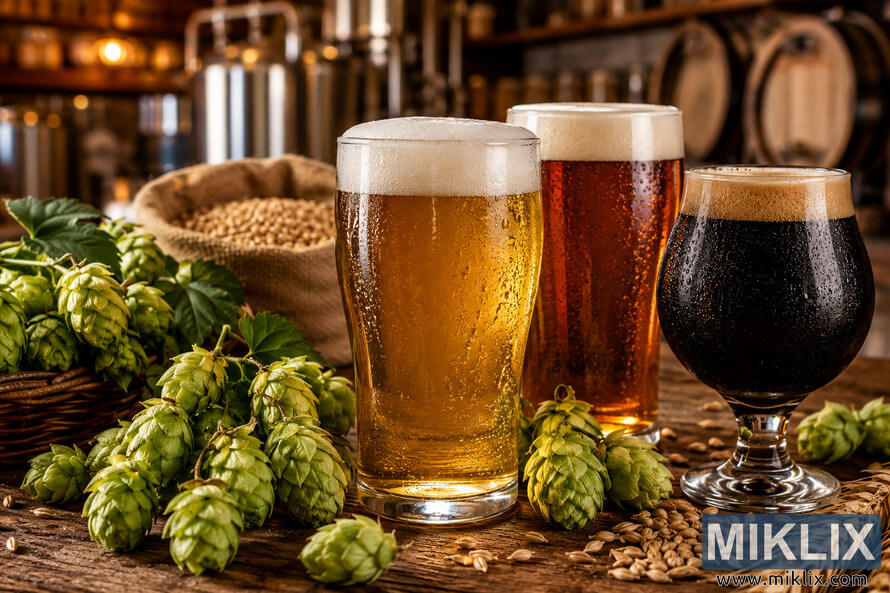
Kliknij lub dotknij obrazu, aby uzyskać więcej informacji i wyższą rozdzielczość.
Hop additions and timing: bittering, flavor, and aroma strategies
Timing is key when adding hops to brew with Whitbread Golding hops. A blend of late-boil, whirlpool, and dry-hop steps enhances floral and spicy notes without harsh bitterness. Here are practical options and measured ranges for a typical 5-gallon homebrew.
Using Whitbread Golding hops for late additions
Late additions focus on flavor and aroma. For a 5-gallon batch, add 0.5–1.5 oz at 10 minutes and 0.5–1 oz at 5 minutes. This method preserves volatile oils, showcasing floral, earthy, and spicy traits.
Timing late hop additions with Whitbread Golding is crucial. Smaller amounts add subtlety, ideal for bitters and session ales. Larger amounts are better for pale ales needing a stronger presence.
Optimal steep and flameout techniques
Whirlpooling and flameout techniques gently extract aroma while minimizing bitterness. Whirlpool at 170–180°F (75–82°C) for 10–30 minutes. This method preserves delicate oils without harsh bitterness.
Flameout additions with Goldings and cooling the wort with hops in place result in a softer aroma. For a delicate touch, add more aroma hops at flameout and whirlpool briefly.
Considerations for dry hopping with Goldings
Dry hopping with Goldings adds gentle, rounded aromatics, unlike bright citrus. Typical rates are 0.5–2.0 oz per 5 gallons, depending on desired aroma intensity. Contact time of 3–7 days at cellar temperatures is common.
- Use conservative rates for subtle English-style beers.
- Higher rates suit modern pale ales seeking a noticeable Golding signature.
- Be aware of hop creep when dry hopping during active fermentation; enzymes can restart fermentation and shift FG.
After dry hopping, cold-crash to settle particulates and preserve delicate aromatics. These steps maintain the floral-spicy profile of Whitbread Golding without introducing haze or off-flavors.
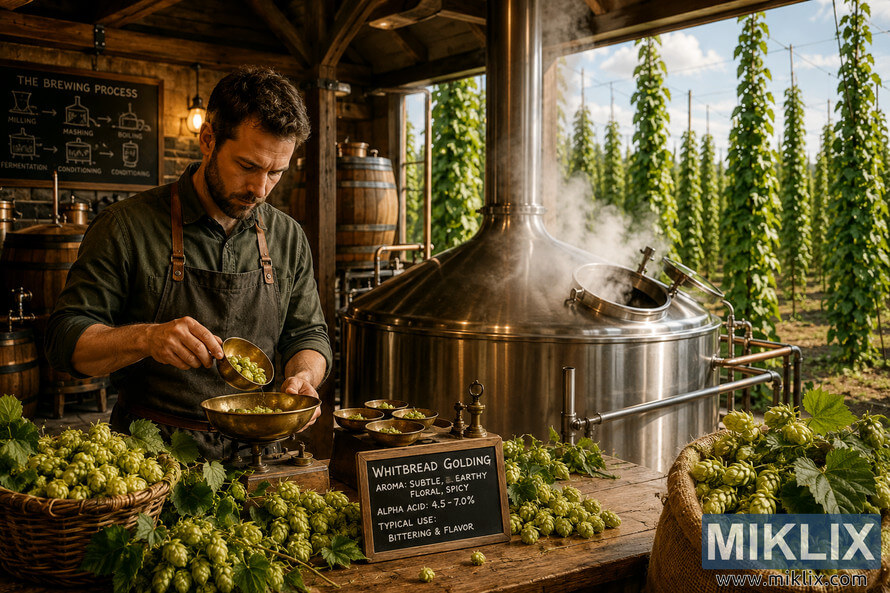
Kliknij lub dotknij obrazu, aby uzyskać więcej informacji i wyższą rozdzielczość.
Substitution and blending: pairing Whitbread Golding hops with other varieties
When Whitbread Golding hops are scarce or a brewer wants to innovate, substitution and blending are essential. Adding small amounts of brighter or resinous hops can enhance the floral and honeyed flavors without overpowering them. This approach helps manage bitterness, aroma, and balance.
For Goldings, complementary hops often come from American and Southern Hemisphere varieties. Adding 5–15% of Cascade, Citra, Amarillo, or Motueka can introduce citrus or tropical notes while maintaining Goldings' dominance. For pine and resin, a small amount of Chinook or Simcoe can be added. However, these should be used sparingly to avoid overwhelming the delicate floral notes.
- 5–15% Citra or Amarillo for citrus and fruit.
- 5–10% Motueka for lime and lemongrass tones.
- 3–8% Chinook or Simcoe for controlled pine character.
Blending Goldings with other hops is most effective when each hop has a defined role. Use a neutral, high-alpha bittering hop early in the boil. Reserve Whitbread Golding for late additions and aroma. A common ratio is 60–70% IBUs from the neutral hop and 30–40% from Goldings. This method preserves Goldings' aroma while keeping bitterness in check.
- Choose a neutral high-alpha bittering hop like Magnum for economy.
- Hold Goldings for flameout and dry-hop to highlight aroma.
- Adjust late-hop quantities if substitute hops have stronger volatile oils.
Golding hop substitutes are necessary when stocks are depleted or a brewer seeks a unique flavor. East Kent Goldings are the closest match to Whitbread Goldings in terms of floral and honey notes. Fuggle offers earthiness and is suitable for traditional bitters. Bramling Cross adds a fruity-spicy twist, while Willamette provides an American-grown approximation with soft fruit tones.
When choosing alternatives to Whitbread Golding, consider the trade-offs. Some substitutes may reduce the subtle floral or honey nuances. Others may introduce fruit, spice, or resin, altering the beer's character. Adjusting late-hop rates and blending a small percentage of complementary hops can help achieve Golding-like balance when using replacements.
Practical Golding hop substitutes list:
- East Kent Goldings — closest aromatic match.
- Fuggle — similar earth and mellow profile.
- Bramling Cross — fruitier, spicier edge.
- Willamette — American-grown, mild fruity notes.
When blending Goldings with other hops, tasting and small-scale trials are crucial. Begin with lower substitution rates, sample at fermentation milestones, and adjust as needed. This approach ensures the beer's identity while allowing for creative exploration.
Recipe examples that highlight Whitbread Golding hops
Below are practical recipe outlines that show how Whitbread Golding hops shine in everyday brewing. These examples cover a classic English bitter, a session pale ale, and notes on how to adjust OG and IBUs when Goldings’ alpha acids vary.
Classic English bitter outline
- Grain bill: 90–95% Maris Otter or British pale malt, 5–10% crystal 20–40L.
- Hop schedule: mid-boil addition of Whitbread Golding at 20–30 minutes for flavor, small flameout/aroma addition; use a neutral high-alpha hop at 60 minutes if needed to hit bitterness targets.
- Yeast: English ale strain such as Wyeast 1968 or White Labs WLP002.
- Target OG/FG: OG 1.040–1.048, expected FG ~1.010–1.012.
- IBU target: 20–35, leaning moderate for balance with Goldings’ gentle profile.
- Fermentation temp: 65–68°F to keep esters controlled and let hop character show.
- Notes: use Goldings for mid-boil flavor and late additions. If alpha is low, don’t rely on Goldings as sole bittering hops.
Session pale ale using Goldings
- Grain bill: British pale malt base with 3–6% light crystal or 2–3% Munich for a lean body.
- OG range: 1.036–1.045 for drinkable ABV and a crisp finish.
- Hop schedule: small 60-minute bittering addition if needed, larger additions at 15–0 minutes with Whitbread Golding for flavor and aroma, flameout and a light dry hop to lift floral notes.
- Mash schedule: single infusion at 148–152°F for a slightly drier body to enhance hop clarity.
- Yeast: clean English ale or an American ale with restrained esters to showcase Goldings.
- Serving: carbonated to moderate levels to preserve drinkability and accentuate floral aroma.
How to adjust OG and IBUs
- When Goldings have low alpha, increase hop weight proportionally to hit target IBUs, or use a high-alpha bittering hop at 60 minutes then Goldings later for flavor.
- To scale IBUs between batch sizes, convert hop weights by volume ratios and recalculate using Tinseth or Morey formulas in brewing software.
- If you need to adjust OG, change grain amounts while keeping specialty malts low to retain sessionability. Lower OG reduces perceived bitterness; raise late hop additions to compensate if raising IBUs is desired.
- Always consult the supplier COA for actual alpha acids and update calculations before brewing to accurately adjust OG IBUs and maintain consistent results.
These Whitbread Golding recipes are built to present the hop’s floral and earthy traits. Use the outlines as templates, tweak grain bills and hop weights, and keep records so you can refine each brew session.
Water profile and mash considerations for Golding-forward beers
Creating a Golding-forward beer begins with water and mash. Small adjustments in minerals and mash temperatures can significantly impact the beer's body, clarity, and the floral notes of Goldings. Aim for a classic English pale ale baseline and then make adjustments as needed.
Recommended water chemistry adjustments
- Target a balanced English pale ale profile: Ca 50–150 ppm, Mg 5–10 ppm, Na 10–50 ppm, SO4 50–100 ppm, Cl 50–150 ppm. This water chemistry English ales approach gives a smooth, rounded malt presence while keeping bitterness clean.
- For Golding-forward beers favor chloride over sulfate. A Cl:SO4 ratio around 1.5–2:1 softens hop bite and supports malt fullness. That keeps delicate Golding aroma from being harsh.
- Limit sodium and magnesium to avoid metallic or harsh impressions. Adjust with calcium chloride and gypsum in small increments and test with a water calculator before brewing.
Mash temperature and body considerations to showcase hop character
- Use a mash temp range of 150–154°F (65.5–67.8°C) for moderate body that supports Goldings’ delicate aromatics. This range preserves enough dextrins to lend a soft mouthfeel.
- For lighter session beers drop toward 148–150°F (64–65.5°C). That yields a drier finish and lets hop aroma sit forward without losing drinkability.
- Raise mash temps for fuller, sweeter beers. Higher temps increase dextrins and perceived sweetness, which can complement Golding character or mask subtle floral notes depending on the goal.
Grain bill tips to complement Golding aroma
- Base malt choices: Maris Otter gives authentic English character. American 2-row offers a cleaner grain canvas when you want hops to pop. Choose one as the foundation of the grain bill for Golding beers.
- Add 5–10% crystal malt (10–30L) for color and backbone. Keep specialty malts low so they do not overwhelm floral and earthy hop notes.
- Avoid heavy roasted or dark malts in Golding-focused recipes. Small amounts of Munich or biscuit malt can add warmth without stealing aroma.
- Consider light adjuncts such as a touch of honey or candi sugar to increase drinkability while letting the grain bill for Goldings remain supportive rather than dominant.
Fermentation and yeast selection to complement Whitbread Golding hops
Choosing the right yeast and managing fermentation is crucial when brewing with Whitbread Golding hops. These hops bring delicate floral and spicy notes that are influenced by yeast character, attenuation, and temperature. Selecting the right yeast and controlling fermentation tightly can enhance these subtleties.
Recommended strains include Wyeast 1968 London ESB and White Labs WLP005 for a classic English character. Nottingham offers a cleaner, more neutral finish, ideal for those seeking hop clarity. These yeasts illustrate how yeast selection can transform a beer from fruity and rounded to crisp and hop-forward.
Below are practical guidelines for matching yeast traits to your recipe:
- Use Wyeast 1968 or WLP005 when you want moderate esters that complement floral Goldings notes.
- Choose Nottingham or an American ale strain for reduced ester impact and clearer hop expression.
- Consider a starter and proper pitching rates to avoid stress-driven off-flavors that mask delicate hops.
Attenuation and esters impact perceived hop intensity. Higher attenuation results in a drier finish, enhancing hop aromatics. Lower attenuation leaves more residual sweetness, softening Goldings’ bite and rounding the profile.
Monitor attenuation and esters during recipe design. Mild pear or banana esters can support Goldings’ floral-spicy profile. However, excessive esters can overwhelm subtle hop nuances, so balance is essential.
Temperature control is critical to preserve delicate hop aromas. Ferment at the lower end of the strain’s range to limit ester production and protect volatile hop compounds. For many English ales, a fermentation temp Goldings window of about 64–68°F works well.
Use a short, controlled diacetyl rest near the end of fermentation to ensure a clean finish without driving up ester levels. Gentle conditioning and careful aging help retain hop aroma while stabilizing the beer.
When planning fermentation, log target attenuation, expected ester profile, and fermentation temp Goldings. This plan will guide yeast selection and timing for optimal English ale yeast hop expression.
Freshness, storage, and forms: whole cone, pellets, and extracts
Ensuring Whitbread Golding hops remain at their best quality requires careful attention to their form and storage. The freshness of Goldings hops significantly impacts their aroma, bitterness, and the subtle floral notes that brewers cherish. Below, we provide practical comparisons and storage tips to help brewers maximize the potential of this delicate variety.
- Pellets: Their greater shelf stability and compact storage make pellets a convenient choice for both commercial and home brewers. The broken lupulin glands in pellets facilitate quicker extraction during the boil and whirlpool, allowing for more precise control over bitterness and flavor with smaller additions.
- Pellets: Dosing is easier and more consistent, which is beneficial when scaling recipes. Although pellet form may slightly alter the perceived aroma, Goldings' delicate character remains intact when stored properly.
- Whole leaf: Many traditionalists prefer whole cones for cask ale and dry hopping due to their softer, more delicate aroma. Whole leaf hops add an appealing visual element to real ale and contribute a unique texture during fermentation.
- Whole leaf: These cones are bulkier and more fragile. They require careful handling to avoid crushing and early loss of volatile oils.
Best practices for storing hops to retain aroma
- Use vacuum-sealed packaging or oxygen-barrier bags to limit exposure to air. Low oxygen slows oxidation of alpha acids and volatile oils.
- Store in cold, dark conditions. Refrigeration or freezing preserves freshness Goldings hops. Aim for storage temperatures between -10 and 35°F (-23 to 2°C) depending on your facility’s capabilities.
- Keep hops dry and avoid temperature swings. Strong light and heat accelerate loss of aroma compounds.
- Label packages with harvest and purchase dates. Use hops within a year for solid results; plan for the first six months when you want the brightest Golding character.
- Check COAs from suppliers like Yakima Chief or HOP PRODUCTS for alpha acid and oil data before use. Regular sensory checks help you track changes over time.
Using hop extracts and aroma concentrates
- CO2 and CO2-free hop extracts offer precise bittering control. Using extracts for bittering can free whole or pellet hops for late additions or dry hopping where aroma matters most.
- Aroma concentrates and T-90 oils deliver targeted floral notes associated with Goldings, useful when space or storage is limited.
- Extracts may lack the layered complexity of whole or pellet hops. Use hop extracts Goldings sparingly when the goal is to preserve subtle character.
- When combining extracts with physical hops, adjust rates and run small trials to maintain balance. Aroma concentrates can boost perceived intensity without overwhelming Goldings’ gentle profile.
Practical checklist for brewers
- Choose form based on use: pellets for consistent dosing and boil extraction; whole leaf for traditional cask or delicate dry hops.
- Store using vacuum or oxygen-barrier bags, then refrigerate or freeze to preserve freshness Goldings hops.
- Consider hop extracts Goldings for stable bittering and to preserve hop stock for aroma work.
- Use hops early in their storage life for the clearest expression of Goldings’ floral and earthy notes.
Scaling recipes and consistency when using Whitbread Golding hops
Scaling up a homebrew recipe to larger batches requires more than just multiplying ingredients. When moving from a 5-gallon system to a 1-barrel or larger kettle, hop utilization changes. This is due to differences in kettle size, boil vigor, and whirlpool volume. It's crucial to check the alpha acid values from supplier certificates of analysis and recalculate IBUs using a trusted formula. This ensures accuracy for your equipment.
Start with linear weight scaling. However, expect sensory perception to change in larger volumes. Plan for small timing or contact-time tweaks. For commercial brewing Goldings, adjust whirlpool contact time and hop immersion to match the aroma extraction achieved at 5 gallons.
Standardize inputs to maintain IBUs Goldings across batches. Track alpha acid percentages for each hop lot. Convert additions into percentage-based recipes tied to alpha values rather than fixed ounces. This approach reduces variability when lots vary from harvest to harvest.
- Test incoming hops for alpha acids and log COAs.
- Blend hop lots to smooth flavor intensity and aroma shifts.
- Set firm SOPs for addition timing, temperature, and agitation.
Implement sensory QC Goldings routines to confirm consistency. Routine checks should include specific gravity, pH, color, and IBU measurements. Follow those lab checks with trained tasting panels that score aroma, bitterness, and overall balance.
For commercial brewing Goldings, add inventory controls and COA logging to your brewery management. Keep hop storage cold and oxygen-limited to preserve delicate Golding oils. Use consistent SOPs for hop addition points so each batch sees the same conditions.
- Recalculate IBUs when alpha acids change; use Tinseth or Rager adjusted for your kettle.
- Scale hop weights linearly, then validate with pilot brews and sensory panels.
- Maintain records: COAs, lot blends, addition timing, and sensory scores.
Keep recipe notes precise and versioned. When scaling Golding recipes, small changes to contact time or whirlpool volume can restore the aroma you expect. Regular lab tests and sensory QC Goldings help catch drift before it affects packaging.
Train staff to follow standardized procedures for hop handling and additions. Consistent technique is one of the simplest ways to maintain IBUs Goldings and ensure repeatable flavor intensity at any scale. Regular reviews of production data and panel feedback close the loop on quality control and continuous improvement.
Common issues and troubleshooting when brewing with Goldings
Brewers often encounter aroma loss, harsh bitterness, or off-flavors when using Whitbread Golding hops. This guide aims to help you identify and fix these problems. Follow these steps to restore the floral and earthy notes that Goldings are known for.
Several factors can lead to a faint or missing hop aroma. Stale or oxidized hops lose essential oils. Excessive boil time or adding hops too early can strip volatile aromatics. Poor storage conditions, such as oxygen, heat, or thaw cycles, can also kill aroma. High mash temperatures, heavy crystal malts, or estery yeast strains can mask Golding notes.
- Use fresh, vacuum-sealed frozen hops and rotate stock to avoid oxidation.
- Increase late additions and flameout hops; dry hop with fresh pellets for aroma lift.
- Pick a cleaner yeast strain or lower fermentation temperature to reduce masking esters.
- Lower mash temp slightly or reduce crystal malts to allow hop aroma to stand out.
Hop bitterness issues often manifest as harsh, astringent flavors. Overlong boil times with heavy early hopping can drive harsh iso-alpha acids. High mash or sparge pH raises tannin extraction. Prolonged hot-side sparging and excessive kettle hopping rates may create harshness.
- Cut early-hop weight and move bitterness contributions into a tighter early schedule when using Goldings.
- Control mash pH in the 5.2–5.6 range to limit tannin extraction.
- Shorten hot-side contact times and consider hop bags or whirlpool hops to separate solids from wort.
- When using high-alpha bittering hops, reduce contact time or split additions to avoid oversaturation.
Hop off-flavors can signal storage or processing faults. Papery or cardboard notes indicate oxidized hops. Vegetal or green notes often come from under-dried or poorly processed cones. Pellet dust or hop powder contamination can introduce phenolic harshness.
- Source hops from trusted suppliers like Charles Faram or BarthHaas and verify COAs when possible.
- Avoid oxygen exposure: reseal packages, purge with CO2, and freeze hops for long-term storage.
- Reject lots that show mold, strong vegetal aroma, or brown, brittle cones.
- Rotate inventory and test small pilot batches when trying new harvests to catch hop off-flavors early.
When troubleshooting Goldings, combine sensory checks with simple lab-style controls. Swap in a fresh hop lot, alter a single variable, and taste the difference. This method helps pinpoint whether missing hop aroma, bitterness issues, or off-flavors stem from ingredients, process, or equipment.
Conclusion
Whitbread Golding hops summary: Goldings impart a classic, subtle floral-earthy-spicy flavor. They are perfect for traditional English ales, pale session beers, and specialty brews. Their moderate alpha acids and delicate oils require careful timing and rates to preserve their aromatic nuance.
When brewing with Whitbread Golding, focus on late-hop, whirlpool, and flameout additions. This preserves the hop's aroma. Pair Goldings with English malts and clean English ale yeasts. Manage mash temperature for the right body and adjust water chemistry to enhance the hop's floral and earthy notes.
Goldings hop takeaways: start with small pilot batches to fine-tune hop rates, fermentation temperatures, and water profile. Keep detailed brew logs to track consistency, as alpha and oil content can vary by harvest. If availability or alpha levels change, blend with complementary varieties or substitute carefully.
For U.S.-based brewers, source Whitbread Golding hops from reputable distributors. Connect with the American Homebrewers Association or local homebrew clubs to share results and refine techniques. Experiment regularly, record outcomes, and let Goldings add a measured, traditional character to your beers.
FAQ
What flavor and aroma can I expect when brewing with Whitbread Golding hops?
Whitbread Golding hops bring a delicate, classic English flavor profile. Expect floral and sweet notes with hints of honey and biscuit. There are also mild earthy and spicy undertones. They are not citrus- or resin-forward. Used late in the boil or at flameout, they add a soft floral lift. Dry hopping provides a subtle, rounded aroma.
What alpha acid range should I expect and how does that affect bitterness?
Whitbread Golding hops have a low-to-moderate alpha acid range, typically around 3.5%–5.5%. This means they contribute a modest amount of bitterness. For the desired bitterness, you might need to use more hops or add a higher-alpha hop early in the boil. Reserve Goldings for flavor and aroma.
How much Whitbread Golding should I use for a 5-gallon batch to get aroma but not overpower the beer?
For a 5-gallon batch, use about 0.5–1.5 oz at 10 minutes and another 0.5–1 oz at 5 minutes or flameout. For dry hopping, add 0.5–2.0 oz. Adjust amounts for stronger aroma, but remember Goldings are subtle.
When is the best time to add Whitbread Golding hops during the brew day?
To showcase Goldings’ delicate floral and spice character, add them late in the boil (15–0 minutes), at flameout, and in the whirlpool at 170–180°F (75–82°C) for 10–30 minutes. Dry hopping after fermentation adds a refined aromatic lift. Use early boil additions only if you need to contribute bitterness, often supplemented with a higher-alpha hop.
Which beer styles work best with Whitbread Golding hops?
Whitbread Golding is ideal for traditional English ales like bitters, pale ales, ESBs, and milds. It also suits session pale ales, some brown ales, and restrained farmhouse or saison variants. Specialty beers like honey-infused ales or lightly hopped cask ales benefit from its subtle hop nuance.
How do malt and yeast choices interact with Goldings?
Malts with biscuit, light crystal, or Maris Otter base complement Goldings by providing a warm backbone. This lets floral notes sit on top. English ale yeasts (Wyeast 1968, White Labs WLP005) produce esters that meld with Goldings’ floral profile. Cleaner American yeasts let the hop aroma stand out more. Heavy crystal or dark malts can mute delicate hop aromatics.
Can I dry hop with Whitbread Golding, and what are the risks?
Yes. Dry hopping with Goldings (0.5–2.0 oz per 5 gallons for 3–7 days at cellar temps) yields subtle aromatics. Watch for hop creep—enzymatic re-fermentation—if dry hopping an active ferment. Cold-crash after dry-hop contact to help settle particulates and preserve clarity.
What are good hop pairings or blends with Whitbread Golding?
For citrus or tropical lift, blend small amounts of Cascade, Citra, Amarillo, or New Zealand Motueka. For pine/resin accents use tiny additions of Chinook or Simcoe. A common approach is a neutral, higher-alpha bittering hop early (Magnum or similar) and Whitbread Golding for late flavor and aroma.
If Whitbread Golding isn’t available, what are suitable substitutes?
East Kent Goldings is the closest authentic alternative. Fuggle and Willamette offer similar earthy/floral notes; Bramling Cross adds a fruitier-spicy edge. Expect subtle shifts in floral/honey nuance and adjust late-hop rates or blend to approximate the original character.
How should I store Whitbread Golding hops to preserve their delicate oils?
Store hops vacuum-sealed in oxygen-barrier bags and refrigerate or freeze. Cold, dark, oxygen-free conditions preserve alpha acids and volatile oils. Use Goldings within a year—ideally within six months—for best floral aroma. Check supplier COAs when precise values matter.
Are pellets or whole leaf better for Whitbread Golding character?
Pellets offer better shelf stability, easier dosing, and efficient extraction; many brewers find Goldings’ delicate character survives pelletizing if properly stored. Whole leaf is favored by some traditionalists for perceived softness in cask or dry hop use. Choose based on extraction needs and serving format.
What water profile and mash temps showcase Golding-forward beers?
Aim for a chloride-forward English-like profile to favor malt roundness (Cl:SO4 around 1.5–2:1). Mash in the 150–154°F (65.5–67.8°C) range for moderate body; lower mash temps (148–150°F) yield a lighter body for session beers. Use Maris Otter or a clean 2-row base and small amounts of crystal 10–30L.
How do I scale a 5-gallon Golding recipe to a commercial batch while keeping consistent flavor?
Scale hop weights linearly but verify alpha acids from COAs and recalculate IBUs using Tinseth or similar formulas. Expect non-linear sensory changes: adjust contact times, whirlpool volumes, and possible utilization differences in larger kettles. Standardize hop addition SOPs and blend hop lots to smooth variability.
What common problems occur when brewing with Goldings and how do I fix them?
Faint aroma often comes from stale hops, early additions, or storage issues—remedy by increasing late/flameout additions, dry hopping with fresh hops, and improving storage. Harsh bitterness can result from overboiling hops, high mash pH, or excessive dark malts—lower early hop weight and control mash pH (5.2–5.6). Oxidized or papery off-flavors signal old hops; source from reputable suppliers like Charles Faram or BarthHaas and rotate stock.
How do essential oils in Whitbread Golding contribute to its sensory profile?
Goldings’ floral-earthy signature comes from a blend of oils: humulene (woody/herbal), linalool and farnesene (floral/sweet), with traces of geraniol/citronellol adding subtle floral facets. Myrcene is generally lower than in bold American hops, so resinous notes are subdued. Oil ratios vary by harvest and supplier, affecting aroma intensity.
Should I use hop extracts or oils to capture Golding character?
CO2 or concentrated extracts offer consistent bittering and let you reserve whole/pellet hops for aroma. T-90 or hop oils can target floral notes but may lack the complexity of whole or pellet hops. Use extracts cautiously if your goal is to preserve Goldings’ subtle, layered aroma.
Dalsza lektura
Jeśli podobał Ci się ten wpis, mogą Cię zainteresować również poniższe sugestie: