
Obraz: Three Sweet Corn Varieties with Different Kernel Colors
Opublikowano:
Ostatnia aktualizacja: 13 marca 2026 20:38:32 UTC
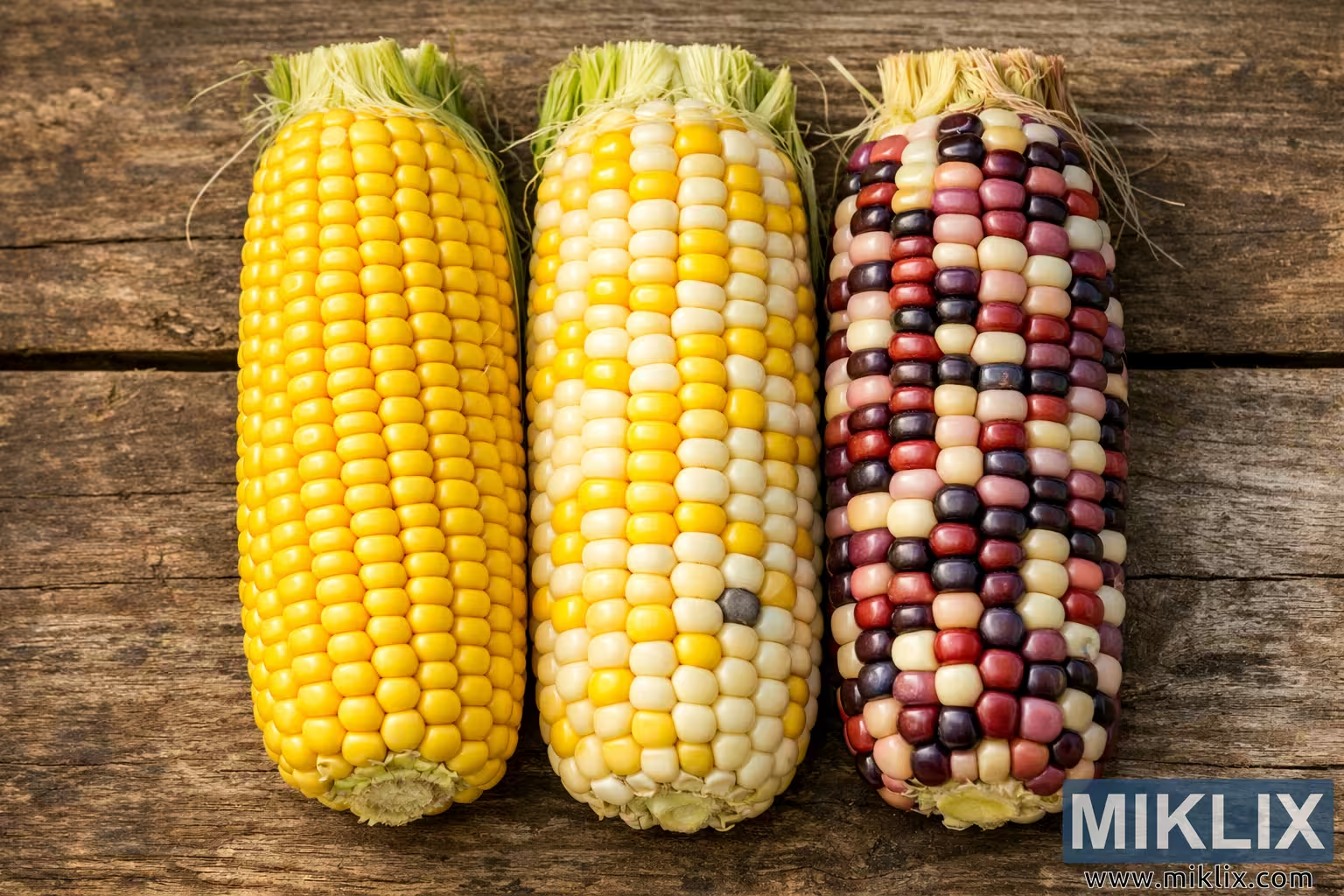
High-resolution image of three ears of sweet corn showing different kernel colors and arrangements on a rustic wooden background.
Three Sweet Corn Varieties with Different Kernel Colors
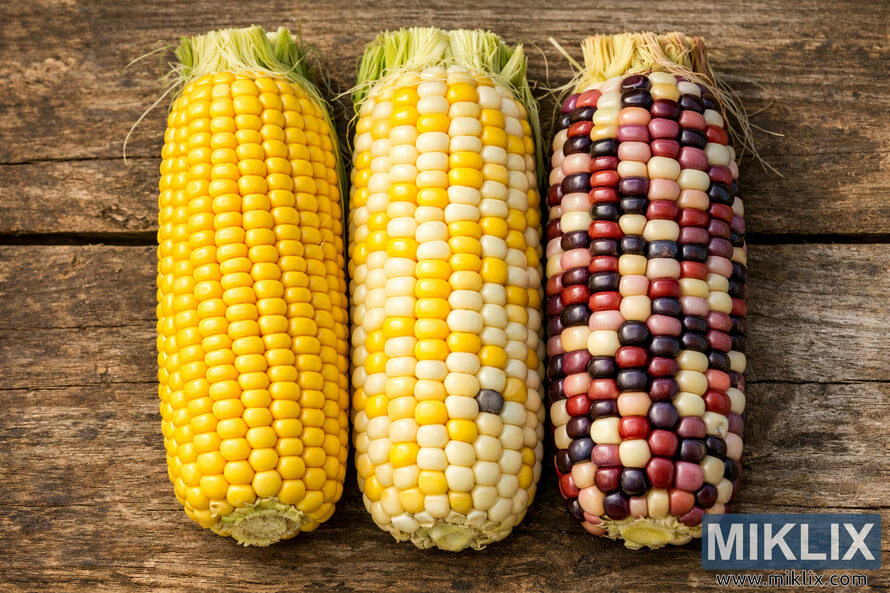
Dostępne wersje tego obrazu
Pliki graficzne dostępne do pobrania poniżej są mniej skompresowane i mają wyższą rozdzielczość - a w rezultacie wyższą jakość - niż obrazy osadzone w artykułach i stronach na tej stronie, które są bardziej zoptymalizowane pod kątem rozmiaru pliku w celu zmniejszenia zużycia przepustowości.
Rozmiar regularny (1,536 x 1,024)
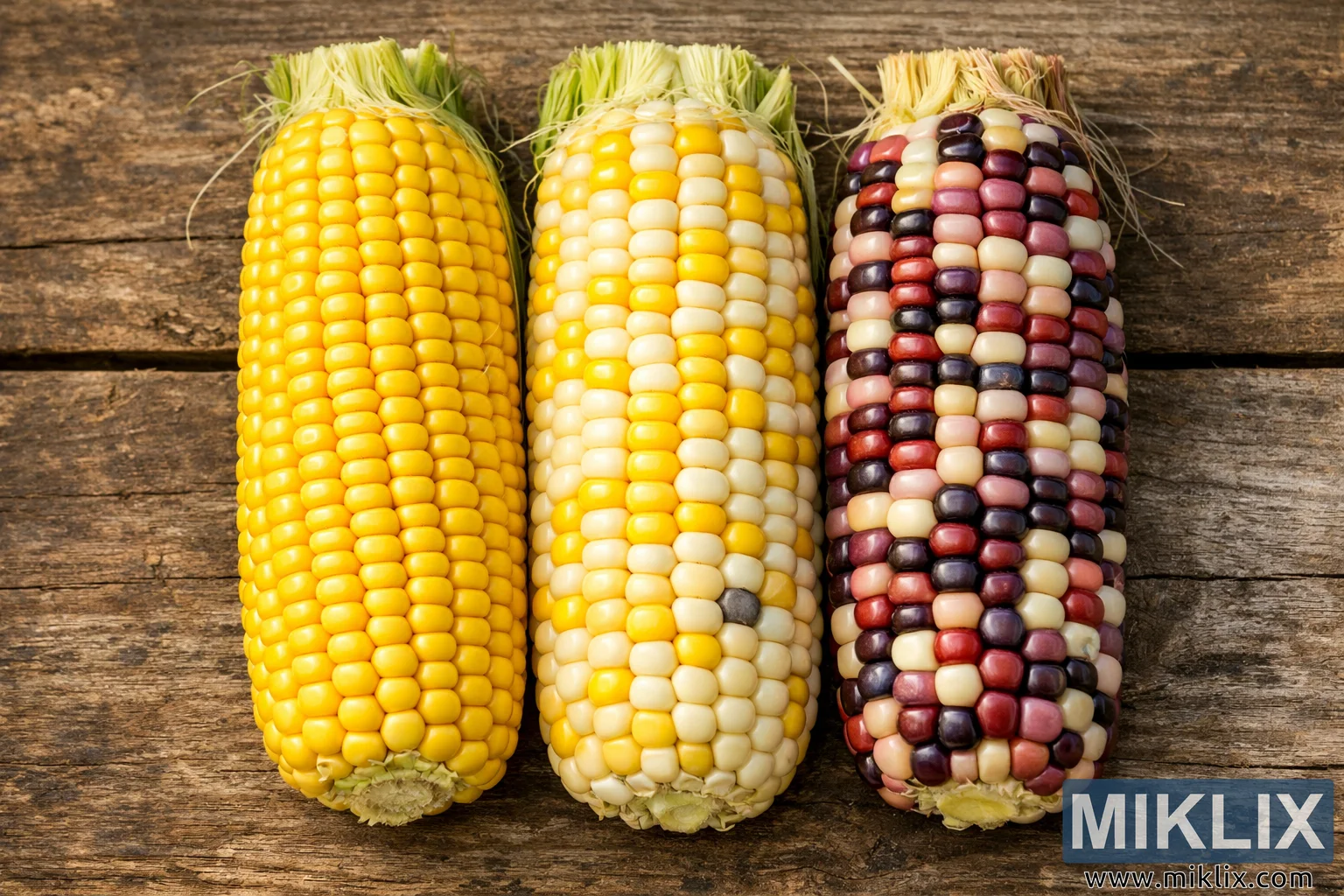
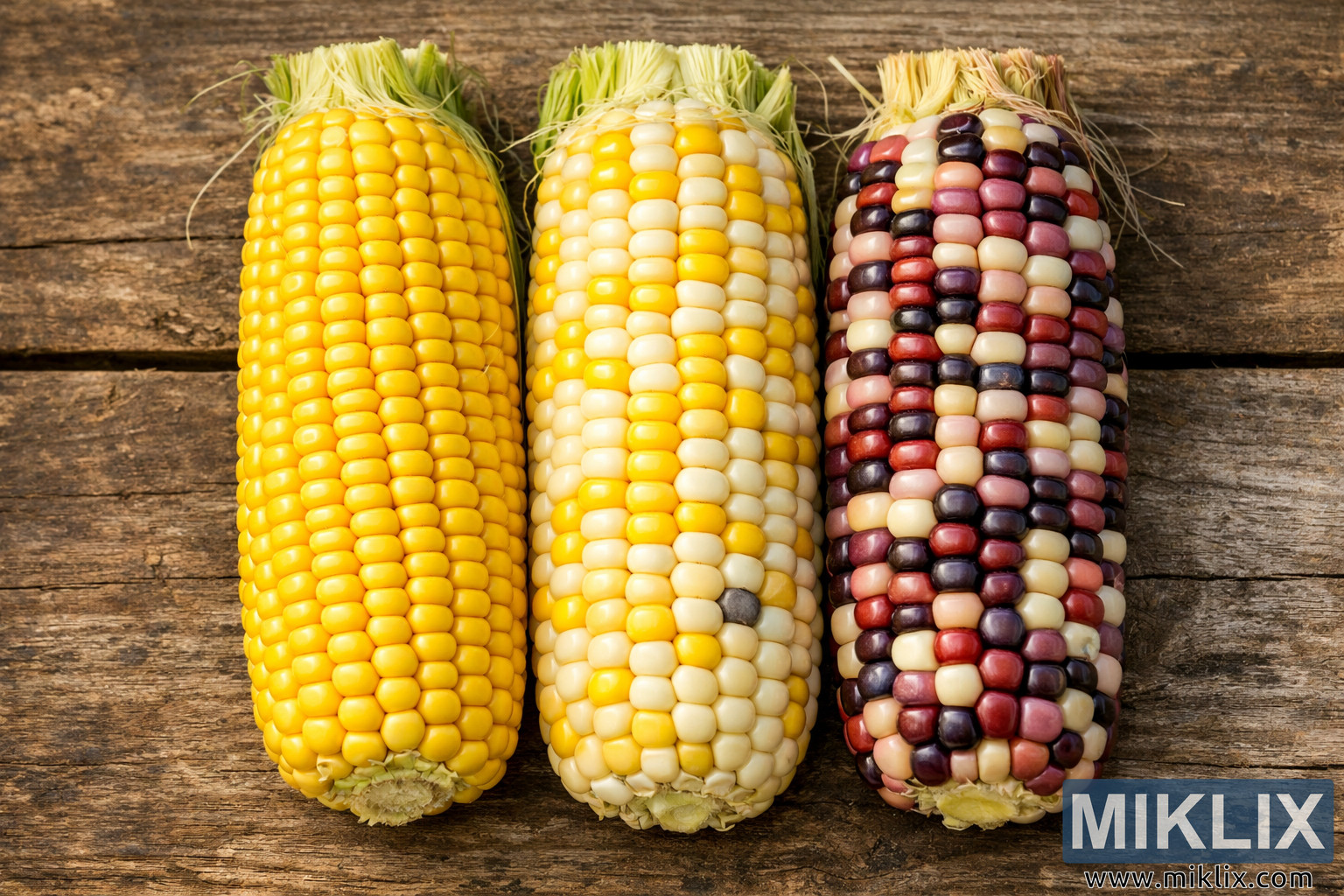
Duży rozmiar (3,072 x 2,048)
Bardzo duży rozmiar (4,608 x 3,072)
Bardzo duży rozmiar (6,144 x 4,096)
Komicznie duży rozmiar (1,048,576 x 699,051)
- Wciąż wgrywam... ;-)
Opis obrazu
The image presents a high-resolution, landscape-oriented photograph of three ears of corn placed side by side on a rustic wooden surface. The wooden background consists of weathered planks with visible grain patterns, cracks, and subtle variations in brown tones that add texture and warmth to the scene. The lighting is soft and even, highlighting the glossy kernels and natural details of each ear of corn while casting gentle shadows that give the composition depth.
The three ears of corn are arranged horizontally across the frame, aligned vertically with their tapered tips pointing upward and their cut bases facing downward. Each ear represents a different sweet corn variety, distinguished by unique kernel colors and patterns.
The ear on the left features uniform, vibrant golden-yellow kernels. The kernels are tightly packed in straight rows that curve slightly around the cob. Their smooth, rounded surfaces catch the light, creating small highlights that emphasize their plumpness and freshness. The husk has been partially peeled back, revealing a fringe of pale green leaves and light corn silk near the top of the cob.
The middle ear displays a classic bicolor sweet corn variety. Its kernels alternate between creamy white and bright yellow, forming an irregular but visually appealing mosaic pattern along the cob. The rows remain consistent and symmetrical, yet the mixture of colors adds visual variety. The kernels appear slightly glossy, and one darker kernel near the center subtly breaks the pattern, making the natural variation more noticeable.
The ear on the right is the most colorful and visually striking. Its kernels include shades of deep red, burgundy, purple, soft pink, and creamy white. These colors are interspersed across the cob in uneven clusters, creating a vibrant patchwork effect. The arrangement highlights the diversity found in different corn varieties and provides a strong contrast to the more uniform colors of the other two ears.
At the top of each ear, remnants of husk leaves and strands of corn silk remain visible, adding natural detail and a sense of freshness. The earthy tones of the wooden background complement the bright kernels without distracting from them. The overall composition is simple and balanced, focusing attention on the differences in color, texture, and arrangement between the three varieties of corn. The photograph effectively illustrates the diversity of sweet corn while maintaining a clean, natural, and visually appealing presentation.
Obraz jest powiązany z: Growing Corn: Your Complete Guide to Sweet Success in the Garden