
Obraz: Cluster of Harvested Shallots with Papery Brown Skin
Opublikowano:
Ostatnia aktualizacja: 22 marca 2026 21:44:09 UTC
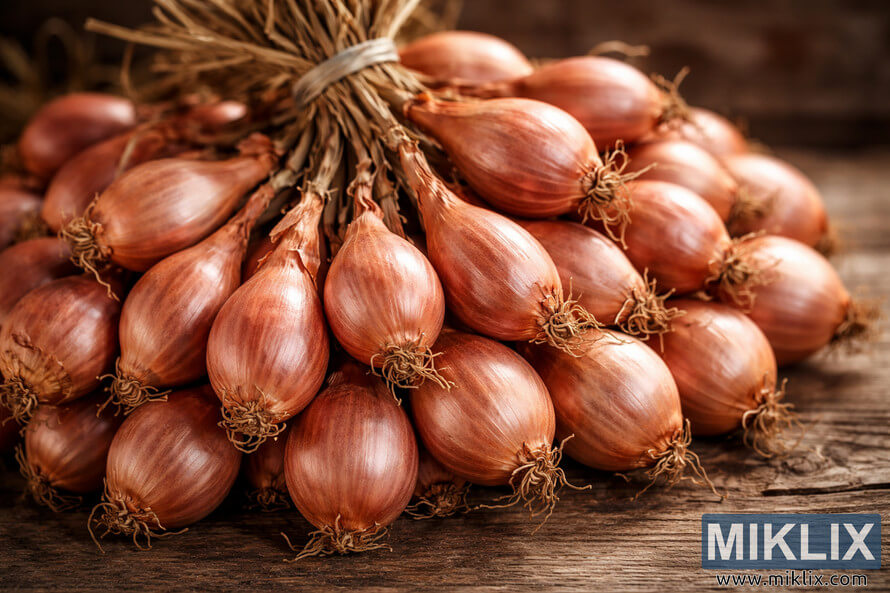
Close-up photograph of harvested shallots showing multiple bulbs clustered together with papery brown skin and roots on a rustic wooden table in warm natural light.
Cluster of Harvested Shallots with Papery Brown Skin
Dostępne wersje tego obrazu
Pliki graficzne dostępne do pobrania poniżej są mniej skompresowane i mają wyższą rozdzielczość - a w rezultacie wyższą jakość - niż obrazy osadzone w artykułach i stronach na tej stronie, które są bardziej zoptymalizowane pod kątem rozmiaru pliku w celu zmniejszenia zużycia przepustowości.
Rozmiar regularny (1,536 x 1,024)
Duży rozmiar (3,072 x 2,048)
Bardzo duży rozmiar (4,608 x 3,072)
Bardzo duży rozmiar (6,144 x 4,096)
Komicznie duży rozmiar (1,048,576 x 699,051)
- Wciąż wgrywam... ;-)
Opis obrazu
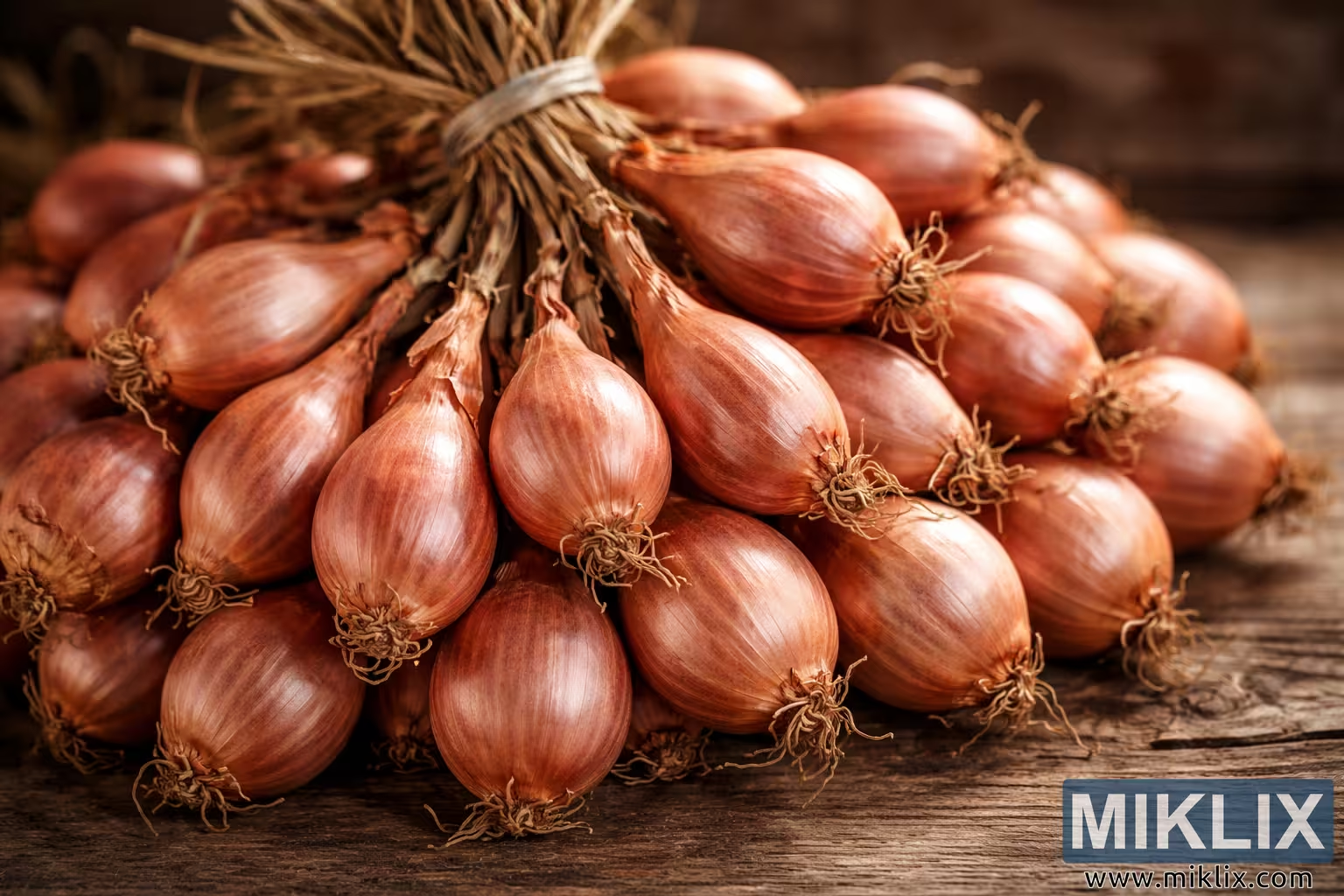
A high-resolution close-up photograph shows a cluster of freshly harvested shallots resting on a rustic wooden surface. The bulbs are gathered tightly together, forming a natural bundle where multiple elongated shallot bulbs fan outward from the point where their dried stems are tied. Each bulb displays the characteristic teardrop shape typical of shallots, tapering gently toward the root end while widening through the middle. Their thin, papery outer skins appear in warm shades of copper, light brown, and soft reddish bronze, with subtle highlights where the surface catches the light. The delicate outer layers of the skin curl slightly at the edges in a few places, revealing faint variations in tone and texture that emphasize the organic nature of the harvest.
The dried roots remain attached at the base of many of the bulbs, forming small tangled tufts that spread outward like fine threads. These roots add visual detail and reinforce the impression that the shallots have been recently pulled from the soil and only lightly cleaned. At the top of the cluster, several dry stems converge and are loosely bound together, creating the appearance of a traditional harvest bundle. The stems themselves are pale beige and fibrous, slightly twisted and brittle, contrasting with the smoother, glossy surfaces of the bulbs.
Warm natural lighting falls across the scene from one side, creating soft highlights along the curved surfaces of the shallots while casting gentle shadows beneath them. This directional light accentuates the rounded forms of the bulbs and emphasizes the layered quality of the papery skins. The color palette remains earthy and natural, dominated by warm browns, copper tones, and muted golden hues.
The shallots rest on a weathered wooden tabletop that shows visible grain patterns, cracks, and textured ridges. The rough wood surface adds a rustic, agricultural context, suggesting a farmhouse kitchen, harvest table, or market setting. In the background, the wooden surface gradually fades into a soft blur, keeping the viewer’s focus on the cluster of bulbs in the foreground.
Overall, the composition centers on the abundance and texture of the harvested shallots. The tight grouping of bulbs highlights their natural clustering growth pattern, while the intact roots, dried stems, and papery skins communicate freshness and authenticity. The image conveys a sense of simple rural harvest, emphasizing the natural beauty and tactile textures of freshly gathered produce.
Obraz jest powiązany z: Growing Shallots: Your Complete Guide to a Bountiful Harvest