
Obraz: Organic Slug Trap Beside Swiss Chard in a Garden Bed
Opublikowano:
Ostatnia aktualizacja: 16 kwietnia 2026 19:41:20 UTC
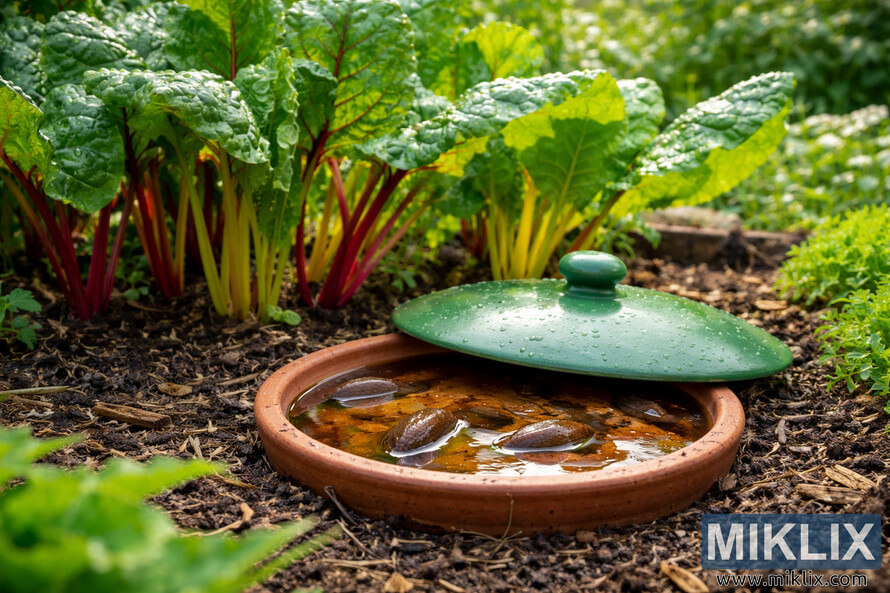
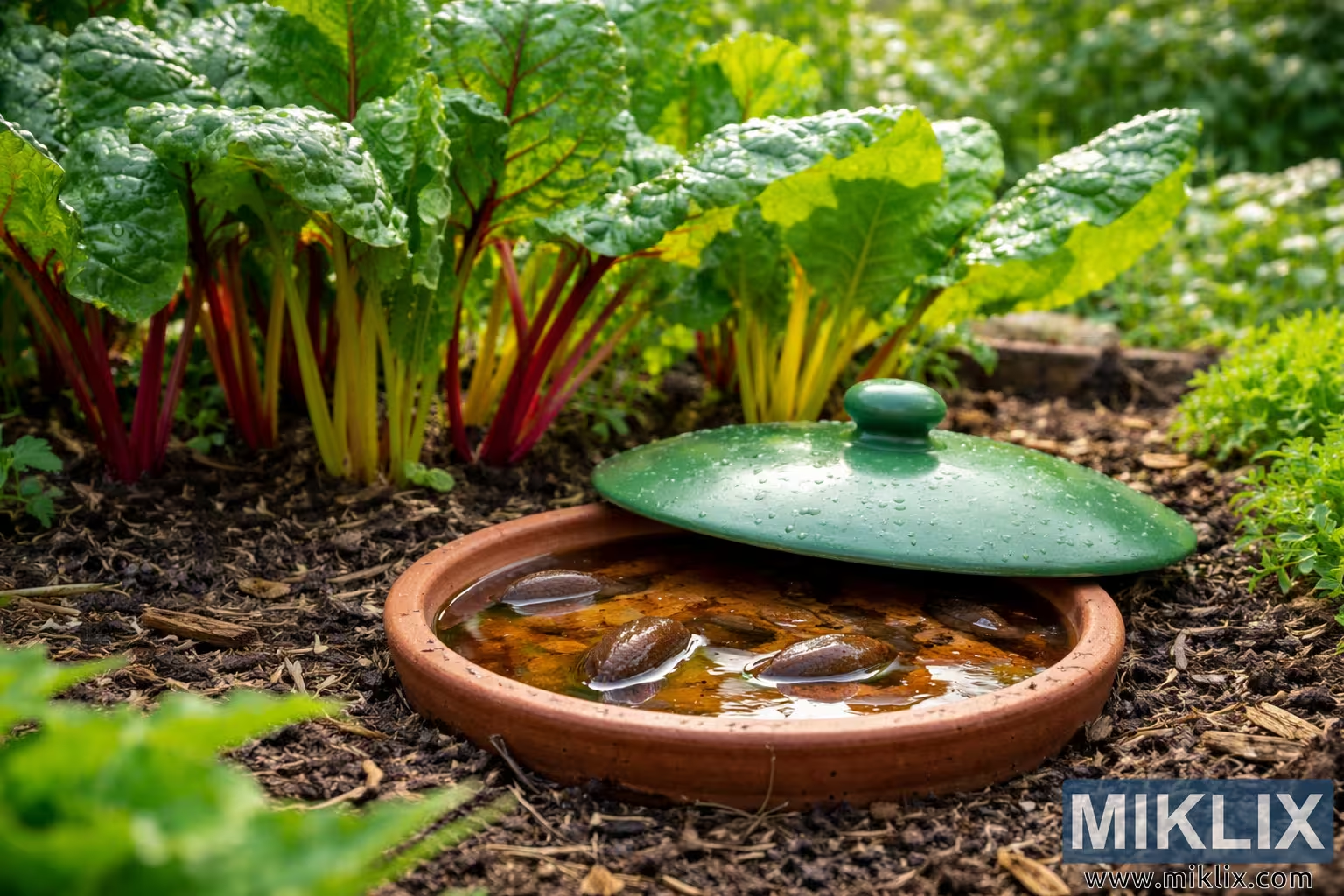
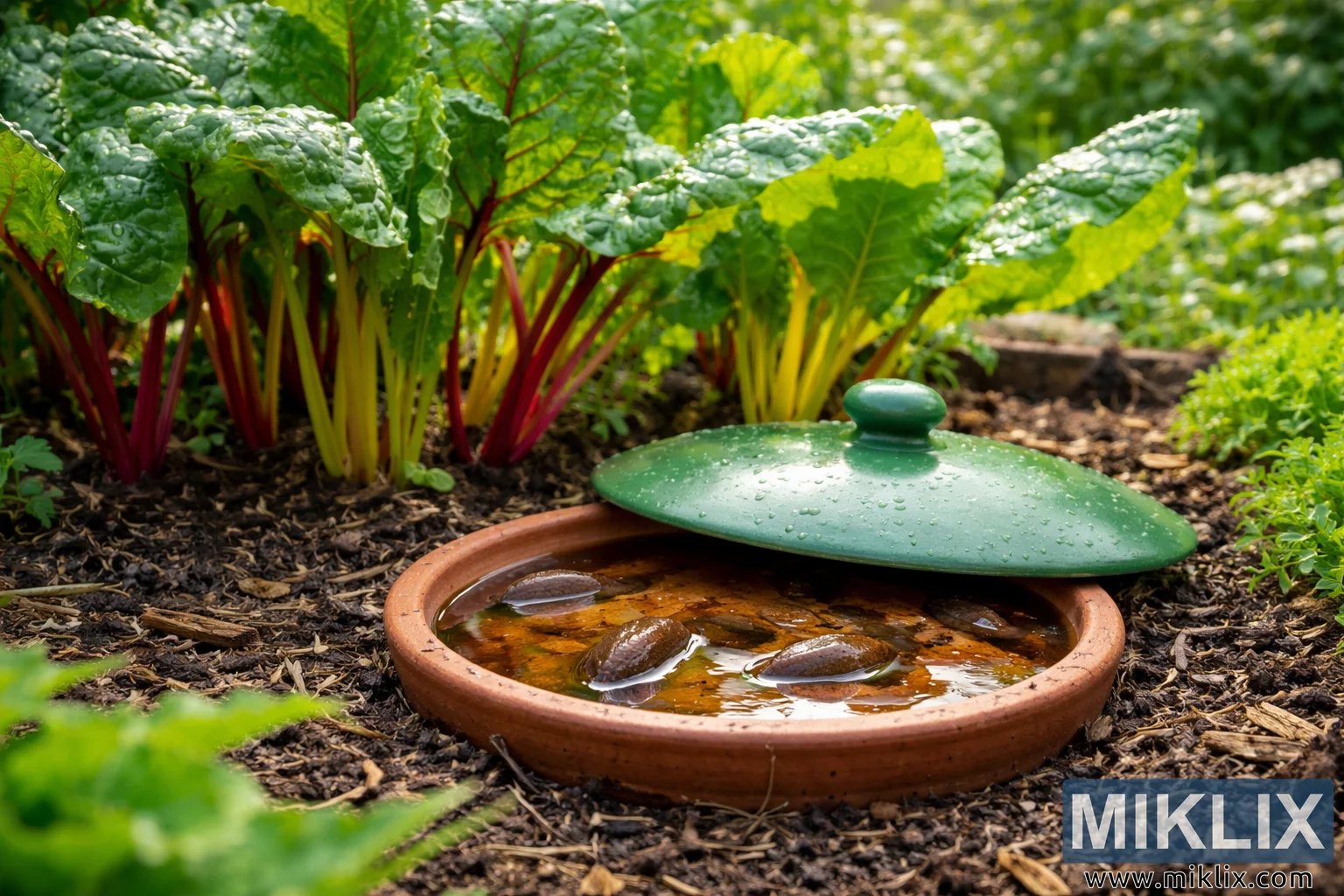
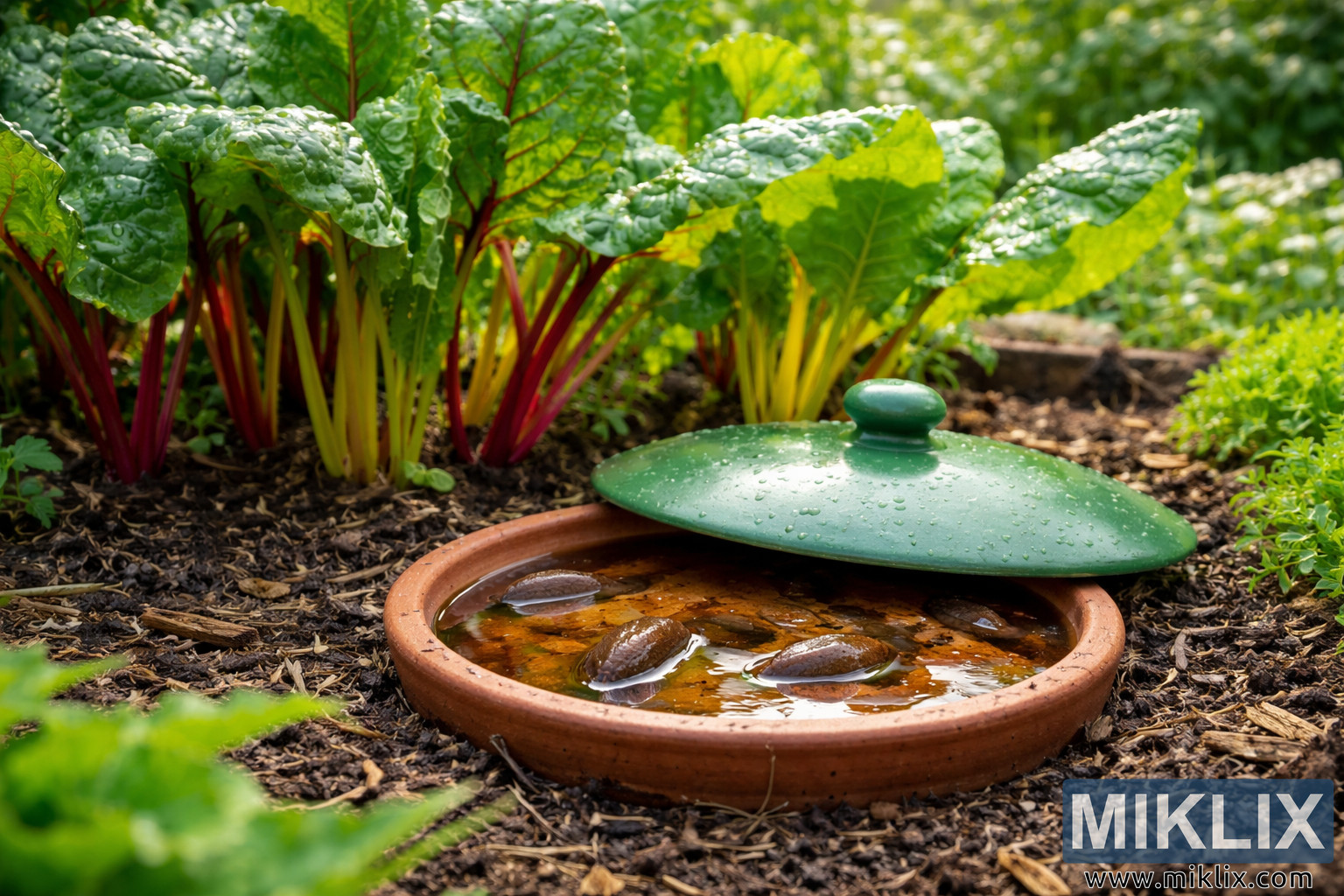
Close-up photo of an organic slug trap set in a vegetable garden beside vibrant Swiss chard plants with red and yellow stems, demonstrating a natural pest control method.
Organic Slug Trap Beside Swiss Chard in a Garden Bed
Dostępne wersje tego obrazu
Pliki graficzne dostępne do pobrania poniżej są mniej skompresowane i mają wyższą rozdzielczość - a w rezultacie wyższą jakość - niż obrazy osadzone w artykułach i stronach na tej stronie, które są bardziej zoptymalizowane pod kątem rozmiaru pliku w celu zmniejszenia zużycia przepustowości.
Rozmiar regularny (1,536 x 1,024)
Duży rozmiar (3,072 x 2,048)
Bardzo duży rozmiar (4,608 x 3,072)
Bardzo duży rozmiar (6,144 x 4,096)
Komicznie duży rozmiar (1,048,576 x 699,051)
- Wciąż wgrywam... ;-)
Opis obrazu
A detailed landscape-oriented photograph captures a close-up scene in a thriving vegetable garden during soft morning light. In the foreground, a shallow terracotta dish sits partially embedded in rich, dark garden soil covered with organic mulch and small wood chips. The dish functions as an organic slug trap and contains a brownish liquid that reflects the surrounding greenery. Several slugs float within the liquid, illustrating the effectiveness of this natural pest-control method often used by gardeners to protect leafy vegetables.
The trap is partially covered by a green ceramic lid with a rounded knob on top. The lid rests slightly off-center, creating an opening that allows slugs to crawl into the dish while shielding the trap from rain and debris. Tiny droplets of moisture are visible on the lid, suggesting early morning dew and adding a fresh, natural atmosphere to the scene.
Behind the trap, a dense row of Swiss chard plants grows vigorously. The plants display large, textured leaves with gently crinkled surfaces and pronounced veins. Their stems form a striking color palette of deep red, bright yellow, and pale green, rising from the soil like colorful stalks supporting the broad leaves above. Sunlight filters through the foliage, illuminating the leaves from behind and creating a vibrant contrast between the translucent green blades and the darker soil below.
The garden bed appears well maintained and healthy. The soil is loose and fertile, enriched with organic matter, and the surrounding mulch helps retain moisture and suppress weeds. Small sprouts and low-growing plants appear along the edges of the frame, hinting at a diverse garden ecosystem where vegetables, soil organisms, and insects interact.
The camera perspective is low to the ground, focusing sharply on the slug trap while allowing the Swiss chard plants in the background to gradually soften into a gentle blur. This shallow depth of field draws the viewer's attention to the trap as the central subject while still conveying the broader garden environment in which it sits.
Overall, the image communicates a practical and environmentally friendly gardening technique. The presence of the trap beside the thriving Swiss chard highlights a balance between cultivation and natural pest management, showing how gardeners can protect their crops without relying on synthetic chemicals. The combination of earthy textures, vivid plant colors, and warm natural light creates a calm and authentic portrait of everyday life in a productive home garden.
Obraz jest powiązany z: How to Grow Swiss Chard: A Complete Beginner's Guide