
Obraz: Gardener Harvesting a Fresh Turnip from the Soil
Opublikowano:
Ostatnia aktualizacja: 19 kwietnia 2026 21:37:05 UTC
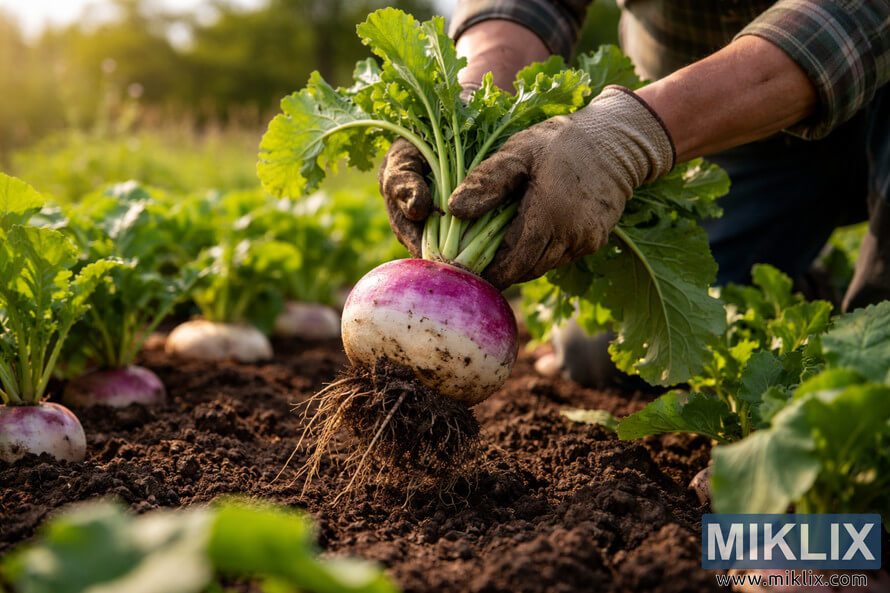
Close-up of a gardener harvesting a mature purple-top turnip from rich soil in a sunlit vegetable garden, highlighting fresh produce and the moment of harvest.
Gardener Harvesting a Fresh Turnip from the Soil
Dostępne wersje tego obrazu
Pliki graficzne dostępne do pobrania poniżej są mniej skompresowane i mają wyższą rozdzielczość - a w rezultacie wyższą jakość - niż obrazy osadzone w artykułach i stronach na tej stronie, które są bardziej zoptymalizowane pod kątem rozmiaru pliku w celu zmniejszenia zużycia przepustowości.
Rozmiar regularny (1,536 x 1,024)
Duży rozmiar (3,072 x 2,048)
Bardzo duży rozmiar (4,608 x 3,072)
Bardzo duży rozmiar (6,144 x 4,096)
Komicznie duży rozmiar (1,048,576 x 699,051)
- Wciąż wgrywam... ;-)
Opis obrazu
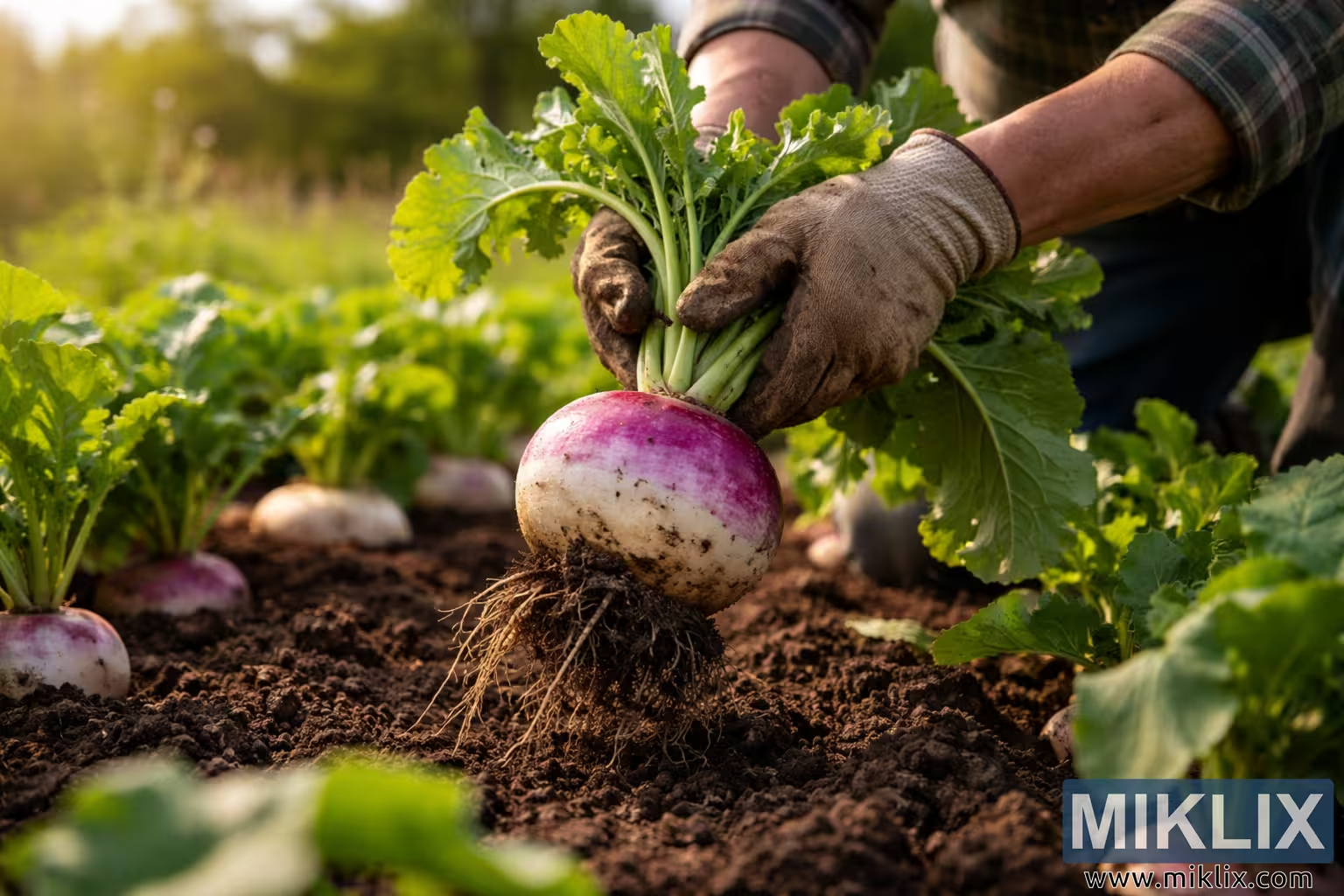
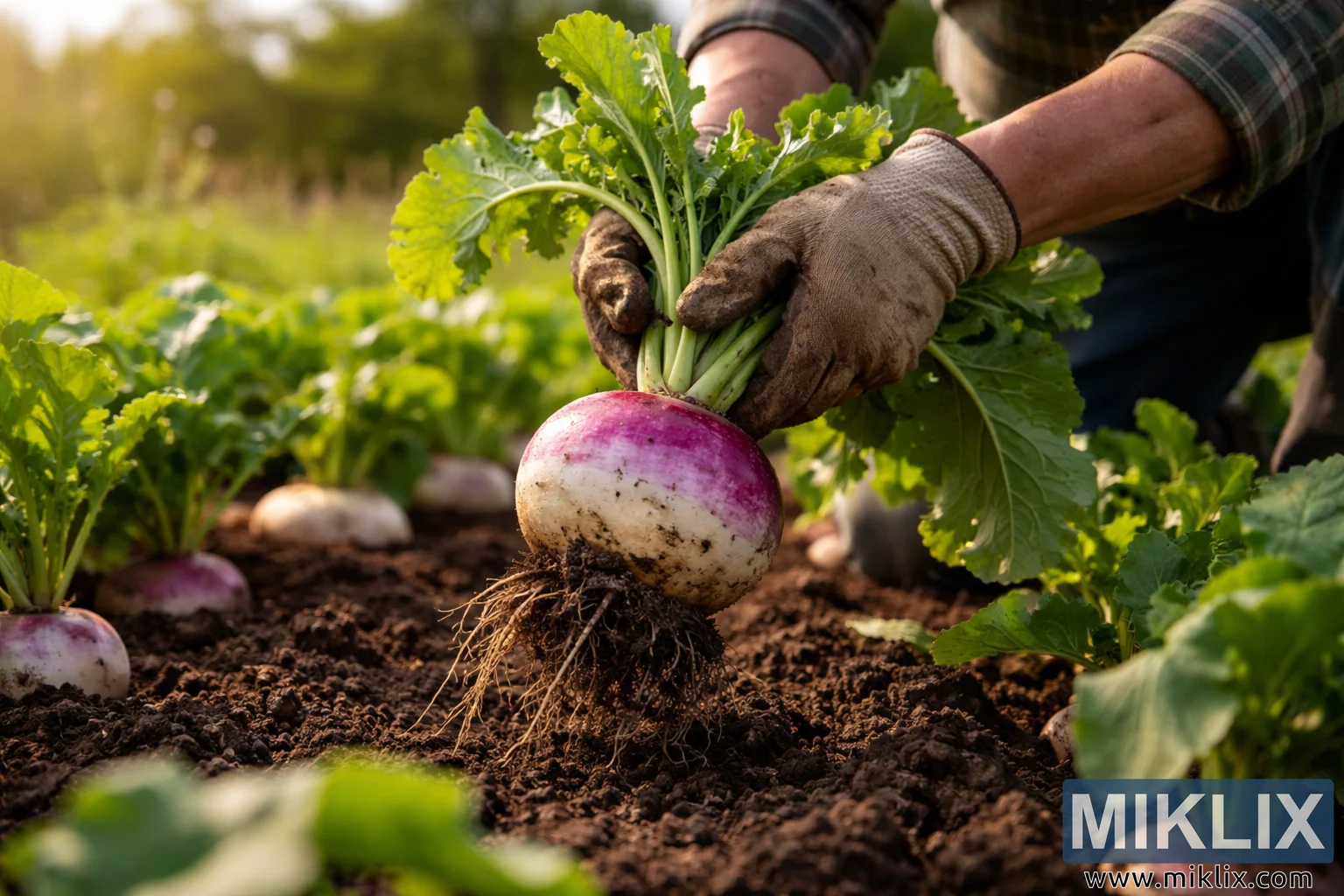
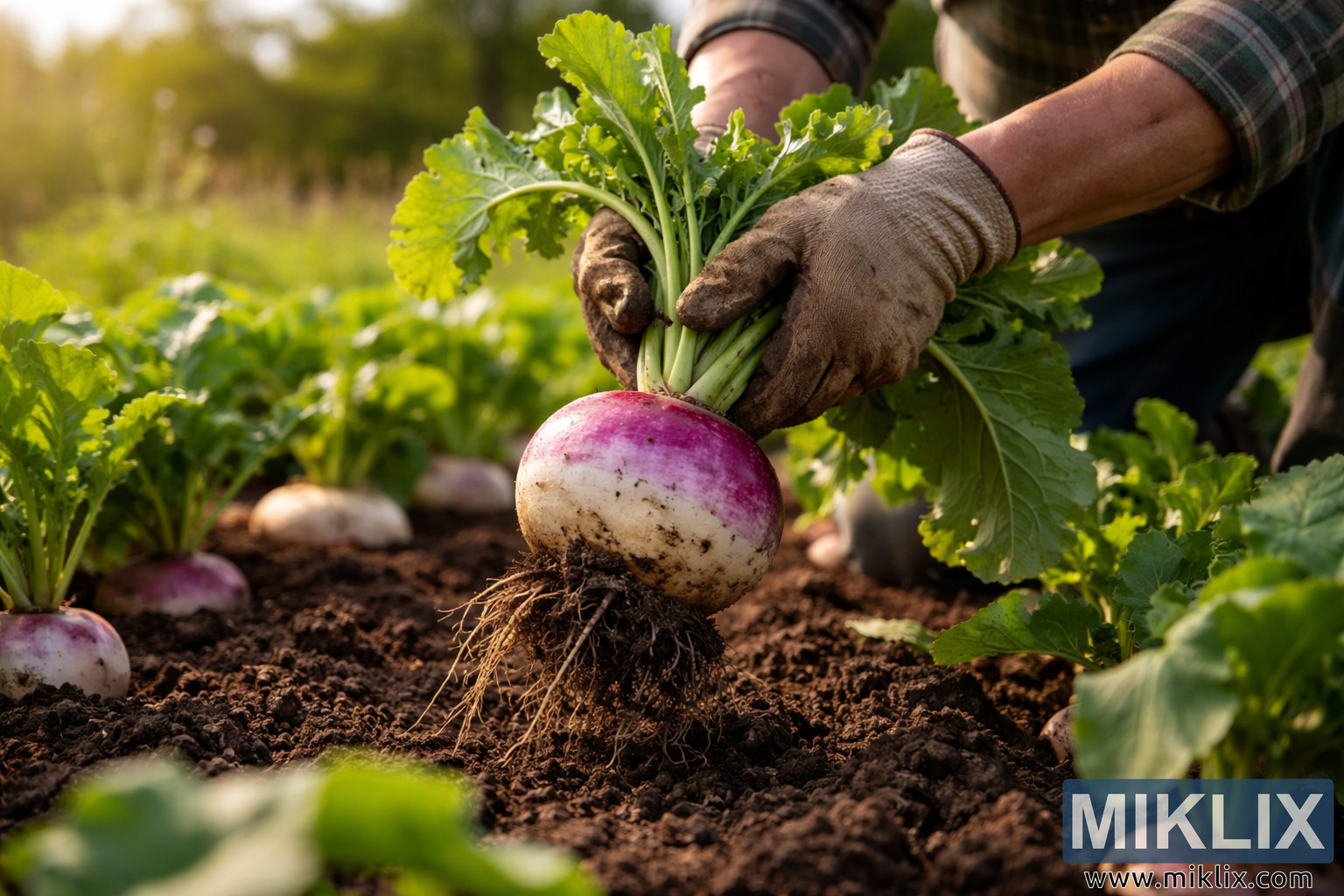
A close-up photograph captures the moment a gardener harvests a mature turnip from the soil in a thriving vegetable garden. The scene is framed at ground level, focusing on the gardener’s hands as they grasp the leafy green tops of a large purple-top turnip and gently pull it free from the earth. The gardener wears well-used, dirt-stained work gloves that show the signs of careful labor and time spent tending the garden. Their sleeves are rolled down, and the fabric of a casual work shirt is visible near the wrists, reinforcing the practical, hands-on nature of the activity.
The turnip itself is prominently centered in the composition. Its round bulb is smooth and slightly dusty from the soil, displaying the characteristic color gradient of a purple top fading into creamy white toward the bottom. Fine root hairs and clumps of dark, moist soil cling to the underside of the vegetable, emphasizing the freshness of the harvest and the richness of the earth it grew in. The gardener’s hands firmly hold the thick green stems, which spread upward into a healthy crown of broad, textured leaves. The leaves appear vibrant and crisp, with visible veins and slightly irregular edges that catch the warm sunlight.
Surrounding the central action is a lush garden bed filled with additional turnip plants and leafy greens. The soil is dark, loose, and freshly disturbed where the turnip has been lifted. In the background, rows of similar plants stretch softly out of focus, creating a natural depth of field that draws attention to the harvested vegetable in the foreground. Several partially visible turnips remain embedded in the ground nearby, hinting at a productive harvest still to come.
The lighting suggests a late afternoon setting, with warm golden sunlight illuminating the leaves and casting soft shadows across the soil. The light enhances the textures of the garden—the crumbly earth, the glossy leaves, and the smooth surface of the turnip bulb. The atmosphere feels calm and rewarding, capturing a quiet agricultural moment where patience and care culminate in the satisfaction of harvesting fresh produce.
Overall, the image conveys themes of sustainable gardening, connection to nature, and the simple pleasure of growing and harvesting food by hand. The tight composition and natural lighting highlight the tactile relationship between gardener, soil, and crop, emphasizing both the beauty of the vegetable and the authenticity of the gardening process.
Obraz jest powiązany z: How to Grow Turnips: Your Complete Growing Guide