
Obraz: Harvesting Fresh Watercress with Scissors Using Proper Technique
Opublikowano:
Ostatnia aktualizacja: 11 maja 2026 20:04:49 UTC
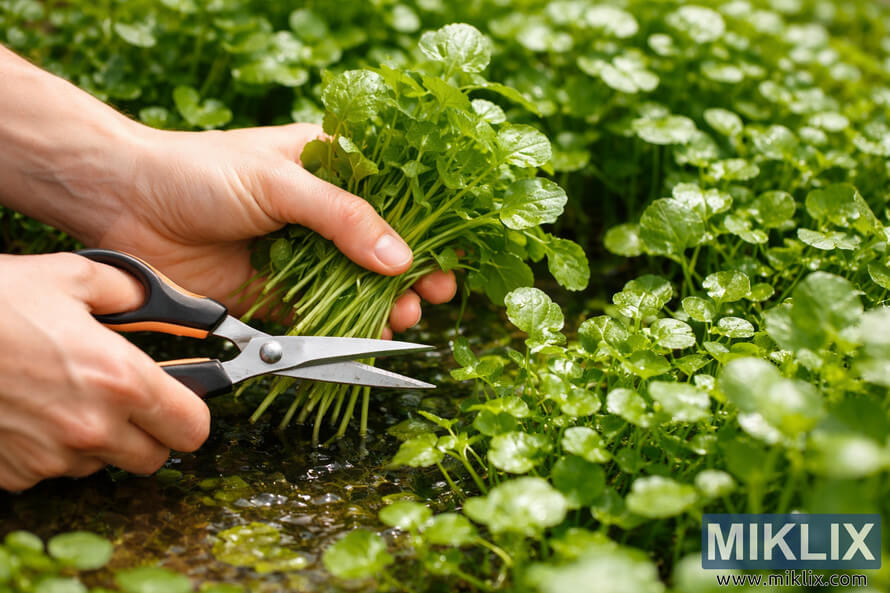
Close-up image of hands harvesting fresh watercress with scissors, demonstrating proper technique for cutting stems cleanly in a shallow stream garden.
Harvesting Fresh Watercress with Scissors Using Proper Technique
Dostępne wersje tego obrazu
Pliki graficzne dostępne do pobrania poniżej są mniej skompresowane i mają wyższą rozdzielczość - a w rezultacie wyższą jakość - niż obrazy osadzone w artykułach i stronach na tej stronie, które są bardziej zoptymalizowane pod kątem rozmiaru pliku w celu zmniejszenia zużycia przepustowości.
Rozmiar regularny (1,536 x 1,024)
Duży rozmiar (3,072 x 2,048)
Bardzo duży rozmiar (4,608 x 3,072)
Bardzo duży rozmiar (6,144 x 4,096)
Komicznie duży rozmiar (1,048,576 x 699,051)
- Wciąż wgrywam... ;-)
Opis obrazu
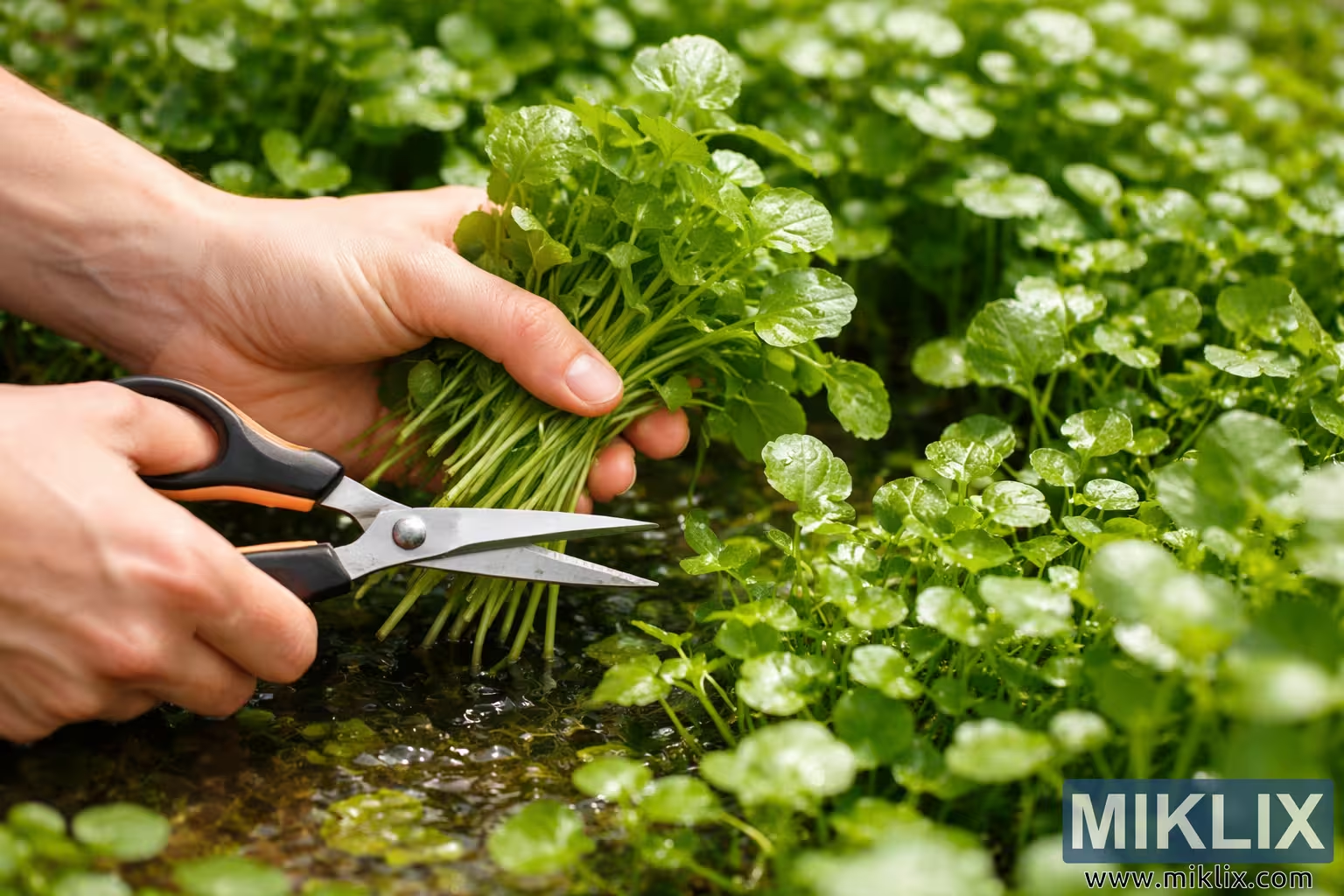
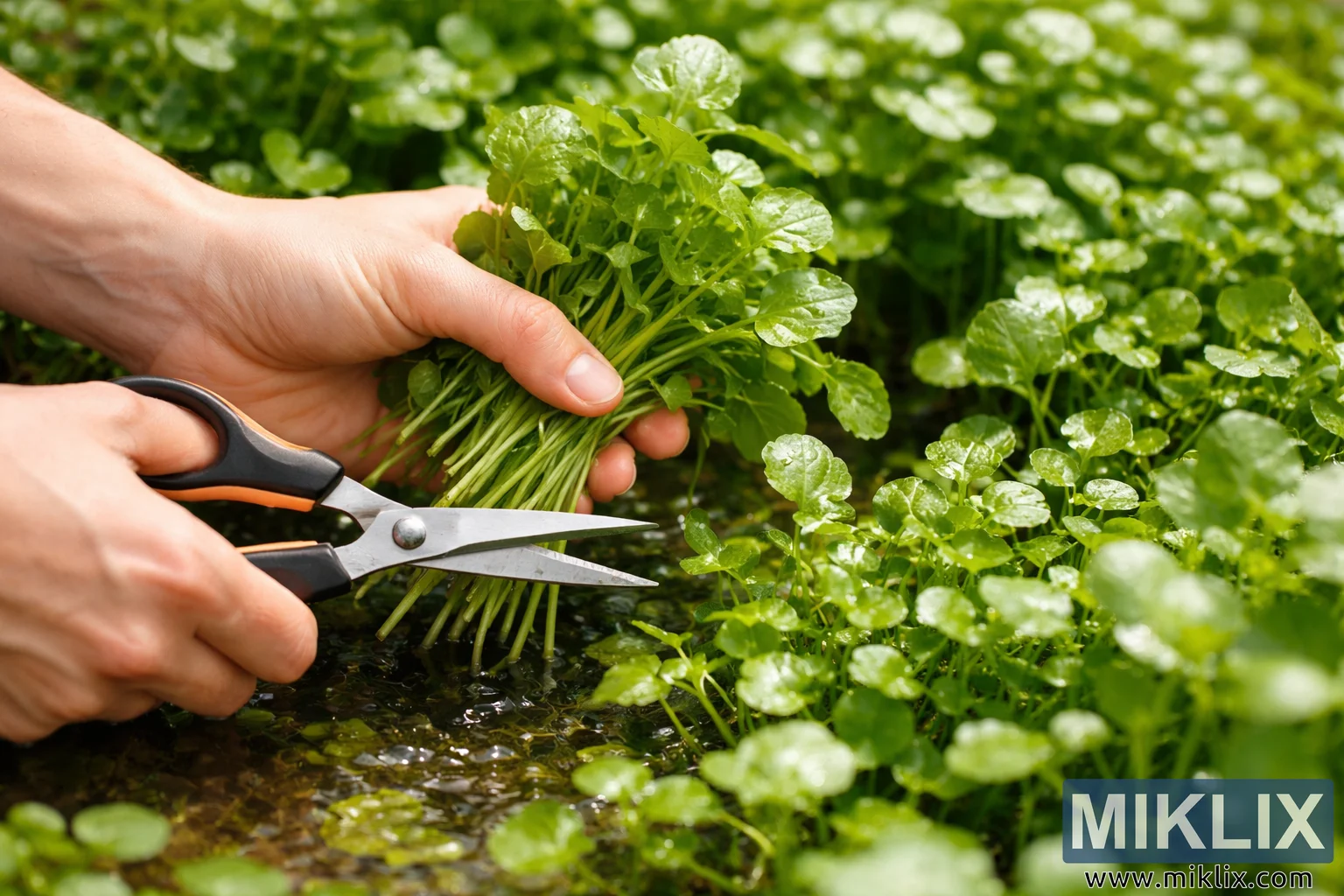
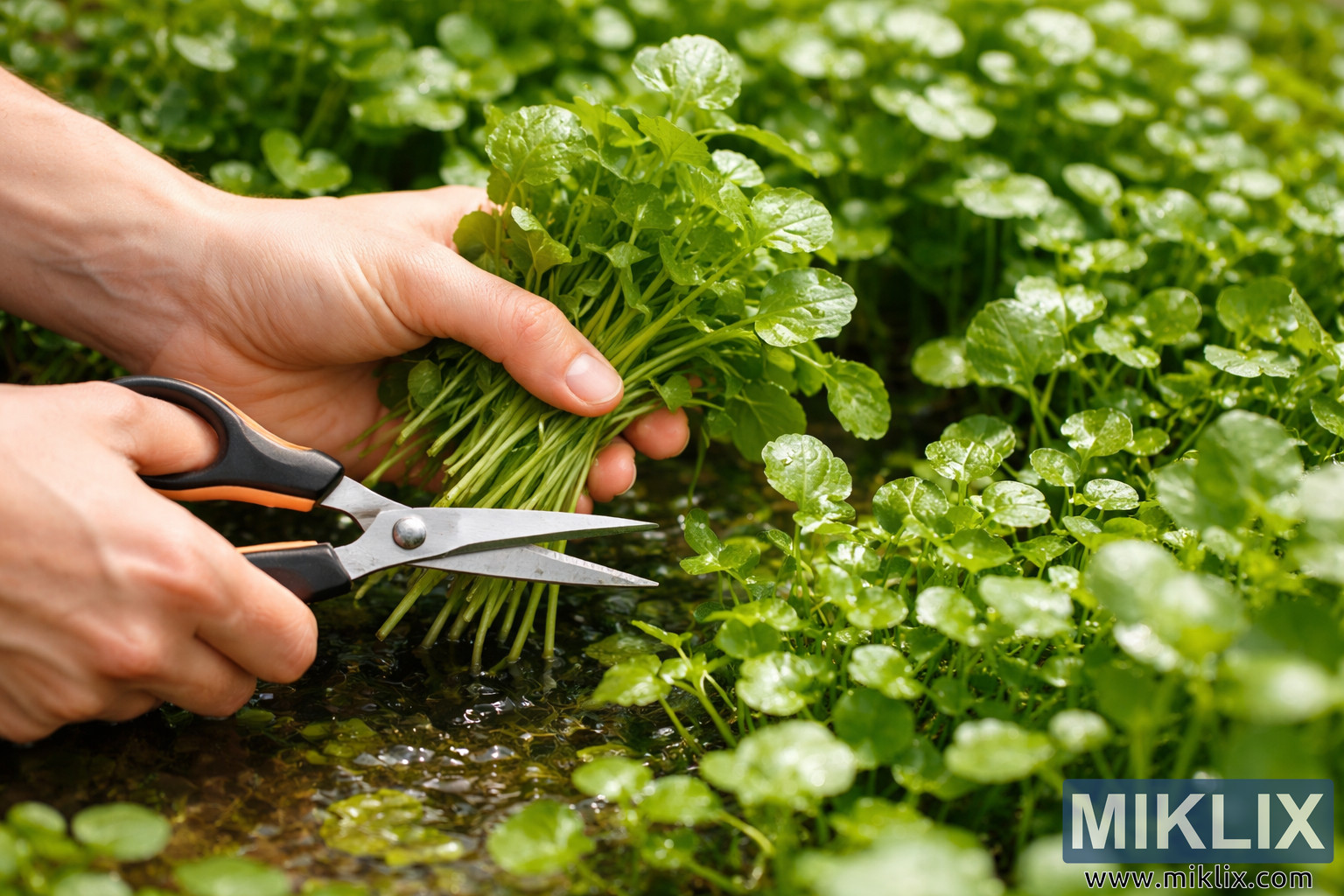
A detailed close-up scene shows a person harvesting fresh watercress using a pair of small pruning scissors, illustrating a careful and proper harvesting technique. The focus of the image is on two hands positioned over a dense patch of vibrant green watercress growing in shallow, clear water. One hand gently gathers a small bundle of slender watercress stems just above the waterline, holding them together without pulling or damaging the surrounding plants. The other hand holds a pair of sharp gardening scissors with black and orange handles, positioned precisely near the base of the gathered stems. The blades are open and angled slightly upward, ready to make a clean cut that allows the plant to continue growing after harvesting.
The watercress plants are lush and healthy, with small, rounded leaves that appear glossy and bright under natural daylight. They form a thick carpet of greenery that stretches across the background, creating a soft blur of green tones behind the sharply focused hands and scissors in the foreground. The shallow stream beneath the plants is visible between the stems, revealing small ripples in the water and a hint of stones and sediment below the surface. Sunlight reflects off the water and leaves, adding a fresh, lively atmosphere to the scene.
The composition emphasizes sustainable harvesting practices. By cutting the stems rather than pulling the plants from their roots, the technique preserves the remaining growth and allows the watercress to regenerate. The person’s grip on the stems is gentle and controlled, demonstrating care and respect for the plant. The scissors are held steadily and close to the stems, ensuring a clean and efficient cut that minimizes damage.
The lighting in the image is bright and natural, suggesting an outdoor garden or a cultivated watercress bed near a stream or irrigation channel. The shallow depth of field draws the viewer’s attention to the harvesting action while the surrounding foliage softly fades into the background. The vivid green tones of the leaves contrast with the neutral colors of the hands and the metallic sheen of the scissors.
Overall, the image conveys a sense of freshness, precision, and mindful gardening. It visually demonstrates how to properly harvest watercress by trimming the stems with scissors, highlighting both the beauty of the plant and the importance of careful, sustainable harvesting methods.
Obraz jest powiązany z: How to Grow Watercress at Home: A Complete Beginner's Guide