
Obraz: Drip Irrigation Nourishing Colorful Endive Rows
Opublikowano:
Ostatnia aktualizacja: 4 marca 2026 20:33:48 UTC
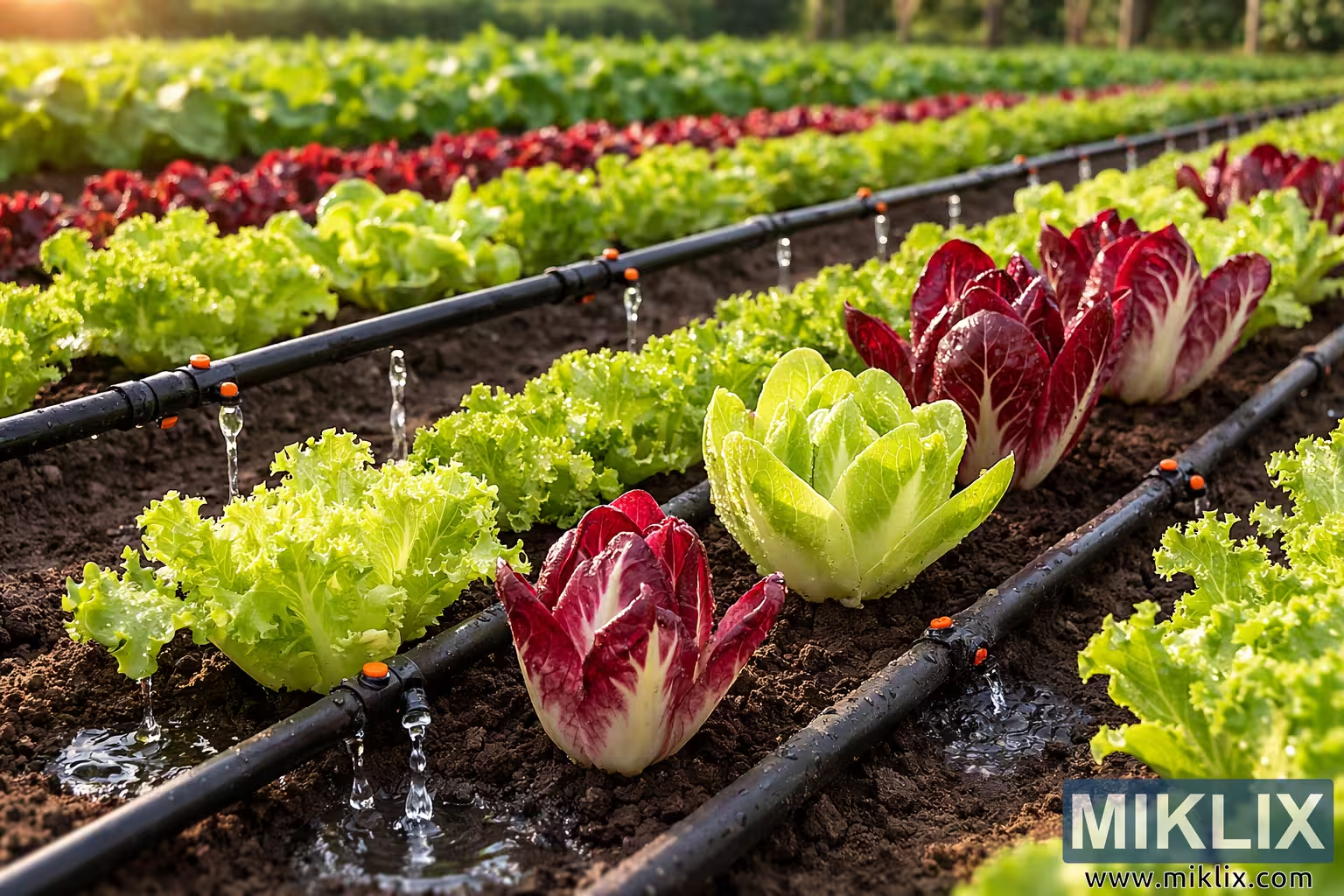
High-resolution landscape image of a drip irrigation system delivering water to vibrant green and red endive plants in neatly arranged agricultural rows.
Drip Irrigation Nourishing Colorful Endive Rows
Dostępne wersje tego obrazu
Pliki graficzne dostępne do pobrania poniżej są mniej skompresowane i mają wyższą rozdzielczość - a w rezultacie wyższą jakość - niż obrazy osadzone w artykułach i stronach na tej stronie, które są bardziej zoptymalizowane pod kątem rozmiaru pliku w celu zmniejszenia zużycia przepustowości.
Rozmiar regularny (1,536 x 1,024)
Duży rozmiar (3,072 x 2,048)
Bardzo duży rozmiar (4,608 x 3,072)
Bardzo duży rozmiar (6,144 x 4,096)
Komicznie duży rozmiar (1,048,576 x 699,051)
- Wciąż wgrywam... ;-)
Opis obrazu
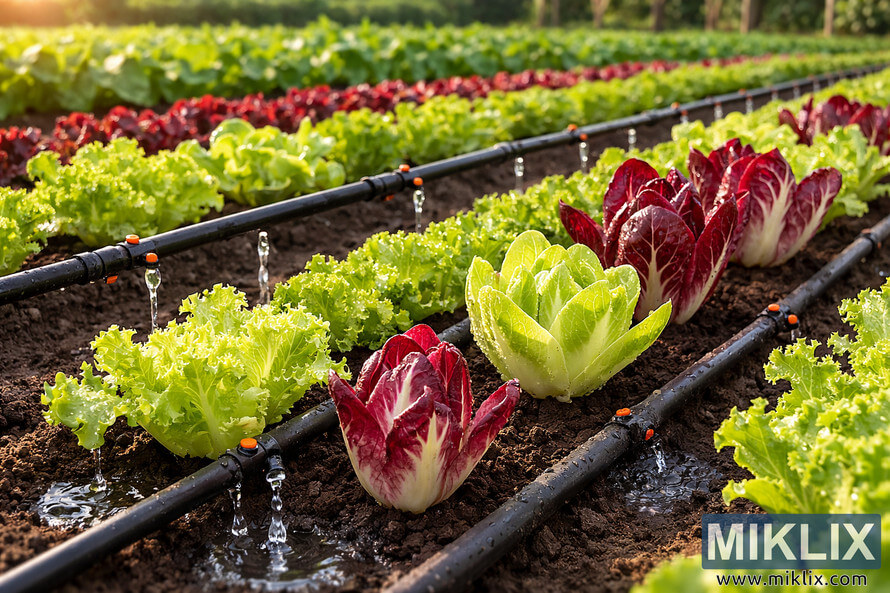
A wide, landscape-oriented photograph captures a meticulously maintained agricultural field where a drip irrigation system sustains a diverse variety of endive plants. The scene is composed in parallel rows that stretch horizontally across the frame, emphasizing both order and abundance. In the foreground, several mature endive heads display a striking range of textures and colors, including bright lime-green frisée with finely curled leaves, pale buttery green heads with smooth, cupped foliage, and deep burgundy-red radicchio-style endive with crisp white ribs. Each plant is rooted in rich, dark brown soil that appears freshly watered, its surface slightly clumped and moist, with small reflective patches indicating recent irrigation.
Black drip irrigation tubing runs neatly between the rows, positioned low to the ground and aligned with precision. Small emitters spaced at regular intervals release clear droplets of water directly at the base of each plant. Some droplets are captured mid-fall, suspended momentarily in the air, while others gather at the emitter tips before descending into the soil below. Tiny splashes and shallow puddles form around the root zones, ensuring targeted hydration and minimal water waste. The system demonstrates efficient water management, delivering moisture exactly where it is needed while leaving the surrounding soil relatively undisturbed.
Soft, warm natural light bathes the field, suggesting early morning or late afternoon. The sunlight enhances the vivid greens and reds of the leaves, causing water droplets to glisten and reflect subtle highlights. The foreground plants are sharply detailed, revealing delicate leaf veins, gently ruffled edges, and beads of water clinging to their surfaces. In contrast, the background gradually softens into a gentle blur, where additional rows of leafy greens extend toward a line of trees at the edge of the field. This shallow depth of field draws attention to the irrigation process and the thriving plants in front while still conveying the scale of the cultivated area.
The overall composition conveys a sense of sustainable farming and careful stewardship. The orderly arrangement of crops, the clean and functional irrigation lines, and the healthy appearance of the endive heads collectively illustrate modern agricultural practices designed for efficiency and crop vitality. The image communicates freshness, productivity, and harmony between technology and nature, highlighting how drip irrigation supports consistent growth while conserving water resources.
Obraz jest powiązany z: How to Grow Your Own Endive: A Complete Beginner's Guide