
Obraz: Braised Belgian Endive with Crispy Breadcrumbs and Pine Nuts
Opublikowano:
Ostatnia aktualizacja: 4 marca 2026 20:33:48 UTC
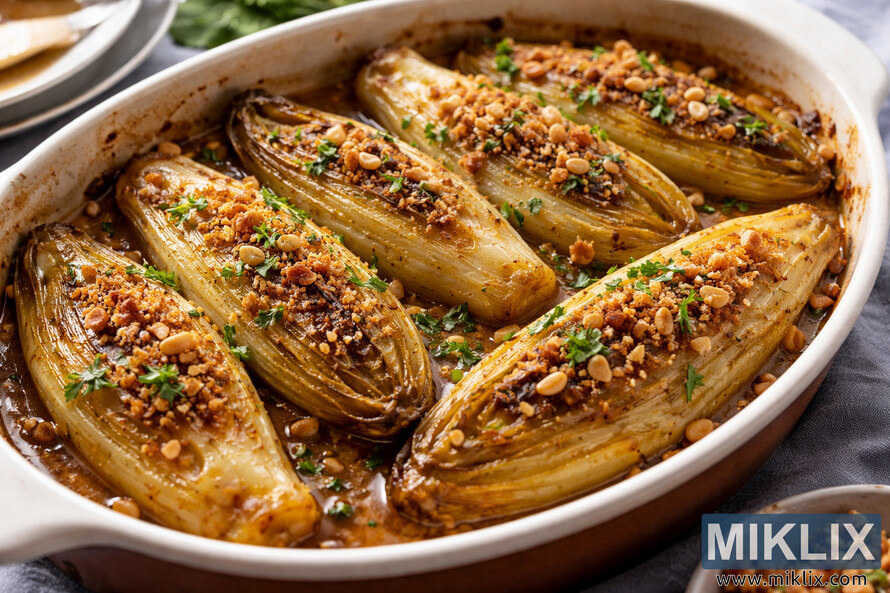
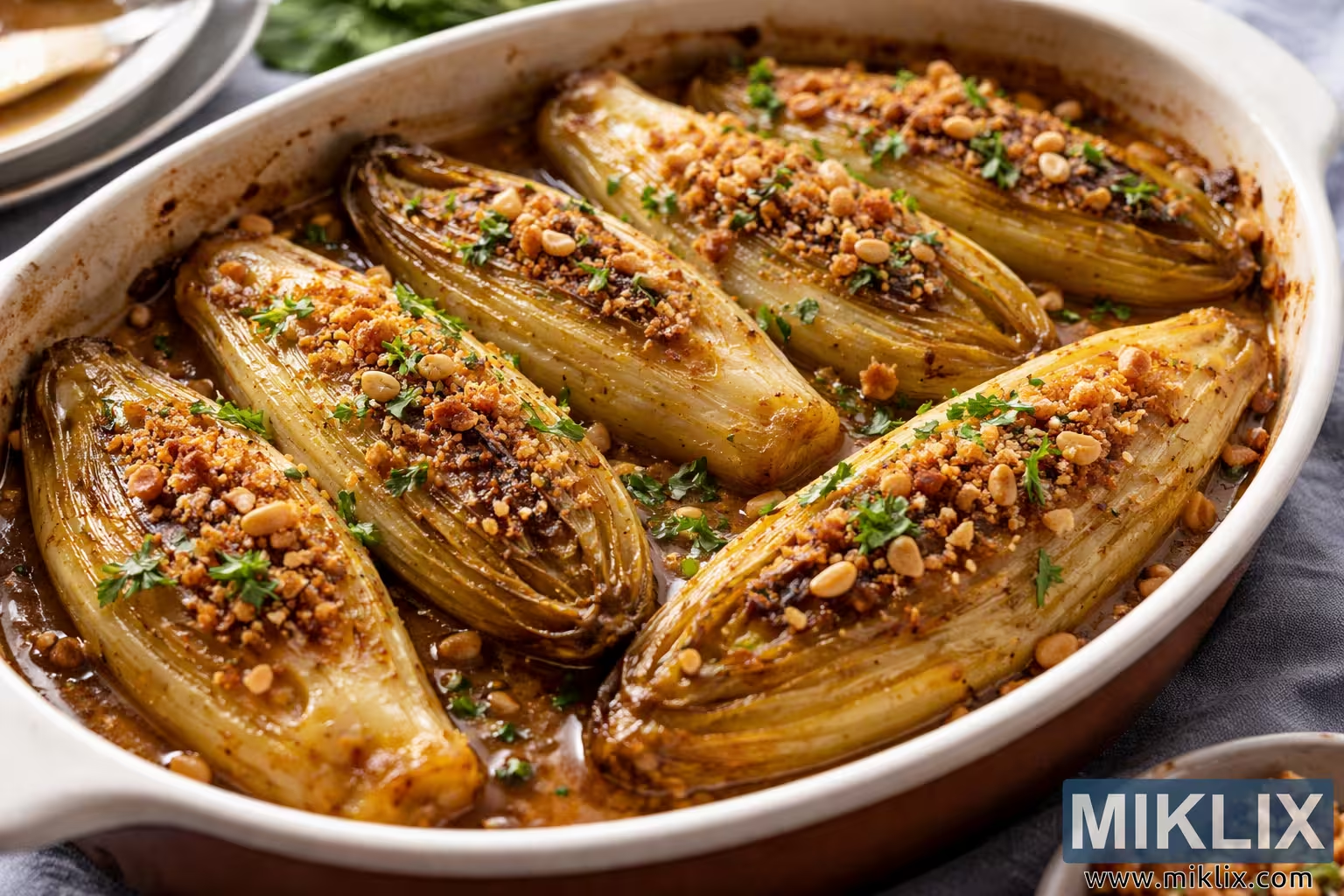
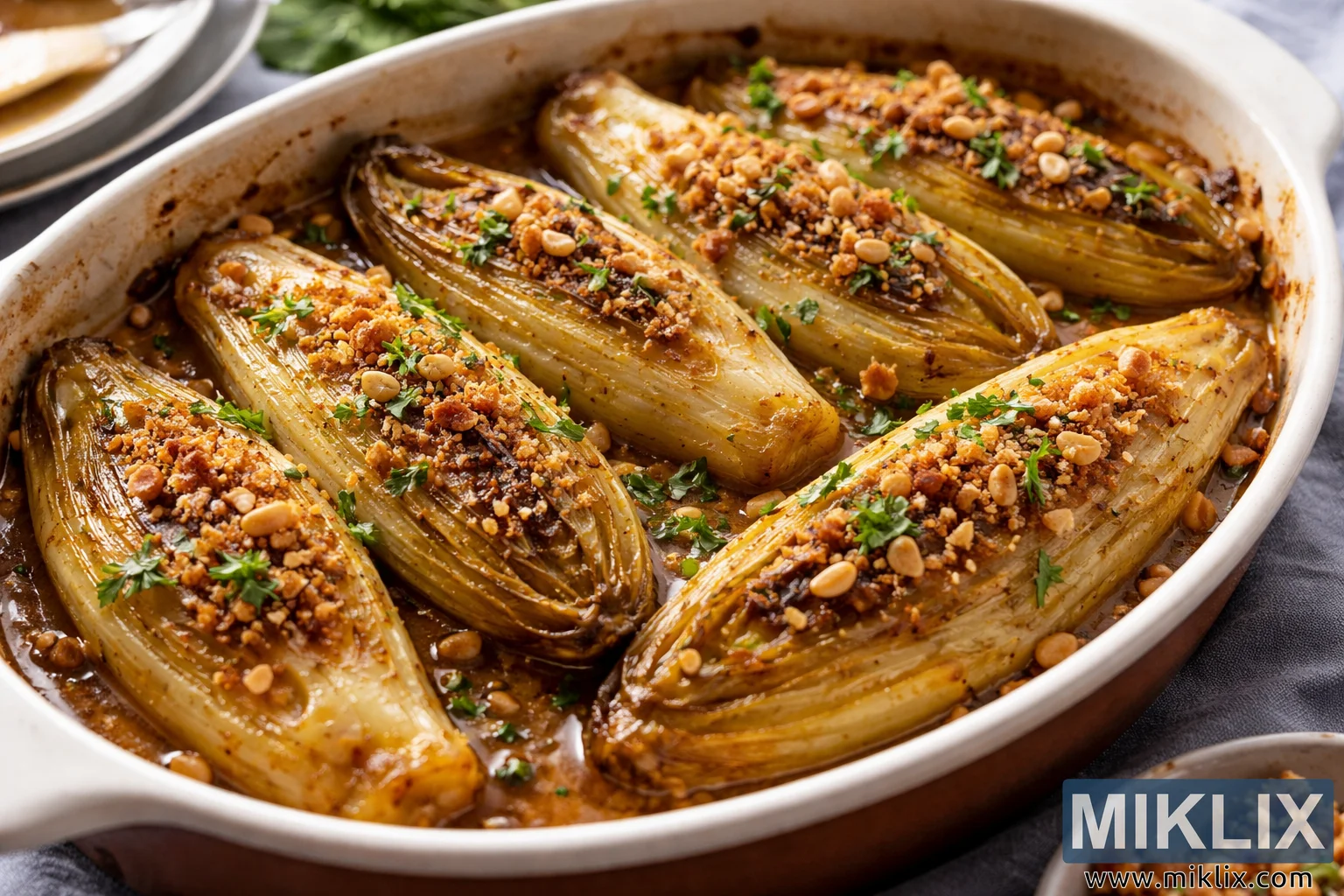
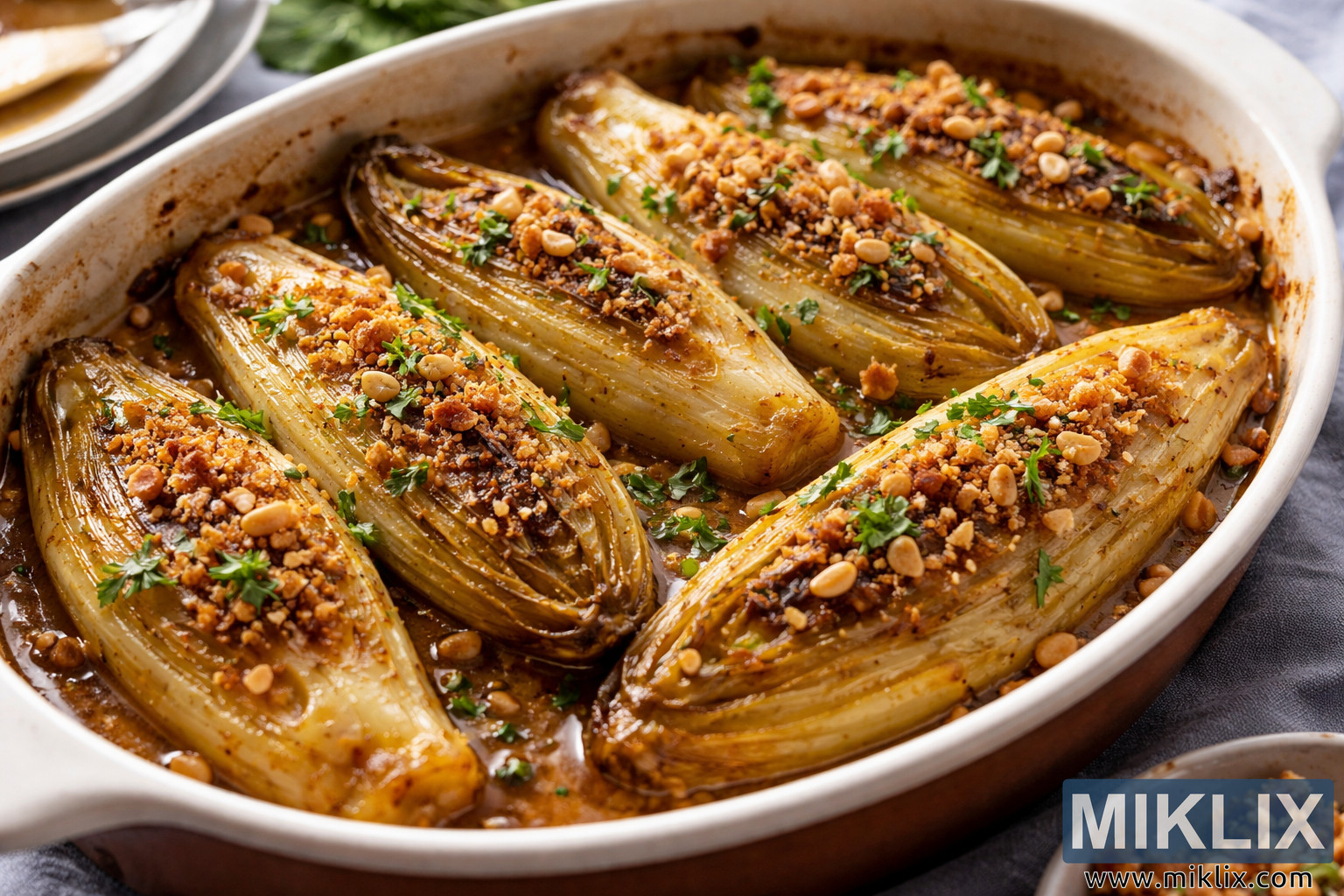
High-resolution landscape photo of braised Belgian endives in a rustic ceramic dish, garnished with crispy breadcrumbs, fresh parsley, and toasted pine nuts.
Braised Belgian Endive with Crispy Breadcrumbs and Pine Nuts
Dostępne wersje tego obrazu
Pliki graficzne dostępne do pobrania poniżej są mniej skompresowane i mają wyższą rozdzielczość - a w rezultacie wyższą jakość - niż obrazy osadzone w artykułach i stronach na tej stronie, które są bardziej zoptymalizowane pod kątem rozmiaru pliku w celu zmniejszenia zużycia przepustowości.
Rozmiar regularny (1,536 x 1,024)
Duży rozmiar (3,072 x 2,048)
Bardzo duży rozmiar (4,608 x 3,072)
Bardzo duży rozmiar (6,144 x 4,096)
Komicznie duży rozmiar (1,048,576 x 699,051)
- Wciąż wgrywam... ;-)
Opis obrazu
This high-resolution landscape photograph presents a beautifully cooked Belgian endive dish arranged in a rustic oval ceramic serving dish. The composition captures five braised Belgian endive halves nestled closely together, their elongated shapes aligned diagonally across the frame. Each endive displays a rich gradient of color, transitioning from pale golden ivory at the base to deep caramelized amber and chestnut tones along the ridged outer leaves. The surfaces glisten under a buttery glaze, highlighting the delicate, layered structure of the vegetable. The caramelization is especially visible along the edges, where the leaves have softened and slightly separated, revealing tender interiors that suggest slow, careful cooking.
A generous topping of crispy breadcrumbs is scattered over each endive half, adding a contrasting texture to the smooth, glossy surface beneath. The breadcrumbs are toasted to a warm golden brown and interspersed with finely chopped fresh parsley, which introduces vibrant green flecks throughout the dish. Toasted pine nuts are sprinkled across the top, their pale beige color and rounded shapes standing out against the darker caramelized leaves. Some of the pine nuts rest in the shallow pool of savory cooking juices at the bottom of the dish, where the sauce collects in a glossy layer that reflects the soft ambient light.
The ceramic serving dish itself has a slightly weathered, off-white interior with gently browned edges, suggesting it has just come from the oven. The rim frames the composition and adds a homely, rustic charm. The background is softly blurred, drawing attention to the endives while hinting at a cozy dining setting. Subtle shadows and highlights enhance the depth and dimension of the food, emphasizing the tender texture and the sheen of the glaze. The lighting is warm and inviting, casting a gentle glow that accentuates the earthy tones of the caramelized vegetables and the toasted garnish.
Overall, the image conveys comfort and elegance in equal measure. The careful arrangement, the interplay of textures from soft braised leaves to crisp toppings, and the harmonious palette of gold, brown, and green create an appetizing and refined presentation. The photograph captures not only the visual appeal of the cooked Belgian endive dish but also evokes its rich aroma and savory flavor, making it feel both wholesome and indulgent.
Obraz jest powiązany z: How to Grow Your Own Endive: A Complete Beginner's Guide