
Obraz: Full Okra Plant Showing Growth Structure, Leaves, Flowers, and Pods
Opublikowano:
Ostatnia aktualizacja: 17 marca 2026 21:37:52 UTC
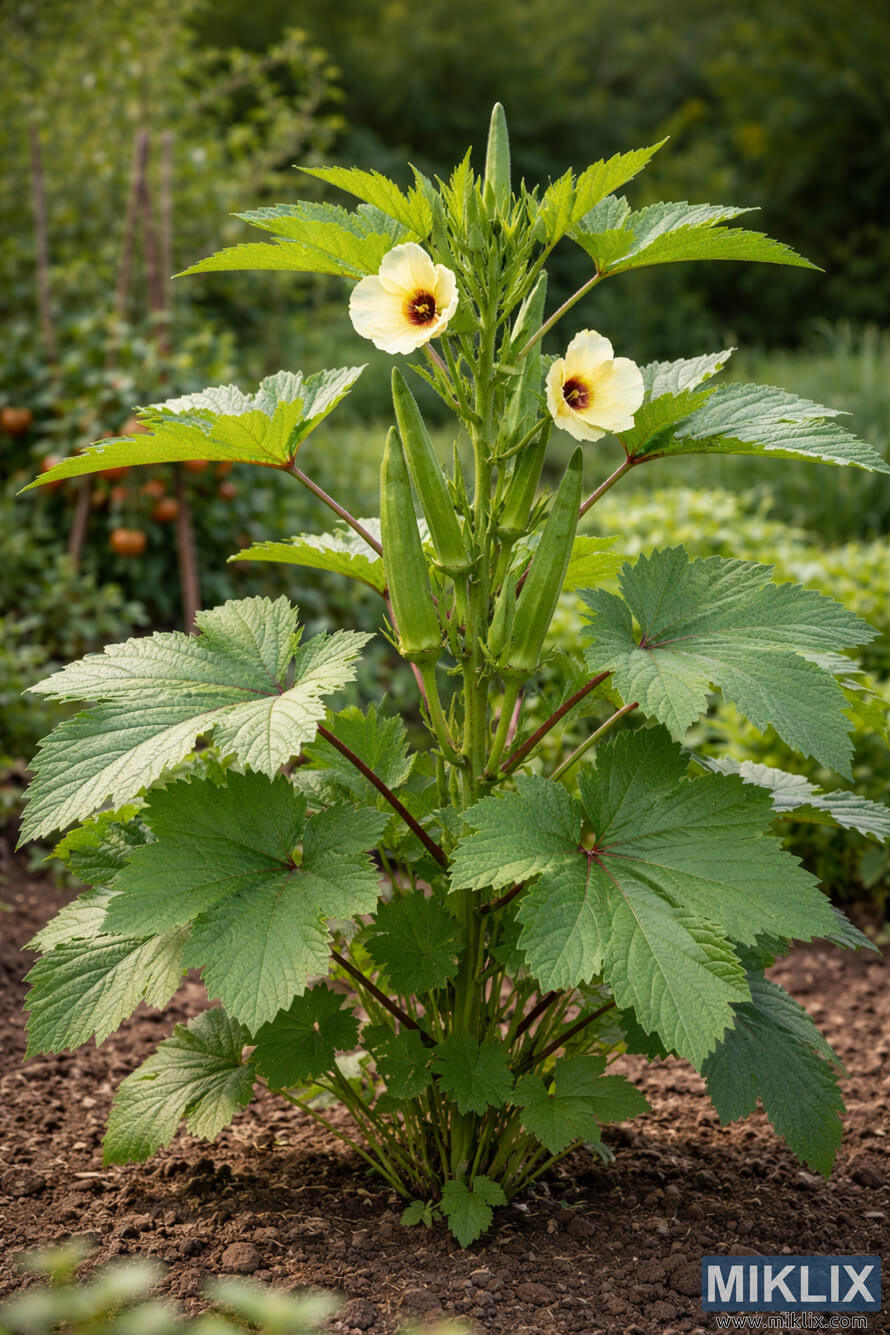
High-resolution image of a mature okra plant displaying its full growth structure, including lobed leaves, yellow flowers with dark centers, and green okra pods developing along the stem.
Full Okra Plant Showing Growth Structure, Leaves, Flowers, and Pods
Dostępne wersje tego obrazu
Pliki graficzne dostępne do pobrania poniżej są mniej skompresowane i mają wyższą rozdzielczość - a w rezultacie wyższą jakość - niż obrazy osadzone w artykułach i stronach na tej stronie, które są bardziej zoptymalizowane pod kątem rozmiaru pliku w celu zmniejszenia zużycia przepustowości.
Rozmiar regularny (1,024 x 1,536)
Duży rozmiar (2,048 x 3,072)
Bardzo duży rozmiar (3,072 x 4,608)
Bardzo duży rozmiar (4,096 x 6,144)
Komicznie duży rozmiar (1,048,576 x 1,572,864)
- Wciąż wgrywam... ;-)
Opis obrazu
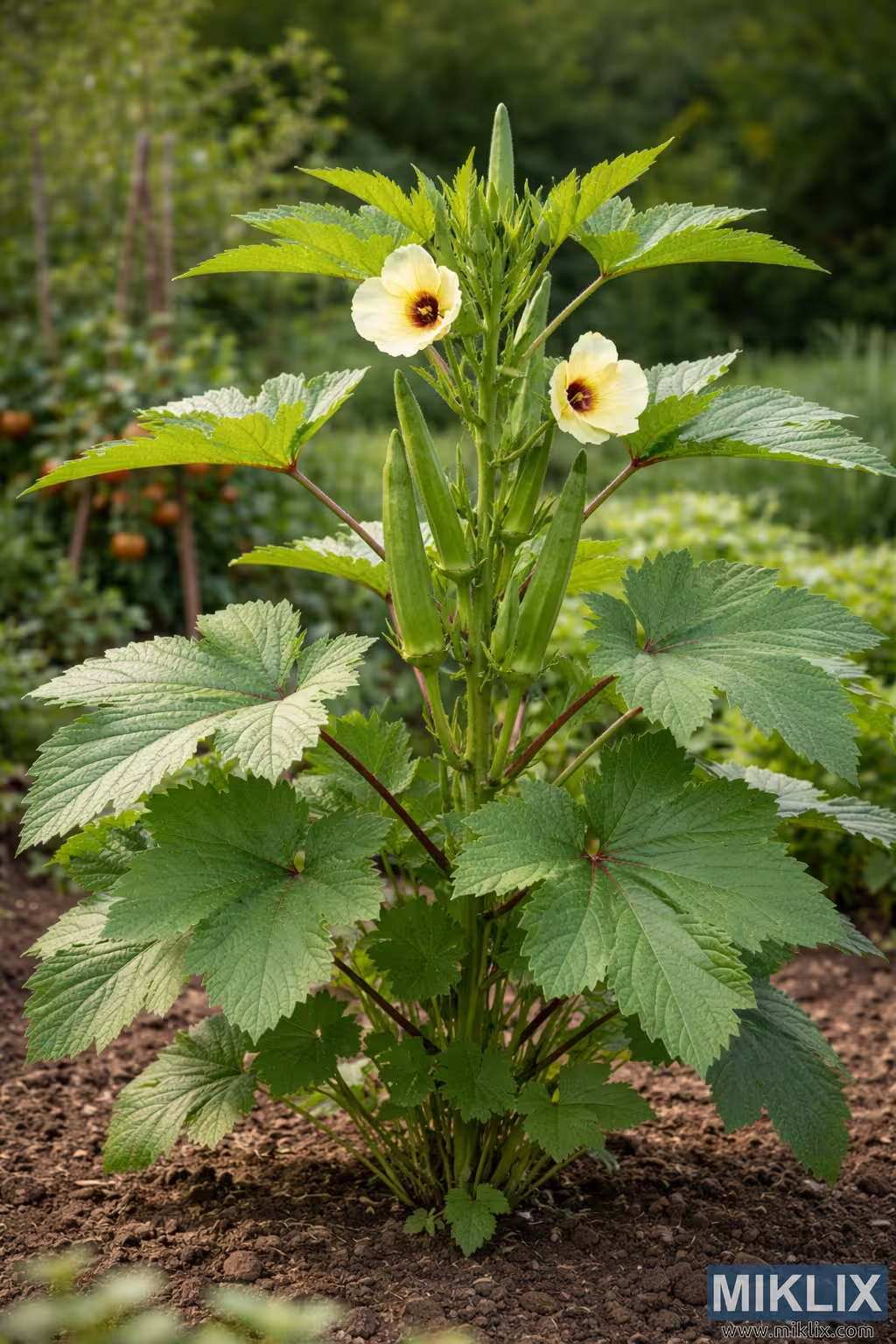
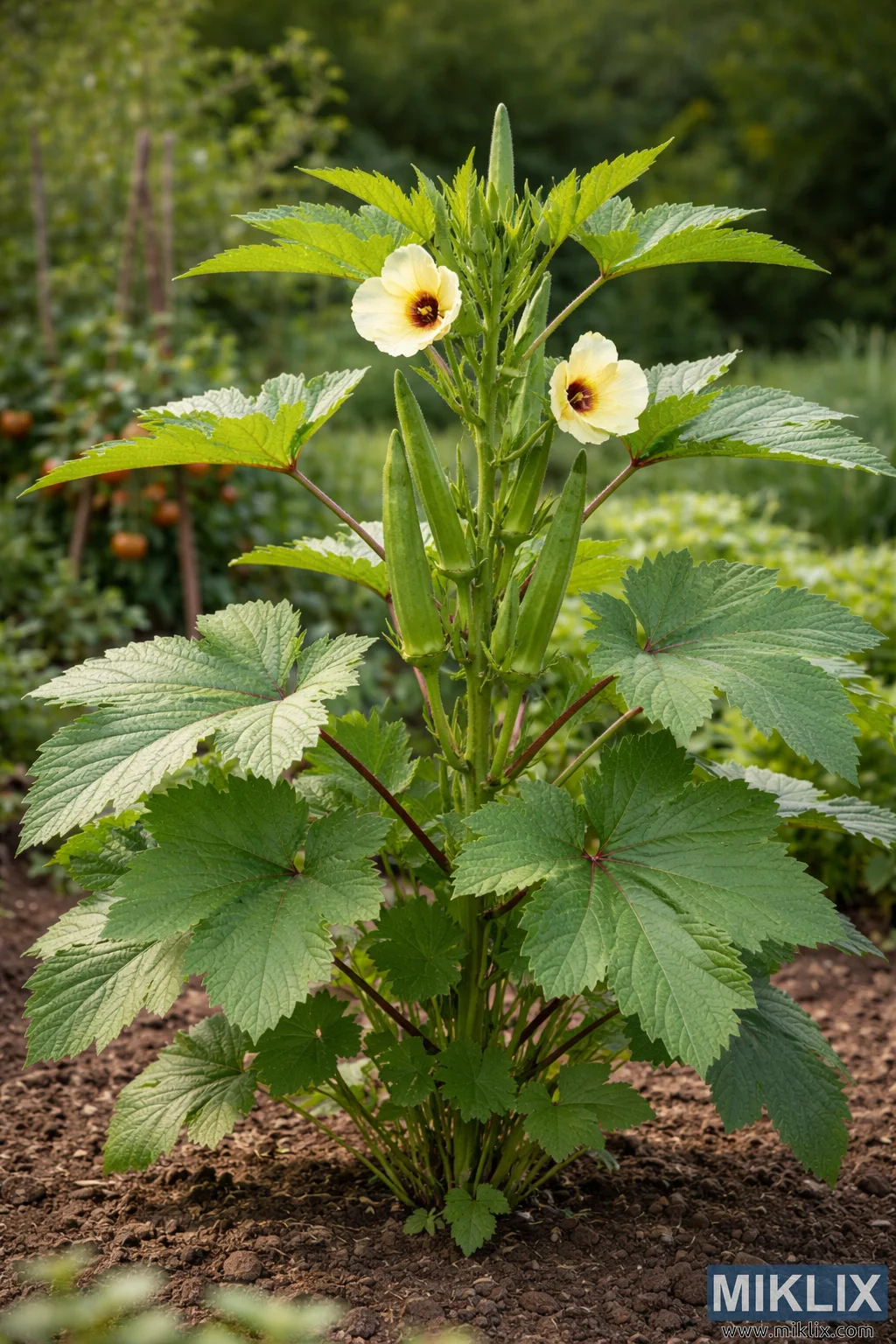
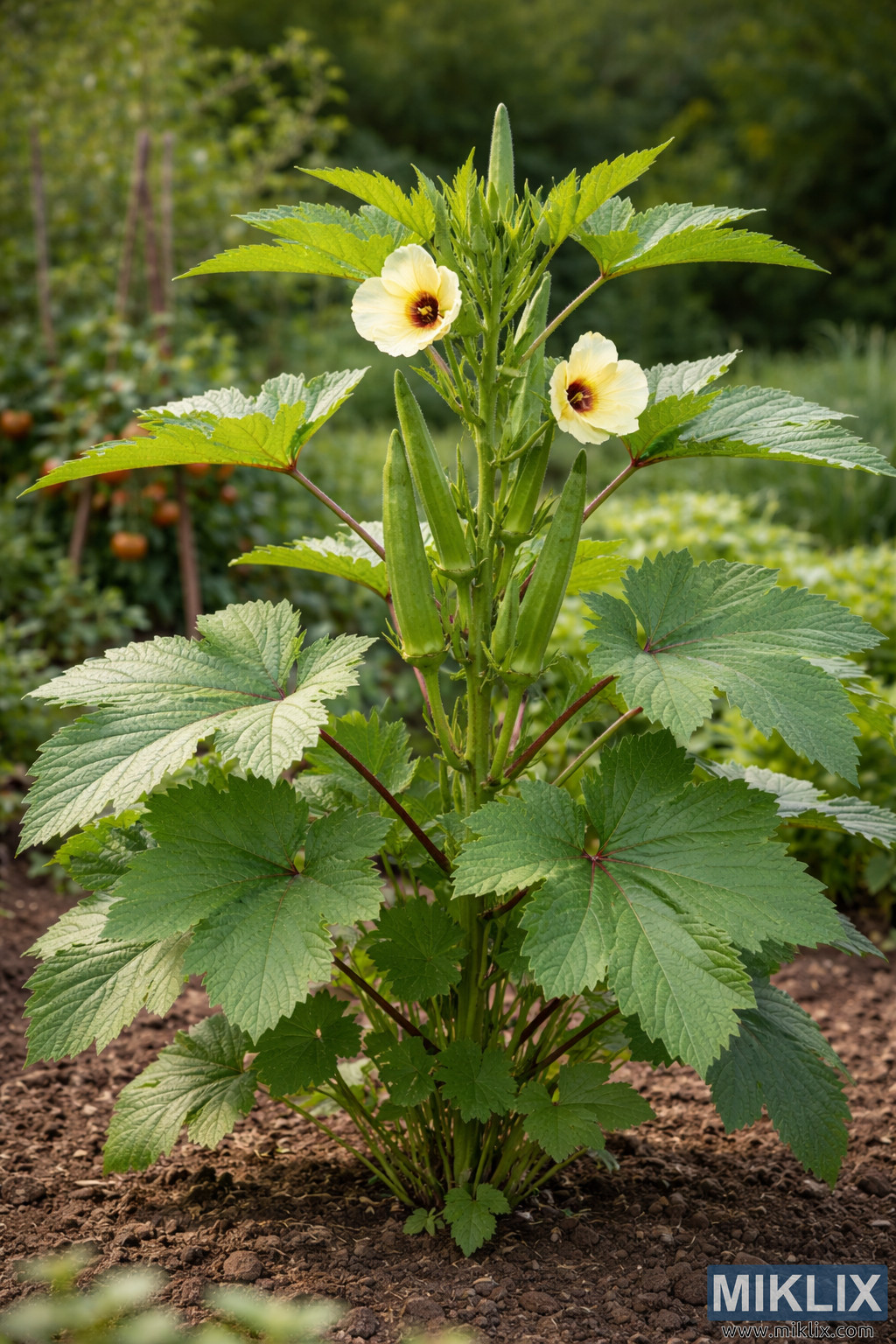
This high-resolution photograph presents a full okra plant (Abelmoschus esculentus) growing upright in a cultivated garden bed. The plant is centered in the frame and clearly displays the characteristic growth structure typical of mature okra. A single sturdy green main stem rises vertically from the soil and branches outward at several nodes where large leaves and fruiting structures develop. The base of the plant emerges from loose brown garden soil, and the lower stem is surrounded by smaller leaves and young shoots, illustrating the early branching habit of the species.
The leaves are large, broad, and palmately lobed, each leaf divided into several pointed segments with visible veins radiating outward from the center. Their surface appears slightly textured and matte, with serrated or gently toothed margins along the lobes. The leaves vary in size depending on their position along the plant, with the largest leaves appearing in the middle section and slightly smaller ones closer to the top. Their green coloration contrasts subtly between lighter fresh growth and darker mature foliage. Each leaf attaches to the main stem via a long petiole, allowing the foliage to spread outward and create an open canopy around the central stem.
Near the upper portion of the plant, several developing okra pods extend upward from the leaf axils. The pods are elongated, tapered, and ridged, displaying the characteristic angular shape typical of okra fruit. Their surface is smooth and bright green, indicating that they are still young and tender. These pods grow vertically or slightly outward from the stem and illustrate how okra fruit forms directly along the plant's central structure rather than hanging heavily downward.
Two open okra flowers are visible near the upper middle of the plant. The blossoms resemble hibiscus flowers, reflecting the plant's membership in the mallow family. Each flower features delicate pale yellow petals that spread outward in a circular form, surrounding a prominent dark maroon or burgundy center. The contrast between the soft yellow petals and the deep central coloration creates a striking visual focal point. The flowers emerge from the same nodes where fruit will later develop, highlighting the reproductive stage of the plant.
The background of the photograph is softly blurred, suggesting a garden environment with other vegetation and possibly cultivated plants beyond the main subject. This shallow depth of field keeps the focus on the okra plant itself while providing context that it is growing outdoors in a productive garden setting. Natural sunlight illuminates the plant evenly, emphasizing the texture of the leaves, the ridges of the pods, and the delicate structure of the flowers.
Overall, the image clearly illustrates the full morphology of an okra plant, including its upright growth habit, branching nodes, large lobed foliage, distinctive flowers, and developing pods. The photograph serves as a detailed visual reference for understanding the structure and appearance of okra during its productive growth stage.
Obraz jest powiązany z: The Complete Guide to Growing Okra in Your Home Garden