
Obraz: Aphids Infesting an Okra Pod in Close-Up Garden Scene
Opublikowano:
Ostatnia aktualizacja: 17 marca 2026 21:37:52 UTC
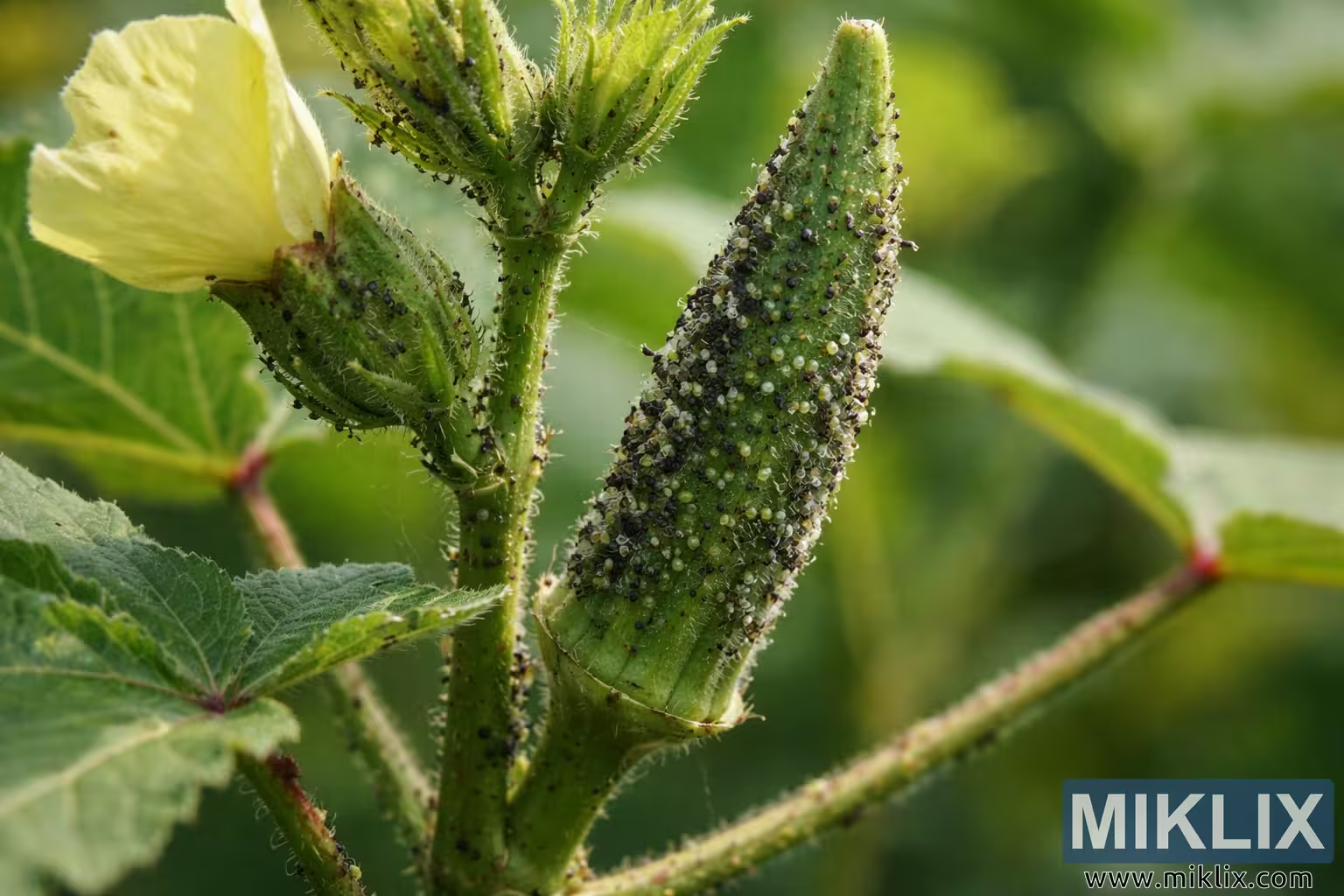
High-resolution close-up photograph of aphids clustered on an okra pod and stem, with green leaves and a yellow okra flower in a natural garden setting.
Aphids Infesting an Okra Pod in Close-Up Garden Scene
Dostępne wersje tego obrazu
Pliki graficzne dostępne do pobrania poniżej są mniej skompresowane i mają wyższą rozdzielczość - a w rezultacie wyższą jakość - niż obrazy osadzone w artykułach i stronach na tej stronie, które są bardziej zoptymalizowane pod kątem rozmiaru pliku w celu zmniejszenia zużycia przepustowości.
Rozmiar regularny (1,536 x 1,024)
Duży rozmiar (3,072 x 2,048)
Bardzo duży rozmiar (4,608 x 3,072)
Bardzo duży rozmiar (6,144 x 4,096)
Komicznie duży rozmiar (1,048,576 x 699,051)
- Wciąż wgrywam... ;-)
Opis obrazu
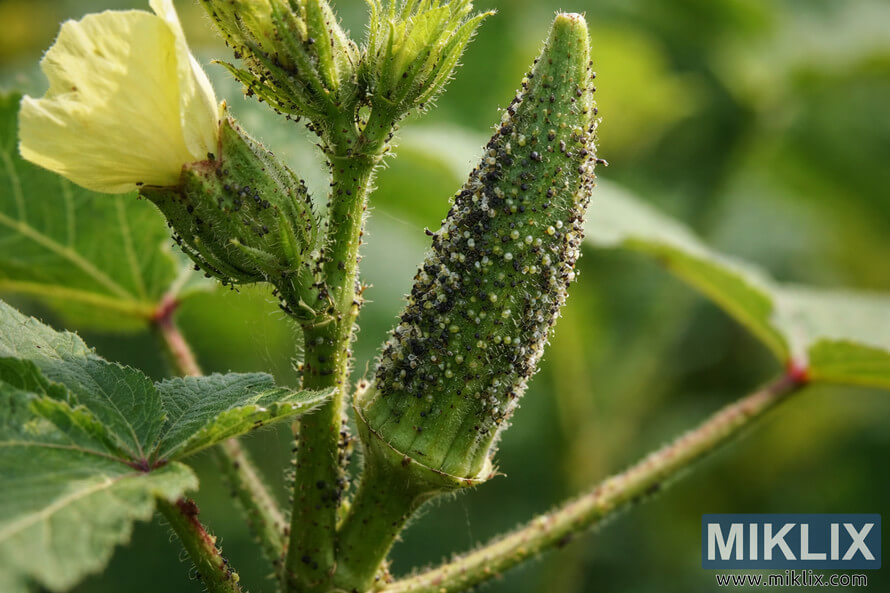
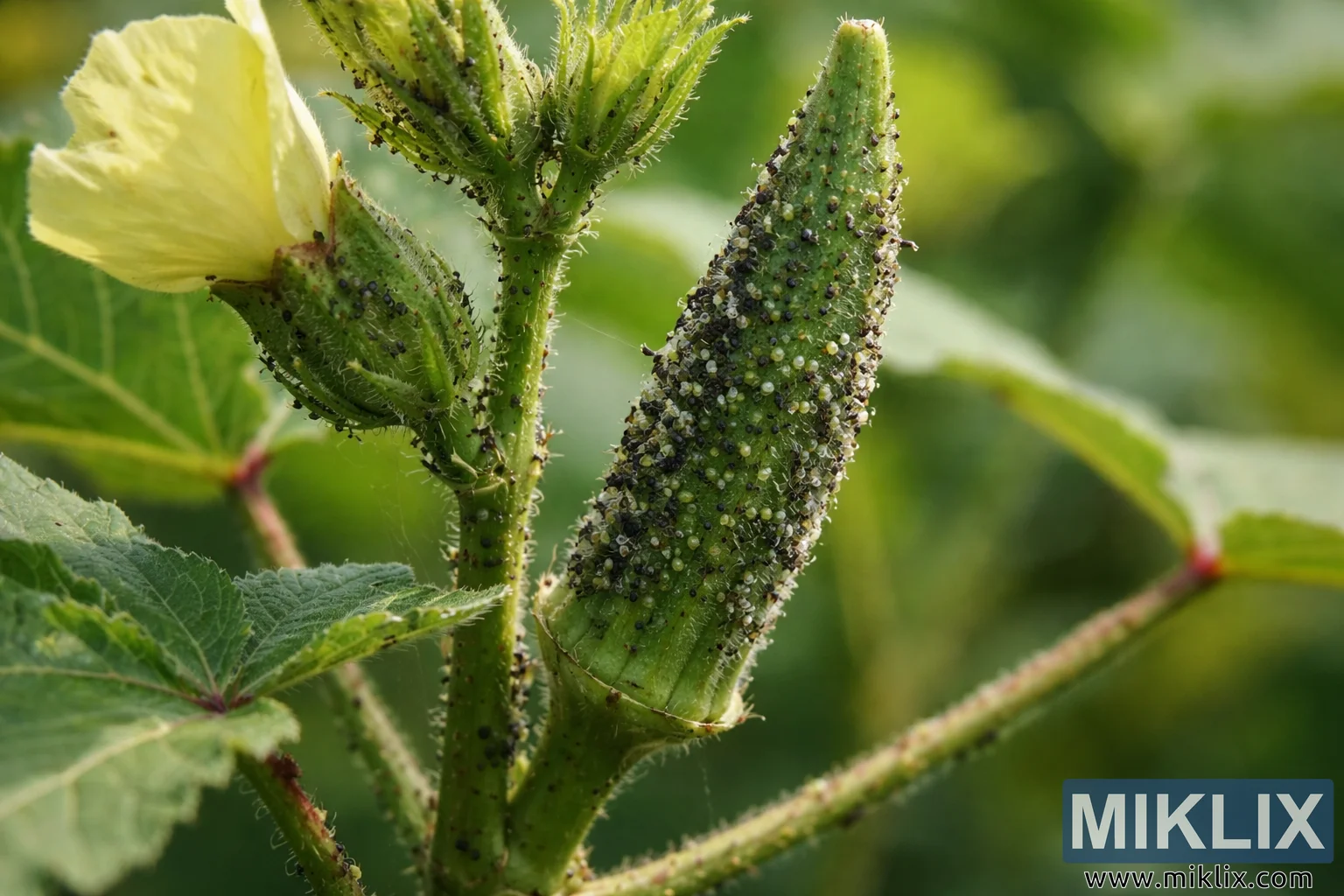
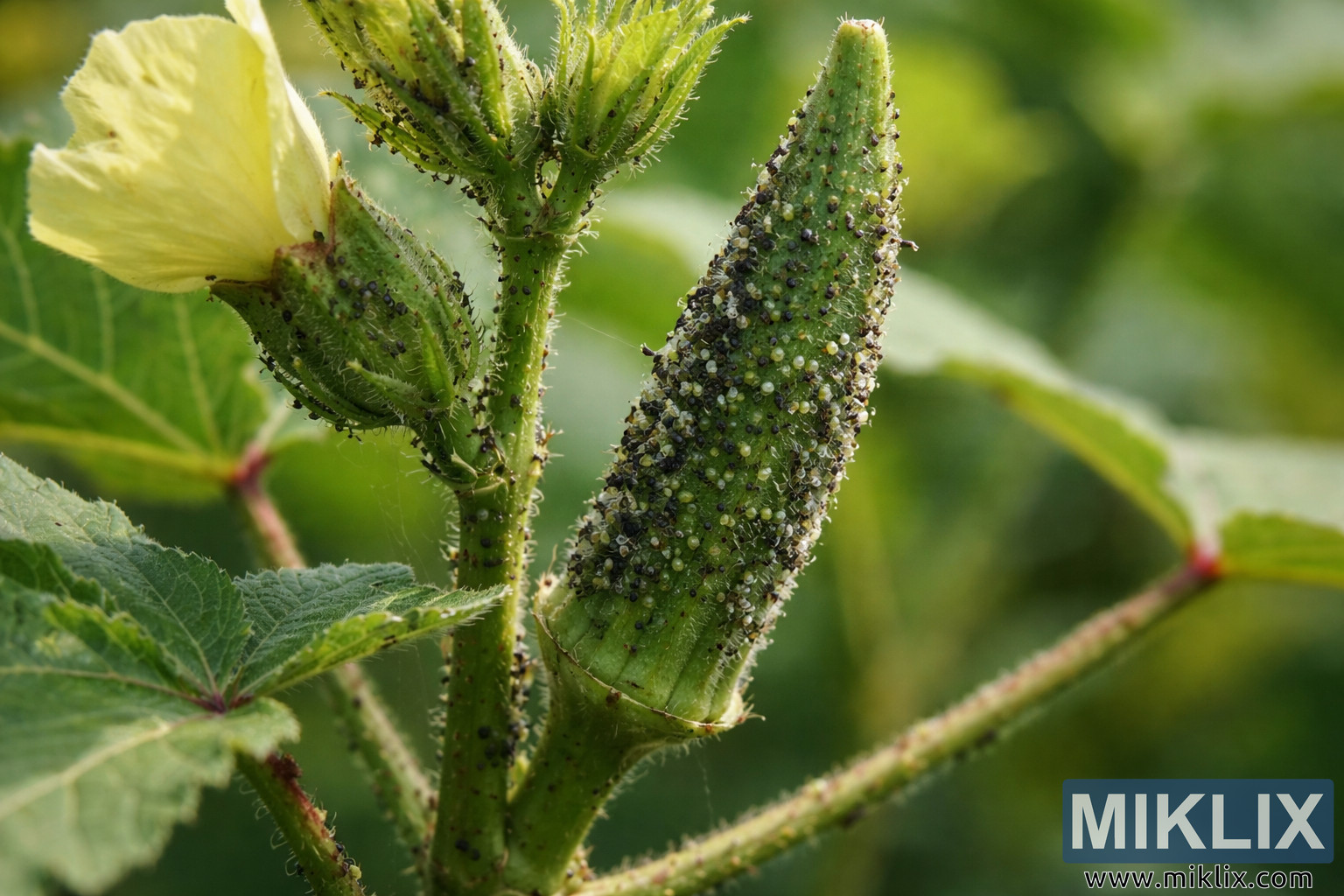
This high-resolution landscape photograph presents a detailed macro view of an okra plant that is heavily infested with aphids. At the center-right of the composition, a developing okra pod rises upward from the plant’s stem. The pod’s textured, slightly fuzzy green surface is densely covered with small aphids in various shades of pale green, gray, and dark brown. They cluster tightly along the ridges of the pod and around the base where the pod connects to the stem, forming irregular patches that visually emphasize the extent of the infestation. The insects vary slightly in size, suggesting different life stages, and their tiny bodies appear almost bead-like against the plant’s soft, velvety surface.
To the left of the main pod, a branching section of the okra stem extends upward and outward, also populated by scattered groups of aphids. These insects cling to the narrow stems and buds, creating dark speckled patterns against the bright green plant tissue. The stems themselves display the characteristic fine hairs typical of okra plants, catching the sunlight and giving the plant a slightly fuzzy appearance.
A partially opened okra flower appears on the left side of the frame. Its delicate petals are pale yellow with a soft, translucent quality that contrasts with the rougher texture of the stems and pods. The flower leans gently outward, adding a sense of organic balance to the composition while subtly highlighting the plant’s reproductive stage. Beneath the flower, broad green leaves with serrated edges stretch into the frame. Their veins are visible and slightly raised, and they show the same fine hairlike texture found on the stems.
Bright natural sunlight illuminates the scene from above and slightly behind the plant, producing gentle highlights along the edges of the pod, stems, and leaves. The lighting enhances the vivid green hues of the okra plant while also making the clusters of aphids clearly visible. Shadows are soft and diffuse, helping to maintain detail across the entire subject.
The background is softly blurred with a shallow depth of field, creating a smooth green bokeh effect that isolates the okra plant from its surroundings. This blurred backdrop suggests a lush garden or agricultural environment without distracting from the main subject. The overall composition emphasizes the contrast between the healthy plant structures and the dense presence of aphids, capturing both the beauty of the plant and the ecological interaction occurring on its surface.
Obraz jest powiązany z: The Complete Guide to Growing Okra in Your Home Garden