
Obraz: Over-Mature Okra Pods Drying on the Plant
Opublikowano:
Ostatnia aktualizacja: 17 marca 2026 21:37:52 UTC
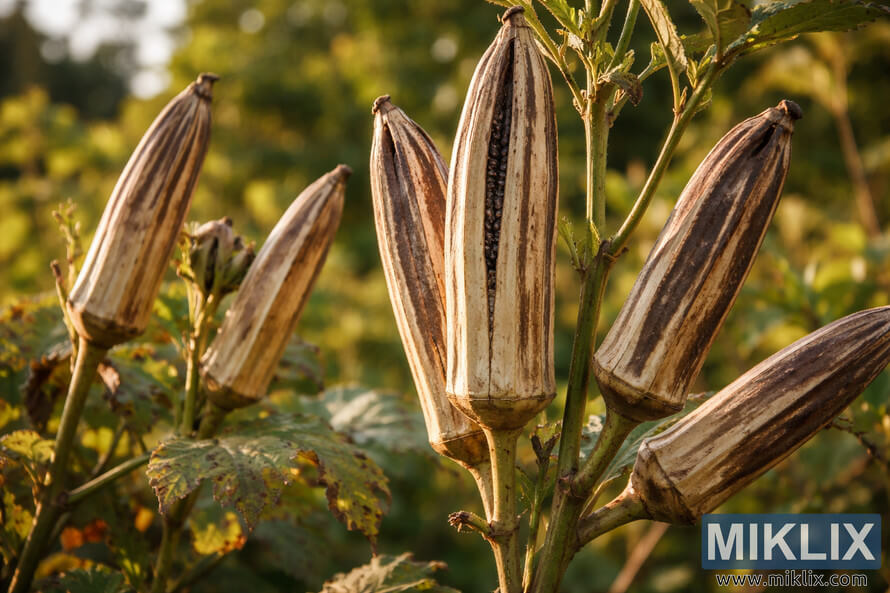
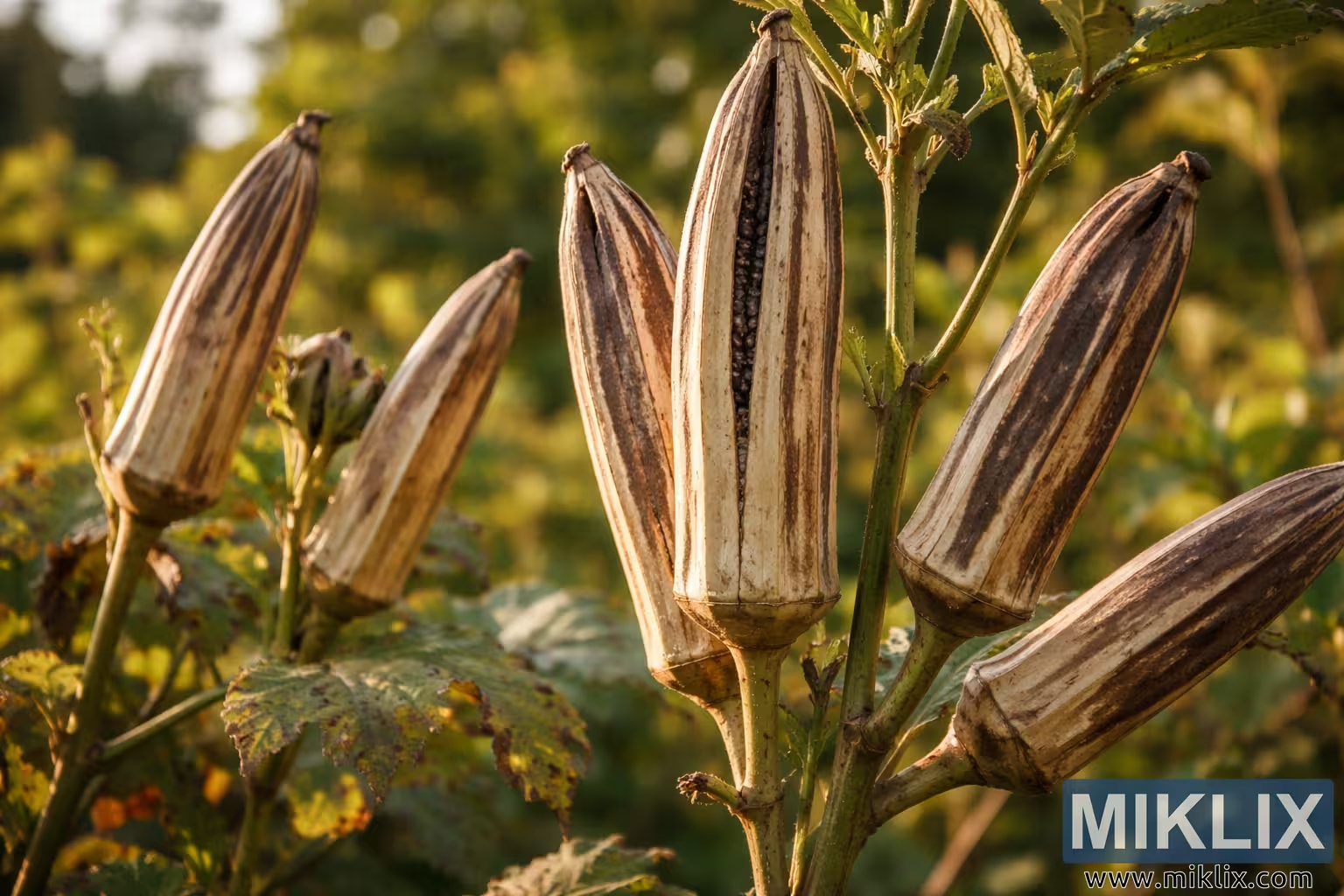
High-resolution close-up photograph of over-mature okra pods left too long on the plant, showing dry woody texture and split pods revealing seeds in warm evening garden light.
Over-Mature Okra Pods Drying on the Plant
Dostępne wersje tego obrazu
Pliki graficzne dostępne do pobrania poniżej są mniej skompresowane i mają wyższą rozdzielczość - a w rezultacie wyższą jakość - niż obrazy osadzone w artykułach i stronach na tej stronie, które są bardziej zoptymalizowane pod kątem rozmiaru pliku w celu zmniejszenia zużycia przepustowości.
Rozmiar regularny (1,536 x 1,024)
Duży rozmiar (3,072 x 2,048)
Bardzo duży rozmiar (4,608 x 3,072)
Bardzo duży rozmiar (6,144 x 4,096)
Komicznie duży rozmiar (1,048,576 x 699,051)
- Wciąż wgrywam... ;-)
Opis obrazu
This high-resolution landscape photograph captures a cluster of over-mature okra pods still attached to their plant in a sunlit garden. The scene is framed as a close-up, with several elongated okra pods rising vertically from green stems in the foreground. Unlike the tender green pods typically harvested for cooking, these pods have been left on the plant far beyond their ideal picking stage. As a result, they have become dry, rigid, and woody in appearance. Their surfaces display pale tan and brown tones with darker longitudinal stripes that emphasize the ribbed structure typical of okra. The pods appear thick and slightly swollen, signaling that they are fully developed and no longer edible.
One of the pods near the center of the composition has split open along its natural seam, revealing a dense line of round, dark seeds packed inside. The opening exposes the inner structure of the pod, providing a glimpse into the reproductive stage of the plant when the seeds have matured and the pod begins to dry and crack. This detail visually communicates the transition from edible vegetable to seed-bearing capsule.
The okra plant’s stems are sturdy and green, branching upward to support the pods. A few leaves are visible around the lower portion of the frame. These leaves show signs of age and environmental wear, including yellowing patches, small holes, and irregular edges, suggesting a late-season garden setting. Their textured surfaces and slightly curled edges reinforce the sense that the plant has progressed through most of its growth cycle.
The background is softly blurred, creating a shallow depth-of-field effect that isolates the okra pods as the main subject. Hints of other garden plants and foliage appear as green and golden shapes in the distance. The warm, golden light of late afternoon or early evening illuminates the pods from the side, casting gentle highlights along their ridges and subtle shadows that accentuate their dry texture. This warm lighting adds a natural, almost rustic atmosphere to the scene.
Overall, the image presents a detailed botanical moment that highlights the lifecycle of okra. It emphasizes the visual transformation that occurs when pods are left too long on the plant—shifting from fresh, edible vegetables to dry seed pods preparing to disperse their seeds. The composition balances natural textures, earthy colors, and warm sunlight to create a visually rich and informative depiction of over-mature okra in a garden environment.
Obraz jest powiązany z: The Complete Guide to Growing Okra in Your Home Garden