
Imagem: Parsnips Stored in Sand in a Rustic Root Cellar
Publicado:
Última atualização: 18 de março de 2026 às 20:43:44 UTC
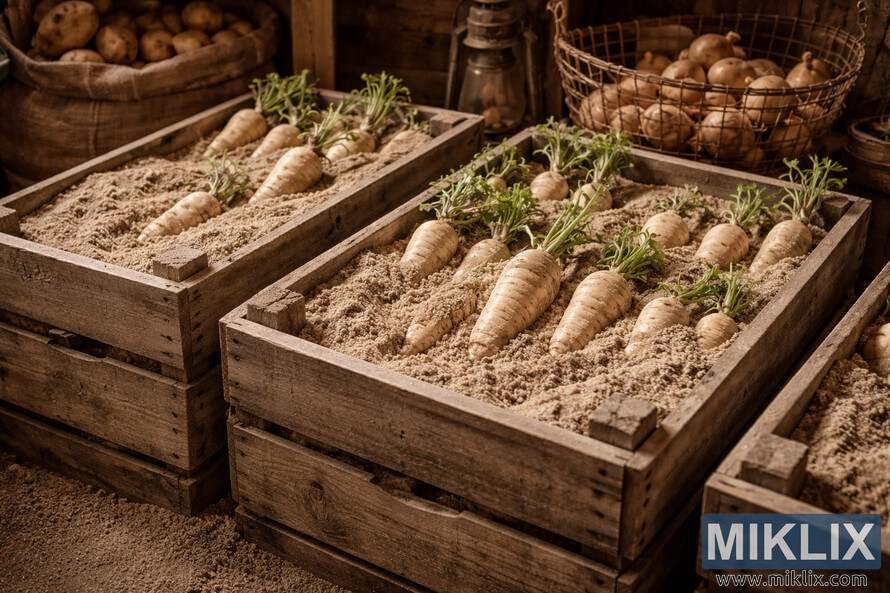
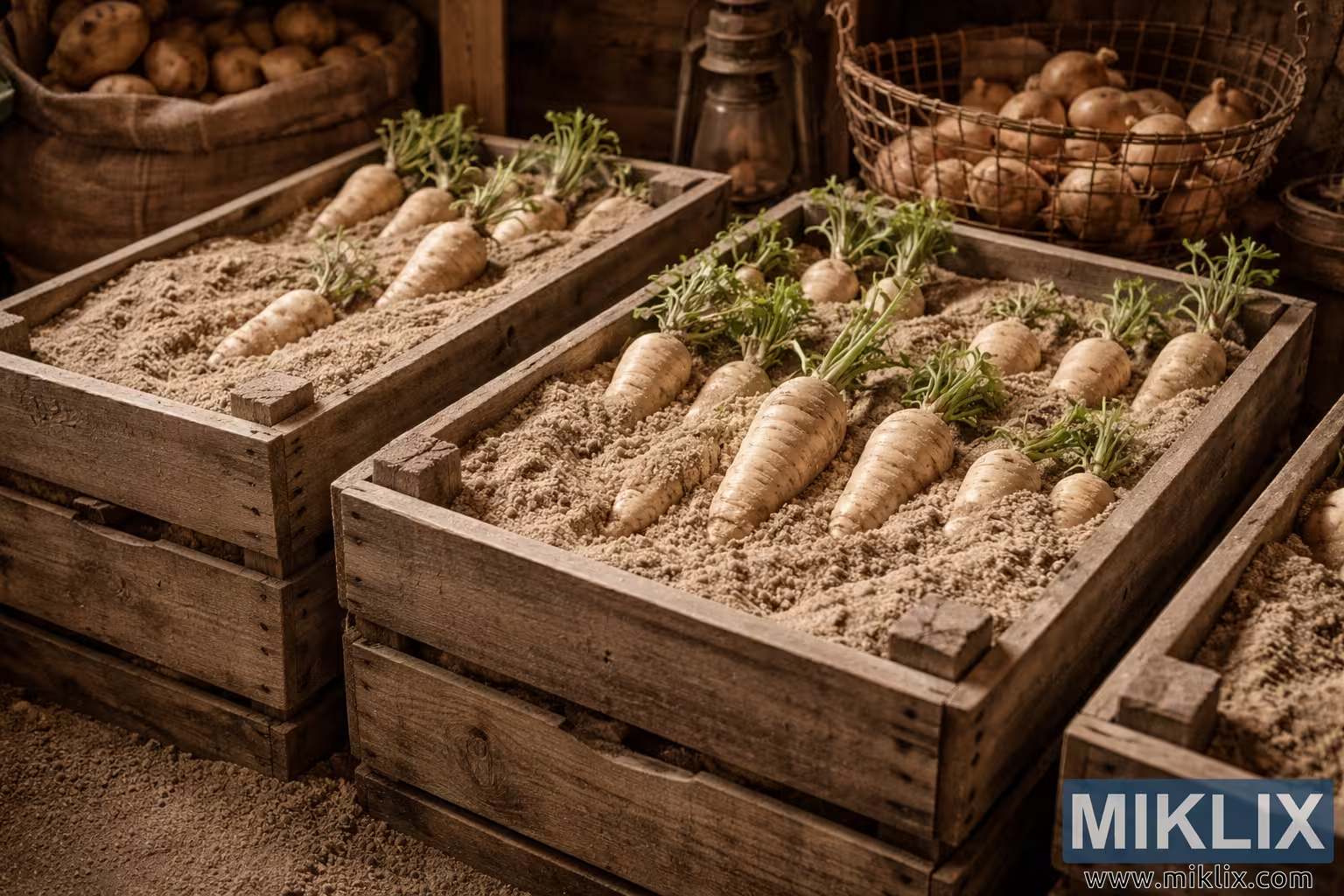
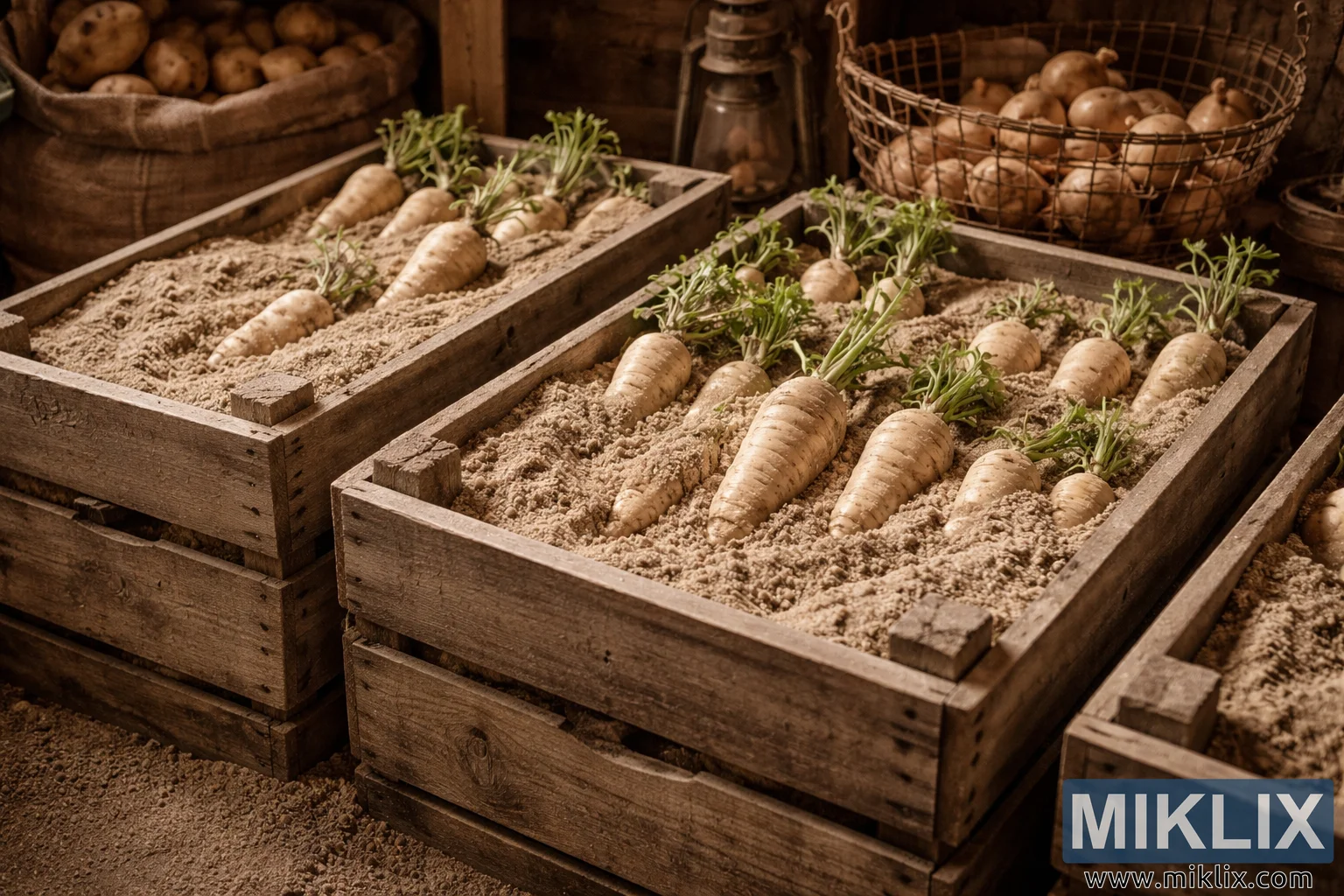
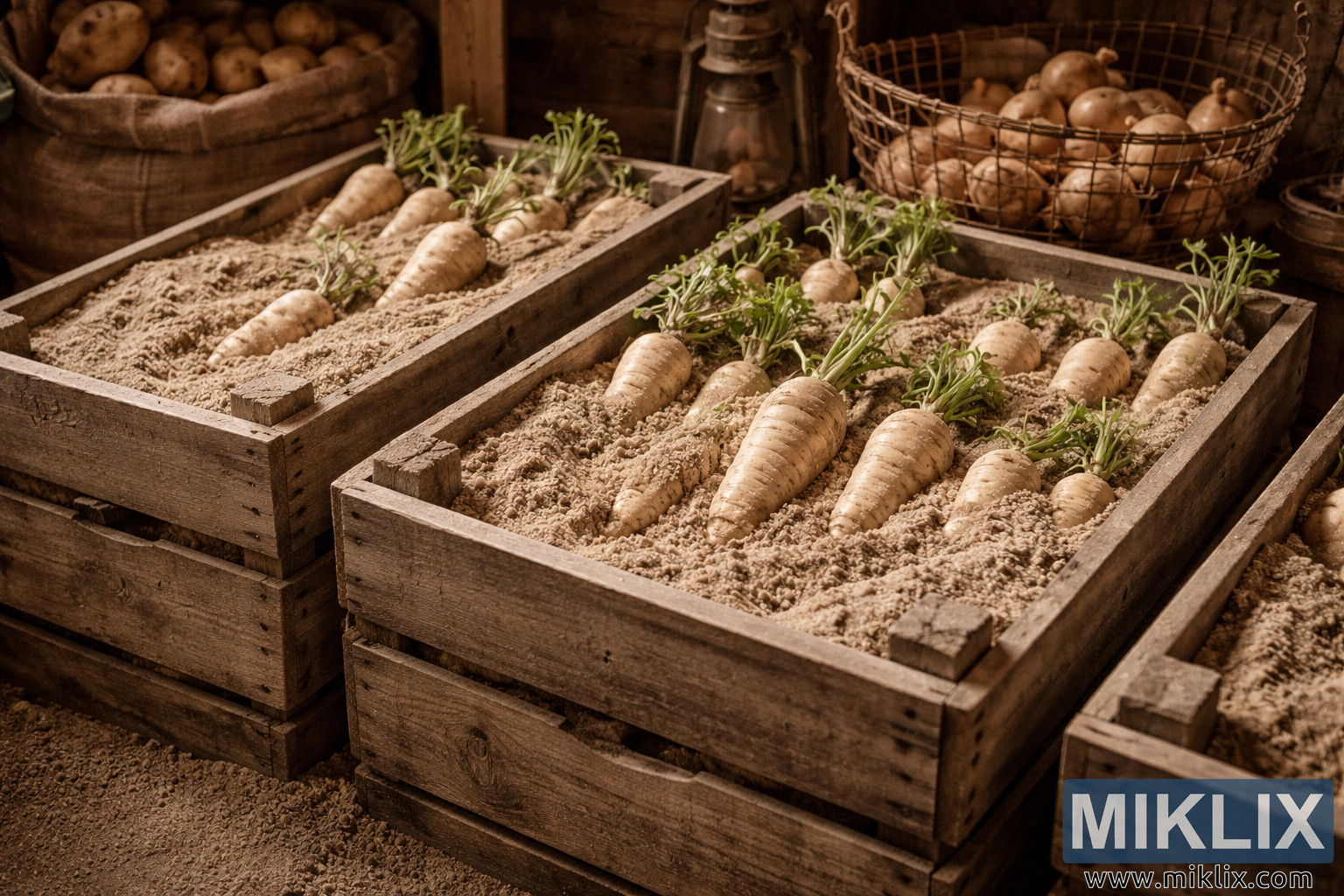
Fresh parsnips preserved in sand-filled wooden crates inside a traditional cool cellar, a classic method for storing root vegetables through winter.
Parsnips Stored in Sand in a Rustic Root Cellar
Versões disponíveis desta imagem
Os arquivos de imagem disponíveis para download abaixo são menos compactados e de maior resolução - e, como resultado, de maior qualidade - do que as imagens incorporadas em artigos e páginas deste site, que são mais otimizadas para o tamanho do arquivo a fim de reduzir o consumo de largura de banda.
Tamanho normal (1,536 x 1,024)
Tamanho grande (3,072 x 2,048)
Tamanho muito grande (4,608 x 3,072)
Tamanho extragrande (6,144 x 4,096)
Tamanho comicamente grande (1,048,576 x 699,051)
- Ainda estou fazendo o upload... ;-)
Descrição da imagem
A rustic cellar storage scene displays freshly harvested parsnips carefully preserved in shallow wooden crates filled with light brown sand. The crates are arranged side by side and stacked in a sturdy, practical manner, suggesting a traditional root cellar designed for long-term storage of vegetables through the colder months. Each crate holds several large, pale cream-colored parsnips partially buried in sand, with their tapered shapes and slightly textured skins visible above the surface. A few of the vegetables still show short green stems, hinting that they were recently harvested from the garden.
The sand surrounding the parsnips appears slightly coarse and loosely packed, providing insulation and moisture control that helps keep the vegetables fresh for extended periods. This classic storage technique protects the roots from drying out while preventing rot by maintaining stable humidity. The arrangement is neat and deliberate, with the parsnips spaced evenly to allow airflow while remaining supported by the sand.
The cellar itself is dimly lit with warm, soft light that highlights the natural textures of wood, soil, and vegetables. The wooden crates have a weathered appearance, with visible grain, knots, and rough edges that emphasize their practical use rather than decorative purpose. Their sturdy construction suggests they have been used for many harvest seasons.
In the background, other stored produce adds context to the scene. A large burlap sack filled with potatoes rests to one side, while a metal wire basket holds several golden-brown onions. These additional vegetables reinforce the atmosphere of a traditional food storage space used for preserving autumn harvests. An old metal lantern sits on a wooden surface behind the crates, contributing to the rustic aesthetic and suggesting that the cellar relies on simple lighting rather than modern fixtures.
The earthen floor and wooden walls of the cellar enhance the sense of cool, stable conditions typical of root cellars. The overall composition conveys practicality, sustainability, and self-sufficiency, capturing a timeless agricultural practice where root vegetables are stored naturally to remain fresh throughout the winter months. The image highlights both the simplicity and effectiveness of this traditional preservation method, with the sand-filled crates acting as a natural storage system that has been relied upon for generations.
A imagem está relacionada a: Growing Parsnips: Your Complete Guide to Sweet, Homegrown Roots