
Imagem: Collard Greens Nutritional Content Visualization
Publicado:
Última atualização: 21 de julho de 2026 às 20:40:16 UTC
Explore the detailed nutritional composition of collard greens through a vivid infographic highlighting vitamins, minerals, fiber, and calorie content. This educational visualization presents the health benefits of collard greens in a clear and engaging format.
Collard Greens Nutritional Content Visualization
Versões disponíveis desta imagem
Os arquivos de imagem disponíveis para download abaixo são menos compactados e de maior resolução - e, como resultado, de maior qualidade - do que as imagens incorporadas em artigos e páginas deste site, que são mais otimizadas para o tamanho do arquivo a fim de reduzir o consumo de largura de banda.
Tamanho normal (1,536 x 1,024)
Tamanho grande (3,072 x 2,048)
Tamanho muito grande (4,608 x 3,072)
Tamanho extragrande (6,144 x 4,096)
Tamanho comicamente grande (1,048,576 x 699,051)
- Ainda estou fazendo o upload... ;-)
Descrição da imagem
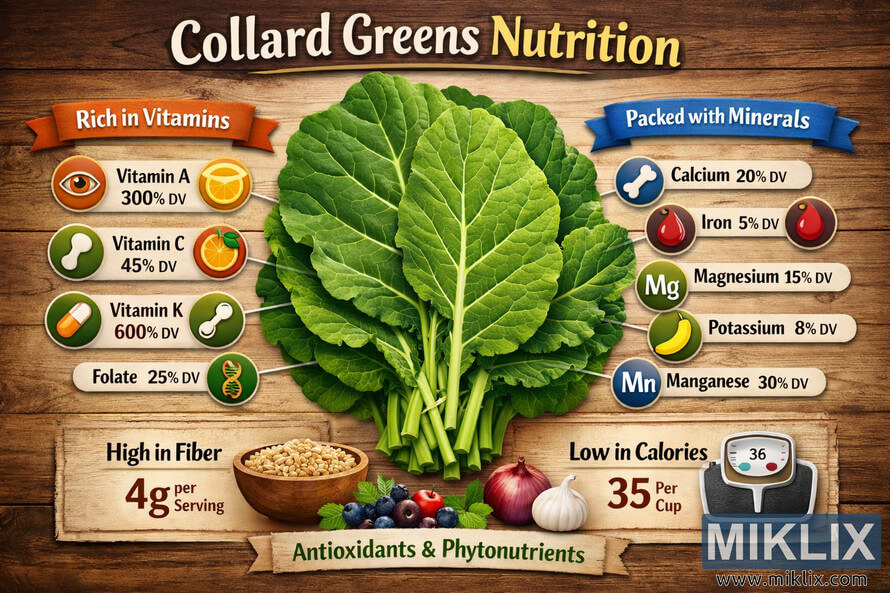
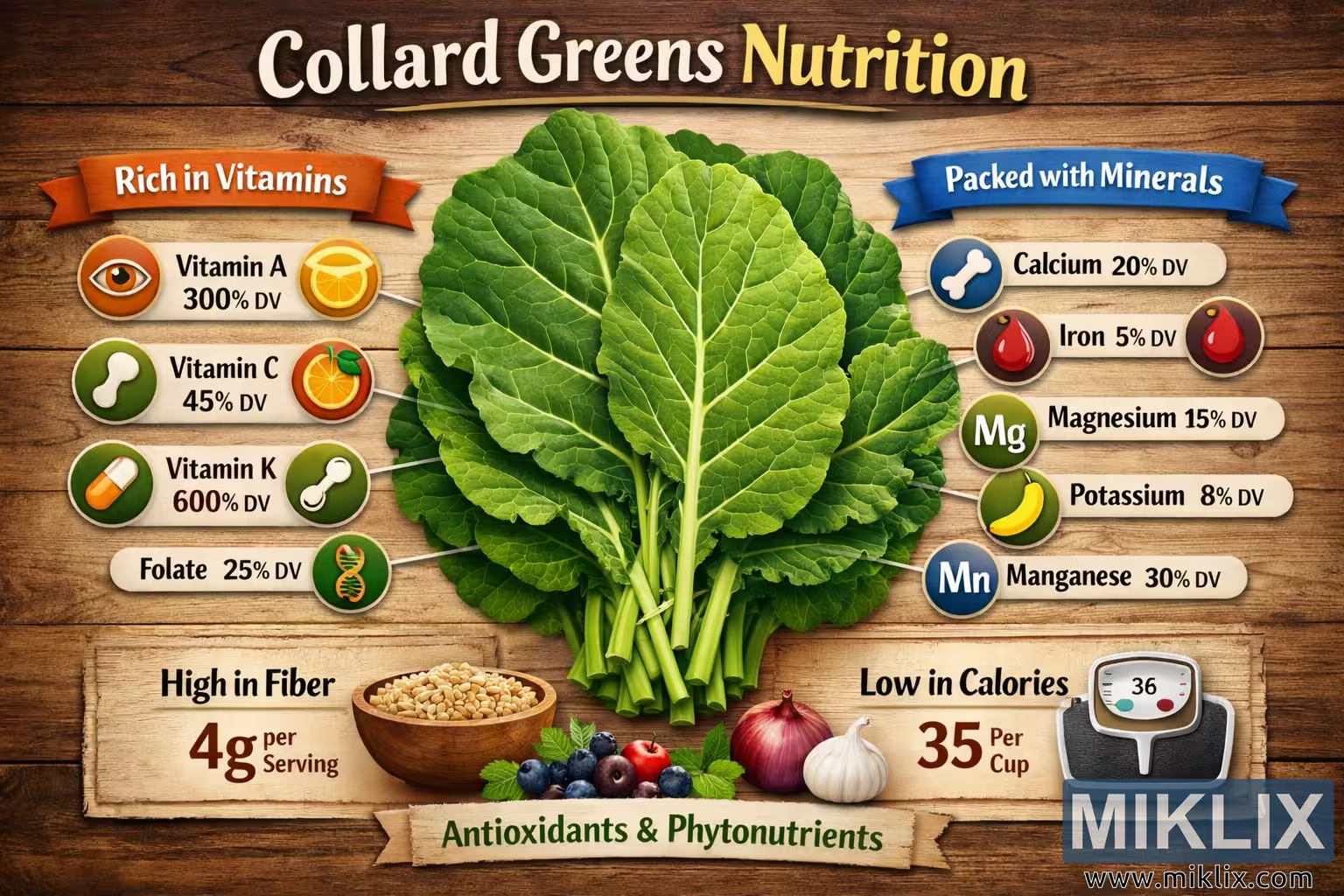
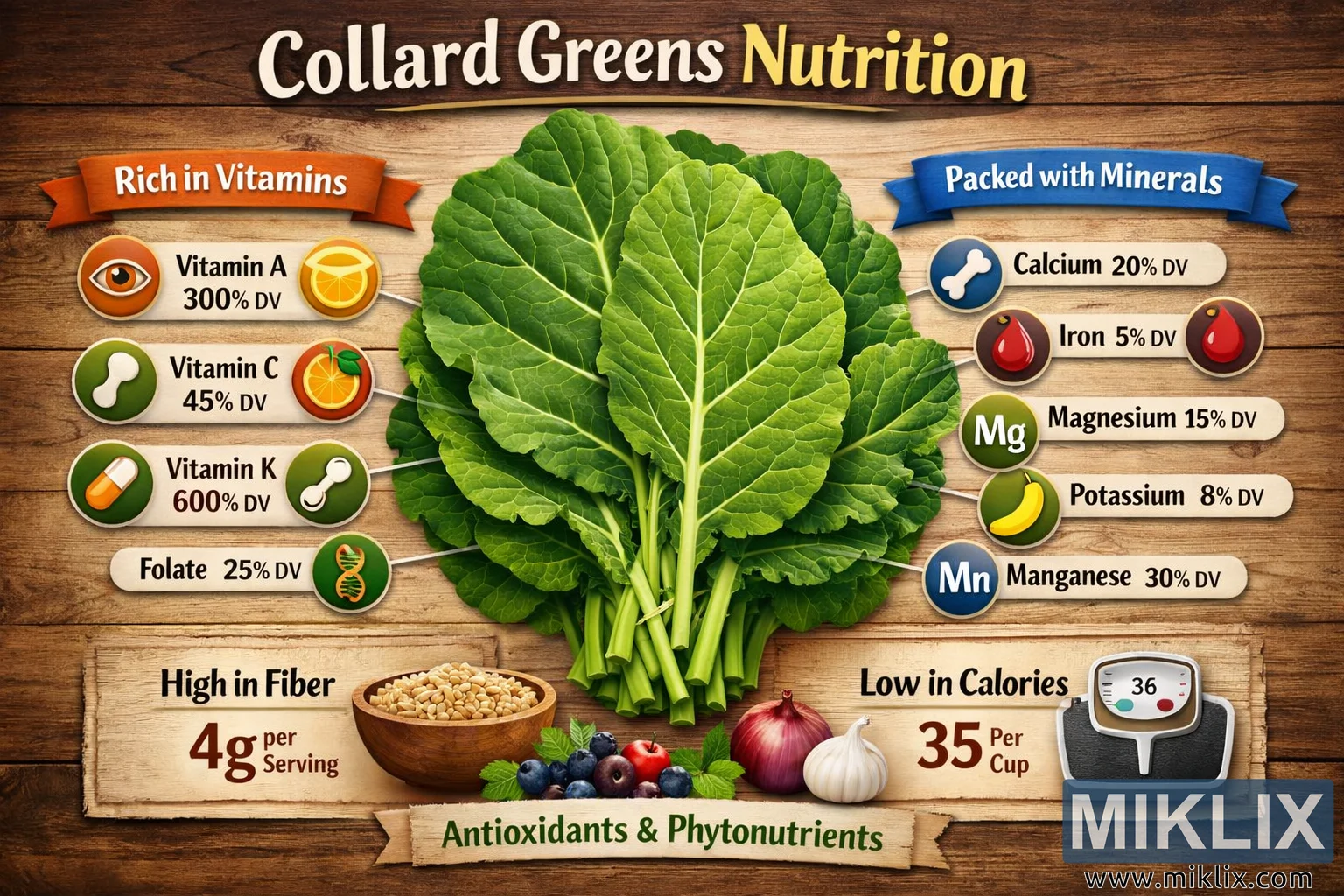
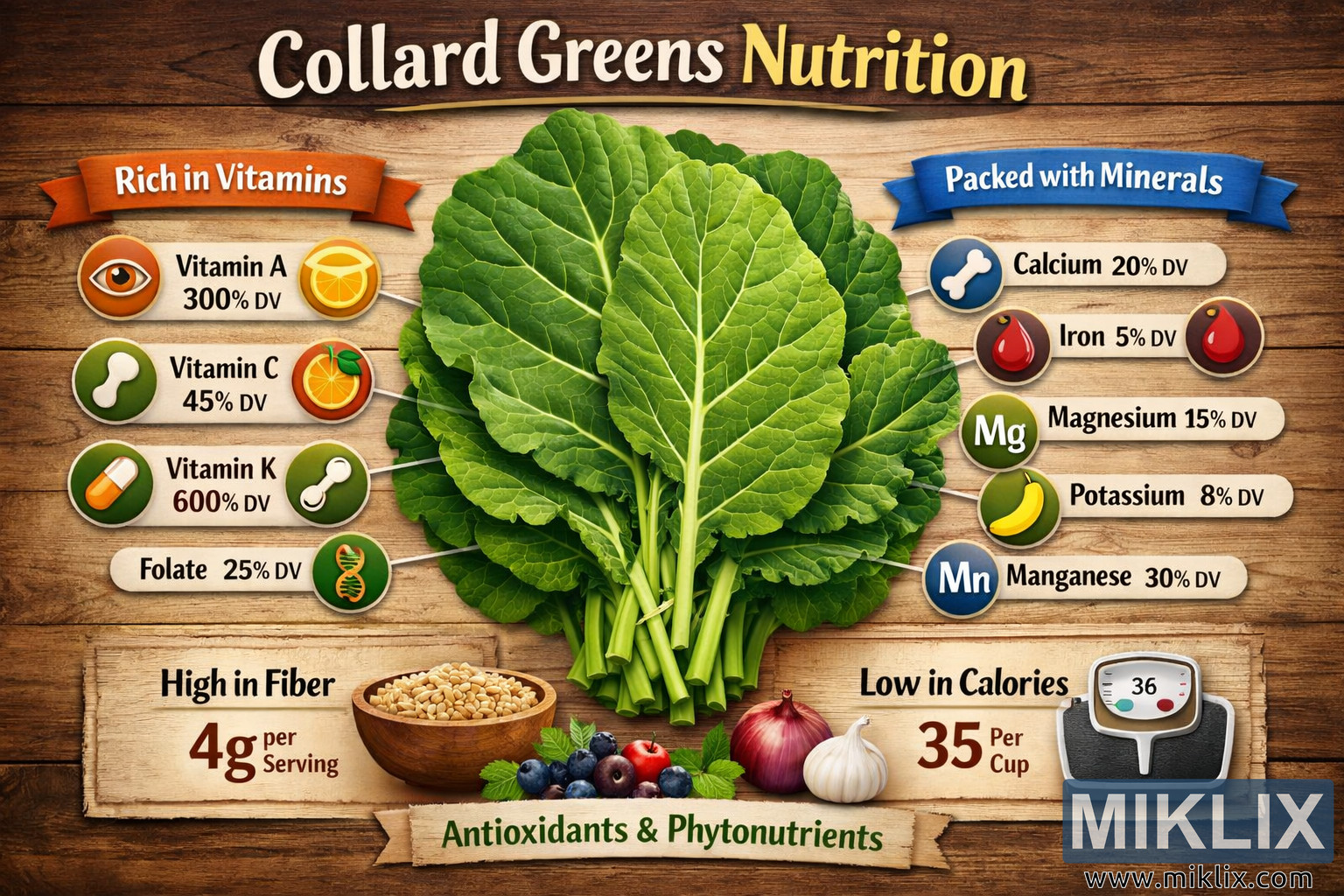
The image is a high-resolution, landscape-oriented infographic that visually communicates the nutritional richness of collard greens. At the top, the title 'Collard Greens Nutrition' is prominently displayed in large, bold lettering, combining white and yellow hues that stand out against a warm wooden background. The typography evokes a natural, wholesome feeling, setting the tone for the entire composition.
In the center of the image, a large, detailed bunch of collard greens dominates the visual field. The leaves are rendered with remarkable realism—deep green tones, visible veins, and subtle highlights that suggest freshness and vitality. The collard greens serve as the focal point, anchoring the surrounding nutritional data that radiates outward in a balanced, symmetrical layout.
To the left side of the image, a section titled 'Rich in Vitamins' appears on an orange banner with white text. This section features several circular icons connected to the collard greens by thin lines, symbolizing the relationship between the vegetable and its nutrient content. Each icon is color-coded and accompanied by a small illustration that represents the specific vitamin’s function or source. For example, 'Vitamin A 300% DV' is paired with an eye icon, emphasizing its role in vision health. 'Vitamin C 45% DV' includes an orange slice, suggesting citrus-like antioxidant properties. 'Vitamin K 600% DV' is linked to a bone icon, highlighting its importance in bone strength and blood clotting. 'Vitamin B6 10% DV' and 'Folate 25% DV' are represented by a capsule and a DNA helix respectively, underscoring their roles in metabolism and cellular function.
On the right side, a complementary section titled 'Packed with Minerals' is displayed on a blue banner with white text. This section mirrors the design of the vitamin area, maintaining visual harmony. Circular icons with concise labels and percentage values are connected to the collard greens by fine lines. 'Calcium 20% DV' features a bone icon, reinforcing its skeletal benefits. 'Iron 5% DV' is symbolized by a red blood drop, indicating its role in oxygen transport. 'Magnesium 15% DV' and 'Potassium 8% DV' are represented by an Mg symbol and a banana icon respectively, while 'Manganese 30% DV' is marked with an Mn symbol. The consistent iconography and color palette make the information easy to digest while maintaining aesthetic appeal.
At the bottom of the infographic, two smaller sections provide additional nutritional highlights. On the left, 'High in Fiber' is written above '4g per Serving' accompanied by an illustration of a wooden bowl filled with grains, symbolizing digestive health and satiety. On the right, 'Low in Calories' is written above '35 Per Cup' with an image of a weighing scale displaying the number 35, emphasizing the vegetable’s suitability for calorie-conscious diets.
The final banner at the bottom center reads 'Antioxidants & Phytonutrients' in green text on a beige background. Surrounding this banner are small illustrations of garlic, red onion, and berries—blueberries and a blackberry—representing the synergistic health benefits of plant-based foods rich in antioxidants. These elements add visual diversity and reinforce the theme of natural wellness.
The overall composition is meticulously balanced, with warm and cool tones complementing each other. The wooden background provides a rustic, organic feel, while the bright greens and colorful icons create contrast and visual interest. The lighting is even and soft, ensuring that every detail—from the texture of the leaves to the fine text—is legible and inviting.
This infographic not only serves as an educational tool but also as a visually appealing piece of design. It effectively communicates complex nutritional data through intuitive visual metaphors and clear labeling. The viewer is guided naturally from the central collard greens outward to the surrounding information, creating a sense of flow and coherence. The image celebrates the health benefits of collard greens, portraying them as a powerhouse of vitamins, minerals, fiber, and antioxidants. It invites viewers to appreciate the vegetable’s nutritional depth and encourages healthy eating through engaging visual storytelling.
A imagem está relacionada a: Collard Greens: The Leafy Green Your Diet Is Missing