
Imagem: Moroccan Lamb Tagine with Quince and Aromatic Spices in Rustic Earthenware
Publicado:
Última atualização: 6 de junho de 2026 às 14:30:38 UTC
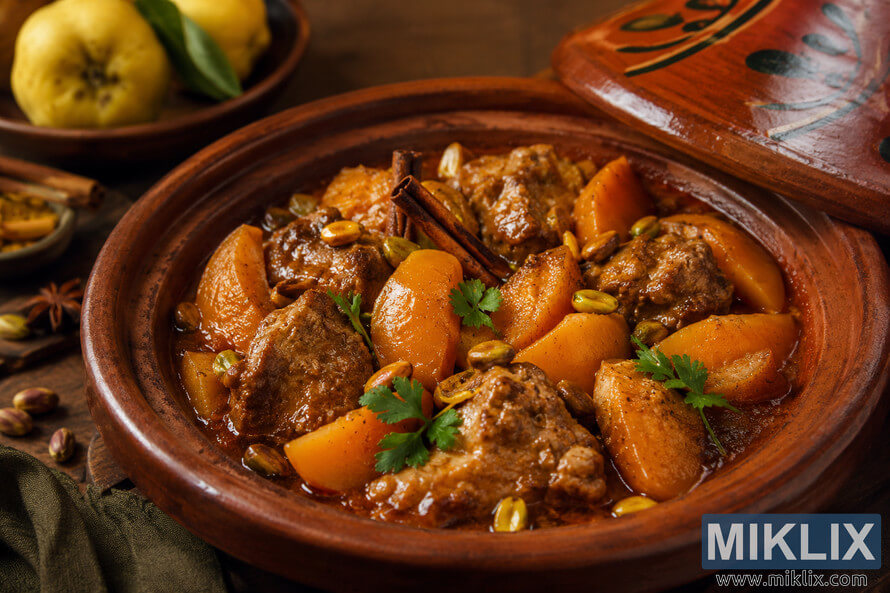
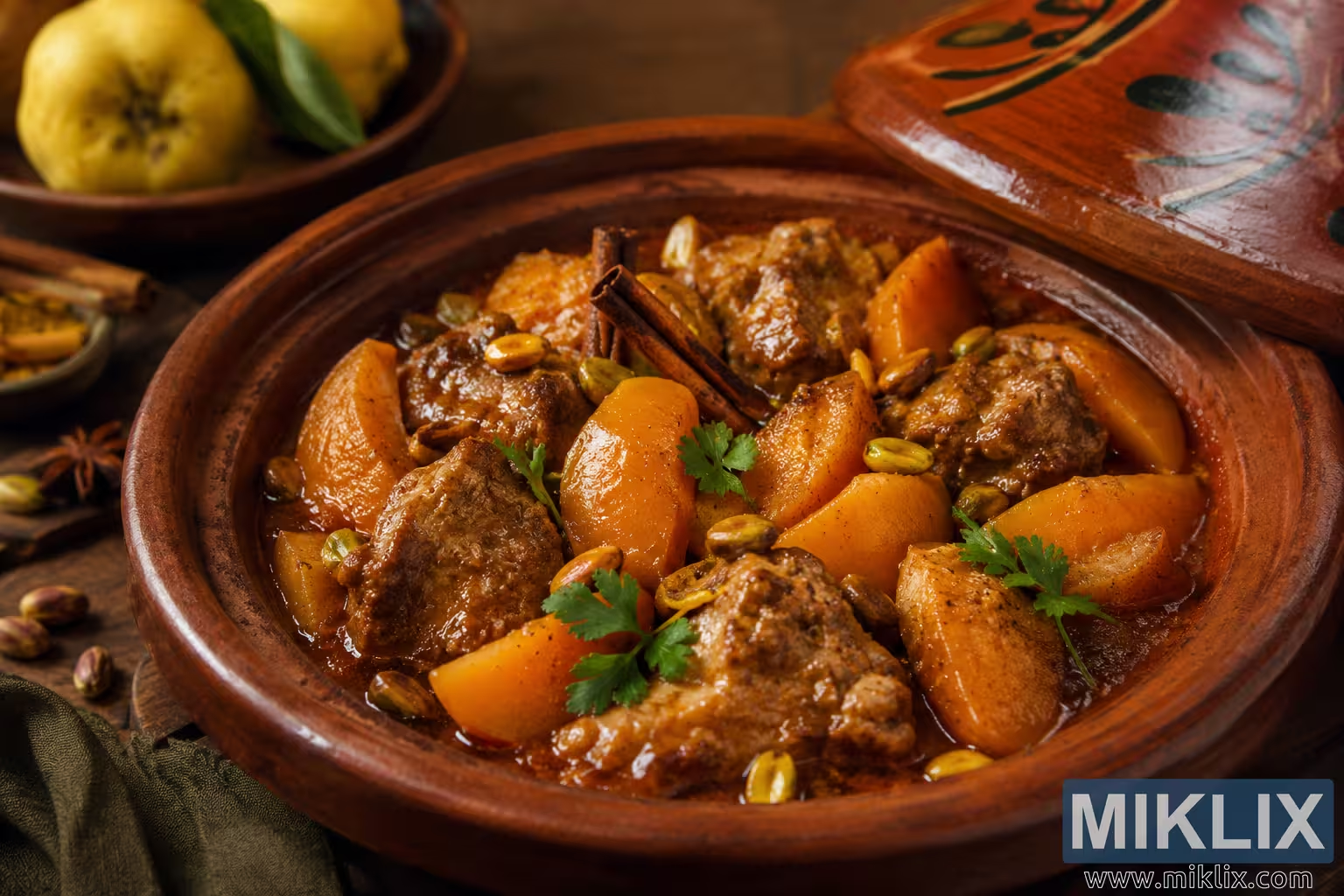
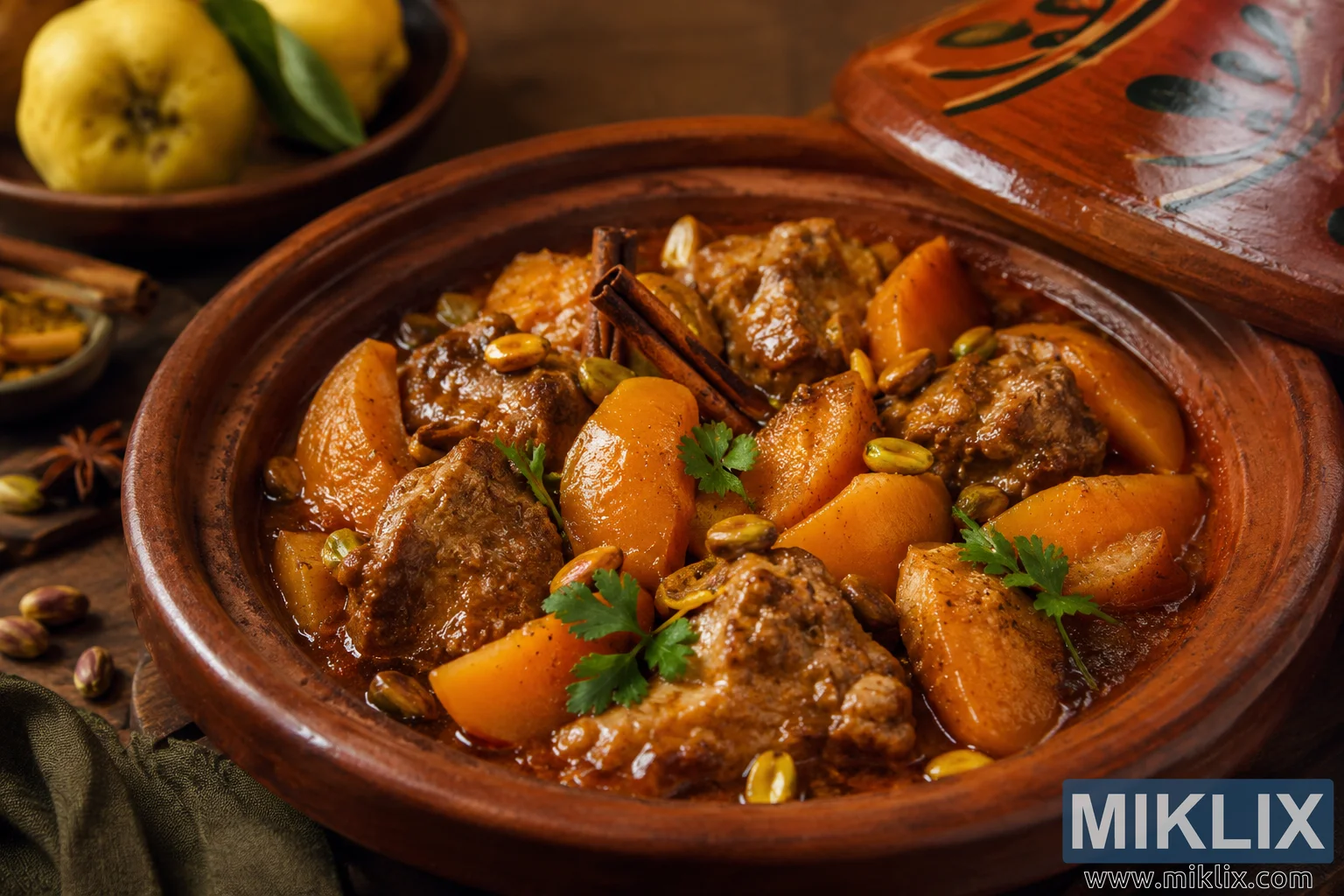
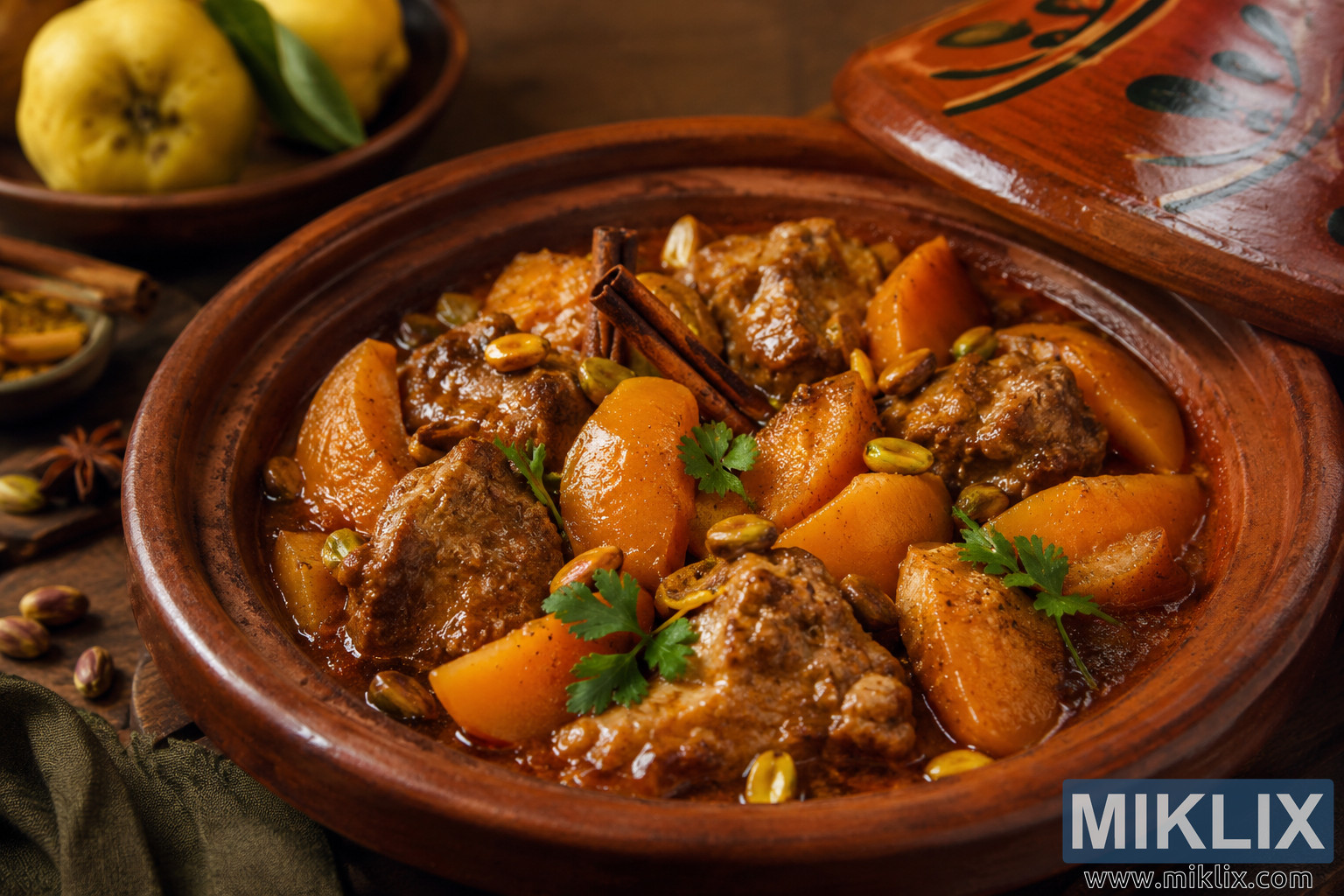
A richly styled Moroccan lamb tagine with quince and aromatic spices presented in a traditional terracotta dish. The warm rustic food scene features tender braised lamb, glossy quince wedges, pistachios, cinnamon sticks, and fresh herbs in an authentic North African-inspired setting.
Moroccan Lamb Tagine with Quince and Aromatic Spices in Rustic Earthenware
Versões disponíveis desta imagem
Os arquivos de imagem disponíveis para download abaixo são menos compactados e de maior resolução - e, como resultado, de maior qualidade - do que as imagens incorporadas em artigos e páginas deste site, que são mais otimizadas para o tamanho do arquivo a fim de reduzir o consumo de largura de banda.
Tamanho normal (1,536 x 1,024)
Tamanho grande (3,072 x 2,048)
Tamanho muito grande (4,608 x 3,072)
Tamanho extragrande (6,144 x 4,096)
Tamanho comicamente grande (1,048,576 x 699,051)
- Ainda estou fazendo o upload... ;-)
Descrição da imagem
A richly detailed landscape-oriented food photograph captures a traditional Moroccan lamb tagine presented in a rustic terracotta serving dish. The composition centers around a large circular clay tagine base filled with a slow-cooked stew of tender lamb and golden quince wedges bathed in a glossy, spice-infused sauce. The warm earthy tones dominate the image, creating an inviting atmosphere that evokes the feeling of an authentic North African dining experience. The lighting is soft and cinematic, emphasizing the textures of the ingredients while casting gentle highlights across the glazed surface of the sauce and the polished clay vessel.
The lamb appears deeply braised, with large succulent pieces arranged naturally throughout the dish. Each piece of meat has a caramelized exterior that suggests hours of slow cooking in aromatic spices. The quince wedges are prominently visible between the lamb pieces, their orange-golden color contrasting beautifully against the darker reddish-brown sauce. The fruit appears soft and glossy, suggesting it has absorbed the sweet and savory flavors of the tagine while maintaining its shape. Tiny specks of seasoning and spice are visible throughout the sauce and across the ingredients, adding realism and visual depth to the image.
Several cinnamon sticks are positioned near the center of the dish, reinforcing the aromatic spice profile commonly associated with Moroccan cuisine. Scattered pistachios add vibrant green accents and subtle texture variation across the composition. Fresh parsley or cilantro leaves are delicately placed on top as garnish, introducing a fresh green contrast that enhances the warmth of the surrounding tones. The sauce itself appears thick and luxurious, lightly pooling at the bottom of the tagine and reflecting the ambient light with a glossy sheen.
The terracotta dish is an important visual feature of the composition. Its hand-crafted appearance and slightly uneven texture contribute authenticity and warmth to the scene. The reddish-brown clay surface frames the food naturally while reinforcing the traditional culinary heritage associated with tagine cooking. In the upper right corner of the image, part of the conical tagine lid is visible, decorated with dark painted motifs that hint at handcrafted Moroccan artistry. The partial placement of the lid creates the impression that the dish has just been opened and is ready to serve.
The background and surrounding props further enrich the atmosphere without distracting from the main subject. The tagine rests on a rustic wooden tabletop with visible grain patterns and warm brown tones that harmonize with the clay cookware. In the softly blurred background, whole quinces can be seen resting in a shallow bowl, subtly reinforcing the featured ingredient in the dish. Small scattered spices, including star anise and cinnamon, are arranged naturally around the scene, helping to communicate the fragrant and spice-driven nature of the recipe. A dark green fabric napkin drapes casually into the lower corner of the composition, adding softness and visual balance.
The overall photographic style emphasizes warmth, comfort, and authenticity. The shallow depth of field keeps the focus sharply on the lamb, quince, and garnishes while softly blurring the background elements to create depth and intimacy. The lighting appears natural and directional, likely coming from the side, creating dimensional highlights and soft shadows that accentuate the textures of the food and pottery. The image has a refined editorial food-photography aesthetic while still feeling rustic and approachable.
Color plays a major role throughout the image. Deep browns, burnt oranges, amber highlights, and muted reds dominate the palette, complemented by subtle green accents from herbs and pistachios. The resulting visual effect is both luxurious and earthy, perfectly matching the comforting and aromatic qualities associated with a Moroccan lamb tagine. The composition feels abundant yet balanced, carefully styled to celebrate the richness of slow-cooked cuisine and the sensory appeal of traditional Moroccan flavors.
A imagem está relacionada a: The Remarkable Health Benefits of Quince: Nature's Forgotten Superfruit