
Imagem: Comparison of Potato Cooking Methods and Their Glycemic Effects
Publicado:
Última atualização: 4 de agosto de 2026 às 13:57:12 UTC
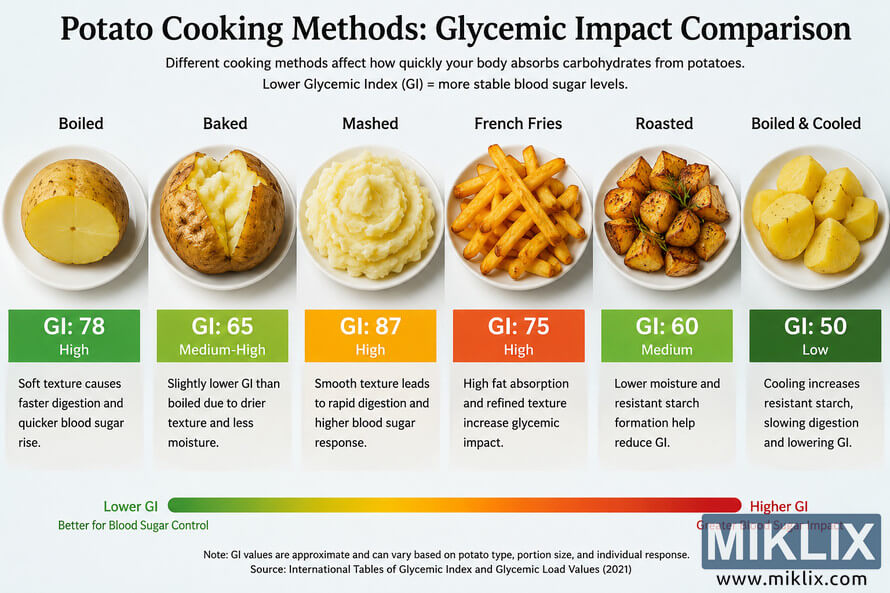
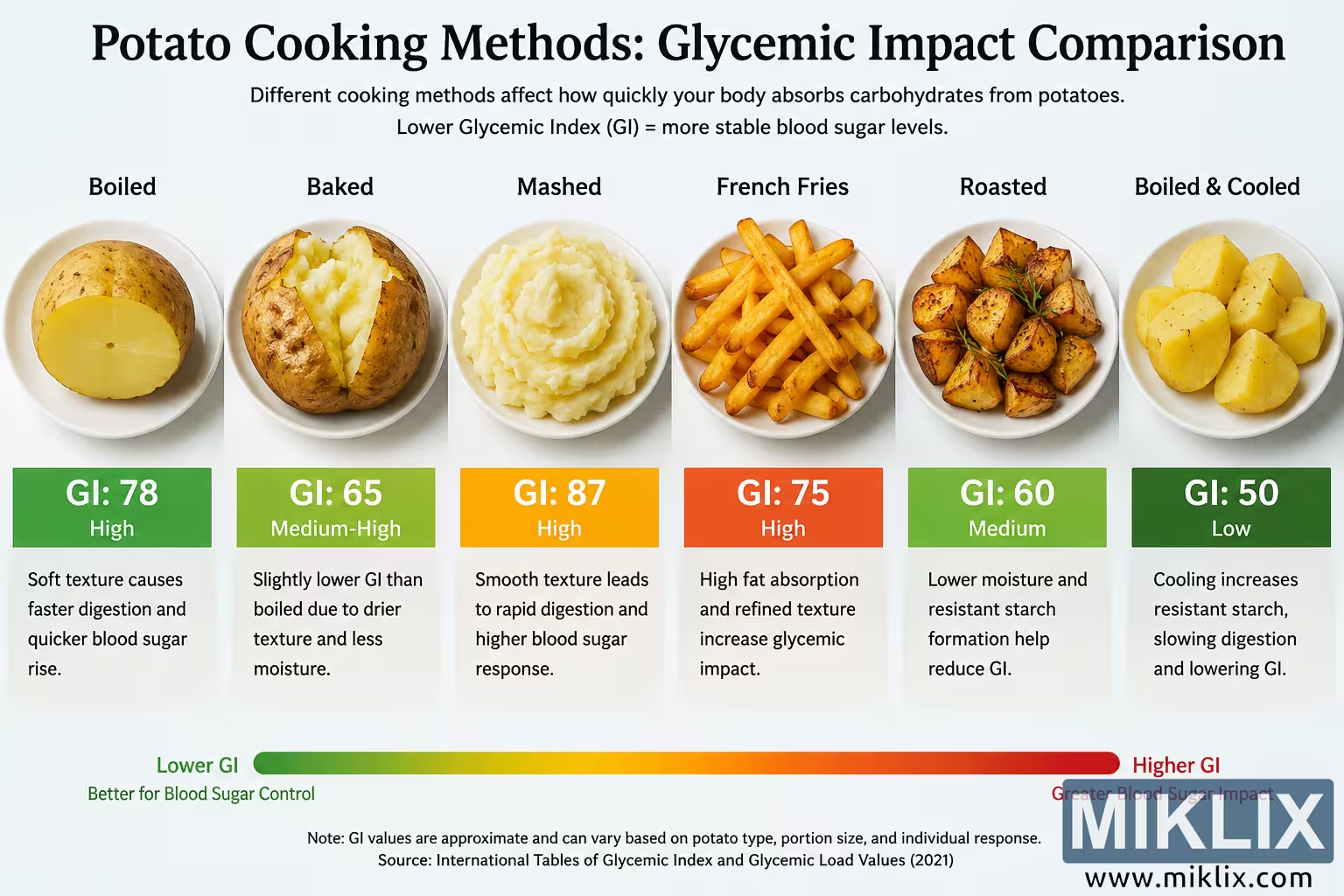
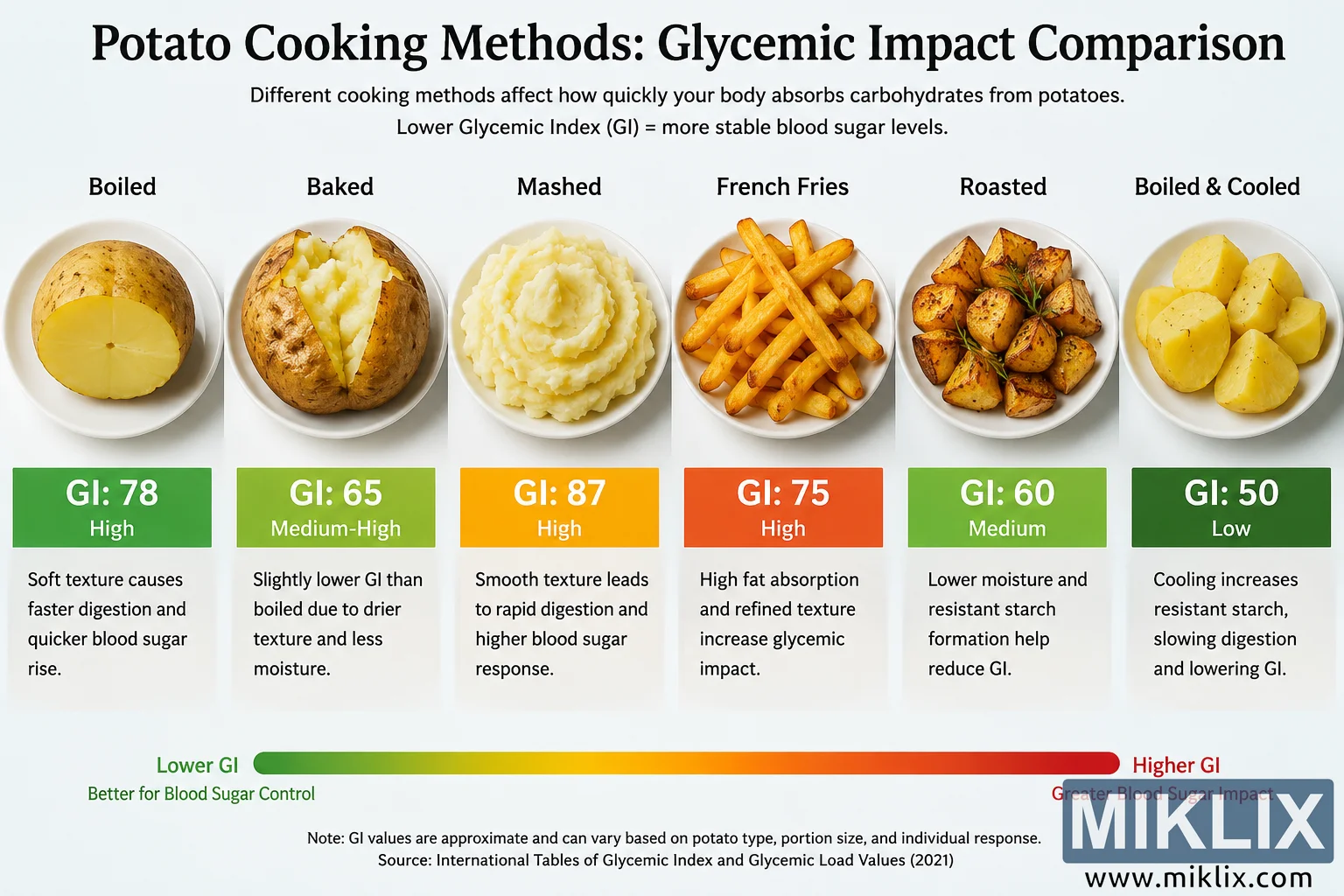
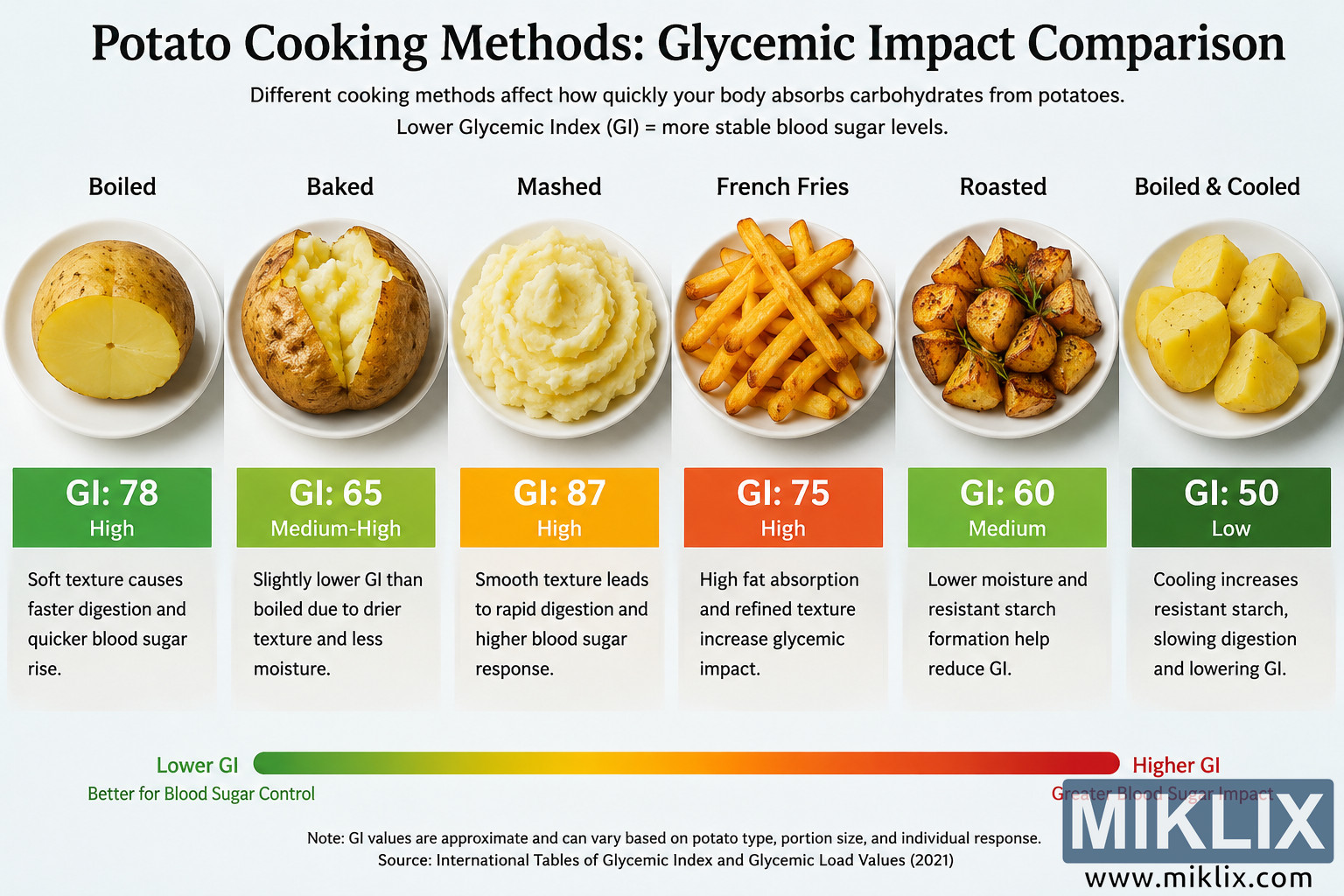
Educational landscape infographic illustrating how different potato cooking methods may influence glycemic response. The graphic compares boiled, baked, mashed, French fries, roasted, and cooled boiled potatoes using approximate glycemic index values, concise explanations, and a visual color scale from lower to higher glycemic impact.
Comparison of Potato Cooking Methods and Their Glycemic Effects
Versões disponíveis desta imagem
Os arquivos de imagem disponíveis para download abaixo são menos compactados e de maior resolução - e, como resultado, de maior qualidade - do que as imagens incorporadas em artigos e páginas deste site, que são mais otimizadas para o tamanho do arquivo a fim de reduzir o consumo de largura de banda.
Tamanho normal (1,536 x 1,024)
Tamanho grande (3,072 x 2,048)
Tamanho muito grande (4,608 x 3,072)
Tamanho extragrande (6,144 x 4,096)
Tamanho comicamente grande (1,048,576 x 699,051)
- Ainda estou fazendo o upload... ;-)
Descrição da imagem
This landscape-oriented educational infographic presents a side-by-side comparison of several common potato cooking methods and their relative glycemic effects. The overall design uses a clean, modern layout with a bright, neutral background that emphasizes the food photography and the informational content. A large, bold title spans the top of the composition, introducing the topic as a comparison of potato cooking methods and their glycemic impact. Beneath the title is a short explanatory subtitle describing that different preparation techniques influence how quickly carbohydrates from potatoes are absorbed, while also explaining that lower glycemic index values generally correspond to a slower blood sugar response. The infographic is organized into six evenly spaced vertical sections extending horizontally across the page, creating a visually balanced comparison. Each section contains a realistic, high-quality food photograph placed on a white plate. The photographs are consistently lit with soft shadows and neutral colors, giving the entire graphic a professional editorial appearance. The first section depicts a boiled potato cut in half to reveal its smooth yellow interior. Below the image is a prominent green information box containing an approximate glycemic index value, followed by a short qualitative classification and a concise explanation describing that the soft texture contributes to relatively rapid digestion. The second section features a baked potato split open with a fluffy interior visible through the skin. Its accompanying information panel displays another approximate glycemic index value and a brief note explaining that the drier texture may influence digestion differently than boiling. The third section shows a serving of creamy mashed potatoes presented as a neatly swirled mound. Its information box contains an approximate glycemic index figure along with a brief explanation that the smooth consistency can contribute to faster digestion and a stronger blood glucose response. The fourth section presents a serving of French fries arranged in a small pile on a white plate. Beneath the photograph is an information panel with an approximate glycemic index value and a short explanation noting that frying changes the texture and overall nutritional characteristics. The fifth section illustrates roasted potato pieces with browned edges and a small herb garnish that adds visual appeal. Its accompanying panel provides an approximate glycemic index value together with a concise explanation suggesting that roasting may influence starch characteristics differently from boiling or mashing. The sixth and final section displays several pieces of boiled potato that have been cooled after cooking. The corresponding information box highlights a comparatively lower approximate glycemic index value and explains that cooling cooked potatoes promotes the formation of resistant starch, which may reduce the glycemic response relative to freshly cooked potatoes. Each information panel uses a color progression ranging from green through yellow and orange to red, visually reinforcing the relative position of each preparation method on a spectrum from lower to higher glycemic impact. The typography is large and highly legible, with consistent spacing and alignment throughout the infographic. Near the bottom of the composition is a long horizontal gradient bar that transitions smoothly from green on the left to red on the right. Text labels at each end indicate lower versus higher glycemic impact, helping readers quickly interpret the comparative values shown above. A small note beneath the gradient clarifies that glycemic index values are approximate and can vary depending on potato variety, preparation details, serving size, and individual physiological response. An additional source attribution appears below the note in smaller text, reinforcing the educational intent of the graphic. The overall visual style combines realistic food photography with clear infographic design principles, including generous white space, consistent alignment, color-coded information boxes, and concise explanatory text. The composition is designed to communicate comparative nutritional information quickly while remaining visually attractive and easy to understand. No commercial branding, product packaging, logos, watermarks, or advertising elements are visible anywhere in the image. Instead, the focus remains entirely on the different potato preparations, their approximate glycemic characteristics, and the educational comparison presented through organized visual hierarchy and clean, accessible design.
A imagem está relacionada a: The Surprising Health Benefits of Potatoes: A Complete Nutrition Guide