
Imagem: Anti-Inflammatory Power of Watermelon on the Human Body
Publicado:
Última atualização: 16 de agosto de 2026 às 19:09:16 UTC
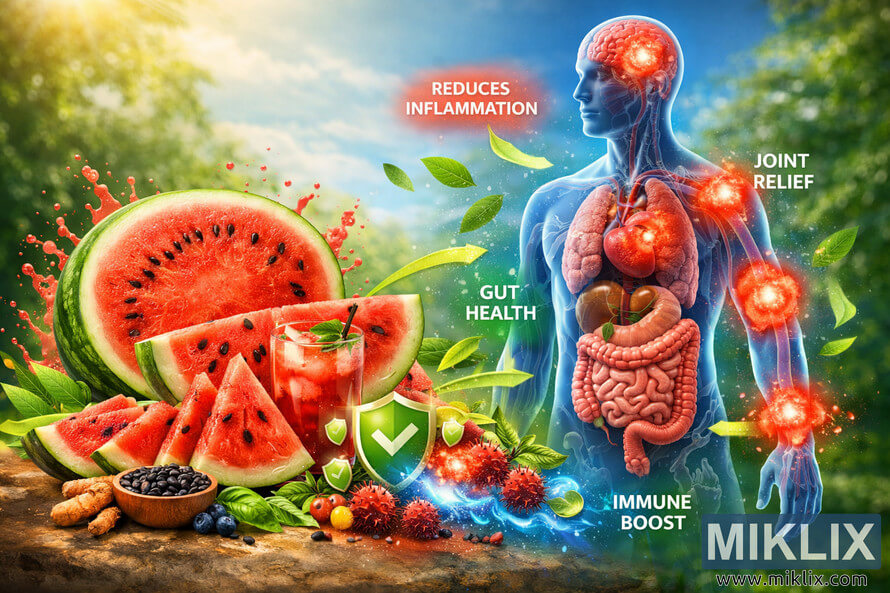
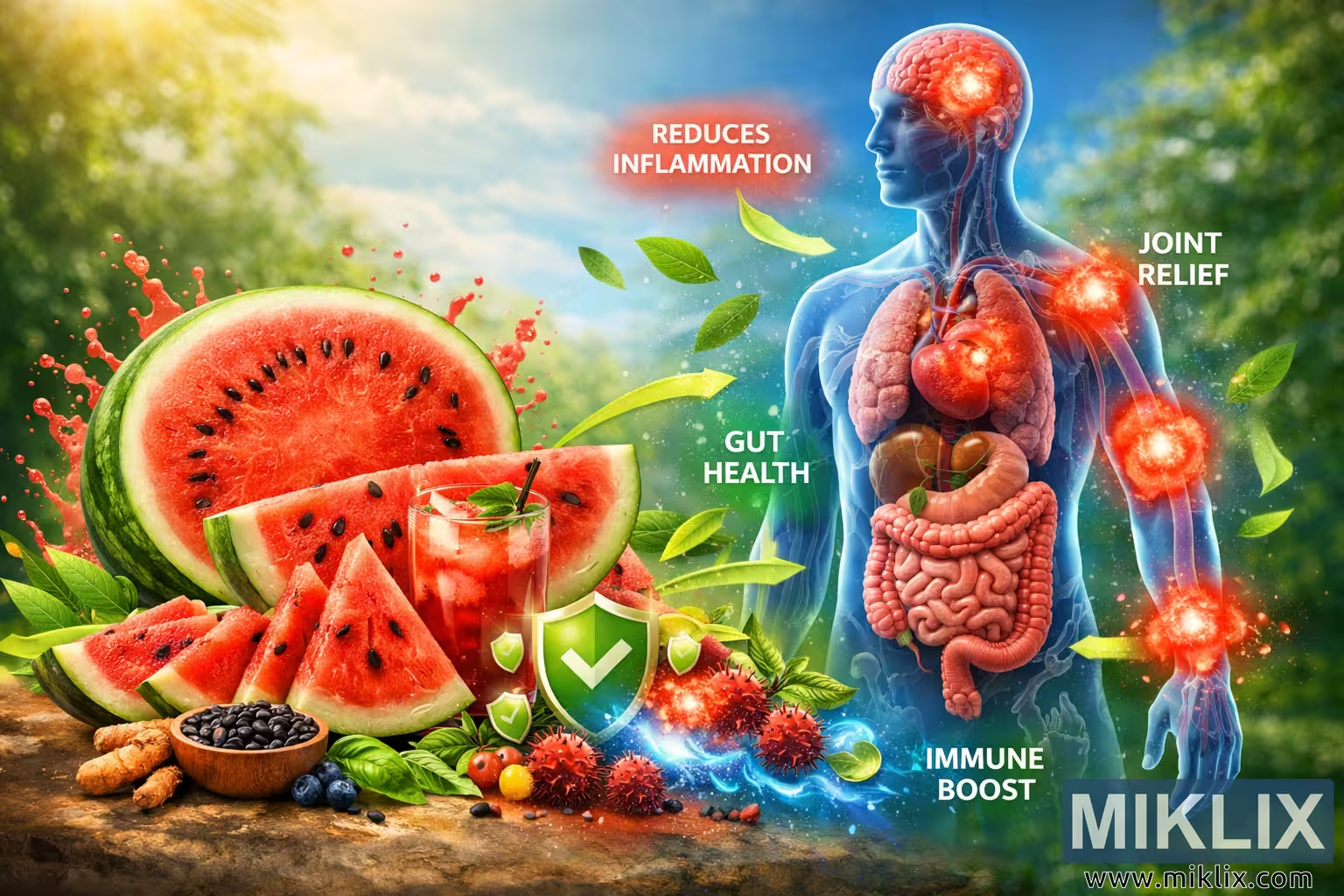
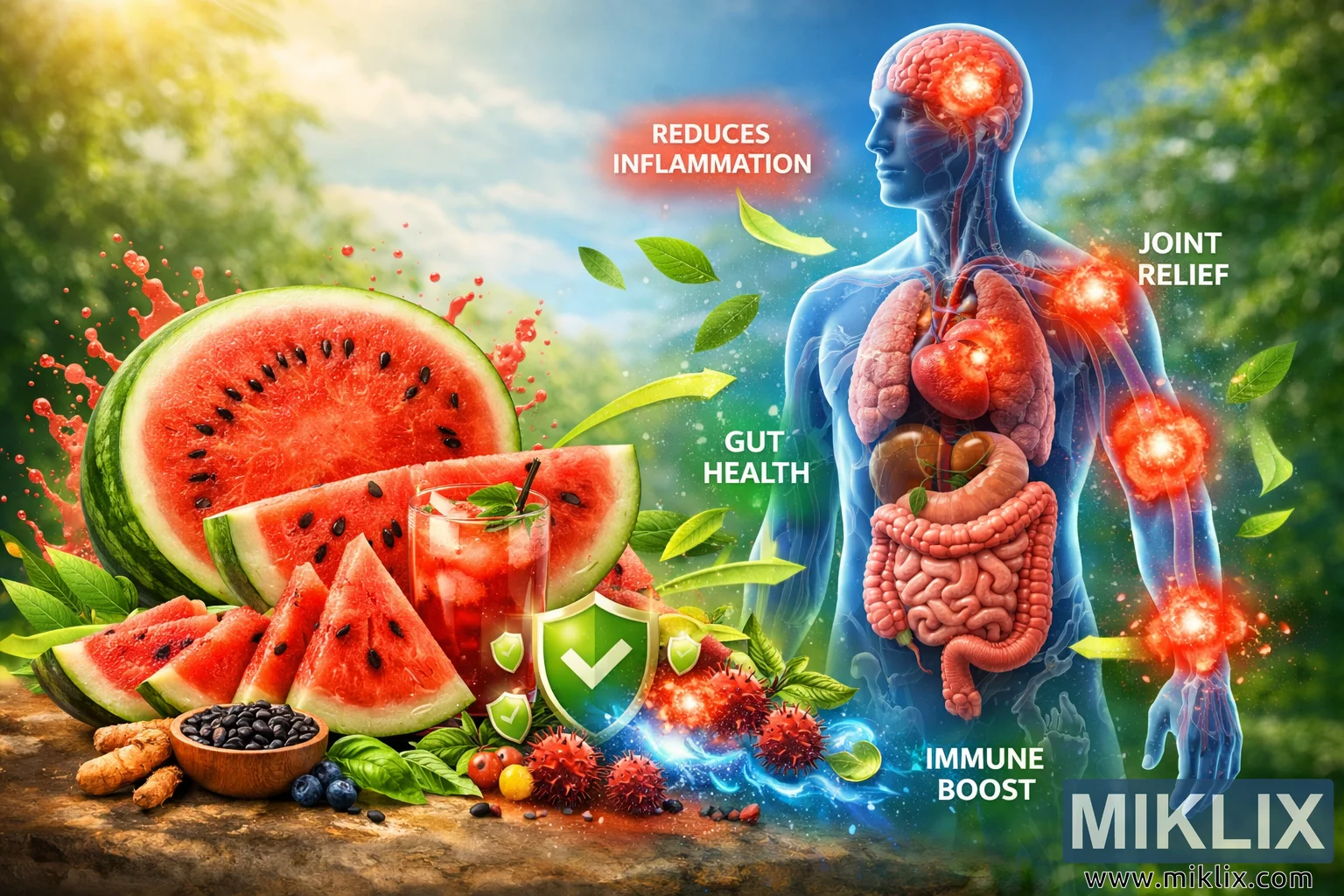
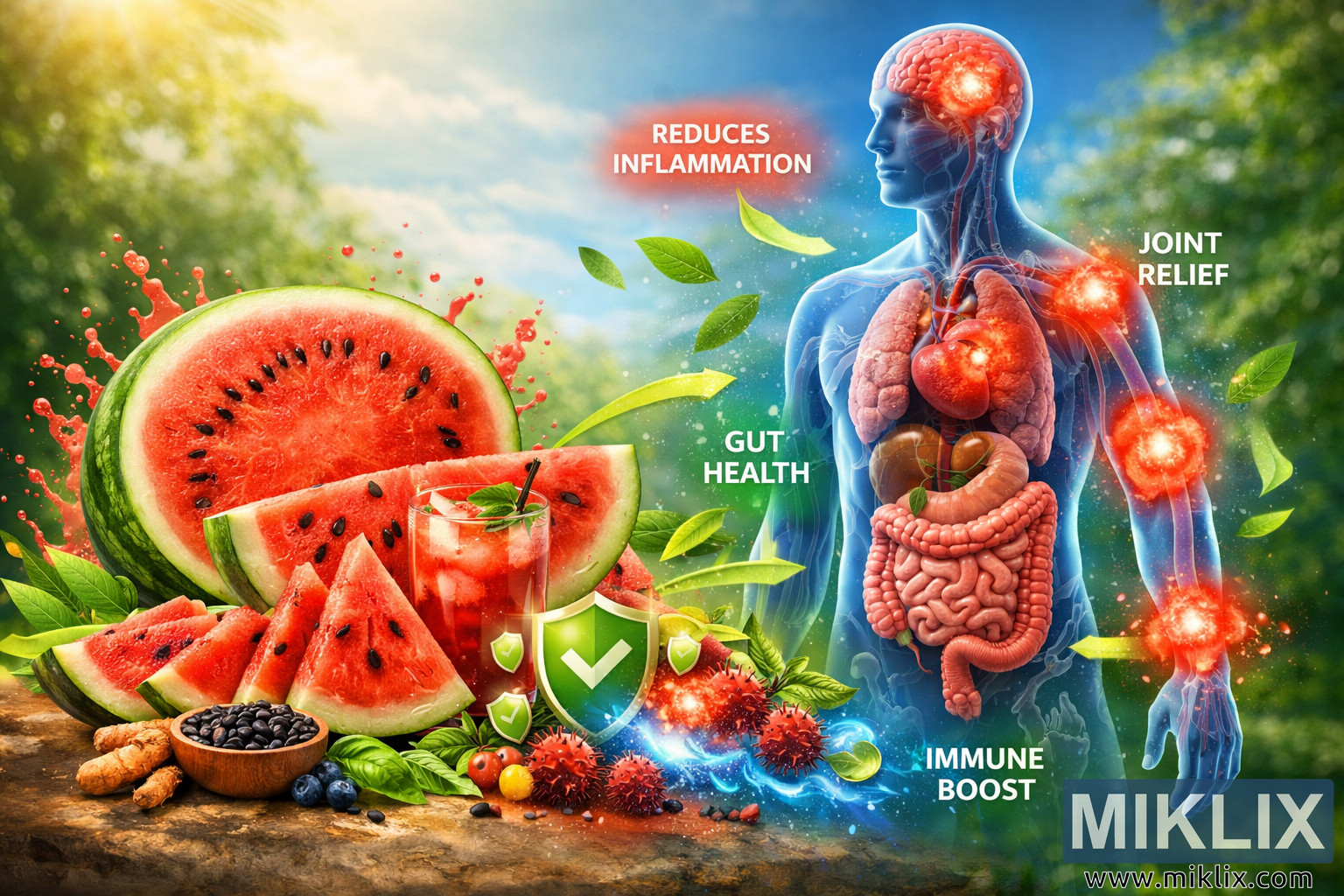
Landscape illustration showing the anti-inflammatory effects of watermelon on the human body, featuring a semi-transparent figure with highlighted inflamed areas, healing blue light, and labels like REDUCES INFLAMMATION, JOINT RELIEF, GUT HEALTH, and IMMUNE BOOST. Fresh watermelon slices, juice, seeds, turmeric, blueberries, and basil leaves symbolize natural, plant-based support for reduced inflammation, improved joint comfort, better gut health, and a stronger immune system.
Anti-Inflammatory Power of Watermelon on the Human Body
Versões disponíveis desta imagem
Os arquivos de imagem disponíveis para download abaixo são menos compactados e de maior resolução - e, como resultado, de maior qualidade - do que as imagens incorporadas em artigos e páginas deste site, que são mais otimizadas para o tamanho do arquivo a fim de reduzir o consumo de largura de banda.
Tamanho normal (1,536 x 1,024)
Tamanho grande (3,072 x 2,048)
Tamanho muito grande (4,608 x 3,072)
Tamanho extragrande (6,144 x 4,096)
Tamanho comicamente grande (1,048,576 x 699,051)
- Ainda estou fazendo o upload... ;-)
Descrição da imagem
This digitally created landscape-oriented illustration visually explores the anti-inflammatory effects of watermelon on the human body, combining scientific symbolism with vibrant, natural imagery. The scene is set outdoors, with a softly blurred green landscape stretching across the background, suggesting a lush field or garden bathed in warm daylight. Sunlight streams in from the upper left corner, casting a gentle glow over the entire composition and reinforcing the theme of health, vitality, and natural healing.
On the left side of the image, occupying a prominent position in the foreground, a large, sliced watermelon is displayed in vivid detail. One half of the watermelon is shown with its red, juicy flesh exposed, dotted with dark seeds and framed by a thick green rind. In front of this half, several triangular slices are arranged, their bright red interiors and crisp edges catching the light. The watermelon appears fresh and appetizing, with tiny droplets and splashes of red juice around it, emphasizing its hydrating and refreshing qualities. Next to the slices, a clear glass filled with watermelon juice stands upright, packed with ice cubes and garnished with a small sprig of green mint. The glass reflects the surrounding light, making the drink look cool and invigorating. Beside the glass, a small wooden bowl holds a collection of dark seeds, symbolizing nutrient density and natural compounds.
Around the bowl and glass, additional health-related ingredients are carefully placed to reinforce the anti-inflammatory theme. Turmeric roots, with their distinctive orange-yellow color and knobby texture, lie near the seeds, hinting at curcumin’s well-known anti-inflammatory properties. A handful of blueberries adds deep blue and purple tones, representing antioxidant-rich foods that support cellular protection. Scattered green basil leaves contribute another layer of herbal freshness, tying the composition back to nature and plant-based wellness. Together, these elements form a cluster of wholesome, nutrient-packed foods that visually support the idea of reducing inflammation through diet.
In the lower center of the image, symbolic graphics illustrate the body’s defense mechanisms and healing processes. A glowing shield icon, rendered in bright green and white, stands out as a central motif. Inside the shield, a green checkmark signifies protection, resilience, and positive health outcomes. Surrounding the main shield are several smaller shields, each glowing softly, suggesting a network of defenses working together to safeguard the body. To the left of these shields, red spiky particles resembling harmful agents or inflammatory triggers float in the air. These particles are depicted as jagged, irregular shapes, visually associated with irritation or damage. On the right side of this cluster, a wave of blue healing light appears to dissolve or neutralize the red particles, symbolizing the reduction of inflammation and the restoration of balance. Nearby, stylized yellow molecular structures represent curcumin-like compounds, while glowing berries and leaves stand in for antioxidants and phytonutrients.
On the right side of the composition, a semi-transparent, 3D-rendered human body from the waist up serves as the focal point for the physiological effects. The figure is shown facing forward, with internal organs visible through the translucent skin. The brain, heart, lungs, and intestines are clearly outlined, each rendered with subtle shading and color to distinguish them. Around specific regions of the body, red inflamed areas glow intensely, highlighting common sites of inflammation. The brain shows a red halo, suggesting reduced inflammatory stress in neural tissue. The throat and upper chest area display a reddish aura, hinting at relief from inflammatory conditions affecting the respiratory or upper digestive tract. The shoulder, elbow, and knee joints are marked with bright red hotspots, visually representing joint discomfort or swelling. The intestines are surrounded by a red glow, symbolizing gut inflammation and digestive imbalance.
Encircling the rest of the body is a soft blue light that contrasts with the red inflamed zones. This blue glow suggests cooling, soothing, and healing effects, as if the body is being enveloped in a protective, anti-inflammatory field. Green leaves swirl gently around the figure, reinforcing the idea that natural, plant-based foods—especially watermelon—contribute to this calming, restorative environment. The interplay of red and blue colors creates a dynamic visual narrative: red stands for inflammation and stress, while blue represents relief, recovery, and equilibrium.
Connecting the watermelon cluster on the left to the human body on the right are several curved green arrows. These arrows arc gracefully across the center of the image, visually linking the consumption of watermelon and other healthy foods to the positive changes occurring within the body. The arrows imply a direct relationship between dietary choices and physiological outcomes, guiding the viewer’s eye from the food sources to the internal organs and joints.
Around the human figure, glowing text labels further clarify the health benefits being depicted. Near the brain, the phrase "REDUCES INFLAMMATION" appears in bright, legible lettering, emphasizing the potential for watermelon and associated nutrients to help lower inflammatory markers. Close to the shoulder and knee joints, the label "JOINT RELIEF" highlights the idea of reduced pain and improved mobility. Near the intestines, the phrase "GUT HEALTH" underscores the importance of digestive wellness and a balanced microbiome. In the lower center, near the shield and healing light, the label "IMMUNE BOOST" draws attention to the strengthening of the body’s defense system. These labels are integrated seamlessly into the composition, glowing softly so they stand out without overwhelming the visual elements.
The overall color palette of the illustration is a harmonious blend of reds, greens, and blues. The red tones of the watermelon and inflamed areas contrast with the cool blues of the healing light and background, while the greens of the rind, leaves, and arrows tie everything together in a cohesive, nature-inspired theme. The lighting is bright and vibrant, with subtle reflections and highlights that give the objects a three-dimensional, realistic feel. The depth of field is moderate: foreground elements such as the watermelon, glass, and bowl are sharply detailed, while the background landscape remains softly blurred, keeping the viewer’s focus on the central narrative of food-based anti-inflammatory effects.
Overall, this image presents a detailed, visually engaging representation of how watermelon and complementary natural foods can support the reduction of inflammation, promote joint comfort, enhance gut health, and strengthen immune function. Through a combination of realistic food imagery, symbolic graphics, and a semi-transparent human figure, the illustration communicates a clear message: nourishing the body with hydrating, antioxidant-rich, and anti-inflammatory foods can contribute to a healthier, more balanced internal environment.
A imagem está relacionada a: Watermelon: The Hydrating Superfruit You Should Eat More Often