
Imagem: Food Allergy Considerations for Watermelon Consumption
Publicado:
Última atualização: 16 de agosto de 2026 às 19:09:17 UTC
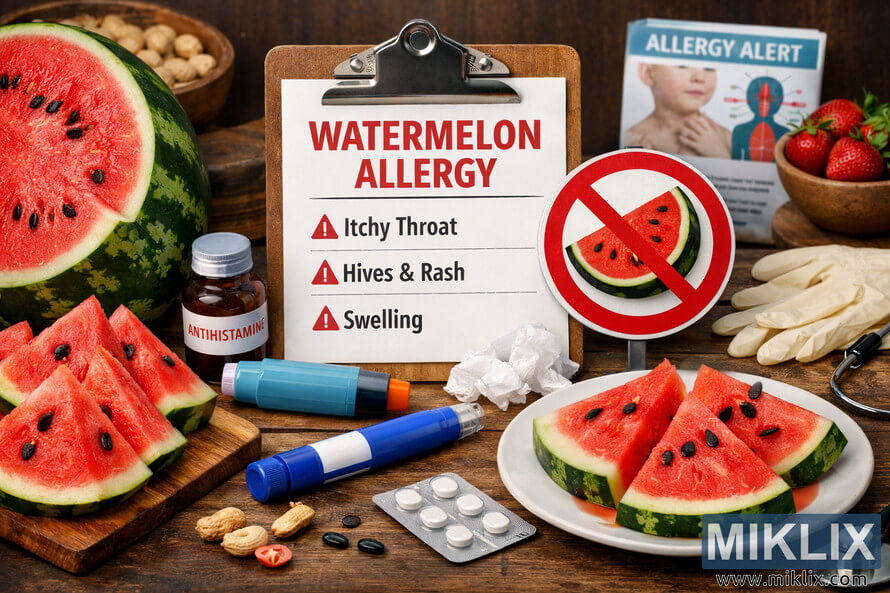
An educational image depicting food allergy considerations for watermelon consumption, showing watermelon slices alongside medical allergy prevention items and warning signs to raise awareness about potential allergic reactions.
Food Allergy Considerations for Watermelon Consumption
Versões disponíveis desta imagem
Os arquivos de imagem disponíveis para download abaixo são menos compactados e de maior resolução - e, como resultado, de maior qualidade - do que as imagens incorporadas em artigos e páginas deste site, que são mais otimizadas para o tamanho do arquivo a fim de reduzir o consumo de largura de banda.
Tamanho normal (1,536 x 1,024)
Tamanho grande (3,072 x 2,048)
Tamanho muito grande (4,608 x 3,072)
Tamanho extragrande (6,144 x 4,096)
Tamanho comicamente grande (1,048,576 x 699,051)
- Ainda estou fazendo o upload... ;-)
Descrição da imagem
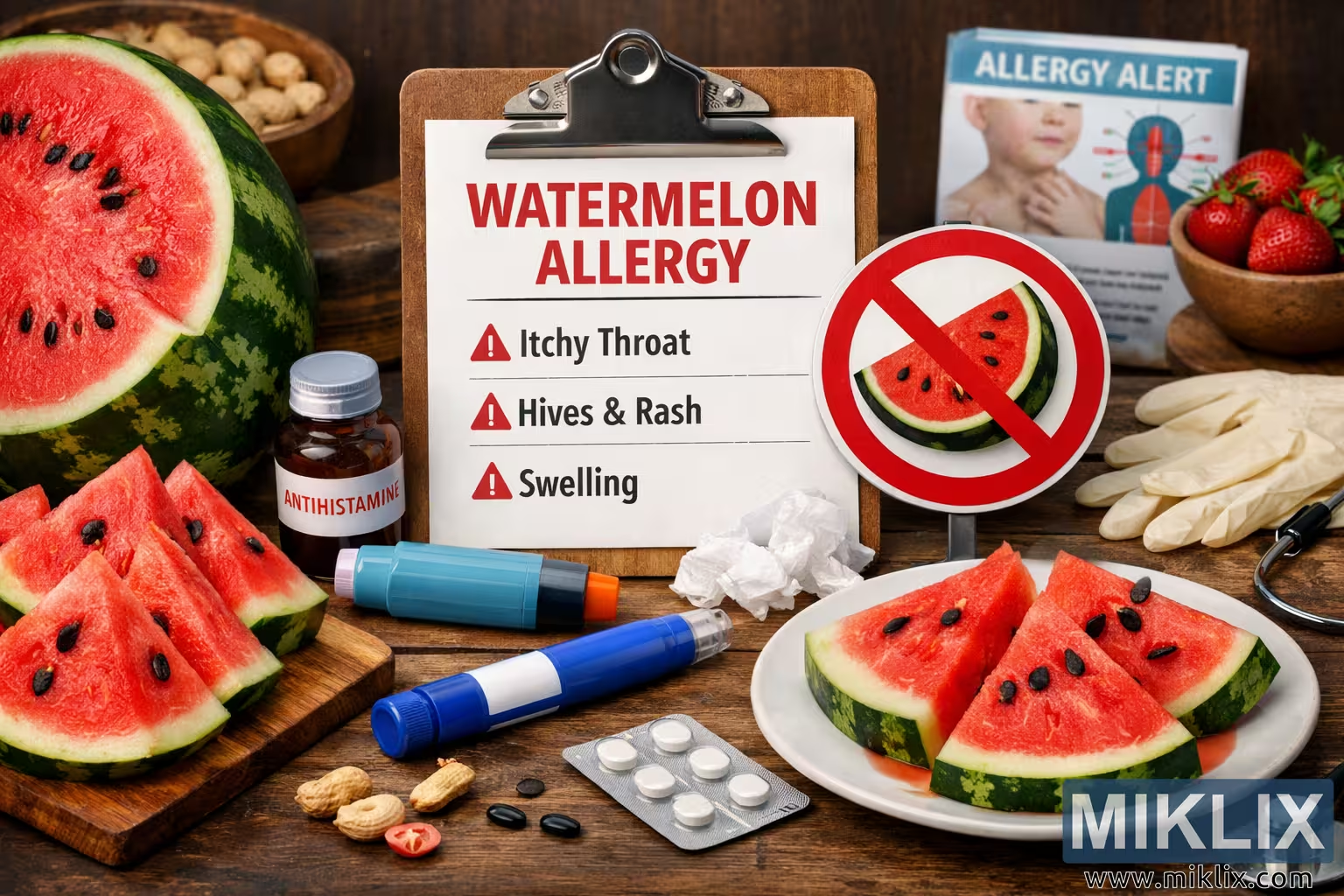
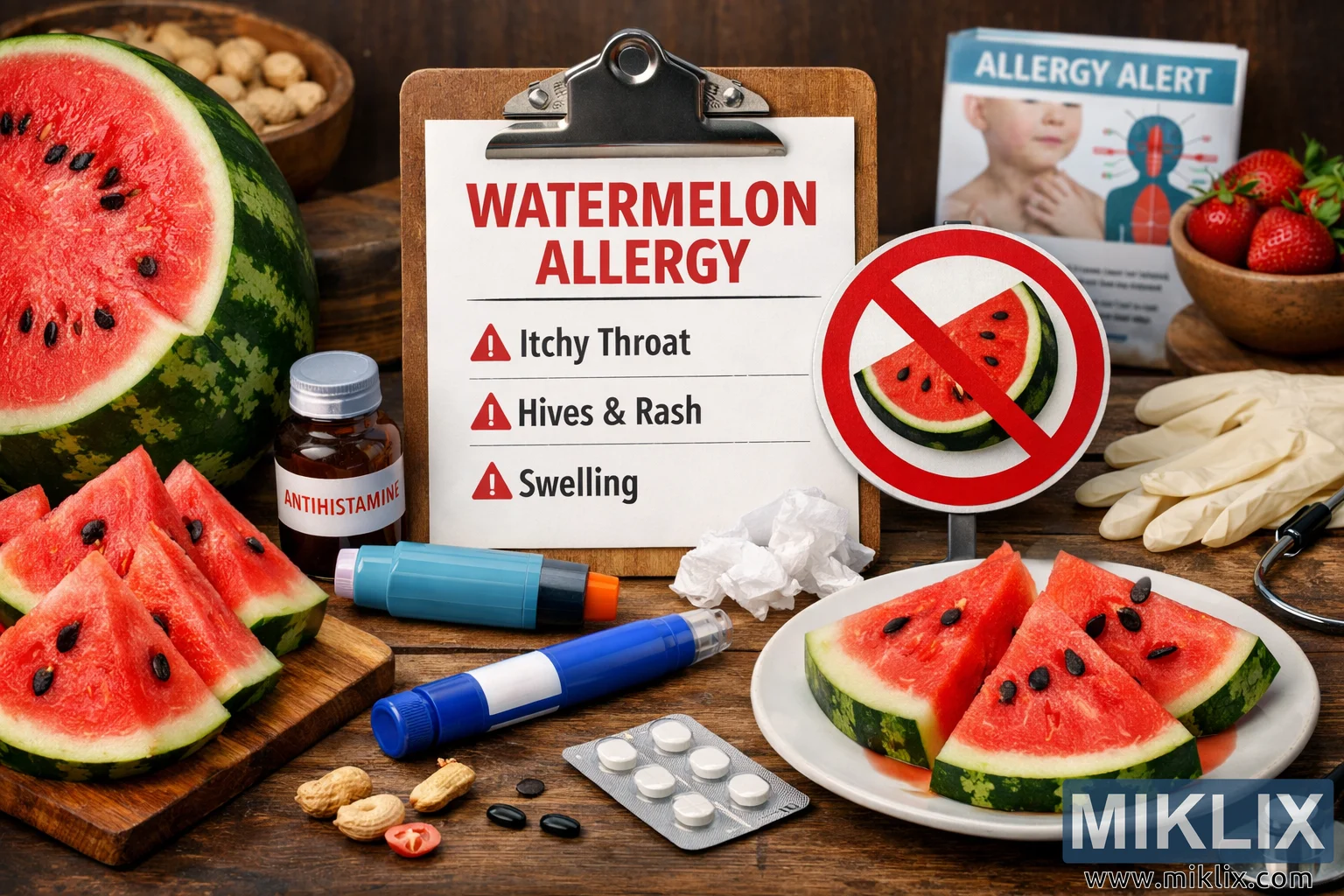
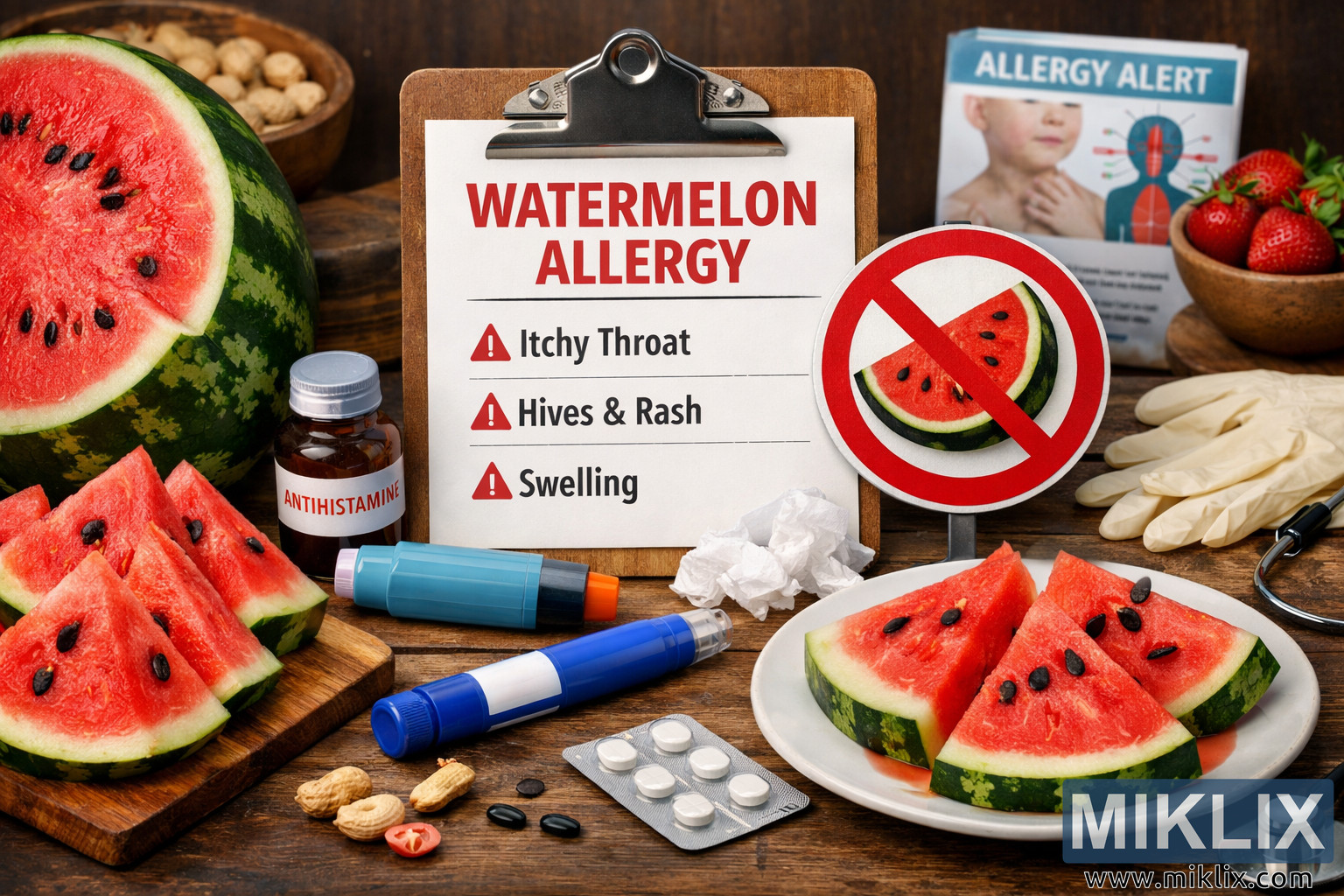
The image presents a meticulously arranged still-life composition designed to raise awareness about watermelon allergies and the broader topic of food allergy considerations. The setting is a rustic wooden table that evokes a natural, homely atmosphere, contrasting the bright red of the watermelon with the muted tones of medical and informational items. In the foreground, a large watermelon sits partially sliced open, revealing its vibrant red flesh and glossy black seeds. Several triangular slices are neatly arranged on a wooden cutting board and a white ceramic plate, symbolizing the common ways people consume watermelon. The fruit’s freshness and appeal are juxtaposed with the serious theme of allergy awareness, creating a striking visual tension between enjoyment and caution.
At the center of the composition lies a clipboard holding a sheet of paper titled 'WATERMELON ALLERGY' in bold, red capital letters. Beneath the heading, three bullet points list typical allergic symptoms: 'Itchy Throat,' 'Hives & Rash,' and 'Swelling.' Each symptom is accompanied by a red warning triangle with an exclamation mark, reinforcing the sense of medical urgency. The clipboard serves as the focal point, drawing the viewer’s attention immediately to the educational message. To the left of the clipboard, an amber glass bottle labeled 'ANTIHISTAMINE' stands beside a blue EpiPen (epinephrine auto-injector), both essential tools for managing allergic reactions. A light blue inhaler lies nearby, suggesting respiratory complications that can accompany severe allergies.
On the right side of the clipboard, a red circular sign displays a black silhouette of a watermelon slice crossed out by a red diagonal line, symbolizing prohibition and caution. This visual cue communicates the need for avoidance in individuals with watermelon sensitivity. Next to the sign, a pair of beige latex gloves rests casually on the table, hinting at medical examination or emergency response. A blister pack of white allergy pills lies beside the gloves, emphasizing pharmaceutical intervention as part of allergy management. Scattered around the table are small details that enrich the narrative: a few shelled peanuts, watermelon seeds, and a crumpled tissue, each contributing to the realism and everyday context of the scene.
In the background, additional elements expand the educational theme. On the left, a wooden bowl filled with peanuts subtly references cross-reactivity between certain food allergens, while on the right, a small dish of strawberries introduces another common allergen. Behind the main setup, an informational brochure titled 'ALLERGY ALERT' is partially visible. It features images of a child with a rash and a human body diagram highlighting affected areas in red, reinforcing the medical and preventive message. The brochure’s presence adds depth and credibility, suggesting that the scene could belong to a health clinic, educational display, or awareness campaign.
The lighting is soft yet precise, illuminating the watermelon’s texture and the reflective surfaces of the medical instruments. Shadows fall naturally, creating a sense of depth and realism. The color palette balances warm wooden tones with the vivid reds and greens of the fruit, complemented by the cool blues of the medical devices. This deliberate contrast enhances visual interest while maintaining thematic coherence. The composition is carefully balanced: the left side dominated by natural food elements, the right side by medical and cautionary symbols, and the center uniting both through the clipboard’s educational message.
Overall, the image communicates a nuanced message about the importance of understanding food allergies, particularly those related to watermelon consumption. It encourages viewers to recognize symptoms, seek medical advice, and take preventive measures. The juxtaposition of appetizing fruit and medical paraphernalia underscores the dual nature of food—both nourishing and potentially hazardous for some individuals. The photograph succeeds not only as an informative visual but also as a thought-provoking piece that bridges everyday life and health awareness. Its high resolution and landscape orientation make it suitable for educational materials, health campaigns, or allergy awareness programs, ensuring that every detail—from the texture of the watermelon rind to the printed words on the clipboard—contributes to a comprehensive and impactful visual narrative.
A imagem está relacionada a: Watermelon: The Hydrating Superfruit You Should Eat More Often