
Imagem: Culinary Artistry with Shallots: A Feast of Flavor and Technique
Publicado:
Última atualização: 5 de agosto de 2026 às 22:49:19 UTC
Explore the versatility of shallots through a stunning culinary tableau featuring caramelized tarts, creamy sauces, pickled garnishes, and more, all beautifully arranged on a rustic wooden table.
Culinary Artistry with Shallots: A Feast of Flavor and Technique
Versões disponíveis desta imagem
Os ficheiros de imagem disponíveis para transferência abaixo estão menos comprimidos e têm maior resolução - e, consequentemente, maior qualidade - do que as imagens incorporadas nos artigos e páginas deste sítio Web, que estão mais optimizadas em termos de tamanho de ficheiro para reduzir o consumo de largura de banda.
Tamanho normal (1,536 x 1,024)
Tamanho grande (3,072 x 2,048)
Tamanho muito grande (4,608 x 3,072)
Tamanho extra grande (6,144 x 4,096)
Tamanho comicamente grande (1,048,576 x 699,051)
- Ainda estou a carregar... ;-)
Descrição da imagem
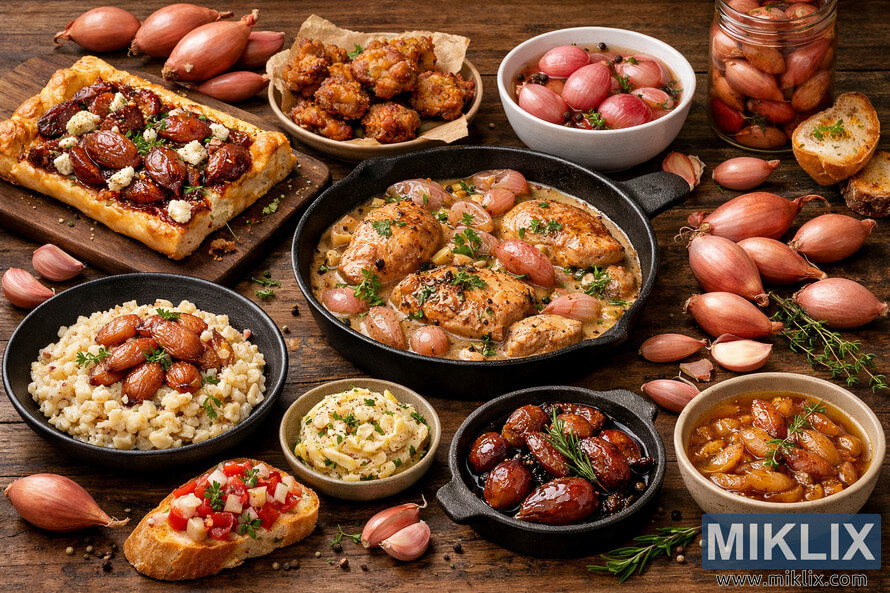
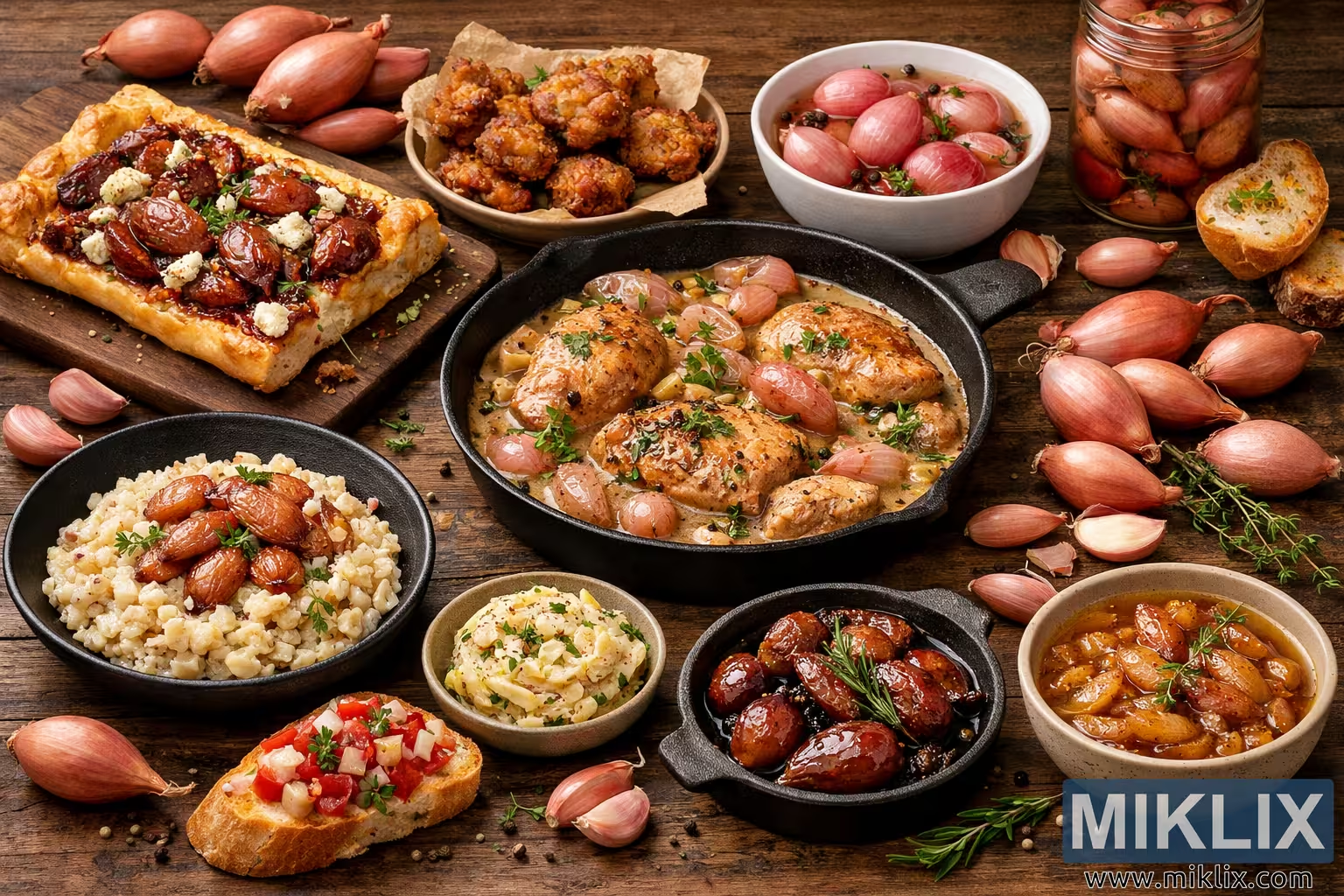
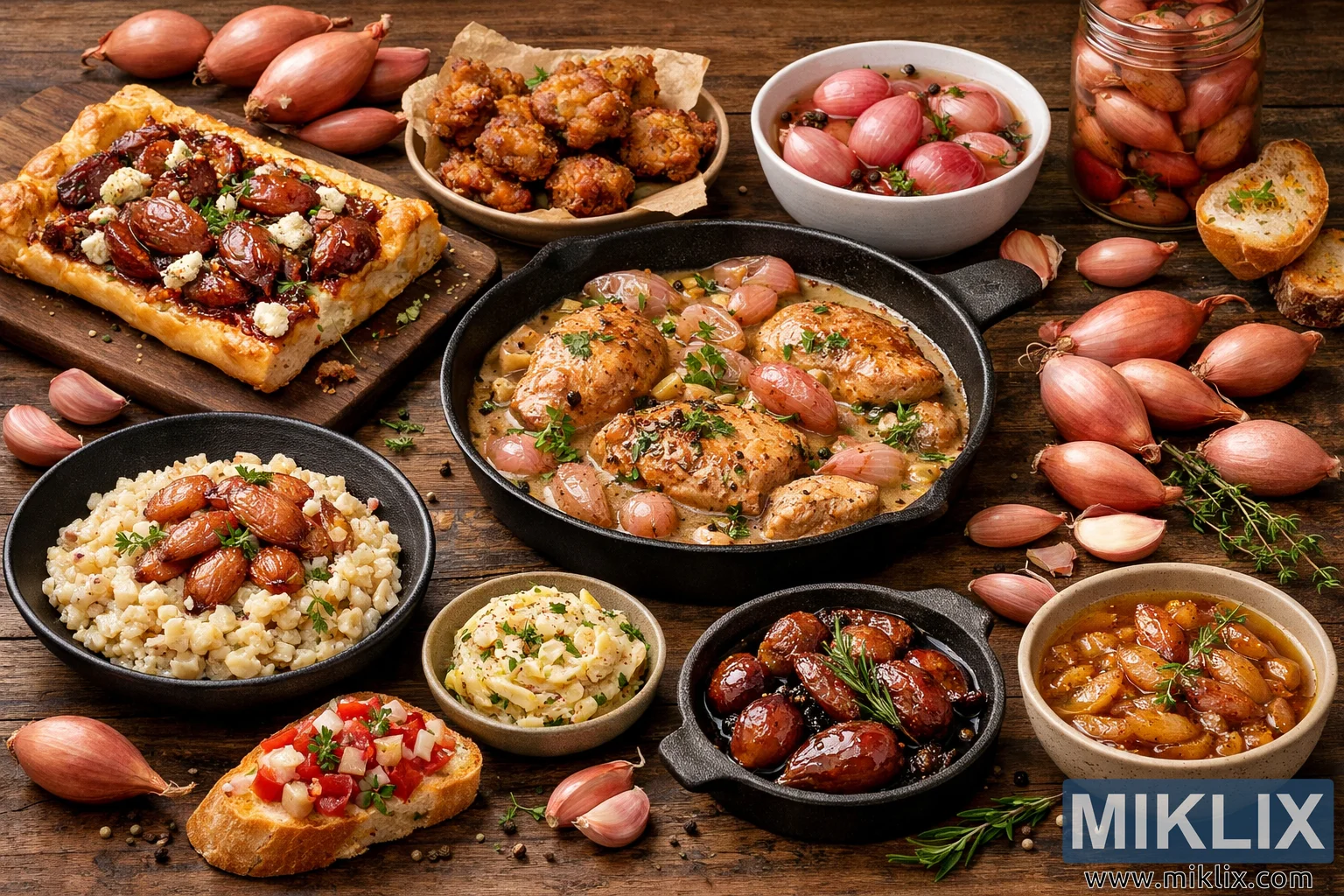
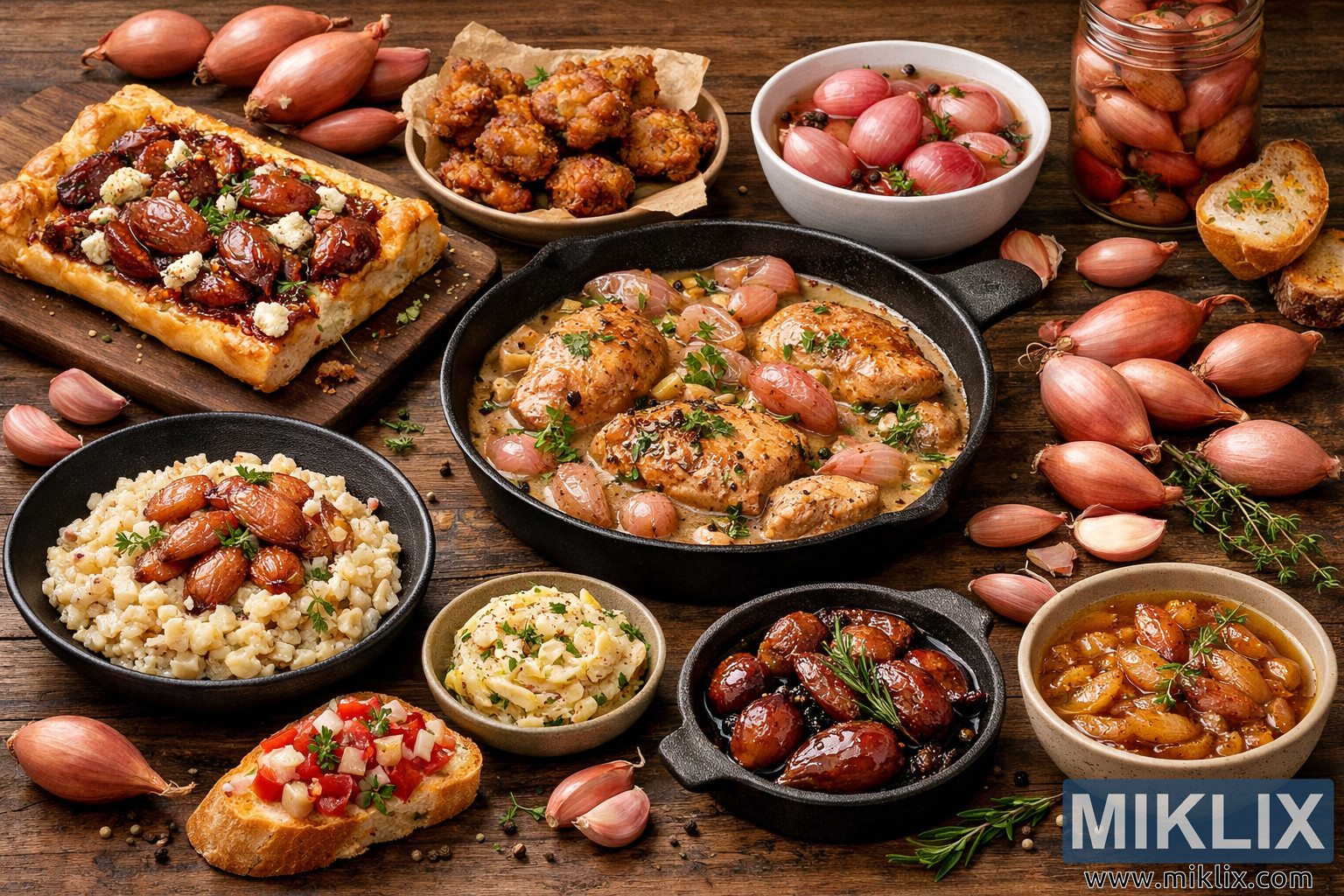
The image presents a rich and immersive culinary scene centered around the humble shallot, transformed into a variety of dishes that highlight its versatility and depth of flavor. The composition is set on a rustic wooden table, whose warm tones complement the golden hues of the cooked shallots and the earthy colors of the surrounding ingredients. Each dish is carefully arranged to create a harmonious balance between texture, color, and form, inviting the viewer to explore the many ways shallots can elevate cooking.
In the upper left corner, a slice of caramelized shallot and goat cheese tart rests on a wooden cutting board. The tart’s puff pastry crust is golden and flaky, its surface glistening with deeply caramelized shallots that have turned a rich amber color. Crumbles of creamy goat cheese are scattered across the top, melting slightly into the shallots, while sprigs of fresh thyme add a touch of green contrast. Behind the tart, a small bunch of raw shallots with their papery skins intact sits beside a bowl of crispy shallot fritters, each fritter golden brown and irregularly shaped, suggesting a hand-crafted preparation.
To the right, a small white bowl holds pickled shallots submerged in a pink brine infused with peppercorns and herbs. The translucent shallots catch the light, their delicate color adding a refreshing visual counterpoint to the richer tones of the cooked dishes. Behind the bowl, a glass jar filled with more pickled shallots stands partially in shadow, hinting at the preservation process that extends the shallot’s culinary life beyond the fresh form.
At the center of the composition, a cast iron skillet commands attention with chicken pieces bathed in a creamy shallot sauce. The sauce is thick and glossy, speckled with sliced shallots, garlic, and herbs. The chicken is browned to perfection, its surface glistening under the light, and garnished with finely chopped parsley that adds a burst of color. This dish serves as the focal point of the image, embodying the comforting richness that shallots bring to savory cooking.
In the lower left, a shallow black bowl contains a creamy shallot and white wine risotto. The grains of rice are plump and glistening, coated in a velvety sauce. Sautéed shallots rest on top, their edges slightly crisped, and a sprinkle of chives adds a fresh green accent. The risotto’s pale tones contrast beautifully with the darker dishes nearby, creating visual rhythm across the table.
Just below the skillet, a small dish of shallot and herb compound butter sits ready for spreading. The butter is pale yellow, flecked with finely chopped shallots and herbs, suggesting a fragrant blend that could enhance bread or grilled meats. To its right, a black ceramic dish holds balsamic glazed shallots—deeply caramelized, glossy, and garnished with rosemary sprigs. Their dark sheen and rich aroma evoke the sweet and tangy balance that balsamic reduction brings to the shallot’s natural sweetness.
In the lower right corner, a toasted baguette slice is topped with shallot and tomato bruschetta. The diced shallots and tomatoes are mixed with fresh basil, their vibrant reds and greens standing out against the golden crust of the bread. The bruschetta adds a Mediterranean flair to the composition, showing how shallots can blend seamlessly into global cuisines.
Beside the bruschetta, a small beige bowl contains shallot confit—slow-cooked shallots glistening in a rich, oily sauce. The confit’s golden tones and soft texture contrast with the crispness of the bruschetta, illustrating the shallot’s adaptability to both delicate and robust preparations. A sprig of thyme rests atop the confit, echoing the herbal motifs found throughout the image.
Scattered across the table are raw shallots, garlic cloves, peppercorns, and sprigs of fresh herbs, creating a natural frame that ties the composition together. The lighting is even and well-balanced, illuminating each dish without harsh shadows, and the moderate depth of field keeps all elements sharp and clear. The overall color palette is warm and inviting, dominated by golden browns, creamy whites, and subtle greens, evoking a sense of comfort and artisanal craftsmanship.
This image celebrates the shallot not merely as an ingredient but as a culinary muse—its subtle sweetness and aromatic complexity inspiring a diverse array of dishes. From rustic tarts to refined sauces, from pickled garnishes to hearty risottos, the shallot’s presence unites the composition in a symphony of flavor and visual harmony. The photograph captures the essence of cooking as both art and tradition, where simple ingredients are transformed through technique and imagination into a feast for the senses.
A imagem está relacionada com: Shallots: The Small Vegetable with Big Nutritional Benefits