
Изображение: Comparison Between Limes and Lemons: Citrus Fruits Differences
Опубликовано:
Последнее обновление: 29 июля 2026 г. в 22:17:17 UTC
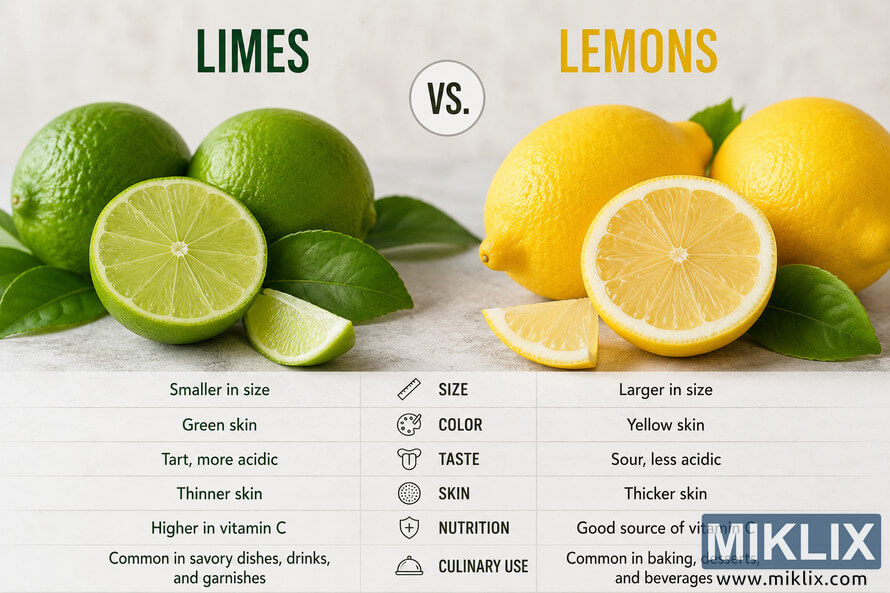
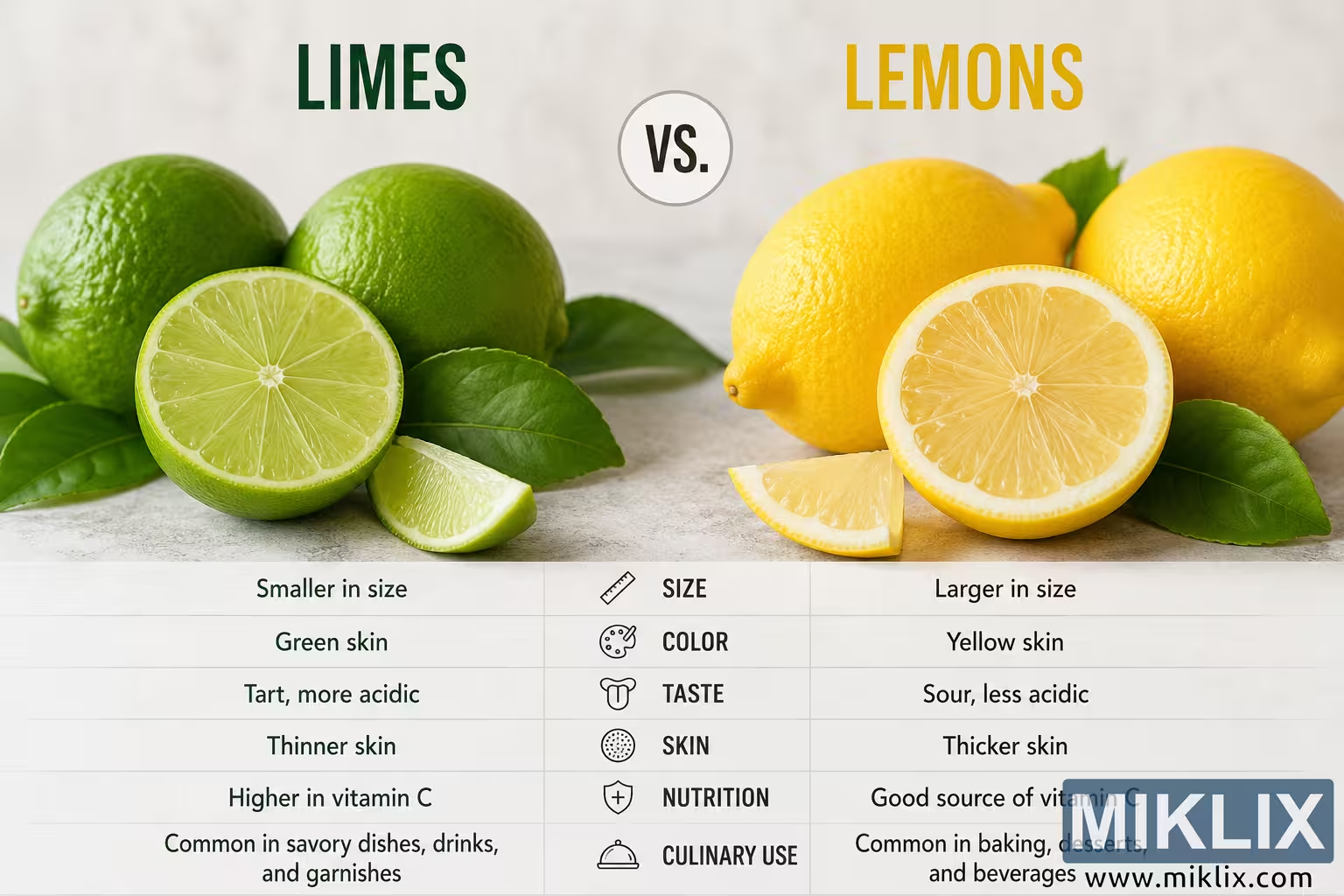
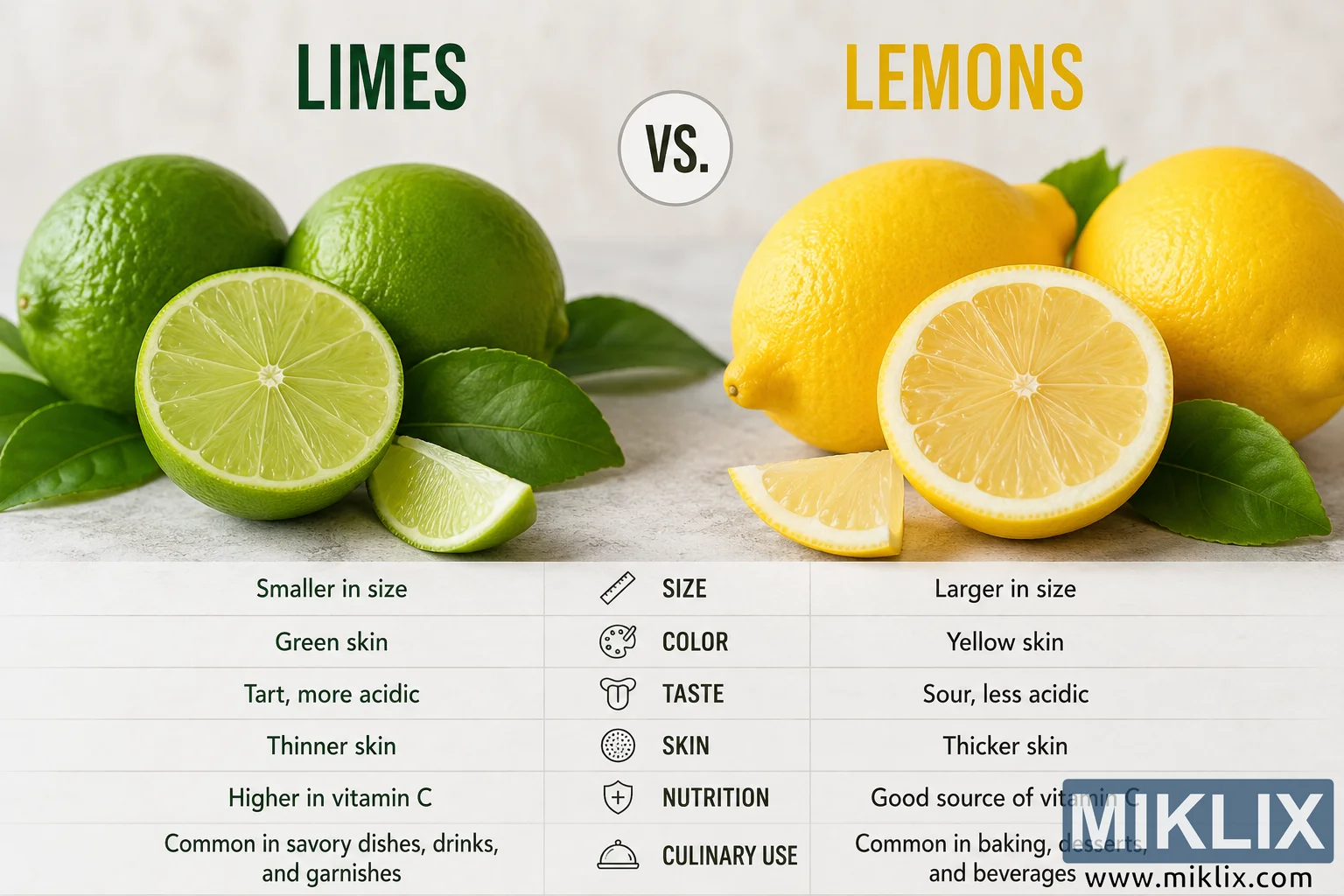
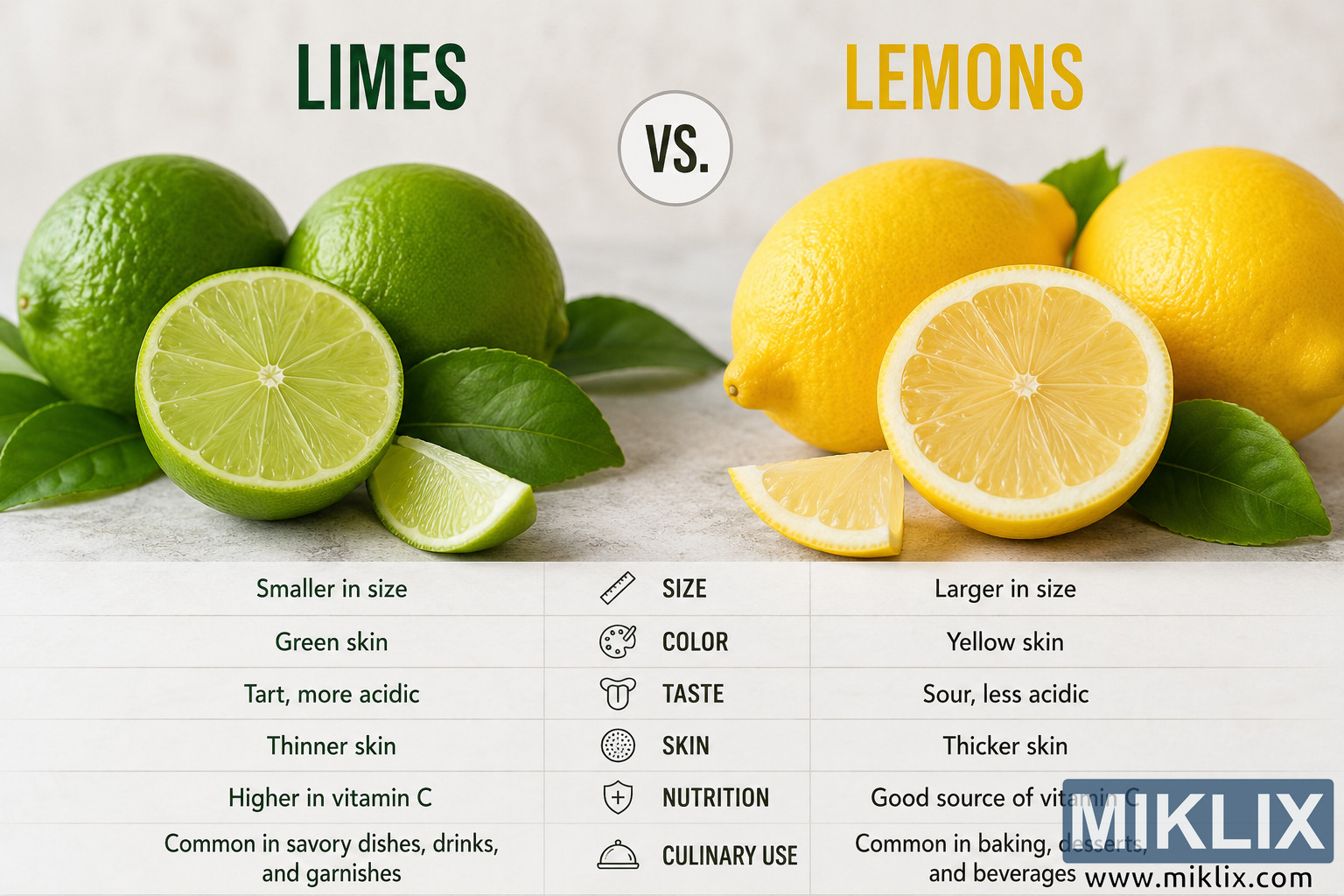
A detailed landscape infographic comparing limes and lemons, highlighting visual differences, flavor, color, size, peel characteristics, nutrition, and culinary uses with fresh citrus photography and an easy-to-read comparison table.
Comparison Between Limes and Lemons: Citrus Fruits Differences
Доступные версии этого изображения
Файлы изображений, доступные для загрузки ниже, менее сжаты и имеют более высокое разрешение - и, как следствие, более высокое качество - чем изображения, встроенные в статьи и страницы на этом сайте, которые более оптимизированы по размеру файла, чтобы уменьшить потребление полосы пропускания.
Обычный размер (1,536 x 1,024)
Большой размер (3,072 x 2,048)
Очень большой размер (4,608 x 3,072)
Очень большой размер (6,144 x 4,096)
Комически большой размер (1,048,576 x 699,051)
- Все еще загружаю... ;-)
Описание изображения
This image is a high-resolution landscape-oriented comparison graphic designed to visually explain the differences between limes and lemons. The composition is divided into two symmetrical halves. The left half focuses on limes, while the right half focuses on lemons. A soft, neutral, lightly textured background extends across the entire image, creating a clean and modern presentation that emphasizes the vibrant citrus fruits. The lighting is diffuse and natural, producing soft shadows and realistic highlights that give the fruit a fresh appearance. At the top of the left section, the large heading reads "LIMES" in bold dark green uppercase lettering. At the top of the right section, the matching heading reads "LEMONS" in bold golden-yellow uppercase lettering. Centered between both headings is a circular emblem containing the text "VS.", visually reinforcing that the graphic is a side-by-side comparison.
On the left side, two whole green limes are displayed alongside one lime cut cleanly in half to expose its pale green interior. The sliced lime reveals a highly detailed radial arrangement of translucent citrus segments converging toward a small white center. A small lime wedge is positioned nearby, showing the juicy flesh and thin green peel from another angle. Several glossy green leaves surround the fruit, adding a natural botanical element and framing the composition. The limes exhibit a slightly textured rind with realistic dimpling that reflects the soft overhead light.
On the right side, two whole bright yellow lemons are arranged in a similar layout for direct visual comparison. One lemon has been cut in half, exposing pale yellow citrus segments arranged in the same radial pattern. A small lemon wedge rests in front of the fruit, displaying the thicker yellow peel and juicy interior. Green leaves accompany the lemons as decorative natural accents, creating balance with the lime section. The lemons have smooth yet gently textured skin with realistic pores and subtle specular highlights.
The lower portion of the image contains a structured comparison table spanning nearly the full width of the composition. A narrow center column displays simple monochrome icons alongside category labels. From top to bottom the categories are: Size, Color, Taste, Skin, Nutrition, and Culinary Use. Each category aligns horizontally with descriptive text for both fruit types.
For the lime column, the listed characteristics are: "Smaller in size," "Green skin," "Tart, more acidic," "Thinner skin," "Higher in vitamin C," and "Common in savory dishes, drinks, and garnishes." For the lemon column, the listed characteristics are: "Larger in size," "Yellow skin," "Sour, less acidic," "Thicker skin," "Good source of vitamin C," and "Common in baking, desserts, and beverages." The comparison is presented in an orderly grid with subtle dividing lines that separate each row while maintaining a clean and uncluttered appearance.
Color plays a significant role in the visual hierarchy. Shades of green consistently identify the lime section, while yellow and gold distinguish the lemon section. The neutral background ensures that the vivid citrus colors remain the primary visual focus. The typography is bold and legible, with larger headings at the top and smaller descriptive text in the comparison table below. Icons in the central column provide additional visual cues without distracting from the information.
The overall style combines realistic food photography with infographic design. The fruit appears fresh, glossy, and carefully arranged, while the table provides educational context in an accessible format. The image is suitable for educational materials, cooking articles, nutrition resources, grocery guides, classroom presentations, food blogs, and websites discussing citrus fruits. The layout is balanced and symmetrical, making it easy for viewers to compare corresponding attributes at a glance. No commercial branding, product packaging, logos, watermarks, or trademarks are visible anywhere in the image. The composition focuses entirely on the natural appearance of the citrus fruits and the clearly organized presentation of their distinguishing characteristics. The result is an attractive, informative visual that communicates the similarities and differences between limes and lemons in a concise yet visually engaging manner while maintaining a polished and professional appearance.
Изображение относится к: Health Benefits of Limes: Your Complete Nutrition Guide