
Изображение: Nutritional Comparison of Different Potato Varieties
Опубликовано:
Последнее обновление: 4 августа 2026 г. в 13:57:13 UTC
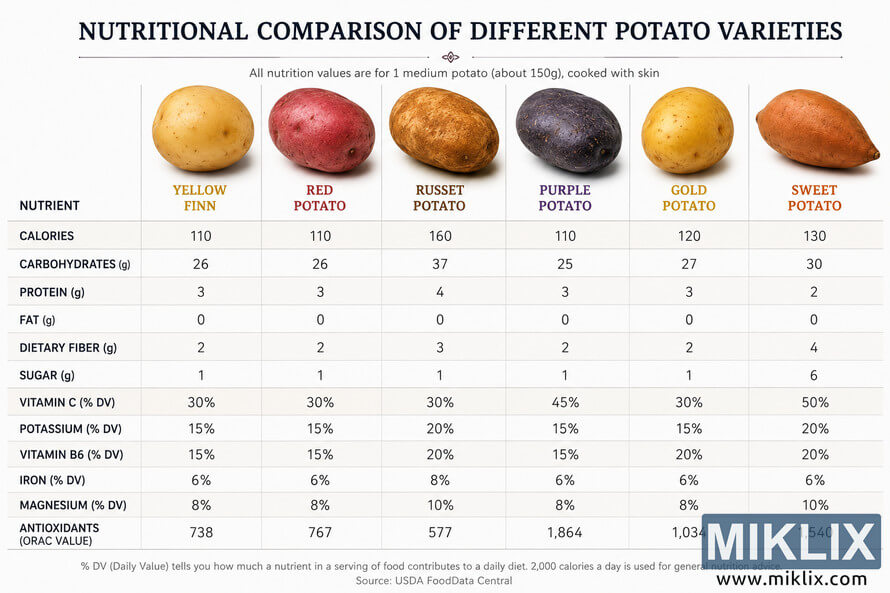
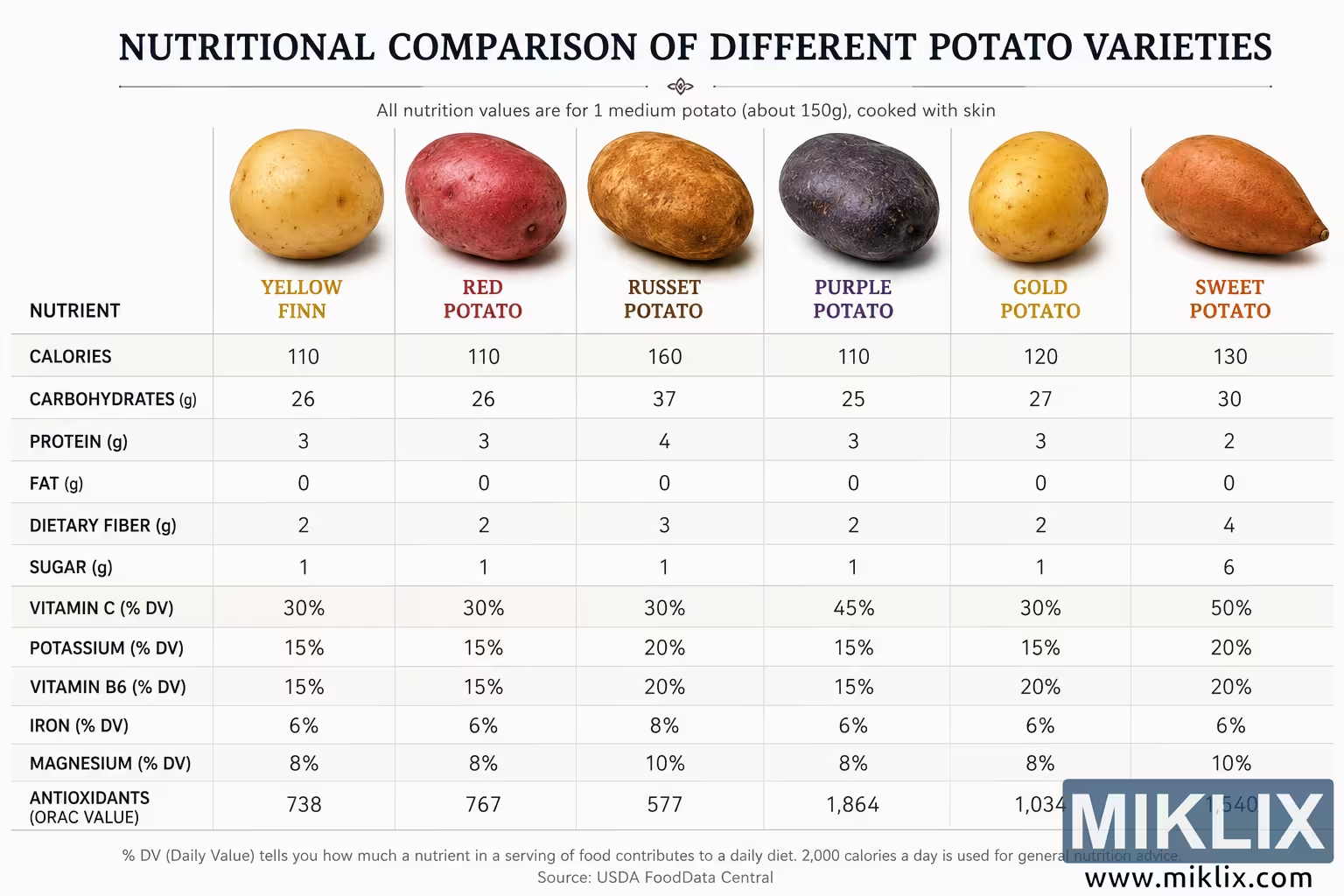
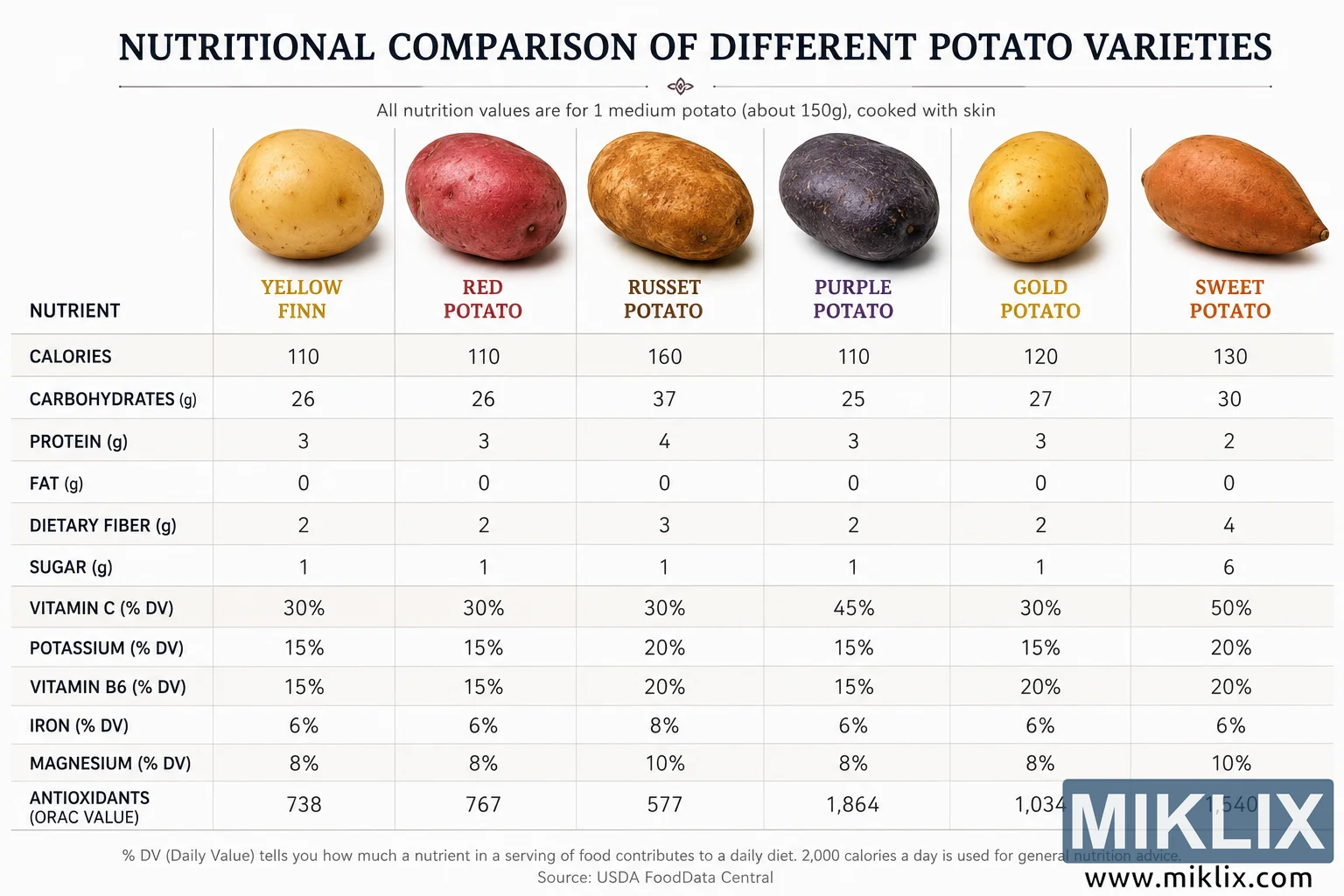
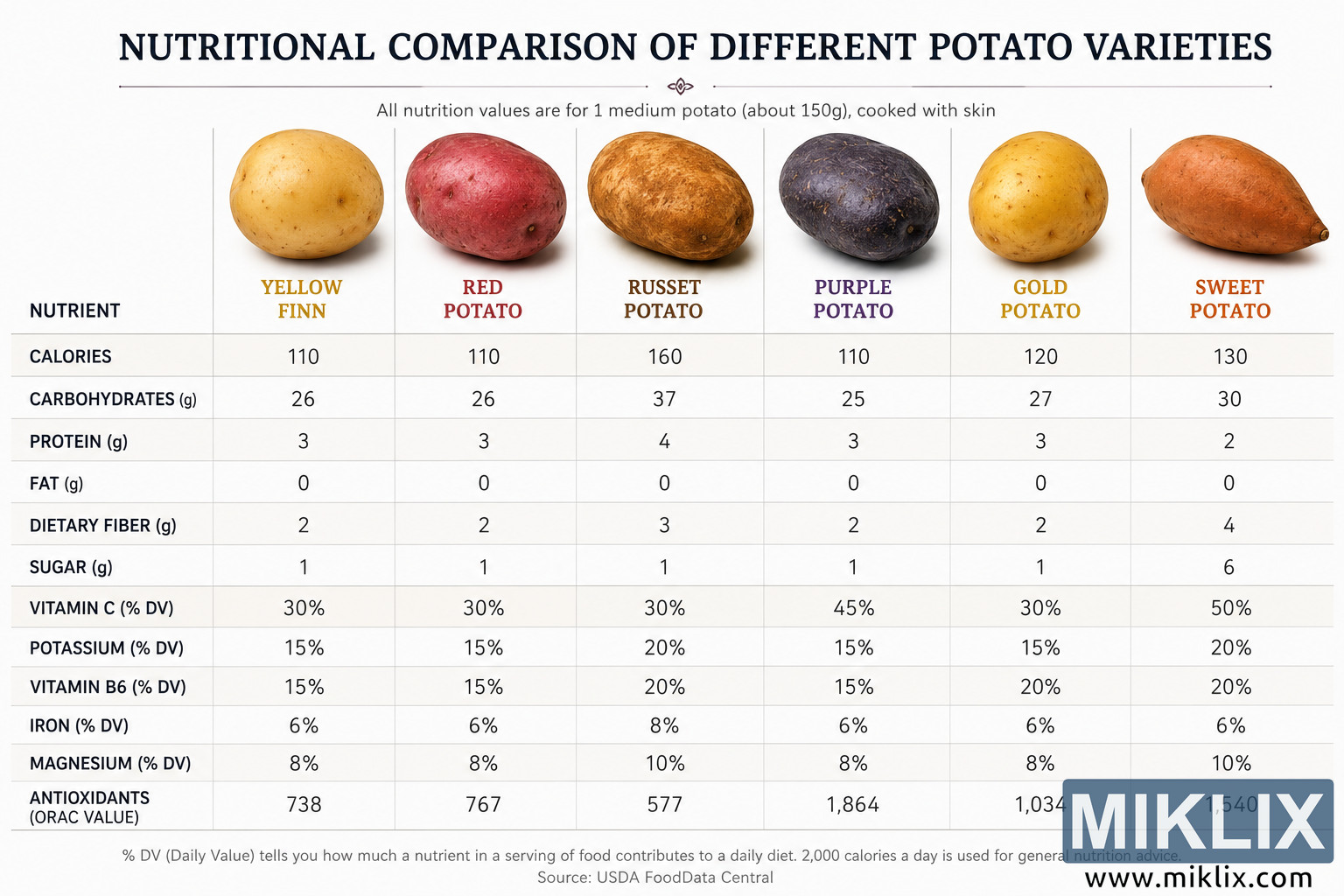
A detailed landscape nutrition chart comparing common potato varieties, including yellow Finn, red, russet, purple, gold, and sweet potatoes, with calories, macronutrients, vitamins, minerals, and antioxidant values.
Nutritional Comparison of Different Potato Varieties
Доступные версии этого изображения
Файлы изображений, доступные для загрузки ниже, менее сжаты и имеют более высокое разрешение - и, как следствие, более высокое качество - чем изображения, встроенные в статьи и страницы на этом сайте, которые более оптимизированы по размеру файла, чтобы уменьшить потребление полосы пропускания.
Обычный размер (1,536 x 1,024)
Большой размер (3,072 x 2,048)
Очень большой размер (4,608 x 3,072)
Очень большой размер (6,144 x 4,096)
Комически большой размер (1,048,576 x 699,051)
- Все еще загружаю... ;-)
Описание изображения
This landscape-oriented infographic presents a clean, photo-based nutritional comparison chart of different potato varieties on a bright, lightly textured background. The design resembles a polished educational nutrition poster, with a large serif headline centered at the top that reads “Nutritional Comparison of Different Potato Varieties.” Beneath the title, a small subtitle explains that the values are for one medium potato, about 150 grams, cooked with the skin. The chart is organized in a wide table format with six potato varieties arranged in vertical columns: Yellow Finn, Red Potato, Russet Potato, Purple Potato, Gold Potato, and Sweet Potato. Each column begins with a realistic image of the potato variety, shown with soft shadows and studio-style lighting. The Yellow Finn potato appears round and pale golden with a smooth, lightly speckled skin. The red potato is reddish pink and oval, with natural skin texture and small eyes. The russet potato is brown, elongated, and rougher in texture, suggesting the familiar starchy baking potato. The purple potato is dark violet to nearly black, with a matte skin and subtle lighter markings. The gold potato is round, warm yellow, and smooth, while the sweet potato is orange-brown, tapered, and more elongated than the others. Below the images, each potato name is displayed in a bold serif style, with color accents matching the potato type, creating a visually intuitive connection between the heading and the vegetable shown above it. The leftmost column lists nutrients and comparison categories in bold uppercase text. Rows include calories, carbohydrates in grams, protein in grams, fat in grams, dietary fiber in grams, sugar in grams, vitamin C as percent daily value, potassium as percent daily value, vitamin B6 as percent daily value, iron as percent daily value, magnesium as percent daily value, and antioxidants expressed as an ORAC value. Light horizontal and vertical rules divide the chart into a structured grid, making the values easy to scan across each variety. The chart shows Yellow Finn and Red Potato with similar baseline values, including 110 calories, 26 grams of carbohydrates, 3 grams of protein, 0 grams of fat, 2 grams of dietary fiber, 1 gram of sugar, 30 percent daily value of vitamin C, 15 percent potassium, 15 percent vitamin B6, 6 percent iron, 8 percent magnesium, and antioxidant values of 738 and 767 respectively. The Russet Potato column stands out with higher calories and carbohydrates, listing 160 calories, 37 grams of carbohydrates, 4 grams of protein, 3 grams of fiber, 20 percent potassium, 20 percent vitamin B6, 8 percent iron, 10 percent magnesium, and an antioxidant value of 577. The Purple Potato column emphasizes antioxidant richness, showing 110 calories, 25 grams of carbohydrates, 3 grams of protein, 2 grams of fiber, 45 percent daily value of vitamin C, 15 percent potassium, 15 percent vitamin B6, 6 percent iron, 8 percent magnesium, and a notably high antioxidant value of 1,864. The Gold Potato column displays 120 calories, 27 grams of carbohydrates, 3 grams of protein, 2 grams of fiber, 1 gram of sugar, 30 percent vitamin C, 15 percent potassium, 20 percent vitamin B6, 6 percent iron, 8 percent magnesium, and an antioxidant value of 1,034. The Sweet Potato column is shown as a nutrient-dense option with 130 calories, 30 grams of carbohydrates, 2 grams of protein, 4 grams of dietary fiber, 6 grams of sugar, 50 percent vitamin C, 20 percent potassium, 20 percent vitamin B6, 6 percent iron, 10 percent magnesium, and an antioxidant value of 1,540. A small explanatory note at the bottom defines percent daily value and states that it describes how much a nutrient in a serving contributes to a daily diet, with 2,000 calories a day used for general nutrition advice. A source line at the bottom references USDA FoodData Central. Overall, the image has a professional, accessible, and classroom-friendly style. It is designed to help viewers quickly compare the nutritional profile of multiple potato types, highlighting differences in calories, carbohydrates, fiber, vitamins, minerals, and antioxidant content. The wide horizontal layout makes it suitable for a website header image, educational blog post, nutrition article, classroom handout, or social media infographic. The image avoids brand marks or commercial packaging and focuses entirely on whole potato varieties and their nutrition data.
Изображение относится к: The Surprising Health Benefits of Potatoes: A Complete Nutrition Guide