
Изображение: Lycopene Molecules Forming a Protective Shield Around Cells Against Oxidative Damage
Опубликовано:
Последнее обновление: 16 августа 2026 г. в 19:09:28 UTC
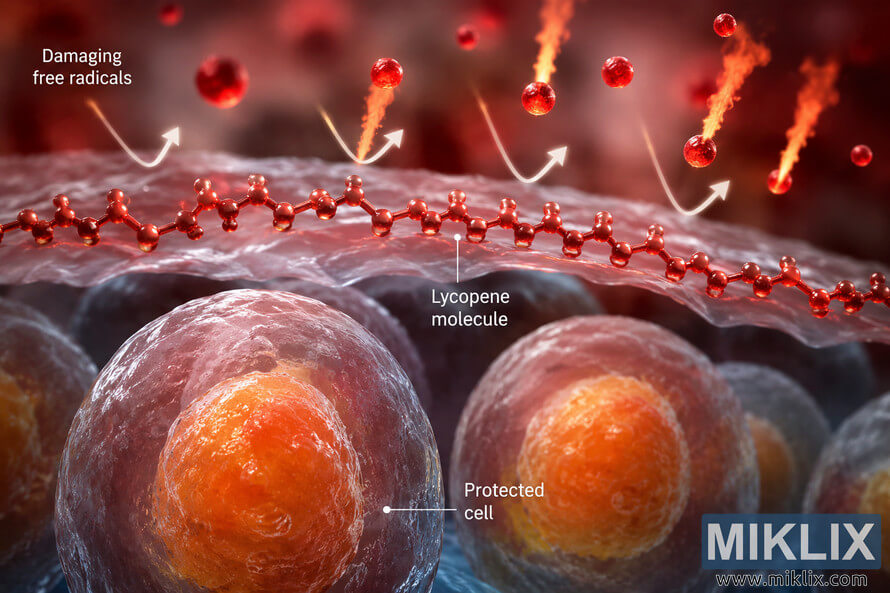
High-detail scientific illustration of lycopene molecules protecting cells from oxidative stress by deflecting damaging free radicals. Ideal for educational, medical, nutrition, and antioxidant-related content.
Lycopene Molecules Forming a Protective Shield Around Cells Against Oxidative Damage
Доступные версии этого изображения
Файлы изображений, доступные для загрузки ниже, менее сжаты и имеют более высокое разрешение - и, как следствие, более высокое качество - чем изображения, встроенные в статьи и страницы на этом сайте, которые более оптимизированы по размеру файла, чтобы уменьшить потребление полосы пропускания.
Обычный размер (1,536 x 1,024)
Большой размер (3,072 x 2,048)
Очень большой размер (4,608 x 3,072)
Очень большой размер (6,144 x 4,096)
Комически большой размер (1,048,576 x 699,051)
- Все еще загружаю... ;-)
Описание изображения
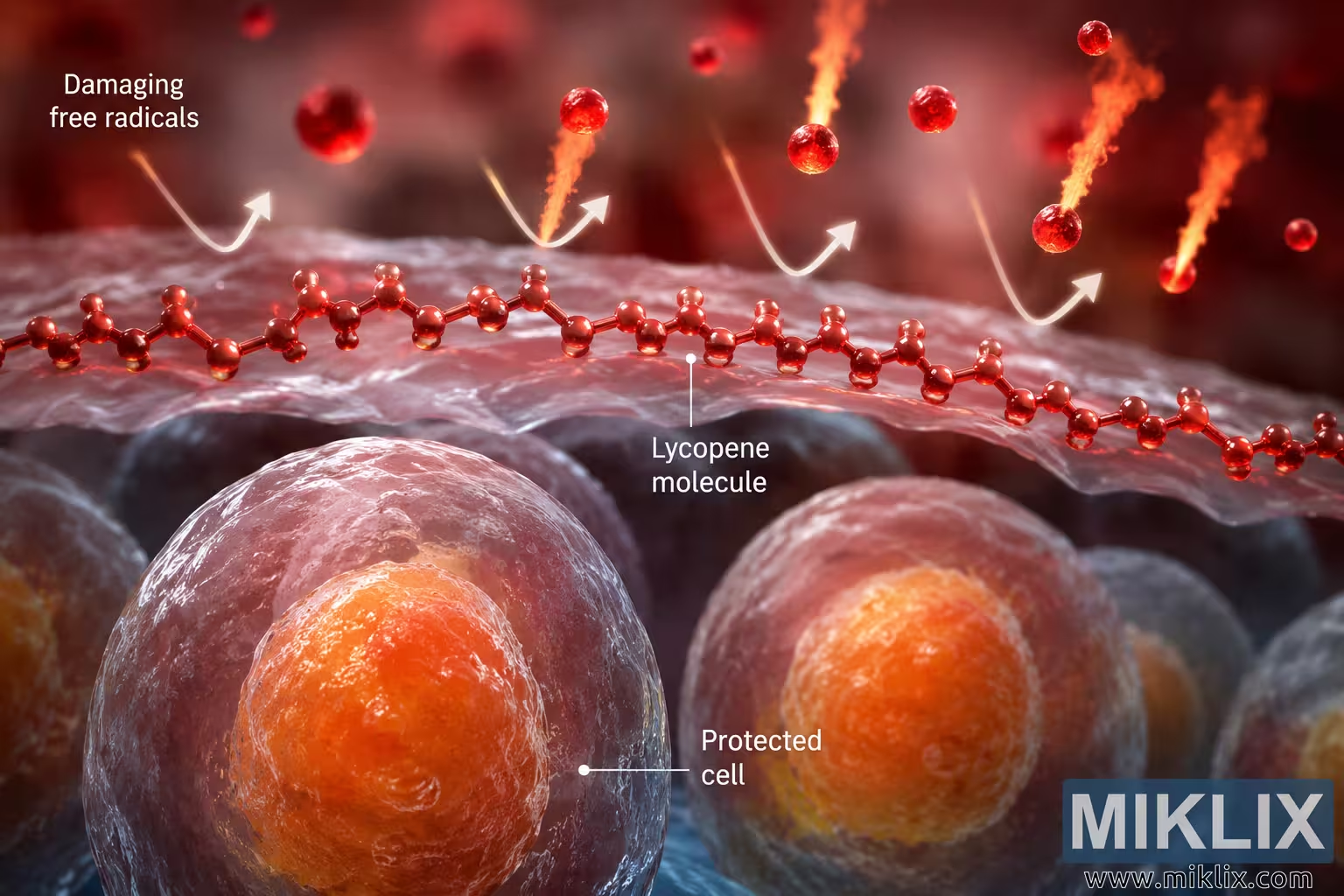
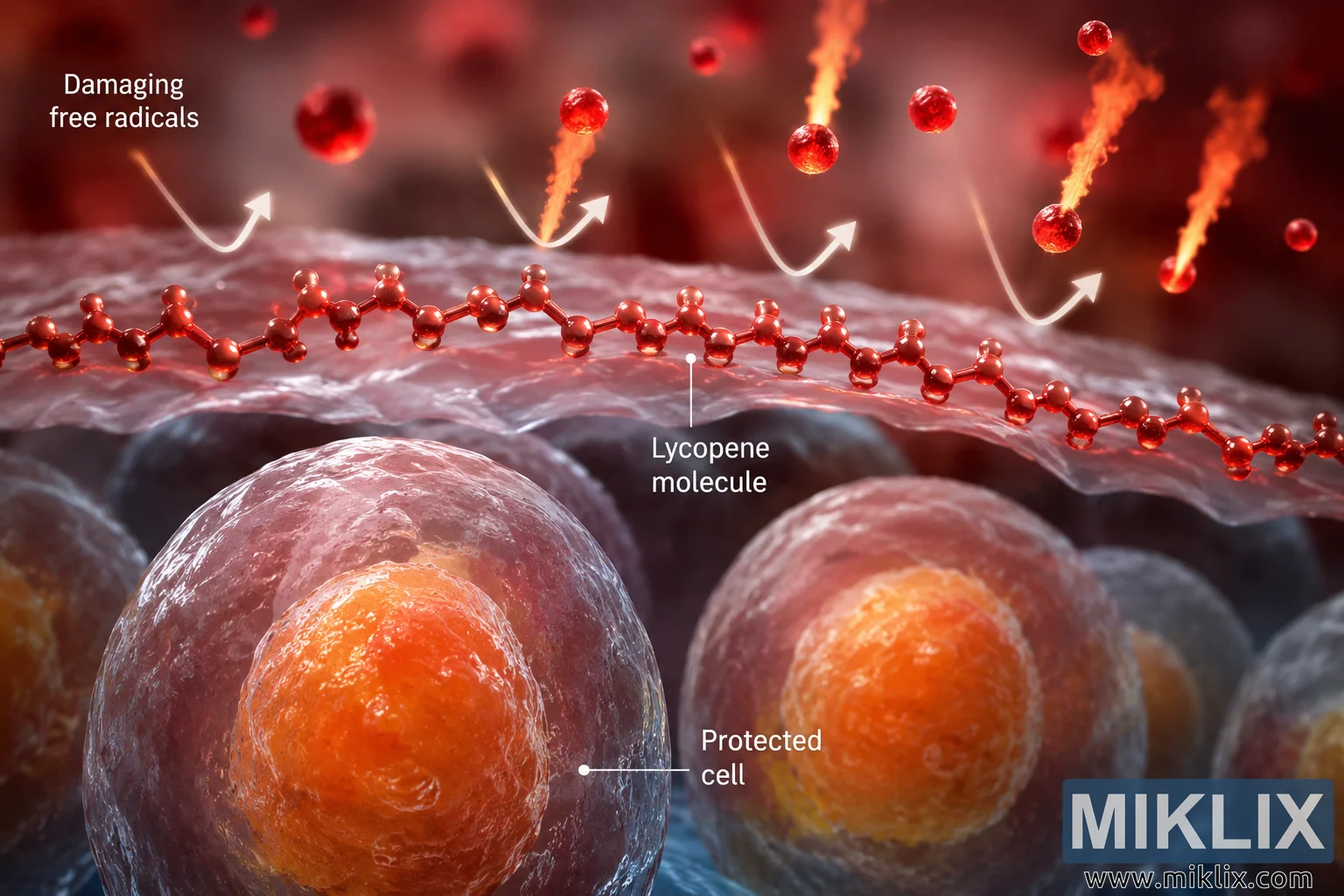
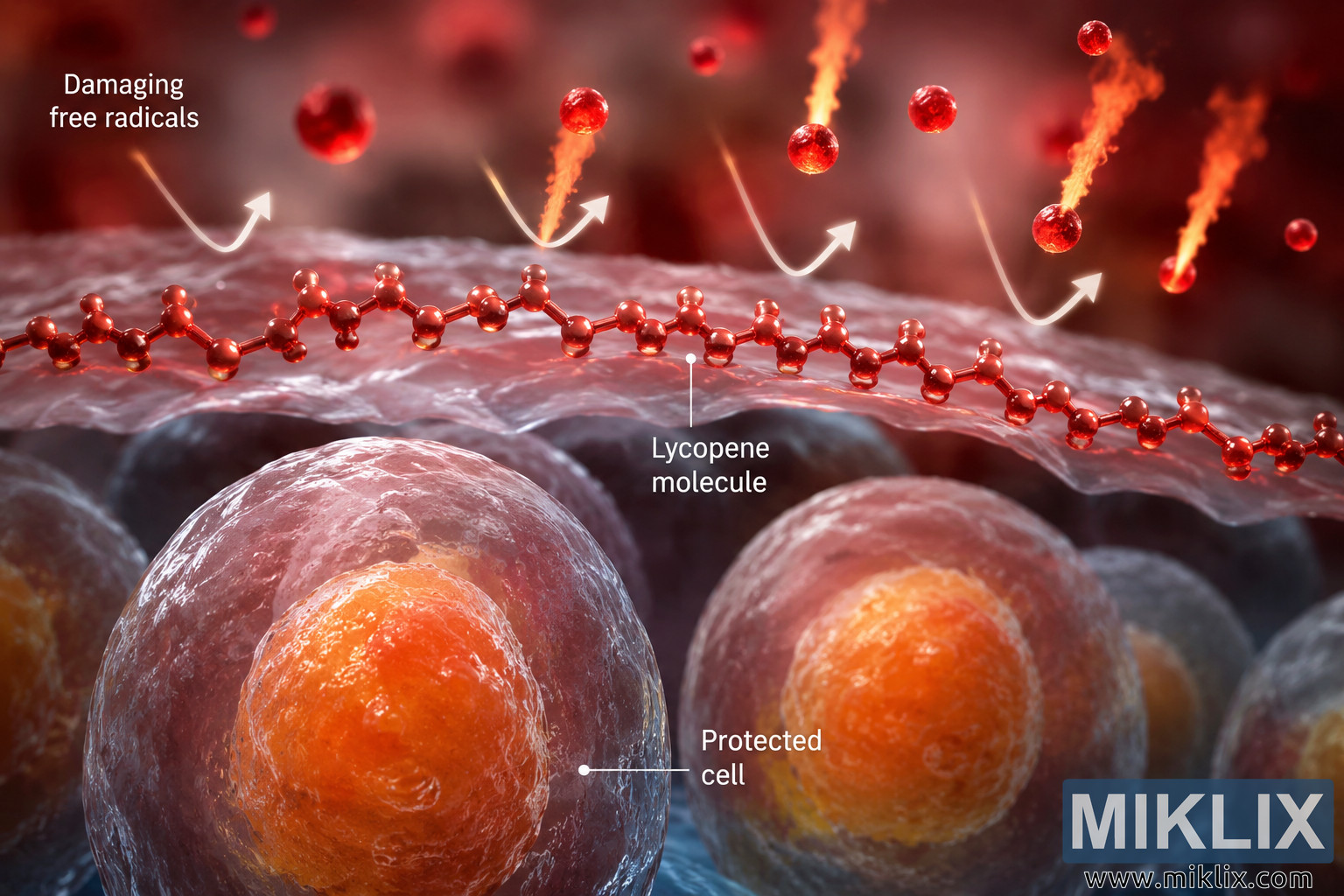
This high-resolution scientific illustration presents a conceptual visualization of how lycopene molecules help protect cells against oxidative damage caused by reactive free radicals. The composition is designed in a cinematic landscape format with a strong sense of depth, combining molecular-scale detail with an educational infographic aesthetic. The lower portion of the image is dominated by several large, translucent biological cells rendered with realistic textures and soft internal illumination. Each cell features a semi-transparent outer membrane with subtle variations in thickness and surface reflections, allowing the viewer to perceive an inner, glowing core that suggests cellular vitality and metabolic activity. The cells are arranged in a shallow perspective, with the nearest cells appearing sharply focused while those farther into the background gradually soften through depth-of-field effects, emphasizing spatial realism.
Stretching horizontally across the upper boundary of the cellular layer is a continuous chain of stylized lycopene molecules. These molecules are depicted as interconnected glossy spheres linked by narrow bonds, forming an elegant molecular network. Their vivid red-orange coloration immediately distinguishes them from the cooler tones of the surrounding cell membranes and reinforces the visual association with lycopene, a naturally occurring carotenoid pigment. The molecular chain follows the curvature of the cellular surface, suggesting that it forms a protective interface between the cells and their external environment. Reflections and highlights on the molecular structure provide a polished three-dimensional appearance while maintaining scientific inspiration rather than exact chemical geometry.
Above this molecular barrier, numerous glowing red particles symbolize reactive free radicals. Several of these particles exhibit fiery trails that imply rapid movement toward the cells below. Rather than penetrating the protective molecular layer, each incoming particle is visually redirected away from the cells. Smooth white directional arrows curve upward, illustrating the deflection of the harmful particles after they encounter the lycopene barrier. The arrows communicate the defensive mechanism in an intuitive manner without requiring extensive scientific background, making the illustration appropriate for educational materials, nutrition articles, health presentations, and antioxidant-related communications.
The background transitions into a warm gradient of deep crimson, burgundy, and soft orange tones populated by softly blurred floating particles that reinforce the microscopic environment. Gentle atmospheric lighting creates separation between the foreground cells, the molecular barrier, and the surrounding environment. Selective focus enhances the realism by concentrating maximum sharpness on the central cells and the lycopene molecules while allowing more distant elements to fade naturally into the background. Bright rim lighting along the molecular chain and subtle subsurface scattering within the cell membranes contribute to a premium scientific visualization style often seen in medical illustrations and biotechnology presentations.
Small infographic annotations identify the conceptual elements of the scene, including labels for the lycopene molecules, protected cells, and damaging free radicals. These annotations are connected by thin indicator lines that point toward their corresponding structures without significantly obstructing the visual composition. Their placement supports educational interpretation while preserving the image's clean, balanced layout.
Overall, the artwork communicates the central concept that lycopene functions as an antioxidant capable of helping defend cells against oxidative stress. Rather than depicting a literal biochemical event, the image employs visual metaphor and scientifically inspired design principles to represent antioxidant protection. The interplay of vibrant red molecular structures, luminous cellular forms, dynamic particle motion, and directional deflection creates a compelling narrative of defense and resilience at the microscopic level. The result is a polished, visually engaging illustration suitable for scientific education, nutrition communication, healthcare marketing, editorial publications, wellness resources, academic presentations, and digital media discussing antioxidants, carotenoids, cellular protection, oxidative stress, healthy aging, and the biological role of lycopene.
Изображение относится к: Watermelon: The Hydrating Superfruit You Should Eat More Often