
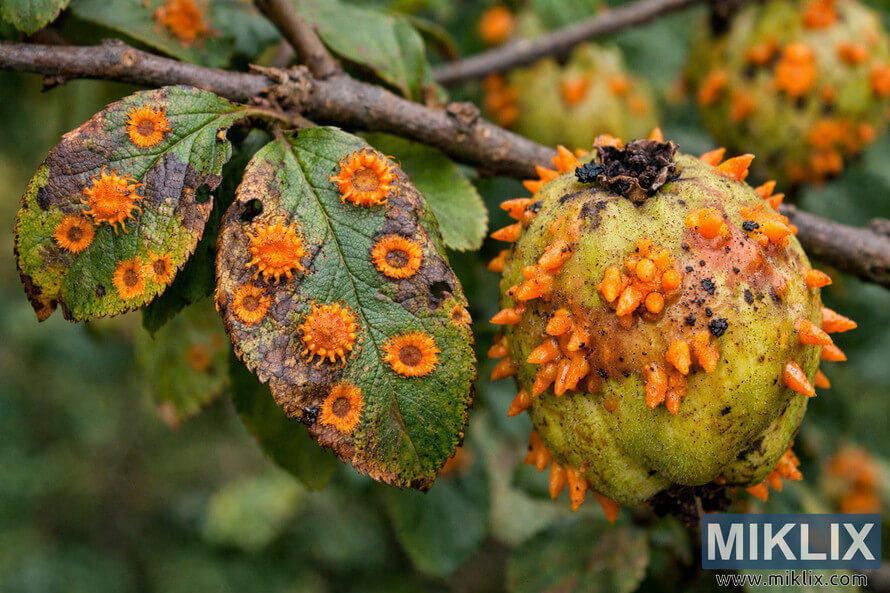
Obrázok: Cedar-Quince Rust Symptoms on Quince Leaves and Fruit
Publikované:
Posledná aktualizácia: 5. marca 2026 o 21:48:06 UTC
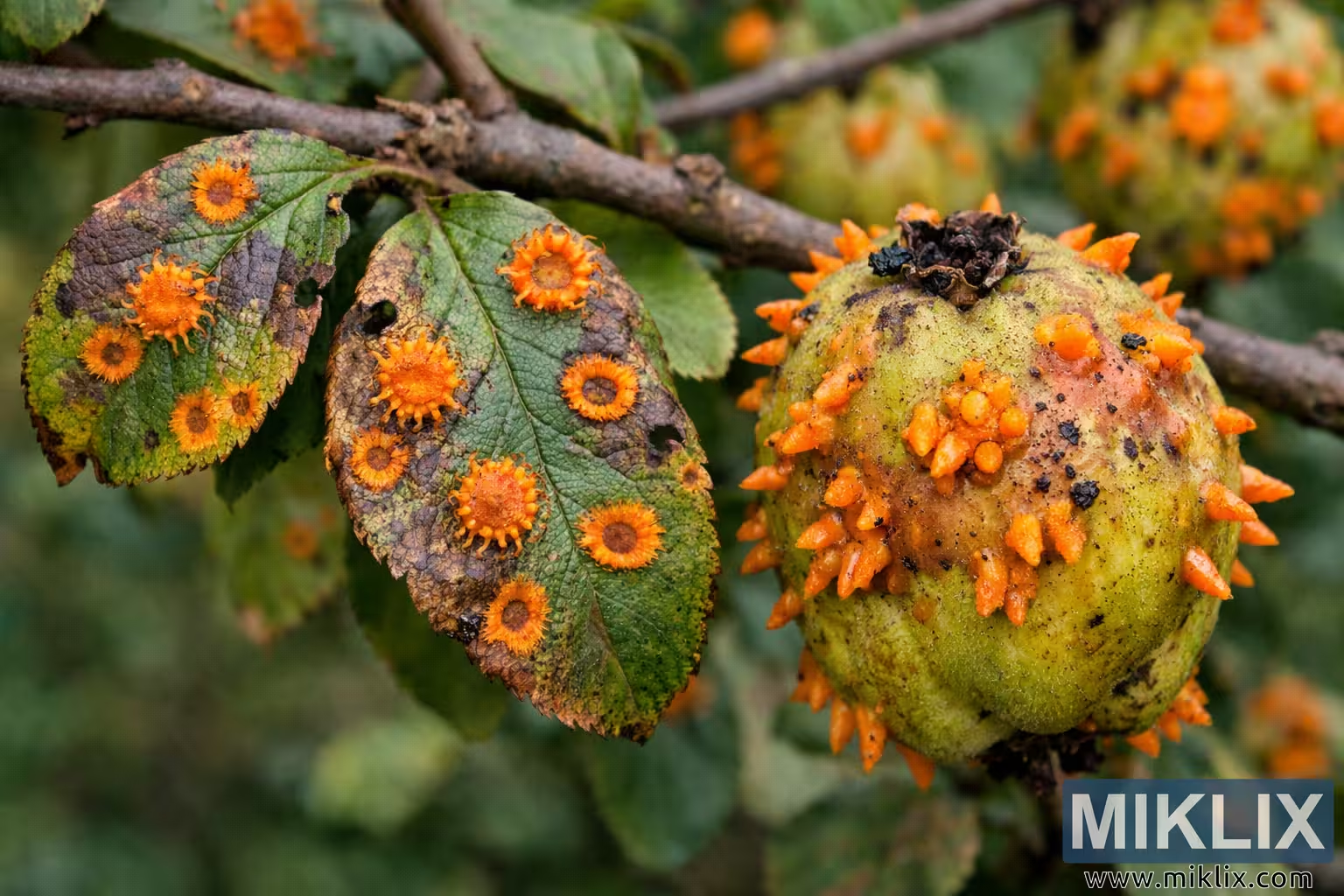
High-resolution landscape image of cedar-quince rust symptoms on quince leaves and fruit, featuring vivid orange lesions and horn-like fungal growths in sharp detail.
Cedar-Quince Rust Symptoms on Quince Leaves and Fruit
Dostupné verzie tohto obrázka
Obrázkové súbory, ktoré sú k dispozícii na stiahnutie nižšie, sú menej komprimované a majú vyššie rozlíšenie - a vďaka tomu aj vyššiu kvalitu - ako obrázky vložené do článkov a stránok na tejto webovej lokalite, ktoré sú viac optimalizované z hľadiska veľkosti súborov, aby sa znížila spotreba šírky pásma.
Bežná veľkosť (1,536 x 1,024)
Veľká veľkosť (3,072 x 2,048)
Veľmi veľká veľkosť (4,608 x 3,072)
Extra veľká veľkosť (6,144 x 4,096)
Komicky veľká veľkosť (1,048,576 x 699,051)
- Stále nahrávam... ;-)
Popis obrázku
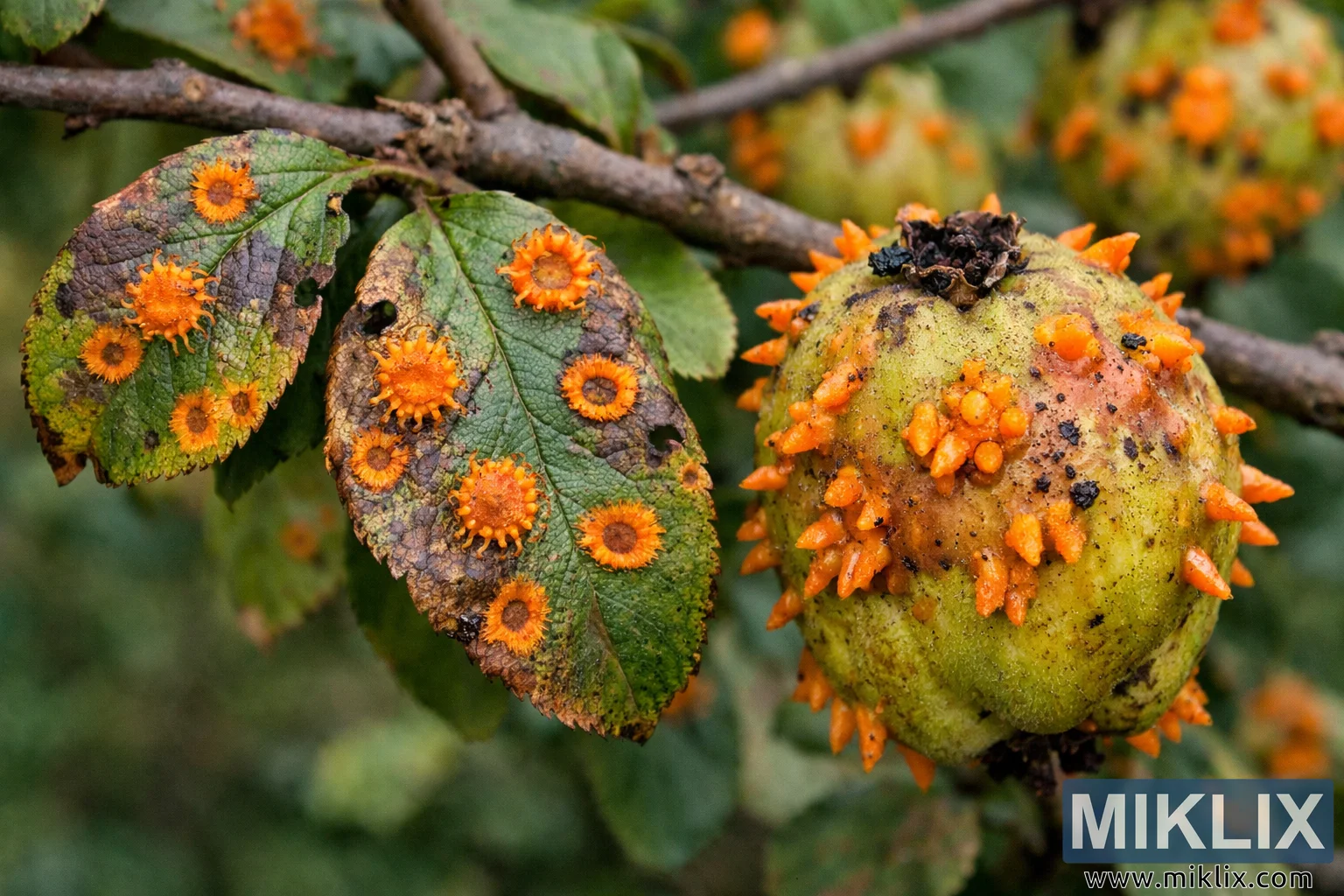
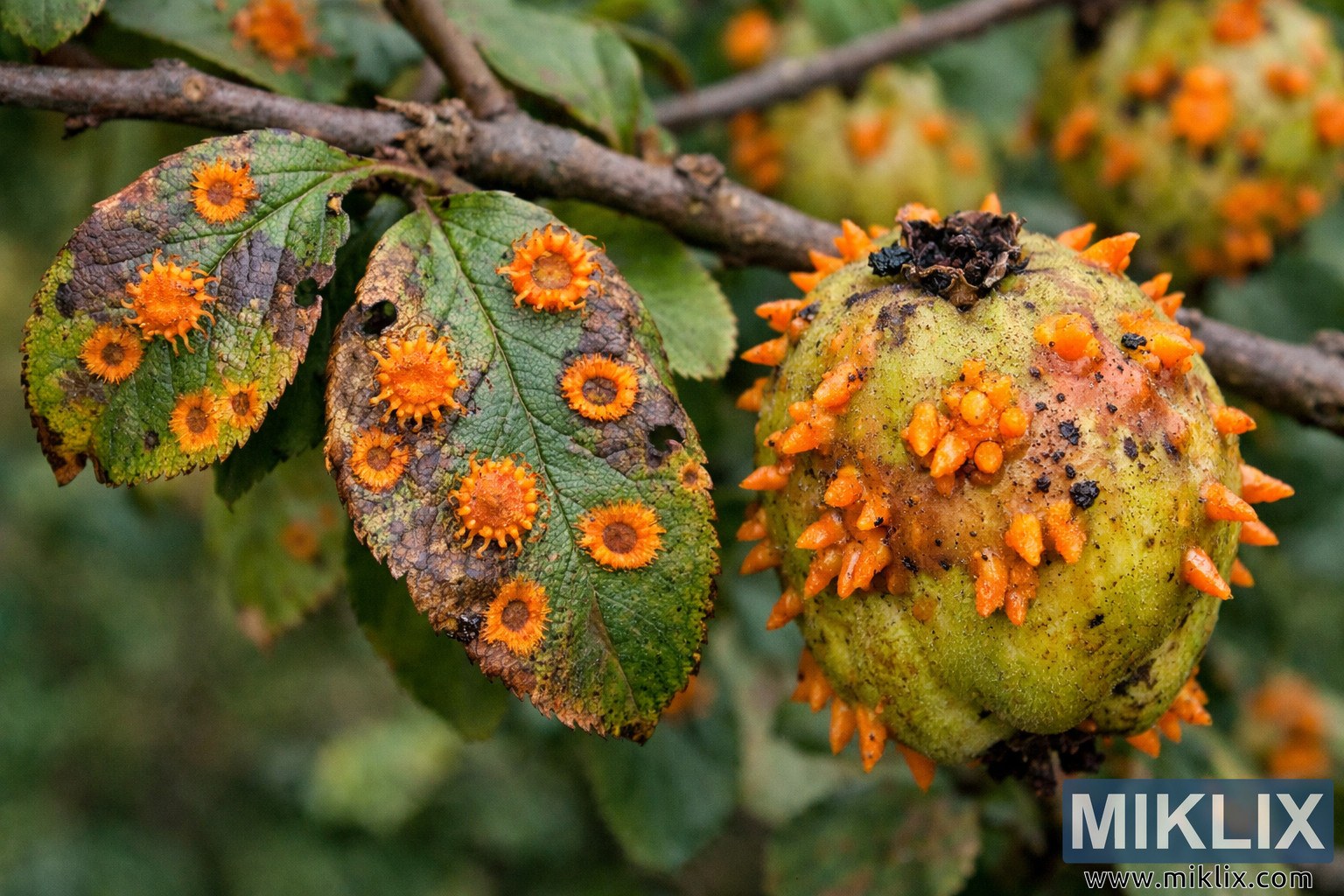
This high-resolution landscape photograph presents a detailed close-up of cedar-quince rust symptoms affecting both leaves and fruit on a quince tree branch. The composition centers on a woody branch extending horizontally across the frame, supporting several broad, oval leaves and a prominently infected quince fruit. The leaves display characteristic signs of fungal infection, including multiple bright orange, circular lesions scattered across their surfaces. Each lesion features a raised, spiky or fringed texture, forming concentric rings with darker orange centers and lighter, almost golden edges. Surrounding the lesions, the leaf tissue appears discolored, with mottled patches of brown, olive, and yellow-green, indicating stress and necrosis. Some areas of the leaves show curling and slight deformation, consistent with advanced infection.
To the right side of the image, a quince fruit hangs from the branch, its greenish-yellow skin marred by numerous vivid orange, horn-like fungal projections. These tubular and spiny growths emerge from the fruit’s surface in clustered formations, creating a dramatic contrast against the muted tones of the fruit’s skin. The infected areas are irregularly distributed, with some sections heavily encrusted by the bright orange structures while others remain partially visible beneath. Dark specks and roughened patches further emphasize the extent of the damage.
The background is softly blurred, consisting of green foliage that provides depth and isolates the infected branch as the focal point. This shallow depth of field draws attention to the texture and color of the lesions and fruiting bodies, highlighting the striking orange hues typical of cedar-quince rust. Natural daylight illuminates the scene evenly, revealing fine surface details such as leaf veins, subtle fuzz on the fruit, and the woody texture of the branch.
Overall, the image clearly documents the distinctive symptoms of cedar-quince rust on both leaves and fruit, capturing the intensity of the fungal growth and the resulting plant damage in sharp, vivid detail. The combination of contrasting colors, textural complexity, and careful focus makes the photograph both scientifically informative and visually compelling.
Obrázok súvisí s: Complete Guide to Growing Your Own Quince Trees