
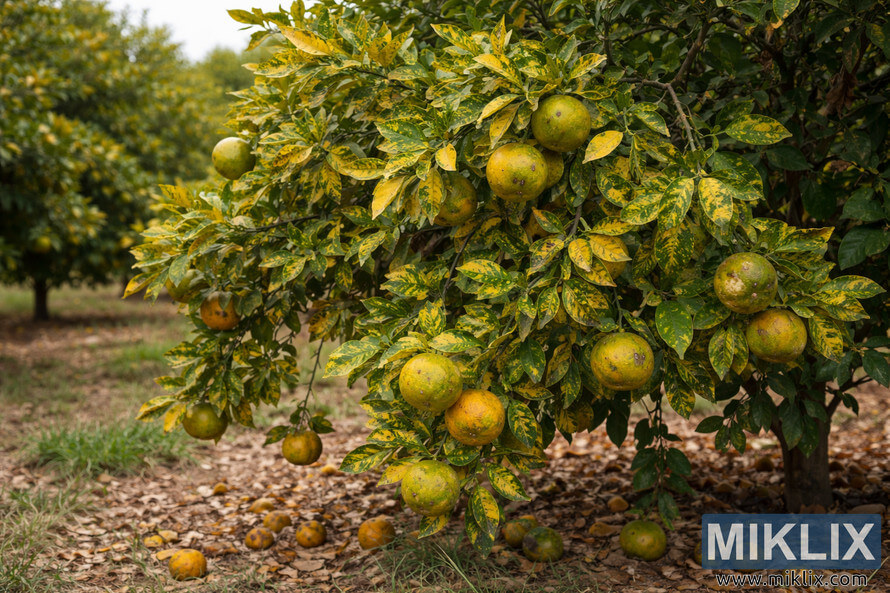
Obrázok: Tangerine Tree Infected with Huanglongbing (Citrus Greening Disease)
Publikované:
Posledná aktualizácia: 25. marca 2026 o 19:05:46 UTC
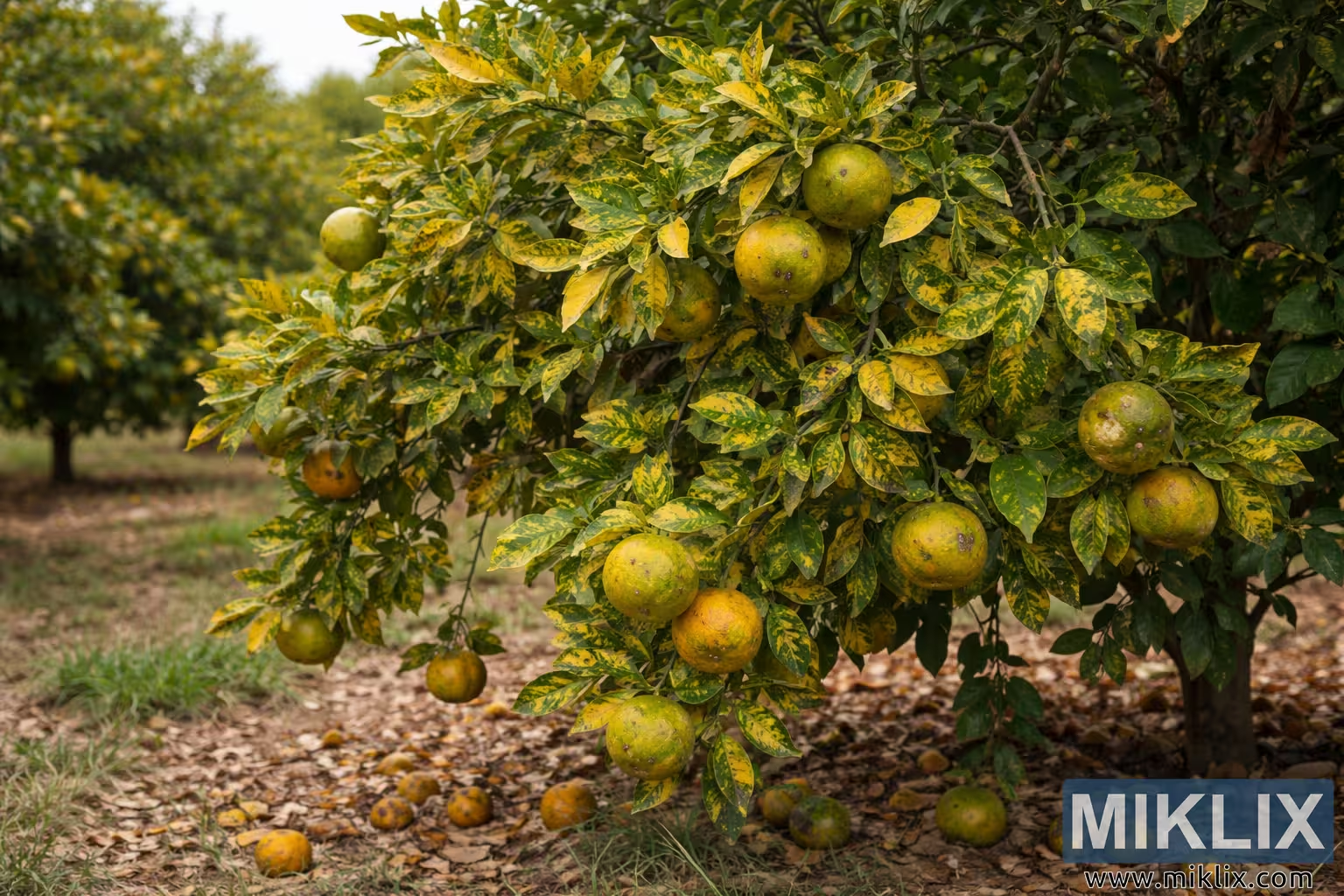
High-resolution photo of a tangerine tree infected with Huanglongbing (citrus greening), showing yellow mottled leaves, damaged fruit, and fallen citrus in an orchard.
Tangerine Tree Infected with Huanglongbing (Citrus Greening Disease)
Dostupné verzie tohto obrázka
Obrázkové súbory, ktoré sú k dispozícii na stiahnutie nižšie, sú menej komprimované a majú vyššie rozlíšenie - a vďaka tomu aj vyššiu kvalitu - ako obrázky vložené do článkov a stránok na tejto webovej lokalite, ktoré sú viac optimalizované z hľadiska veľkosti súborov, aby sa znížila spotreba šírky pásma.
Bežná veľkosť (1,536 x 1,024)
Veľká veľkosť (3,072 x 2,048)
Veľmi veľká veľkosť (4,608 x 3,072)
Extra veľká veľkosť (6,144 x 4,096)
Komicky veľká veľkosť (1,048,576 x 699,051)
- Stále nahrávam... ;-)
Popis obrázku
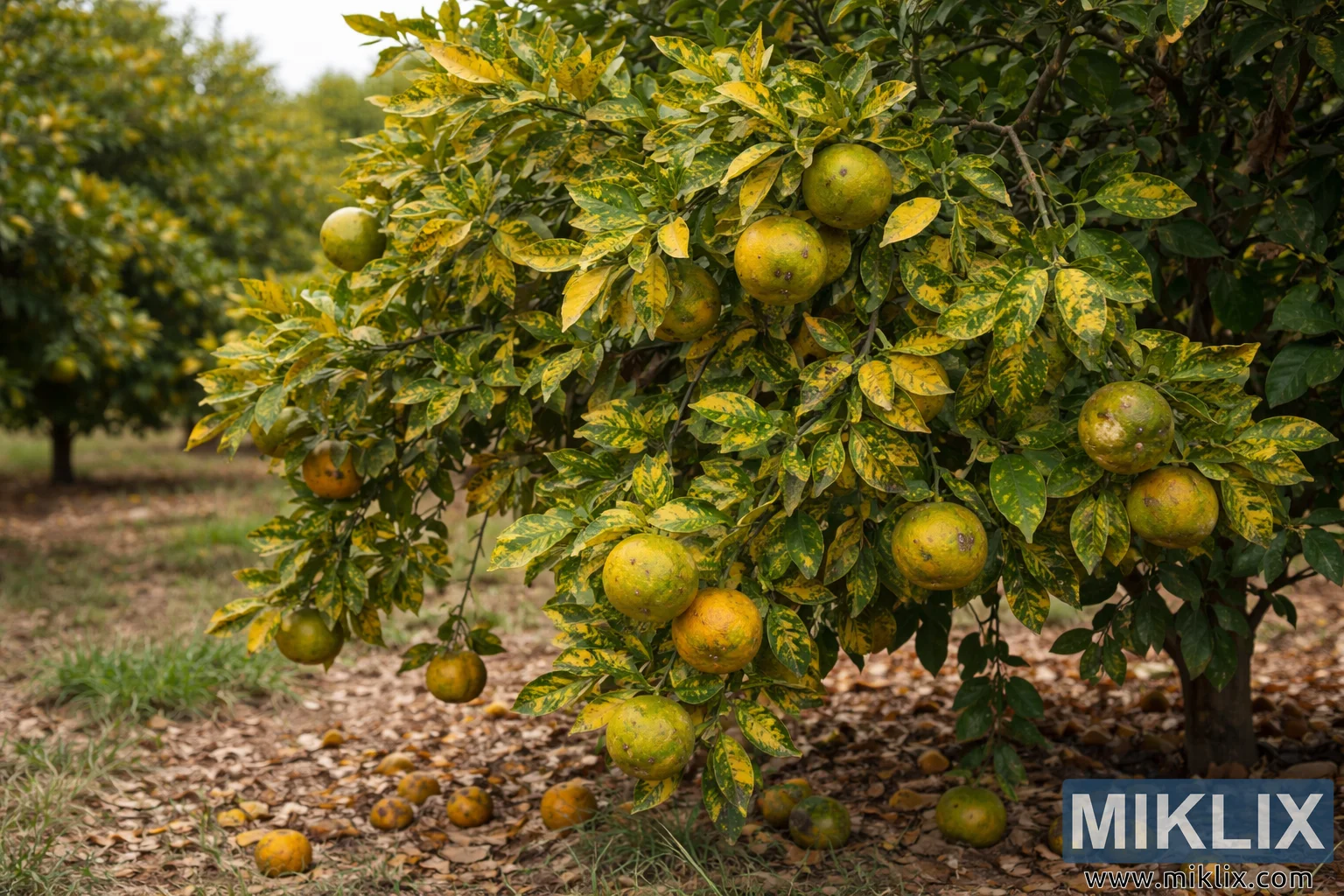
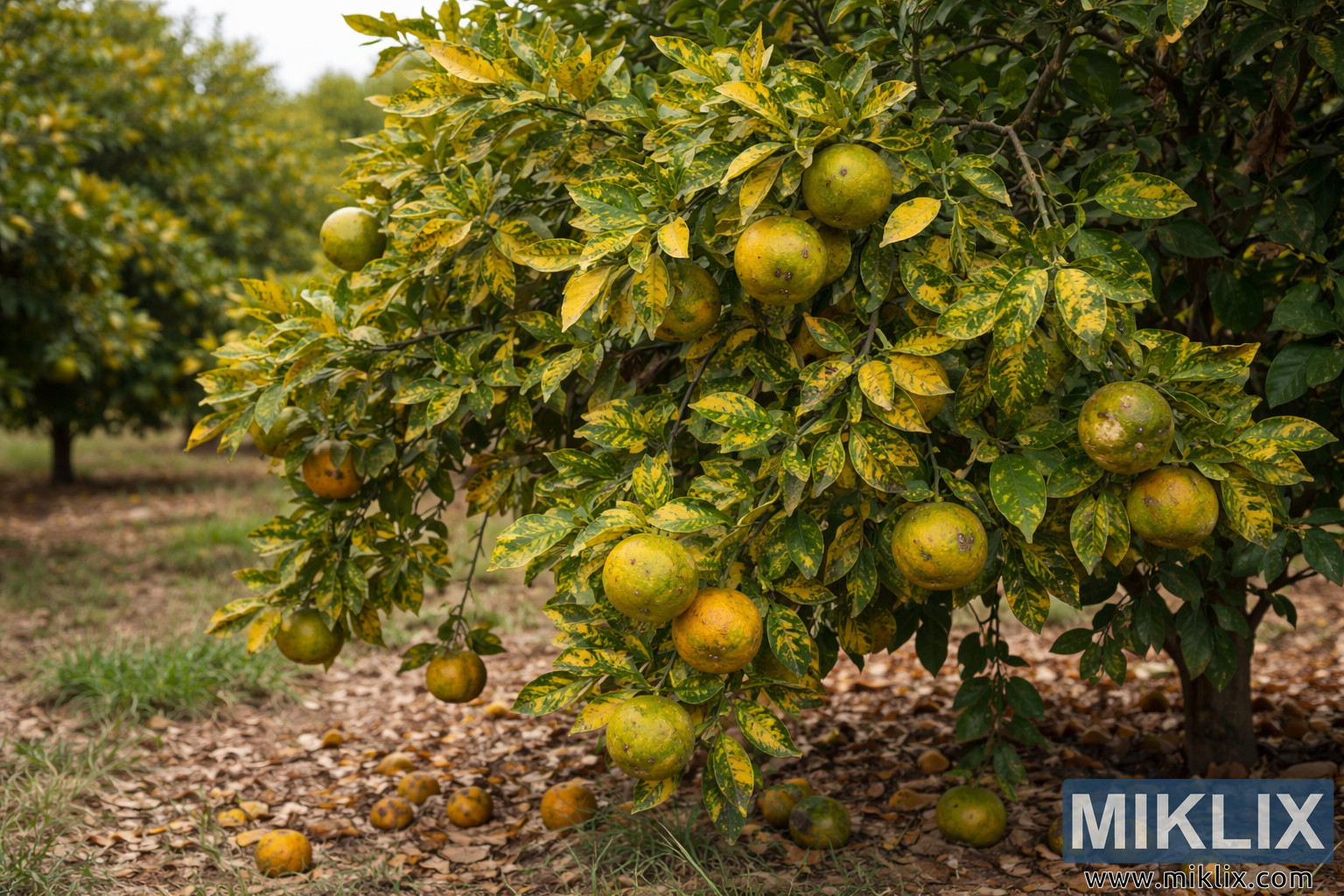
This high-resolution landscape photograph shows a tangerine tree in an orchard suffering from Huanglongbing (HLB), also known as citrus greening disease. The tree occupies most of the foreground, its dense canopy extending horizontally across the frame. Instead of the healthy deep-green foliage expected from a vigorous citrus tree, the leaves display irregular yellow and green mottling, a classic symptom of HLB infection. The discoloration appears uneven and patchy across many branches, giving the canopy a speckled yellow-green appearance that contrasts strongly with the darker foliage of nearby trees in the background.
Clusters of fruit hang throughout the branches. Many of the tangerines appear abnormal: their surfaces are blotchy and unevenly colored, ranging from dull green to yellowish orange with brown or darkened spots. Several fruits look misshapen or slightly lopsided, another common characteristic of citrus greening. Their skin texture appears rougher than normal, and some fruits display patches of dark scarring. The fruit does not show the bright, uniform color typical of healthy ripe tangerines, reinforcing the visual impact of the disease on crop quality.
Below the tree, the ground is scattered with fallen citrus fruit in various stages of decay. Some lie intact but discolored, while others appear shriveled or partially rotting. Dry leaves and orchard debris surround the fallen fruit, forming a textured layer on the soil. This accumulation suggests premature fruit drop, another sign frequently associated with Huanglongbing infection.
The scene is illuminated by soft natural daylight, likely during a clear or lightly overcast day. The lighting highlights the texture of the leaves and fruit while maintaining realistic color tones. The background reveals additional citrus trees arranged in rows, slightly blurred to emphasize the diseased tree in the foreground. Their darker green foliage contrasts with the affected tree, making the symptoms more visually apparent.
Overall, the image presents a detailed and realistic depiction of the agricultural impact of Huanglongbing. The mottled leaves, misshapen fruit, and fallen citrus on the ground together illustrate the progressive decline of an infected tangerine tree. The photograph captures both the biological symptoms of the disease and the broader orchard context, making it a clear visual representation of how citrus greening affects tree health, fruit quality, and productivity.
Obrázok súvisí s: Growing Tangerines: The Complete Guide to Sweet Success in Your Home Garden