
Obrázok: Licorice Plant in Its Natural Habitat
Publikované:
Posledná aktualizácia: 28. augusta 2026 o 20:35:36 UTC
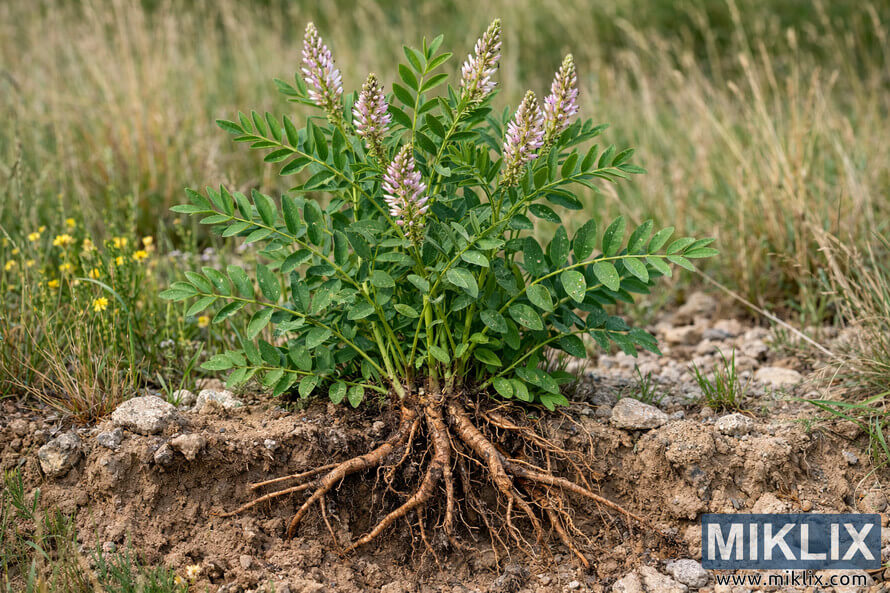
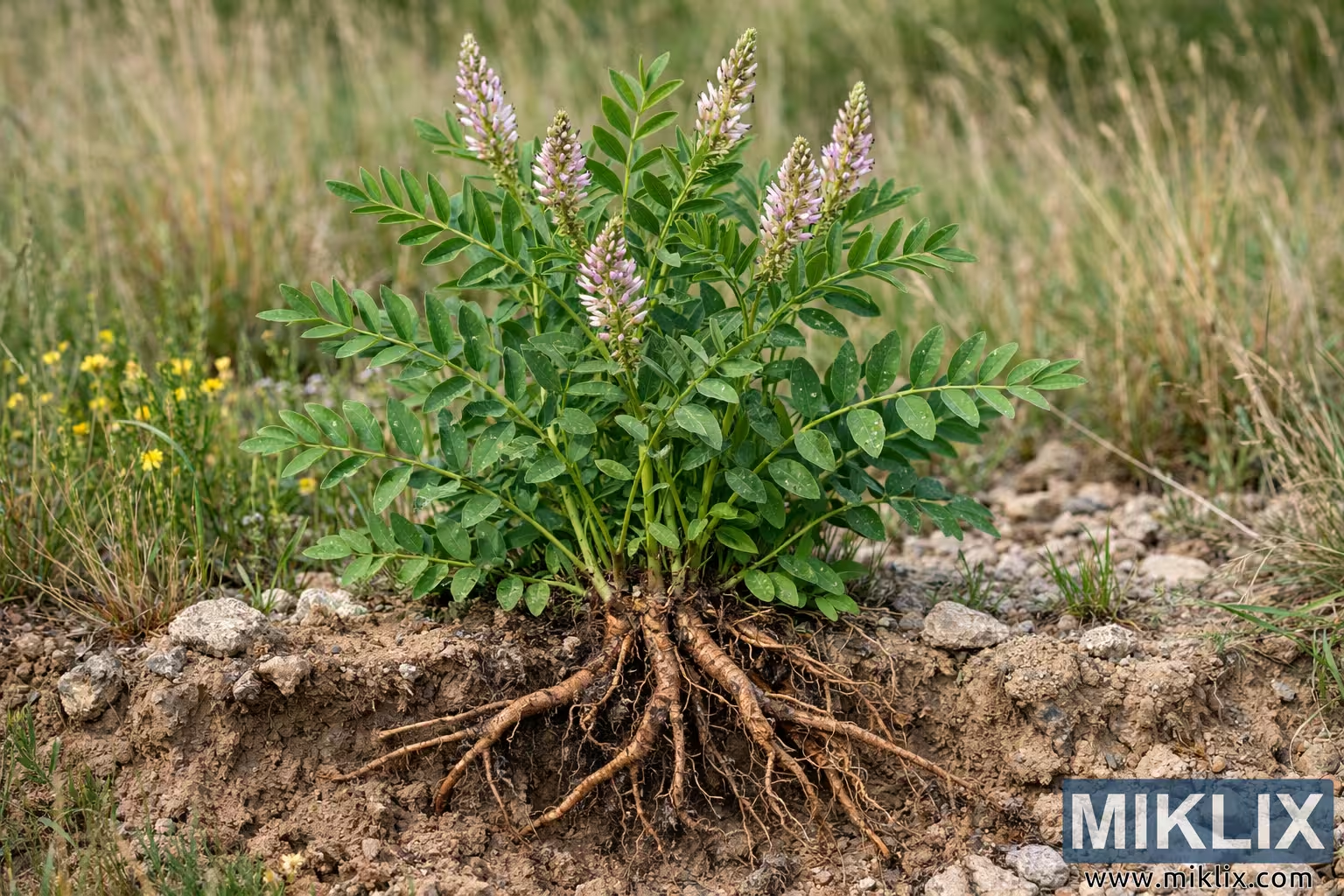
Detailed depiction of a licorice plant (Glycyrrhiza glabra) in its natural environment, showing its green leaves, purple-tinged flowers, and exposed root system in dry, rocky soil.
Licorice Plant in Its Natural Habitat
Dostupné verzie tohto obrázka
Obrázkové súbory, ktoré sú k dispozícii na stiahnutie nižšie, sú menej komprimované a majú vyššie rozlíšenie - a vďaka tomu aj vyššiu kvalitu - ako obrázky vložené do článkov a stránok na tejto webovej lokalite, ktoré sú viac optimalizované z hľadiska veľkosti súborov, aby sa znížila spotreba šírky pásma.
Bežná veľkosť (1,536 x 1,024)
Veľká veľkosť (3,072 x 2,048)
Veľmi veľká veľkosť (4,608 x 3,072)
Extra veľká veľkosť (6,144 x 4,096)
Komicky veľká veľkosť (1,048,576 x 699,051)
- Stále nahrávam... ;-)
Popis obrázku
The image presents a vivid and scientifically accurate portrayal of a licorice plant (Glycyrrhiza glabra) thriving in its natural habitat. The composition is horizontal, emphasizing the plant’s full morphology from its leafy crown to its exposed root system. The central subject is a mature licorice plant positioned slightly off-center, surrounded by a semi-arid landscape of grasses, small wildflowers, and rocky soil. The lighting is natural and even, suggesting a clear day with soft sunlight that enhances the plant’s textures and colors without harsh shadows.
The upper portion of the plant displays pinnately compound leaves arranged alternately along slender stems. Each leaf consists of multiple pairs of small, oval leaflets with smooth margins and a slightly glossy surface that reflects the sunlight. The leaves are a vibrant green, contrasting beautifully with the muted tones of the surrounding vegetation. Emerging from the upper stems are clusters of delicate flowers forming elongated racemes. These blossoms exhibit a gradient of color, transitioning from creamy white at the base to pale lavender and light purple at the tips. The flowers are small and pea-like, characteristic of the Fabaceae family, and they add a subtle touch of color to the otherwise earthy palette of the scene.
The middle section of the image captures the plant’s sturdy stems and the transition from foliage to the root zone. The stems are slightly woody near the base, showing the plant’s perennial nature. The soil around the plant has been partially removed to reveal the root system, which is one of the most distinctive features of the licorice plant. The roots are thick, fibrous, and brownish-red, extending downward and outward in a network of intertwined strands. Fine rootlets branch off from the main roots, indicating the plant’s extensive underground growth. The texture of the roots is rough and woody, with visible ridges and irregularities that suggest age and resilience.
The surrounding environment is composed of dry, rocky soil interspersed with small stones and patches of sand. The soil color ranges from light brown to grayish beige, complementing the plant’s earthy tones. In the background, the terrain gently slopes upward, covered with tall grasses and scattered wildflowers, primarily yellow and white. The vegetation is slightly blurred, creating a natural depth of field that draws attention to the licorice plant as the focal point. The overall atmosphere conveys a sense of quiet endurance and adaptation, illustrating how the licorice plant thrives in challenging conditions typical of Mediterranean and semi-arid regions.
The photograph’s composition is balanced and harmonious. The exposed roots occupy the lower third of the frame, symbolizing the plant’s hidden strength and medicinal significance, while the flowering tops reach toward the upper third, representing vitality and growth. The interplay between the visible roots and the lush foliage encapsulates the dual nature of the licorice plant—its underground parts valued for their sweet, therapeutic compounds, and its above-ground structure contributing to ecological diversity.
The background vegetation, though blurred, provides contextual richness. Grasses sway gently, and small yellow wildflowers punctuate the scene with color. The lighting enhances the natural hues, with warm tones in the soil and cool greens in the leaves. The absence of any human-made elements or brands ensures the authenticity of the natural setting. The image evokes both scientific curiosity and aesthetic appreciation, serving as an educational visual for botany enthusiasts and herbal medicine scholars alike.
In essence, this landscape-oriented image captures the full life cycle of the licorice plant—from its photosynthetic leaves to its nutrient-storing roots—within a single frame. It highlights the plant’s ecological role, its adaptation to dry environments, and its botanical beauty. The detailed depiction of morphology, texture, and environment makes this image not only visually appealing but also informative, offering insight into the natural growth patterns of Glycyrrhiza glabra and its harmonious coexistence with surrounding flora.
Obrázok súvisí s: Licorice Root: The Ancient Herb with Modern Health Benefits