
Slika: Optimal Fermentation Temperature for Belgian Wit Ale in a Cozy Brewery
Objavljeno:
Nazadnje posodobljeno: 13. julij 2026 ob 7:42:18 pop. UTC
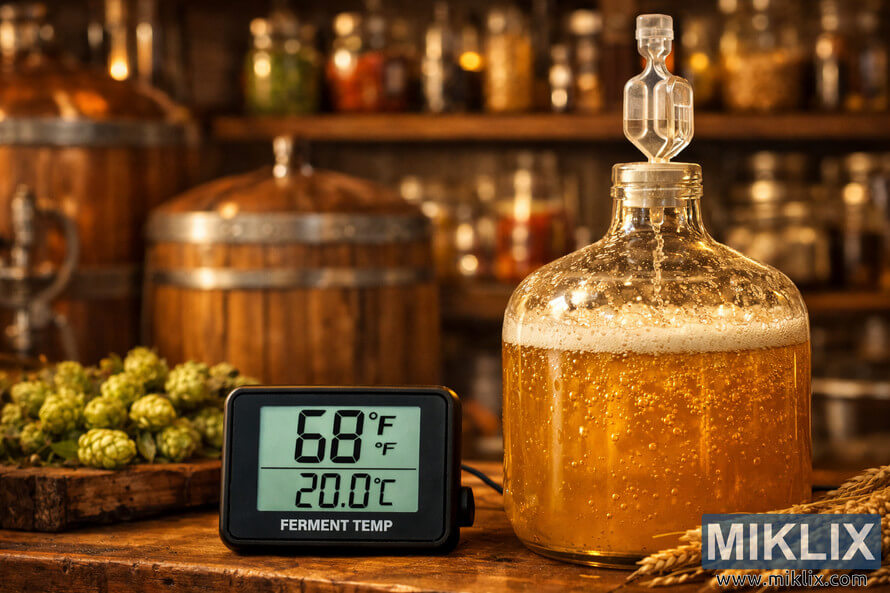
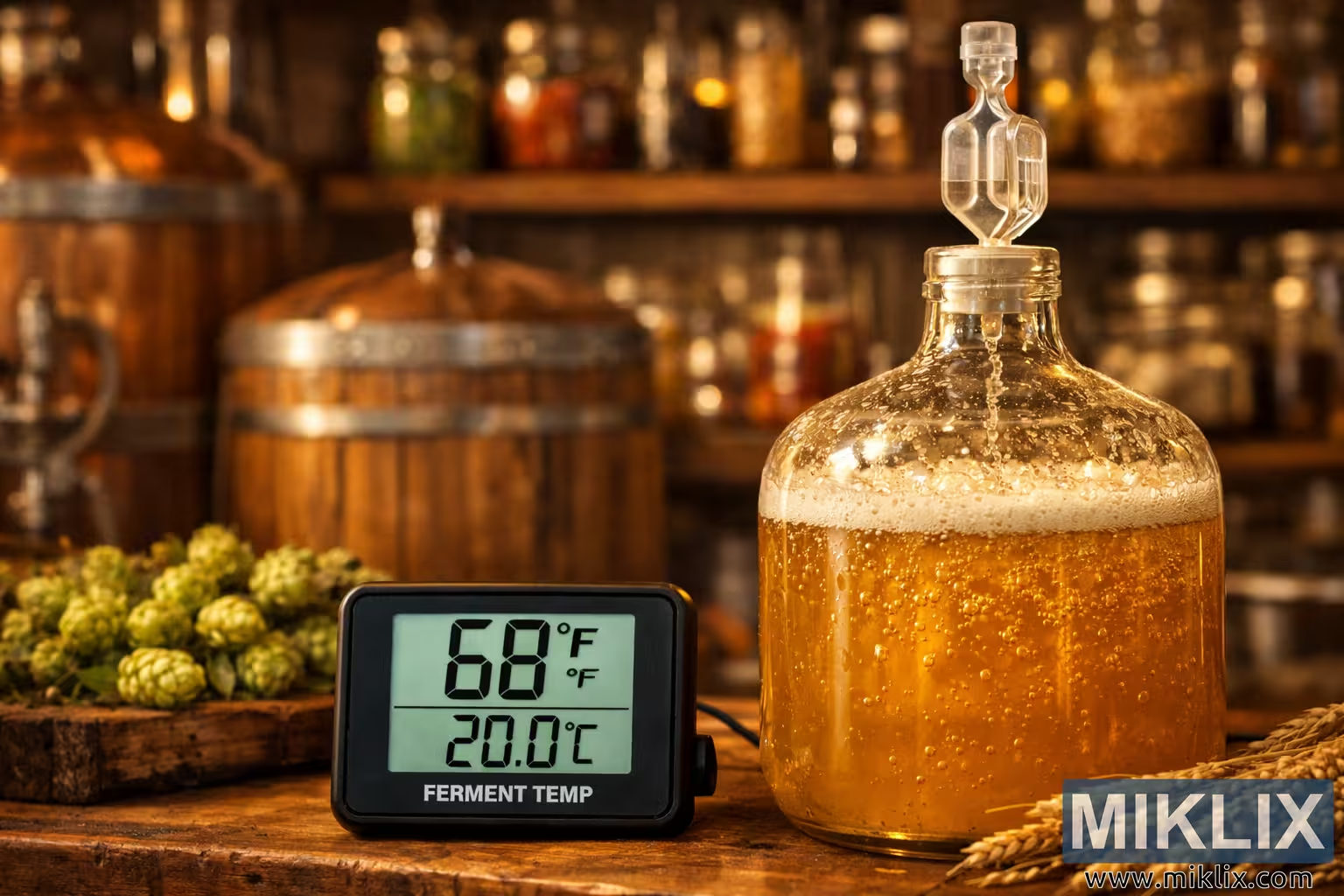
A detailed depiction of Belgian wit ale fermentation at 68°F (20°C) in a cozy brewery setting, featuring a digital thermometer, bubbling carboy, wooden tanks, and warm lighting that evokes craftsmanship and creativity.
Optimal Fermentation Temperature for Belgian Wit Ale in a Cozy Brewery
Razpoložljive različice te slike
Slikovne datoteke, ki so na voljo za prenos spodaj, so manj stisnjene in imajo višjo ločljivost - in s tem višjo kakovost - kot slike, vdelane v članke in strani na tem spletnem mestu, ki so bolj optimizirane glede velikosti datotek, da se zmanjša poraba pasovne širine.
Redna velikost (1,536 x 1,024)
Velika velikost (3,072 x 2,048)
Zelo velika velikost (4,608 x 3,072)
Zelo velika velikost (6,144 x 4,096)
Komično velika velikost (1,048,576 x 699,051)
- Še vedno nalagam... ;-)
Opis slike
The image presents a richly detailed and atmospheric view of a small, cozy brewery during the fermentation stage of Belgian wit ale. The composition is carefully arranged to draw the viewer’s attention toward the digital thermometer and the glass carboy in the foreground, both of which serve as the focal points of the scene. The thermometer, sleek and modern, displays a precise reading of 68°F (20°C), the optimal fermentation temperature for this style of ale. Its glowing green backlit screen contrasts gently with the warm tones of the surrounding environment, emphasizing the harmony between technology and tradition in the brewing process.
Next to the thermometer sits a large glass carboy filled with golden, effervescent wort. Tiny bubbles rise continuously through the liquid, catching the soft light and creating a sense of motion and life within the stillness of the room. The carboy’s surface reflects the amber hues of the wooden surroundings, and the airlock perched on top gleams faintly, indicating active fermentation. This interplay of light and texture conveys the delicate balance of science and artistry that defines craft brewing.
Behind the carboy, the middle layer of the composition features two large wooden fermentation tanks bound with metal hoops. Their surfaces are aged and polished, suggesting years of use and care. Resting against the tanks are bundles of fresh green hops and golden barley stalks, symbolic ingredients that represent the natural foundation of beer. The hops appear vibrant and textured, their cones detailed enough to reveal individual petals, while the barley glows softly under the ambient light, reinforcing the organic warmth of the setting.
The lighting throughout the image is a key element in establishing mood. Warm, amber tones dominate, emanating from unseen sources that mimic the gentle glow of incandescent bulbs or lanterns. This illumination bathes the wooden surfaces, the glass vessels, and the metallic accents in a comforting radiance, evoking the inviting atmosphere of a traditional brewery. The soft focus applied to the background enhances the depth of field, ensuring that the thermometer and carboy remain sharply defined while the rest of the environment fades into a pleasing blur.
In the background, shelves line the walls, filled with brewing equipment, jars of grains, spices, and colorful ingredients. Copper kettles, measuring tools, and glass containers add authenticity and complexity to the scene, hinting at the meticulous craft behind each batch of beer. The shelves are arranged neatly but not rigidly, suggesting a workspace that is both functional and personal—a place where creativity thrives amid the scent of malt and yeast.
The overall composition is balanced and harmonious, with the foreground elements anchoring the viewer’s gaze and the background providing context and narrative depth. The textures of wood, glass, and metal are rendered with exceptional clarity, and the interplay of light and shadow creates a tactile sense of realism. The soft focus effect contributes to a dreamlike quality, transforming the brewery into a sanctuary of craftsmanship and warmth.
Emotionally, the image conveys a sense of calm, satisfaction, and creative fulfillment. It captures the quiet joy of brewing—the anticipation of transformation as simple ingredients evolve into something complex and flavorful. The thermometer’s precise reading of 68°F (20°C) serves as a subtle reminder of the importance of control and precision in the process, while the bubbling wort symbolizes vitality and progress. Together, these elements form a visual narrative that celebrates both the science and the soul of brewing.
The viewer is left with an impression of timelessness, as though the scene could belong to any era where artisans gather to create with care and passion. The cozy brewery setting, the golden hues, and the gentle glow all combine to evoke a sense of belonging and inspiration. It is not merely a depiction of fermentation—it is a portrait of dedication, patience, and the artistry that transforms raw materials into a beloved beverage. The image stands as a tribute to the craft of brewing, inviting the observer to appreciate the beauty of process as much as the pleasure of the final product.
Slika je povezana z: Fermenting Beer with White Labs WLP410 Belgian Wit II Ale Yeast